Fort Gorazda: An Austro-Hungarian Fortress in Montenegro
Site at a Glance
- Country
- Montenegro
- Primary era
- Modern
- Eras represented
- Modern
- Civilizations
- Austria-Hungary, Habsburg
- Site type
- Military
- Remains
- Fort
On this page8 sections
History
Fort Gorazda is an Austro-Hungarian mountain fortress on Goražde Hill in Montenegro, built in 1884-86 to defend approaches to the Bay of Kotor. It formed part of a late nineteenth-century program to strengthen the bay’s defenses and protect strategic positions inland. The Austro-Hungarian Empire was a Central European dual monarchy that lasted from 1867 until the end of the First World War. The bay served as a major naval base, while Montenegro controlled the hinterland. Montenegrins and their Russian allies sought control of the bay, and Austrian rule was not accepted by everyone in the area.
Fortification after 1869
A predecessor fort stood on the site before the 1869 uprising. During the revolt, the Krivošije, a local highland clan, defeated an Austro-Hungarian force and came close to capturing the fort. The empire responded by extending and strengthening its regional fortifications. Fort Gorazda replaced the earlier work and was among the first new fortresses built around the bay under this program.
First World War
In 1910, plans proposed rebuilding the fortress and adding two howitzer turrets, machine-gun turrets, and observation turrets. The First World War prevented this work. During the war, the garrison consisted of 8 officers and 195 men. Its weapons included six 12 cm M80 mortars, artillery pieces that fired shells at steep angles; two 10 cm M4 guns in casemates, enclosed fortified spaces for guns or troops; three M4 and two M7 machine guns; and 25 gun carriages, supports for artillery pieces.
Austrian forces used the fort in artillery exchanges with Montenegrin batteries on Mount Lovćen. After heavy Montenegrin attacks, they added two concrete infantry positions to the roof in 1915. Shelling by guns of up to 24 cm calibre caused little damage. An Austrian offensive in 1916 drove Montenegrin forces beyond the fort’s range. The fort was then repaired, and its guns were removed to equip the Austrian field army.
Yugoslav use and abandonment
After the war, the Yugoslav Army, the armed force of Yugoslavia, took over Fort Gorazda and used it as a military depot until the early 1990s. The fort was later abandoned. Its accessibility and lack of state protection contributed to extensive metal theft and the loss of many interior fittings.
Remains
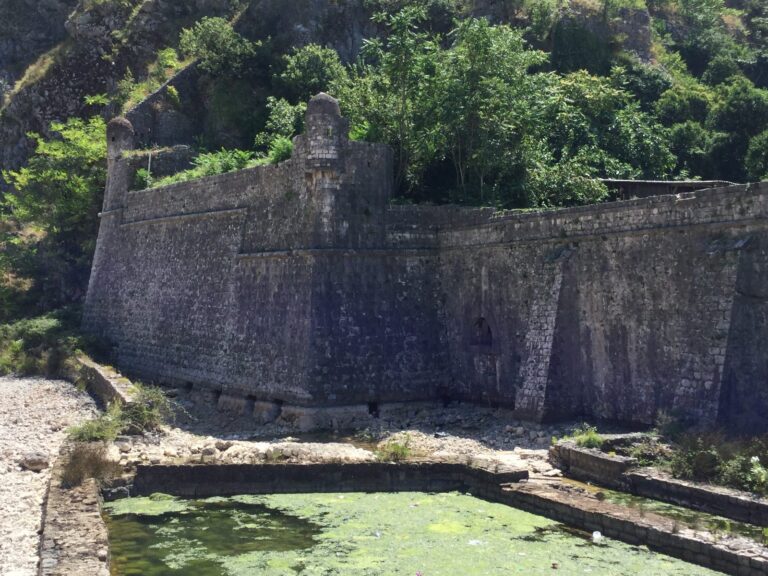
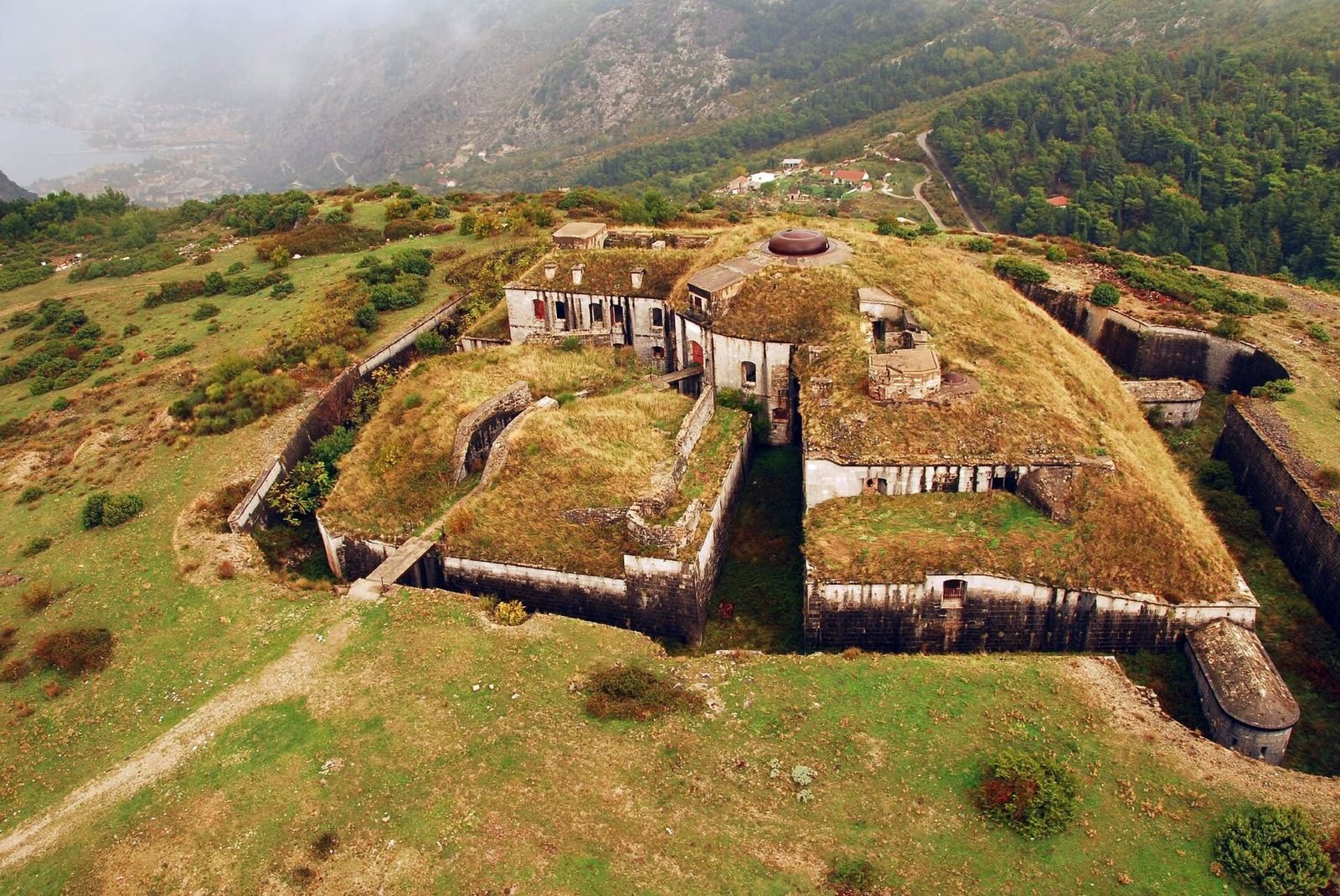
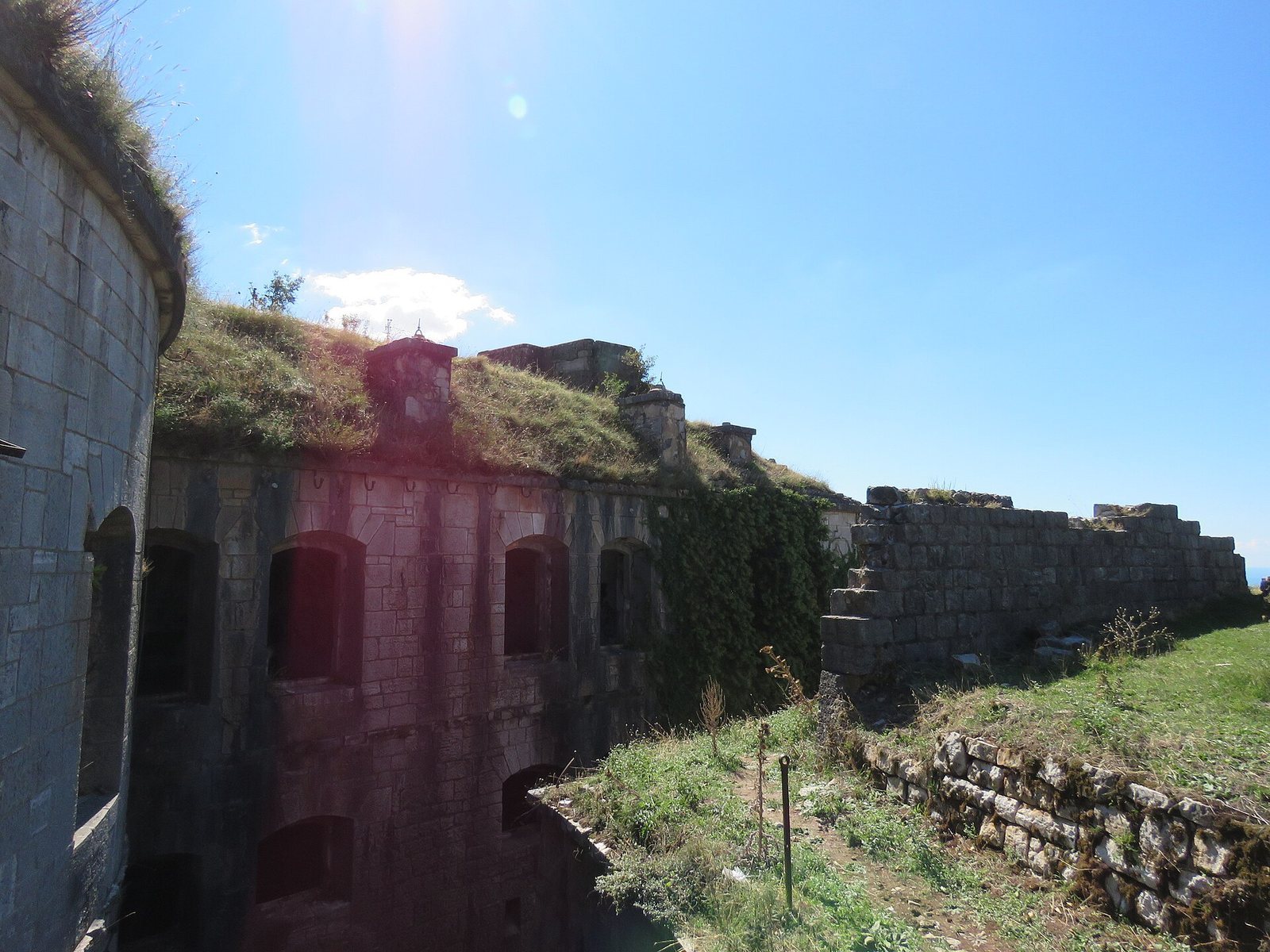
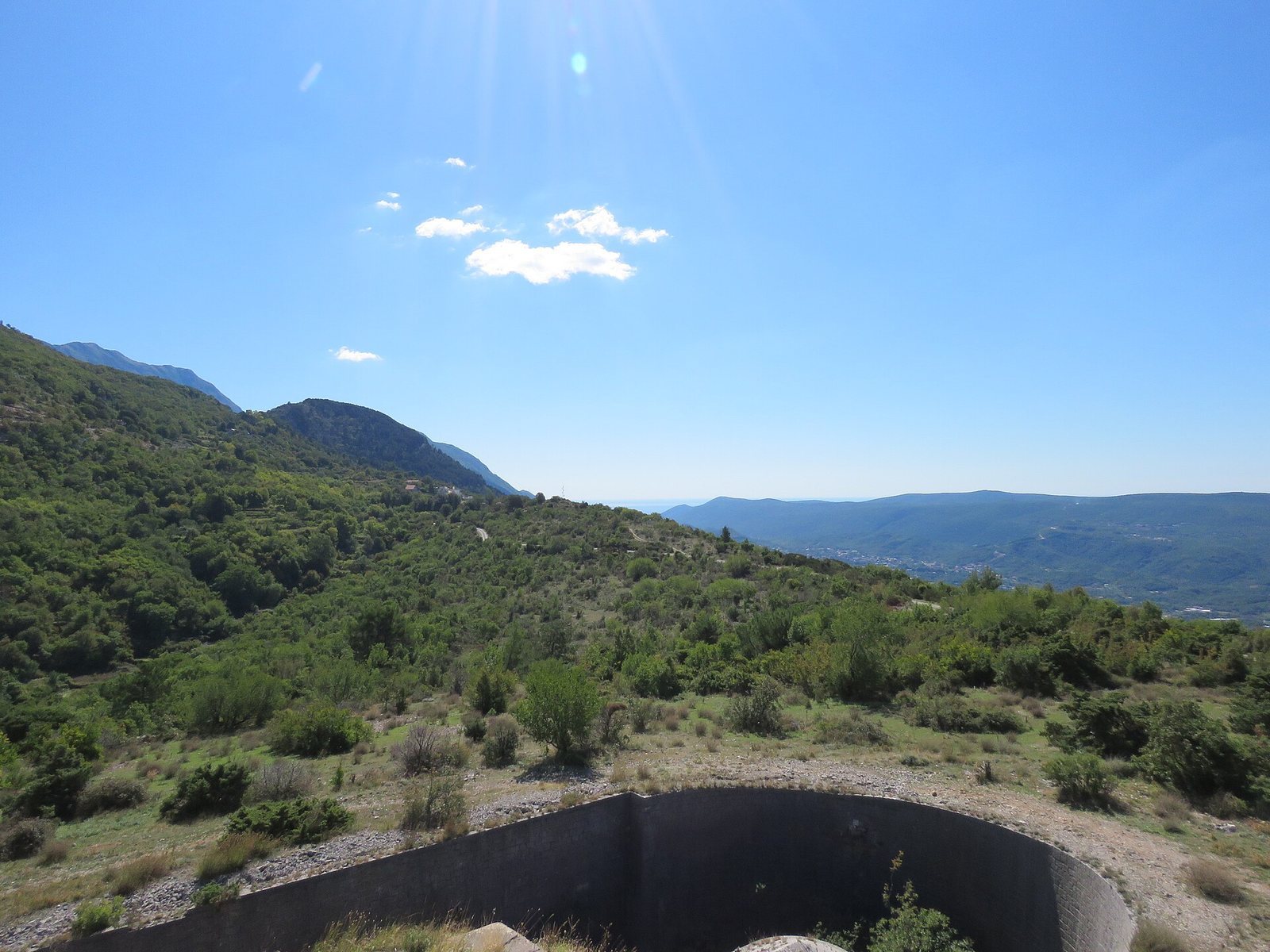
The fort stands at an altitude of 452 m on Goražde Hill, about 10 km from Kotor. It overlooks the Austrian-built road from Kotor to Cetinje, Montenegro’s former capital, and guards one side of the pass leading to Kotor. The Škaljari Battery and Fort Vrmac lie several kilometres away on the opposite side of the pass. From 1909, Fort Trašte also supported the defenses from hills above the plain of Tivatsko polje. The heavily reinforced fort is built of stone and concrete within a ditch. Its symmetrical plan, unusual for a mountain fortress of this type, has two wings joined by a circular central structure.
Approach and ditch defenses
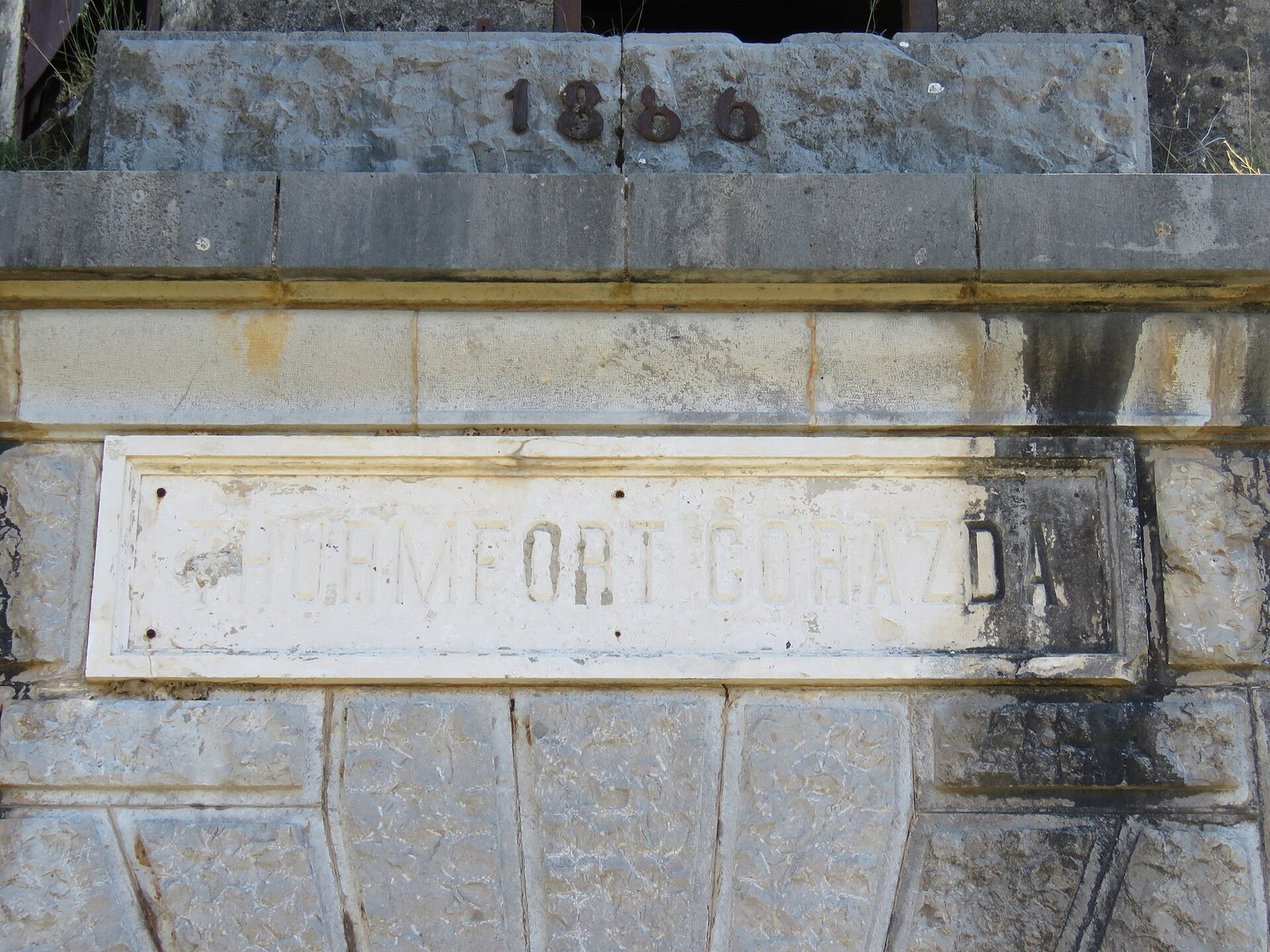
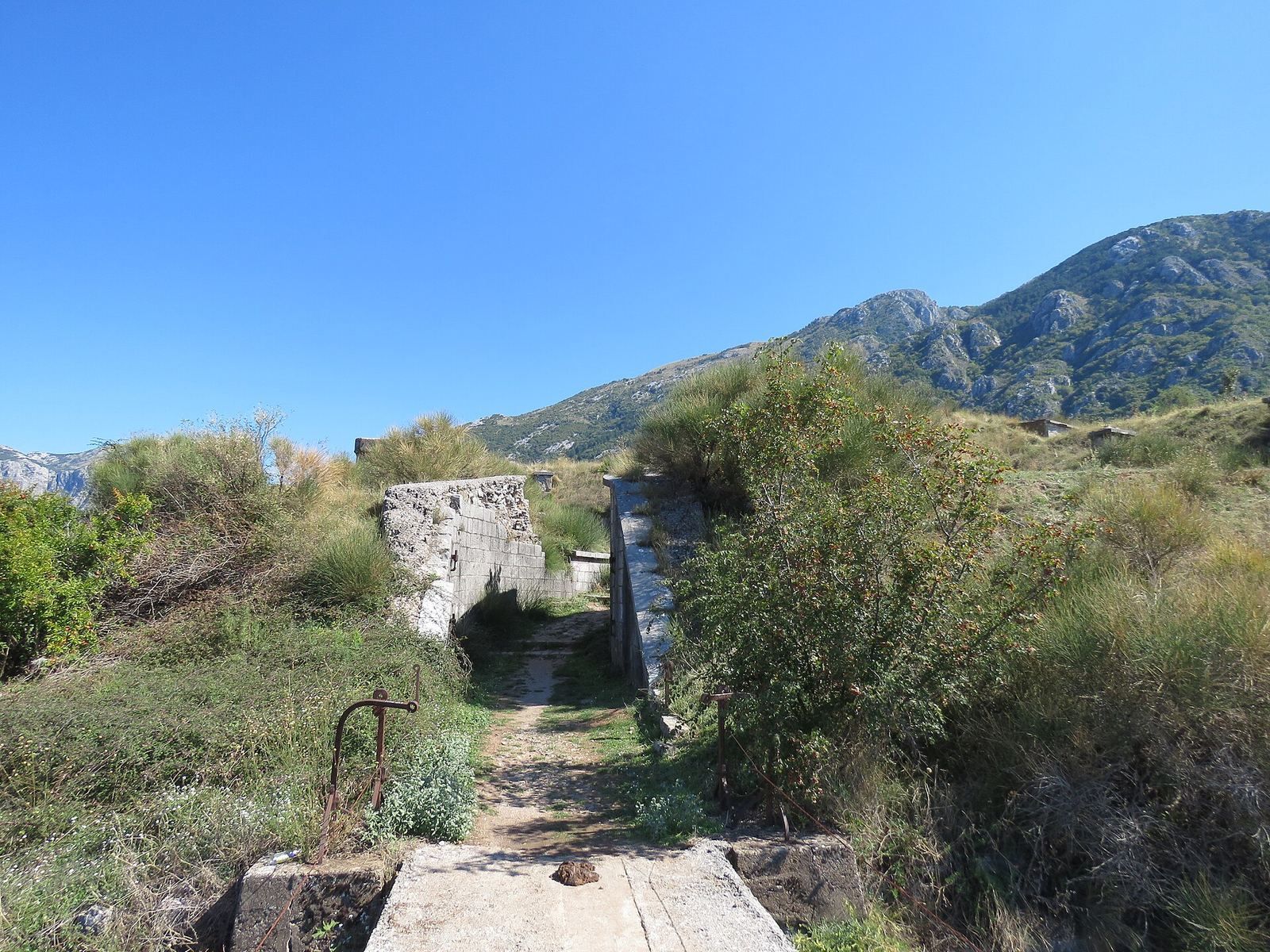
A curved track between two retaining walls leads to the two-storey fort and crosses a retractable bridge over the ditch. A steel door protects the main entrance. Above it, an inscription identifies the fort as Thurmfort Gorazda, or Tower Fort Gorazda, and a concrete infantry position stands overhead. Caponiers, protected structures designed to defend a fort’s ditch, occupy the corners. Another caponier is located in the southeastern part of the ditch.
Interior arrangement
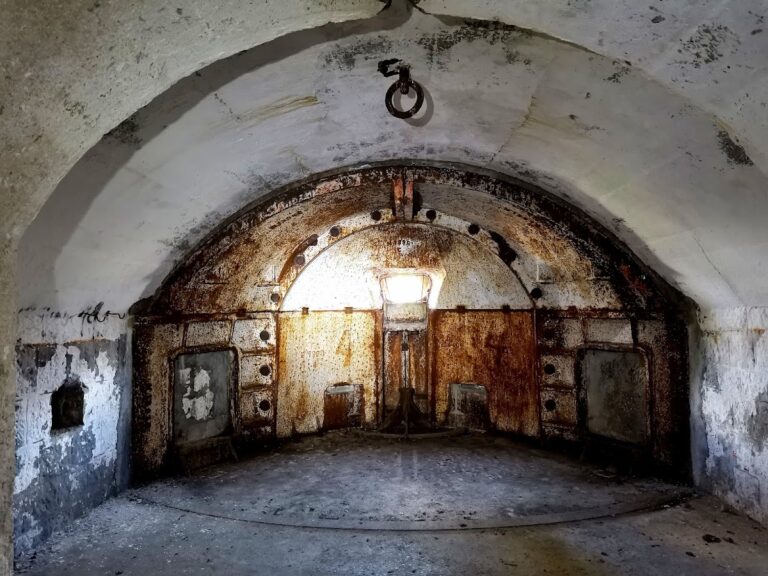
Barracks rooms occupy the lower level. Two spiral staircases lead to the upper level, where the casemates provide enclosed fortified spaces for guns or troops.
Roof turrets
Two rotating Škoda observation turrets, armored structures that turn and serve as observation positions, stand on the roof above infantry positions. Installed in 1906-07, they are distinct from the 100-ton German-made Gruson gun turret above the central section. This rotating armored mount formerly housed the fort’s main armament and is the last surviving example of its type. Two people turned it by hand using a crank.