Schloss Fantaisie: A Baroque Palace and Garden Estate in Germany
Site at a Glance
- Country
- Germany
- Primary era
- Early Modern
- Eras represented
- Early Modern, Modern
- Civilizations
- Holy Roman Empire, Kingdom of Prussia
- Site type
- Domestic
- Remains
- Elite Residence
On this page9 sections
History
Medieval Origins and the Palace
Schloss Fantaisie is a Baroque palace in Donndorf, within the municipality of Eckersdorf, Germany, about five kilometres west of Bayreuth. The estate has medieval origins, and in the sixteenth century the Lords of Lüchau built a plain Renaissance castle there. After Friedrich Ludwig von Lüchau died in 1757, the property passed to Frederick III, Margrave of Brandenburg-Bayreuth. A margrave was a territorial ruler in the Holy Roman Empire.
During an almost year-long journey to Italy in 1754–55, Frederick and his wife, Wilhelmine, gathered ideas for a new palace, including from the Villa Doria Pamphilj in Rome. They planned it as an additional summer residence after the Hermitage and as a home for Wilhelmine’s art collection. Construction began in 1758 but stopped after Wilhelmine died that year, aged 49. Frederick resumed work in 1761, but died in Bayreuth in 1763, aged 51, before the palace was finished. Their daughter, Princess Friederike, inherited the property in 1763, named the palace Fantaisie, and had builder Johann Jakob Spindler complete it by 1765.
Later Owners and Nineteenth-Century Use
After Friederike’s death in 1780, the palace and park were sold. In 1792, her cousin Friederike Dorothea Sophia of Brandenburg-Schwedt acquired them with her husband, Friedrich Eugen, Duke of Württemberg. The couple had the park redesigned in the English style. Their grandson Alexander Friedrich Wilhelm (1804–1881) later added a storey to the palace and renewed its garden ornaments to suit contemporary taste. He lived there with his second wife, Emilie von Meyernberg, in a morganatic marriage, in which a spouse of lower rank did not share the other partner’s dynastic status.
Richard Wagner stayed at the palace with his family for several months in 1872, before moving to Bayreuth. While there, he became acquainted with barber Bernhard Schnappauf, whom he chose as his personal assistant.
Nazi-Era Use
In autumn 1937, Nazi district leader Wächtler oversaw the palace’s remodeling for use as a Reich school of the Nazi Teachers League, the Nazi organization for teachers. The school opened in October 1938. During the summer of that year, Sudeten German political leader Konrad Henlein used the palace as his headquarters and issued his “Home to the Reich” appeal to recruit for the Sudeten German Freikorps, a paramilitary force made up of Sudeten Germans. In November, the newly formed force installed its general command at the palace.
Remains
The Palace and Garden Museum
Palace Layout
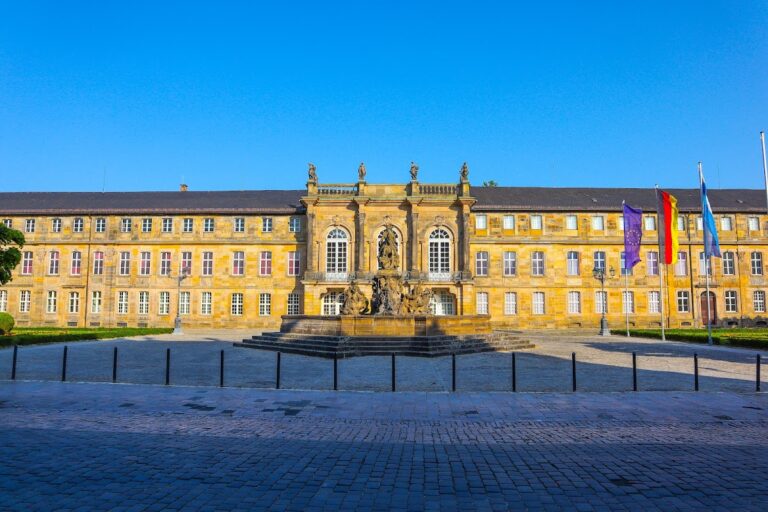
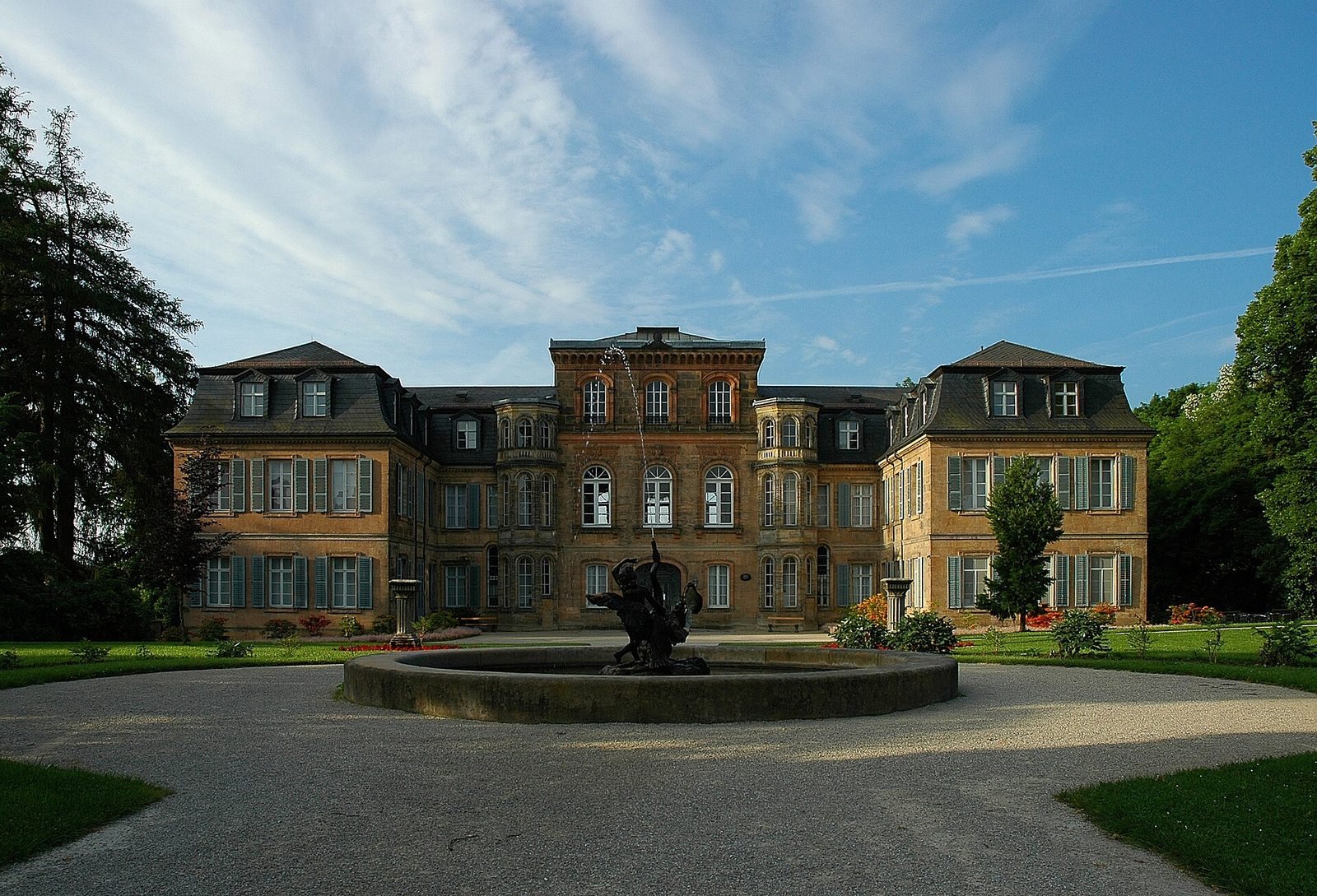
The palace and its large park form a complex on the site of the earlier castle. The Baroque building has its main entrance and a court of honor on the north side, while its south façade faces the park. A fountain is also situated on the north side. Later alterations left little of the palace’s original fabric.
Spindler Cabinet and Museum
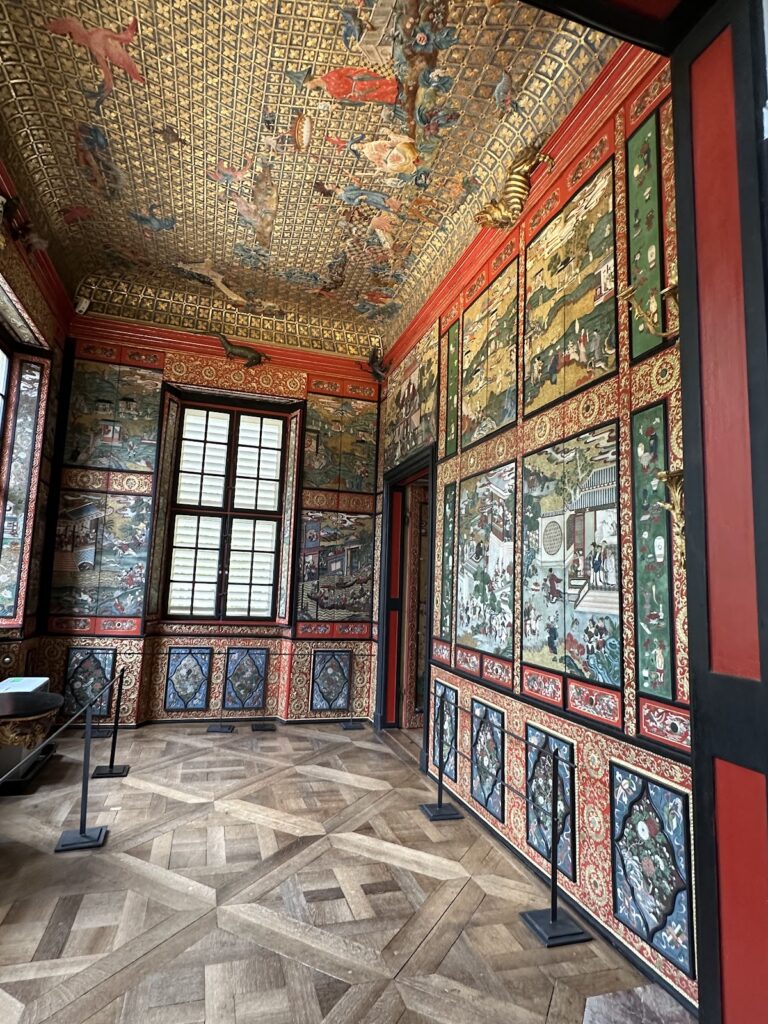
The palace contains a replica of the Spindler Cabinet, a wooden room decorated with inlay by the brothers Johann Friedrich and Heinrich Wilhelm Spindler. The original is held by the Bavarian National Museum in Munich. The German Garden Art Museum is also housed in the palace. Its collection includes drawings, prints, paintings, sculptures, and documents relating to garden design. It was Germany’s first museum devoted exclusively to this subject.
The Park
The park reflects Rococo, the Age of Sensibility, Romantic, and Historicist styles. Its southern terraces face toward the lake and have been replanted with grapevines. Restoration brought parts of the grounds closer to their earlier appearance, including the recreation of the labyrinth and repairs to the cascades using sandstone shells and figures of mythical beings. A Baroque fountain of Neptune is associated with the cascade.