Old château of the Eremitage in Bayreuth: A Margravial Pleasure House


Site at a Glance
- Rating
- 4.8
- Popularity
- Low
- Country
- Germany
- Primary era
- Early Modern
- External website
- Open
- Eras represented
- Early Modern
- Civilizations
- Holy Roman Empire
- Site type
- Domestic
- Remains
- Palace
On this page11 sections
History
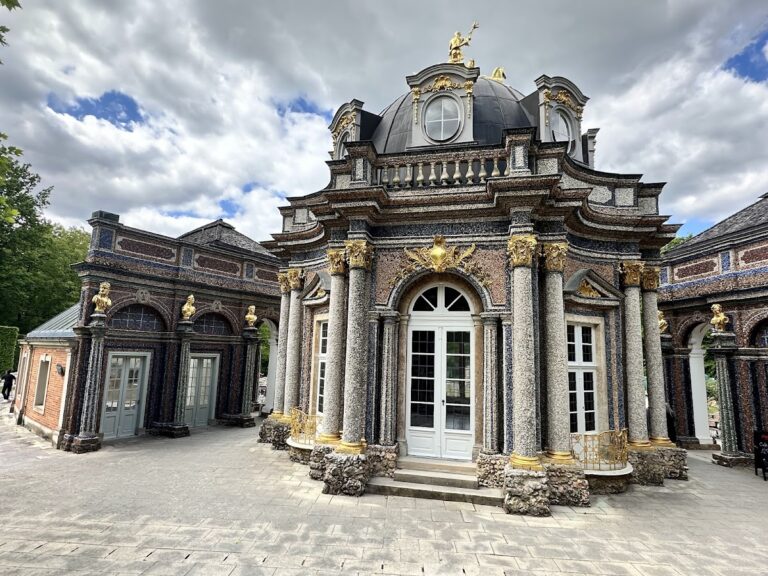
The Old château of the Eremitage in Bayreuth, Germany, is an eighteenth-century pleasure house built for the Bayreuth margraves, German territorial rulers whose title originally referred to responsibility for a frontier territory. Construction began in 1715 on the orders of Margrave Georg Wilhelm. Johann David Räntz the Elder was probably the architect, while Johann Heinrich Endrich supervised the work.
From parish woodland to hunting park
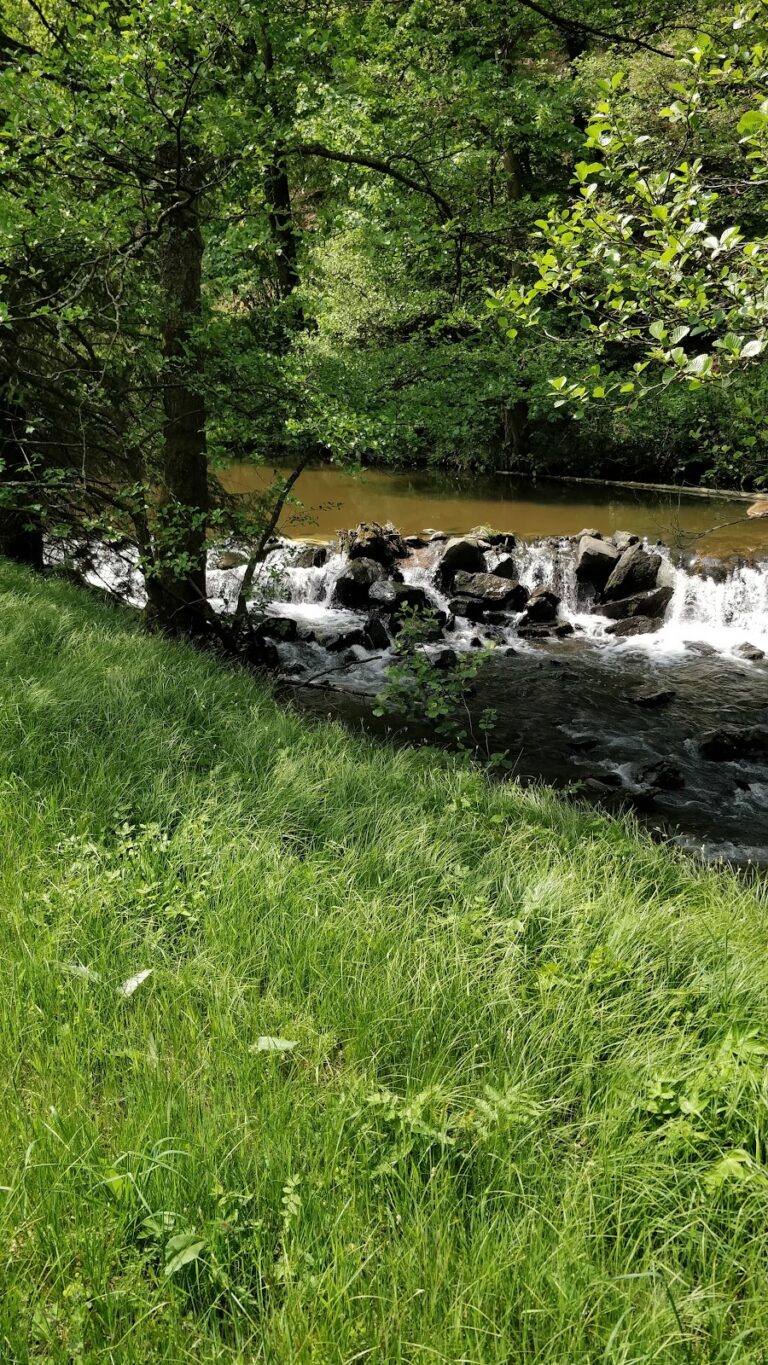
The surrounding forest had formerly belonged to a church parish before the Bayreuth margraves acquired it in 1616. From 1664, Margrave Christian Ernst developed the woodland first as a hunting park and later added a house of grottoes and fountains. This earlier development established the setting in which the Old château and the wider Hermitage complex were created.
Georg Wilhelm intended the château as a pleasure house and reserved the Hermitage for himself and a small circle of courtiers. They adopted an imagined eremitic way of life, spending the day as hermits in small houses scattered through the forest before gathering in the château’s ballroom in the evening. The arrangement combined courtly recreation with a staged retreat from ordinary court life.
Wilhelmine’s expansion
In 1735, Margrave Friedrich gave the Hermitage to his wife, Wilhelmine of Prussia, as a birthday present. A Prussian princess, writer, and patron of the arts, Wilhelmine expanded the château while preserving Georg Wilhelm’s original structure. She sought to transform the complex into a place for inner contemplation, and the enlarged rooms also reflected her artistic interests.
After Bayreuth became part of Prussia in 1791, the Prussian minister Karl August von Hardenberg spent the summer months at the Hermitage. Princess Friederike von Solms-Braunfels lived there from 1806 and reportedly arranged repairs and obtained new furniture. Napoleon, the French emperor and military leader, conquered Bayreuth later that year, and the refurnishing remained incomplete.
Royal residence and restoration
Bayreuth became part of Bavaria in 1810. The Hermitage was subsequently used several times as a holiday residence by members of the Bavarian royal family. Duke Pius spent his summers there from 1823. King Maximilian II visited with his family for several weeks in 1851 and ordered renovations. King Ludwig II stayed in the Old château during the Richard Wagner Festival in August 1876, the annual opera festival established in Bayreuth in connection with the composer Richard Wagner.
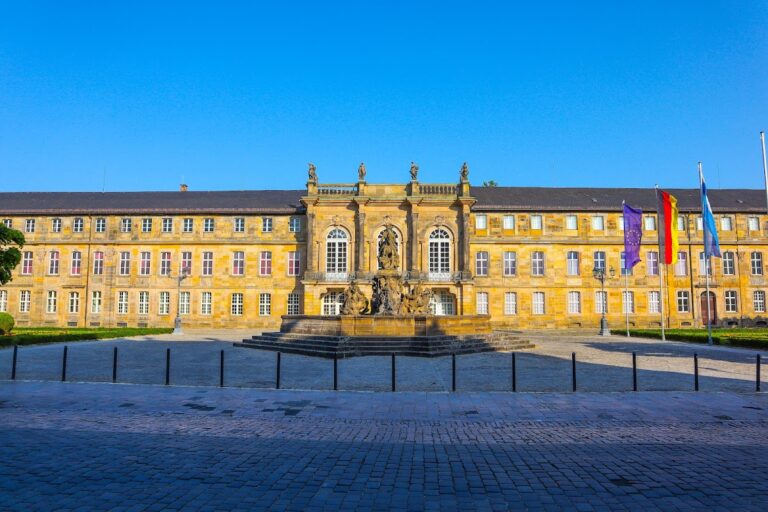
The château underwent restoration between 1928 and 1935, although some work changed its historical appearance. A further restoration campaign took place from 2005 to 2009. The Old château remains one of the two castles in the historic Hermitage Park east of Bayreuth’s Sankt Johannis district, distinct from the Old Palace in Bayreuth’s city centre.
Remains
Château complex and surrounding grounds
Four-wing complex
The Old château is arranged as a four-wing complex entered from the south through a small grotto. The north wing held the apartments of the margrave and margravine together with a ballroom. The east and west wings contained simply furnished apartments for the court’s staged hermit life. Linden trees surrounded the building, while a parterre, a formal garden laid out in geometric patterns, stood before the ballroom.
Wilhelmine enlarged the north side by adding five rooms on each side. This gave the margrave and margravine separate complete apartments. The hermit cells in the margrave’s wing were retained, while those in the women’s wing were converted into Wilhelmine’s artistic study.
Wilhelmine’s interiors
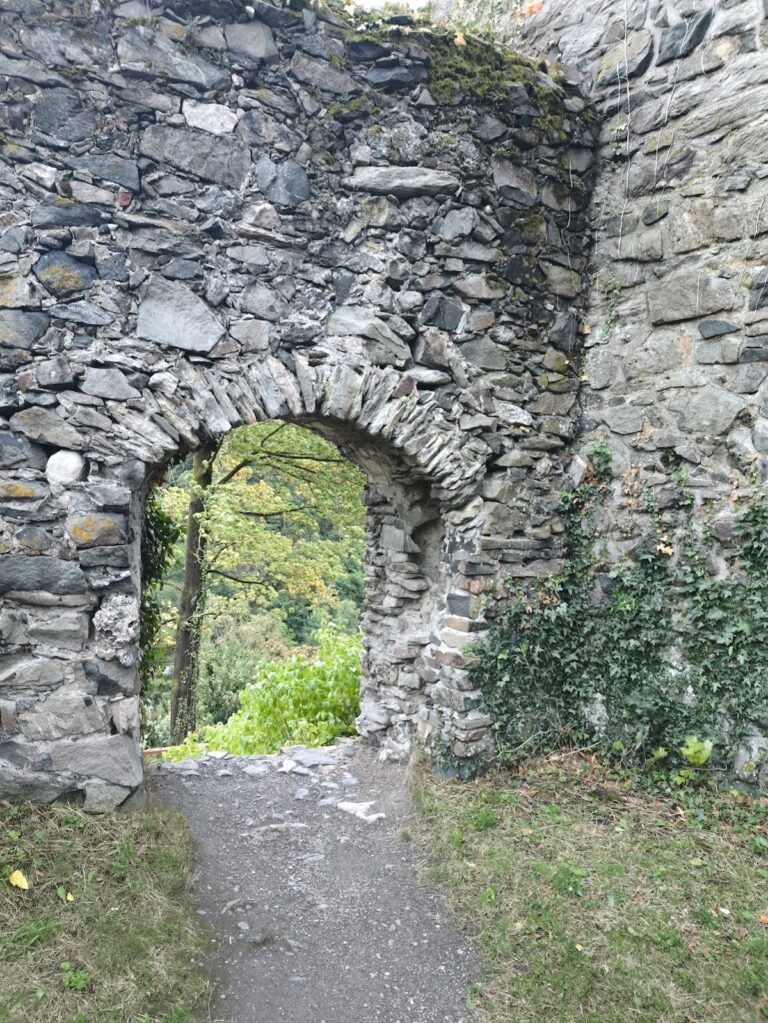
Rooms associated with Wilhelmine’s expansion include the Japanese Cabinet, the Music Room, and the Chinese Mirror Shards Cabinet. Two lacquer panels in the Japanese Cabinet were gifts from her brother Frederick the Great, King Frederick II of Prussia. Wilhelmine wrote her memoirs in the Chinese Mirror Shards Cabinet. Despite the eighteenth-century expansion, the façade deliberately preserved a ruin-like character.
Hermitage park buildings
Hermit houses
Small hermit houses were distributed through the surrounding forest as part of the Hermitage’s designed environment. They supported the courtly enactment of an eremitic life and formed part of the relationship between the château and its wooded grounds.
Monplaisir
Johann Heinrich Endrich later built a residence for himself at the edge of the park. The building subsequently became known as Monplaisir.