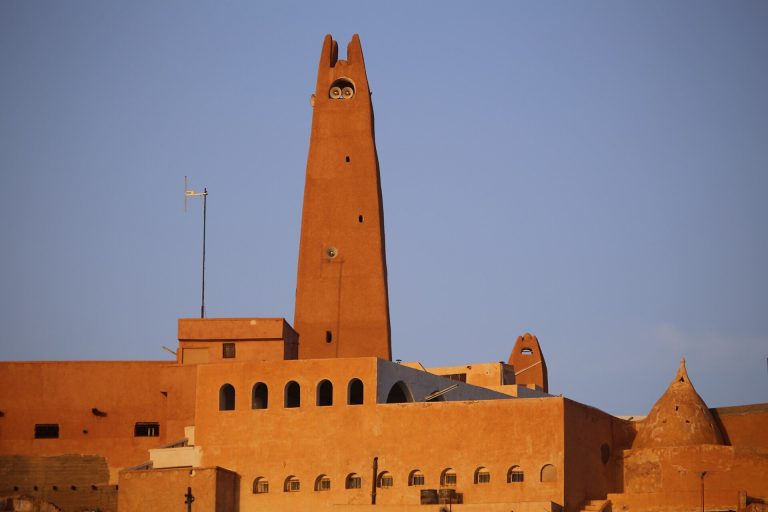
Ksar Melika: A Fortified Settlement in the Mzab Valley
Site at a Glance
- Country
- Algeria
- Primary era
- Unclassified
- Eras represented
- Unclassified
- Civilizations
- Unclassified
- Site type
- City
On this page8 sections
History
Ksar Melika is a traditional fortified settlement in Algeria’s Mzab Valley, founded in the tenth century by Mozabites, members of the region’s Ibadi Muslim community. Ibadism is a distinct branch of Islam. The town’s precise foundation date is uncertain. Its founders came from Tahert after the Fatimids, a North African dynasty, destroyed the Rustamid kingdom, an Ibadi state centered there.
Formation and religious role
Melika’s name means “the queen.” It was regarded as the leading town in the Mzab’s group of five settlements. Until the nineteenth century, it also held the valley’s religious standing as its holy city; Beni Isguen later assumed that role.
Settlement, diplomacy, and recognition
Around 1250–1251, after conflict destroyed Bounoura, Melika received the town’s population. In 1317, an Ibadi sheikh from Melika and a Chaamba sheikh from Metlili agreed that Chaamba and Mozabite families could establish themselves in both towns. The arrangement aimed to strengthen cooperation between settled communities and nomads.
In 1982, Melika and the rest of the Mzab Valley were inscribed on the UNESCO World Heritage List.
Remains
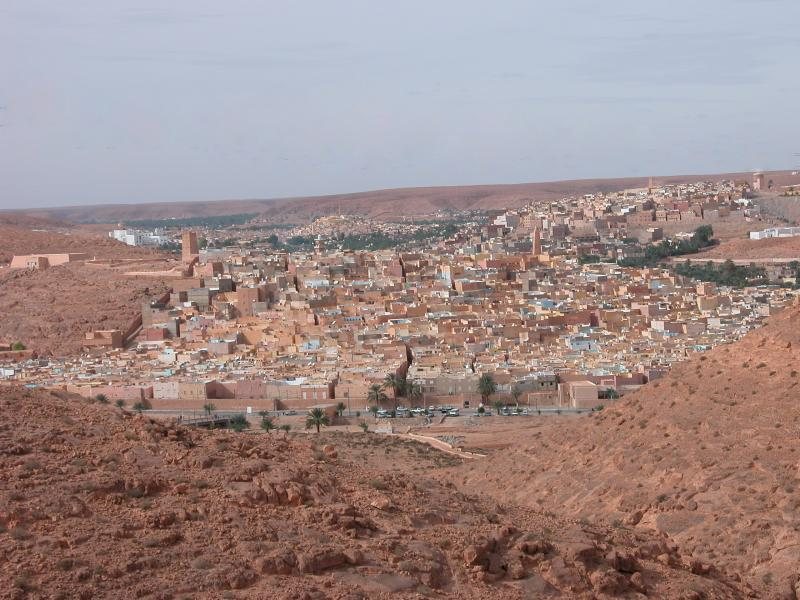
The 6.64-hectare settlement occupies a plateau overlooking the left bank of the Mzab wadi, a valley channel that may carry water seasonally. It lies equidistant between Ghardaïa and Beni Isguen.
Houses and settlement form
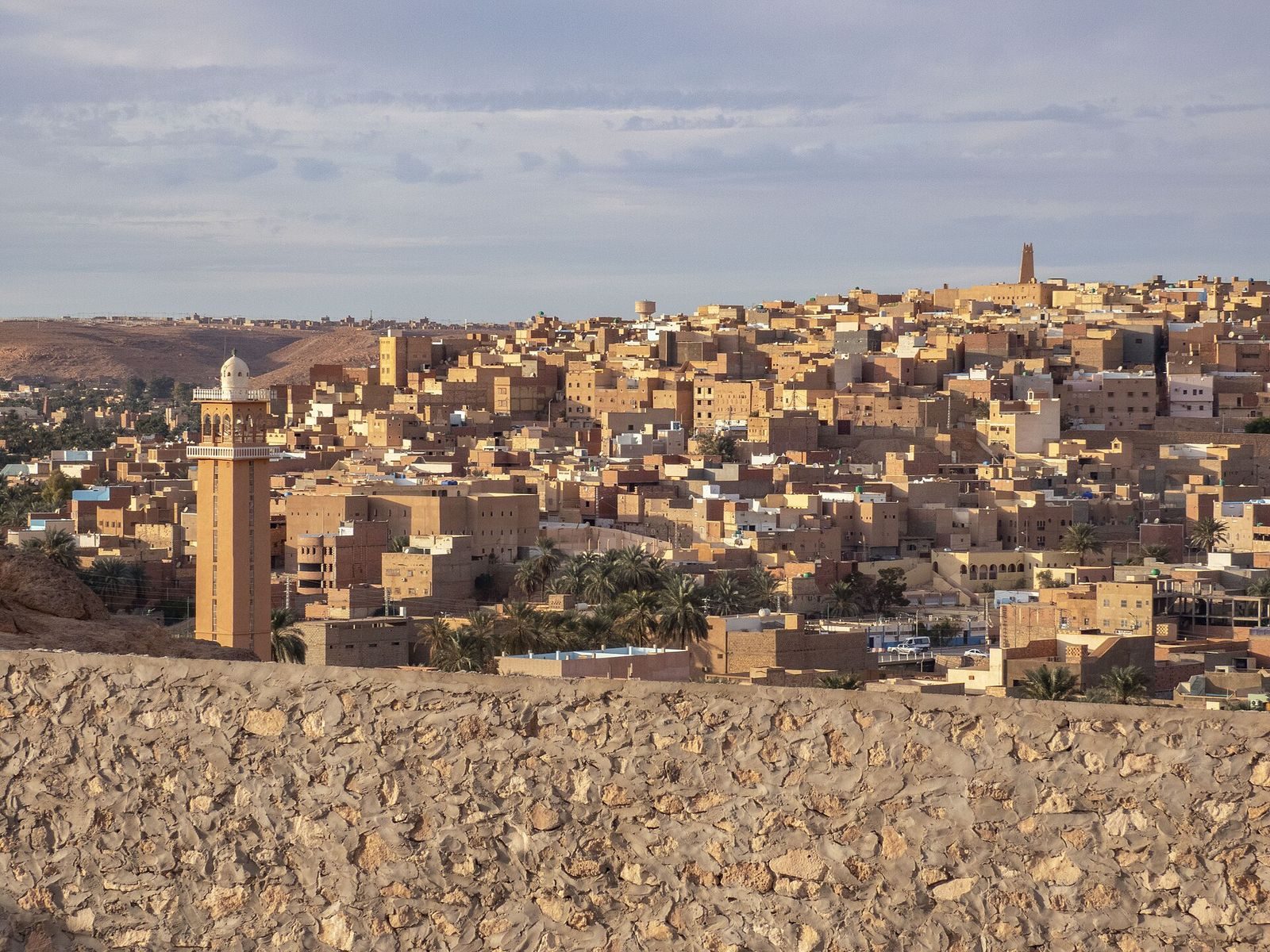
Melika is described as a miniature replica of Ghardaïa. Ochre-colored houses follow the steep slopes of a hill, while taller houses form a protective rampart. Melika is the only ksar in the valley that has not expanded, a condition attributed to the physical characteristics of its site.
Central religious and civic features
Marketplace and great mosque
At the center of town, the marketplace adjoins the great mosque, a layout that differs from those of the other settlements in the valley.
Tombs of Sidi Aïssa and his family
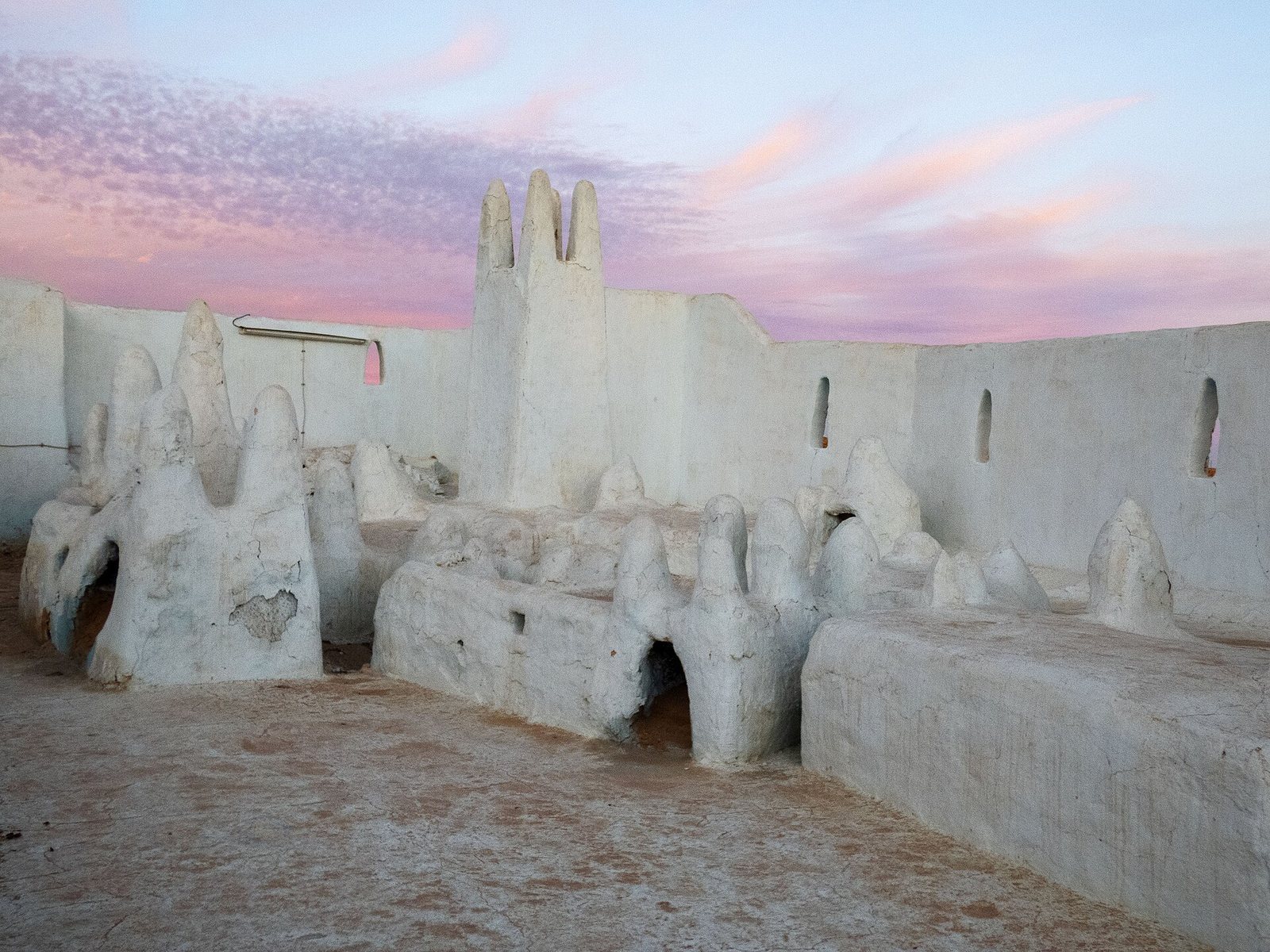
The tombs of Sidi Aïssa, a locally revered saint, and his family are associated with iduden, finger-like projections of limewashed earth that point upward.