Niukanshōfu Shrine: Guardian of Kōyasan’s Estate
Site at a Glance
- Country
- Japan
- Primary era
- Medieval
- Eras represented
- Medieval
- Civilizations
- Ashikaga shogunate
- Site type
- Religious
- Remains
- Sanctuary
On this page5 sections
History
Founding and religious role
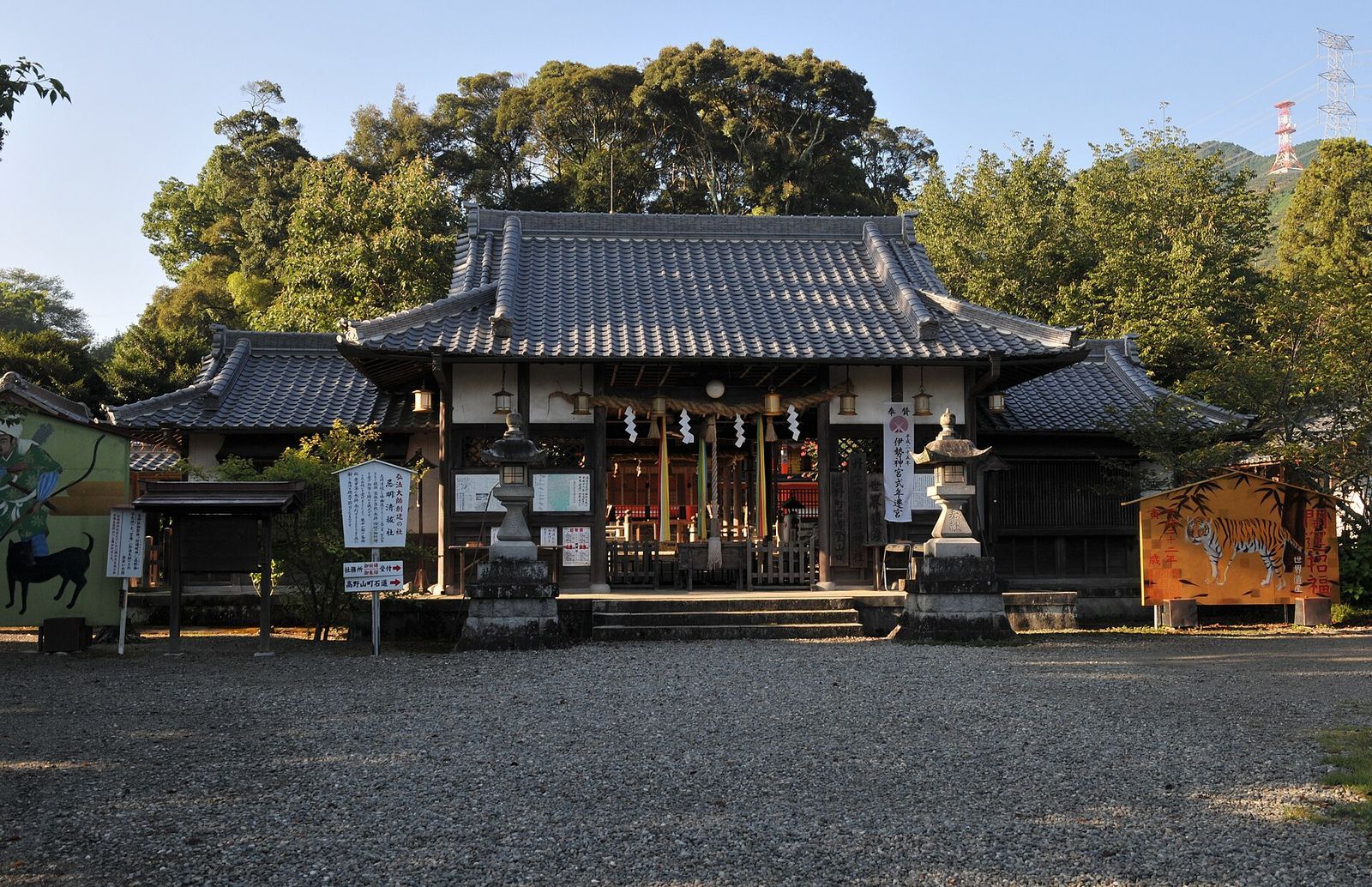
Niukanshōfu Shrine stands in Kudoyama, Wakayama Prefecture, Japan, at the entrance to Kōyasan. Kūkai, the Buddhist monk who established Shingon, a form of Japanese esoteric Buddhism, founded the shrine after Emperor Saga granted him Kōyasan in 816. Its main sanctuary reflects sixteenth-century rebuilding and follows Kasuga-zukuri, a traditional Japanese shrine style. The shrine later served as guardian of Kōyasan’s estate.
Tradition recounts that, while searching for a place for his Buddhist center, Kūkai entered Uchi District in Yamato, an ancient province in the area of present-day Nara Prefecture. Kōyamiko-no-Ōkami, a guardian deity of Shingon Buddhism, appeared to him as a hunter and directed him to Kōyasan in Kii. The deity sent a white dog and a black dog to guide him. After receiving the mountain, Kūkai established the shrine to honor Kōyamiko-no-Ōkami and the deity’s mother, Niutsuhime-no-Ōkami.
The shrine also hosted prayers to heavenly and benevolent deities. It was regarded as a connection between heaven and the kami, a Shinto deity or sacred presence. The original four deities were Niutsuhime-no-Ōkami, Kōyamiko-no-Ōkami, Ōgetsuhime-no-kami, associated with food, and Ichikishimahime-no-Ōkami, associated with water. Three additional shrines honored Amaterasu, the sun deity; Hachiman, a protective deity associated with warriors and identified with Emperor Ōjin; and Kasuga’s Ame-no-Koyane, associated with ritual. Together, these were known as the Seven Shrine Deities. The shrine’s name later changed to the Great Deities of Niu’s Seven Shrines and then to Niu Shrine.
Kōyasan’s administration and estate
A Buddhist temple was built below the shrine’s entrance steps to serve as Kōyasan’s administrative center. Later known as Jison-in, it had an altar to Maitreya, the future Buddha. That altar and the shrine’s altar to its deities were collectively called Jison-in.
The shrine’s role as guardian of Kōyasan’s estate appears in a document dated 1396, which also refers to the sanctuary’s seven shrines. Other records mention the shrines of the Twelve Princes and the 120 Guardian Deities. A shrine-history tradition dates the enshrinement of Niutsuhime-no-Ōkami and Kōyamiko-no-Ōkami to 810–824, during Kūkai’s lifetime, and places the Twelve Princes and 120 Guardian Deities at about the same time.
Relocation and later changes
The shrine-history tradition dates the enshrinement of the Kehi and Itsukushima deities to 1469–1487. It also relates that a flood of the Kinokawa River submerged the old precinct sometime between 1532 and 1555, after which four shrines were relocated.
The shrine separated from Jison-in during the Meiji period (1868–1912). In 1910, shrines in Kudoyama and Jison-in were consolidated into it, and it received the rank of district shrine in Japan’s prewar shrine system. The present name, Niukanshōfu Shrine, was adopted in 1946.
The main sanctuary became a National Important Cultural Property in 1965. The precinct forms part of a National Historic Site covering the stone-marker route to Kōyasan, designated in 1977 and extended in 1997. The wider route designation was renamed “Kōya Pilgrimage Routes” in 2015. In 2004, the main sanctuary was registered as a monument and the precinct as an archaeological site within the UNESCO World Heritage property “Sacred Sites and Pilgrimage Routes in the Kii Mountain Range.”
Remains
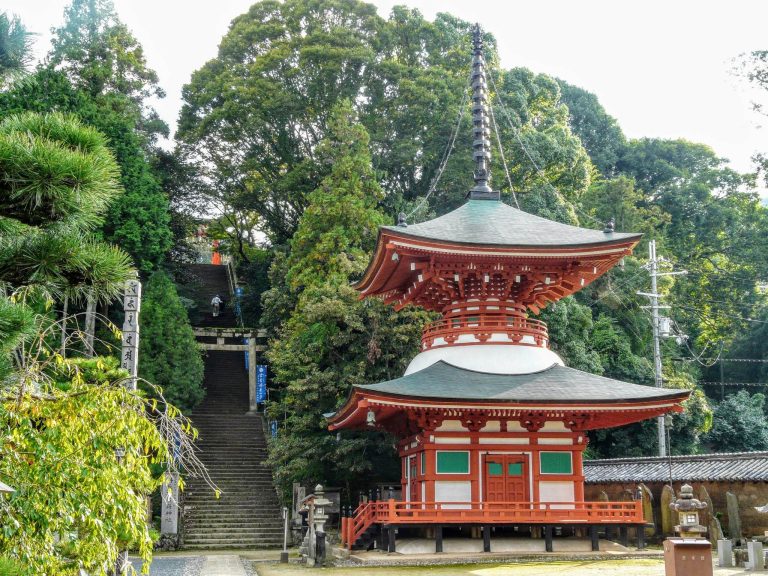
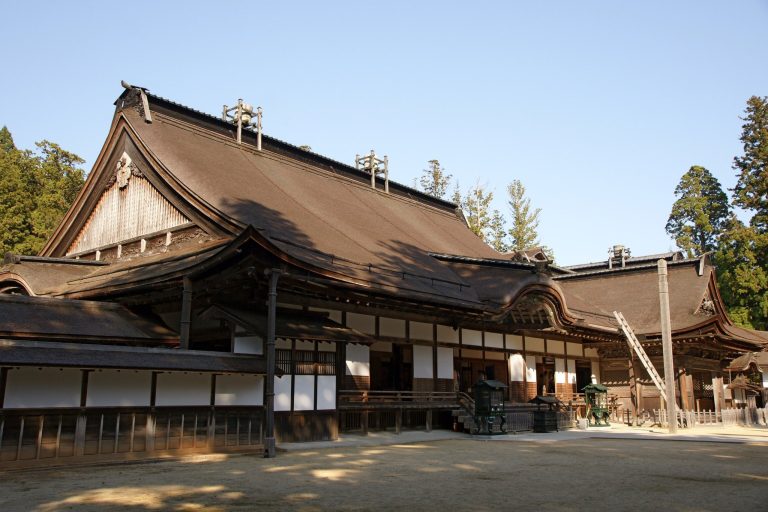
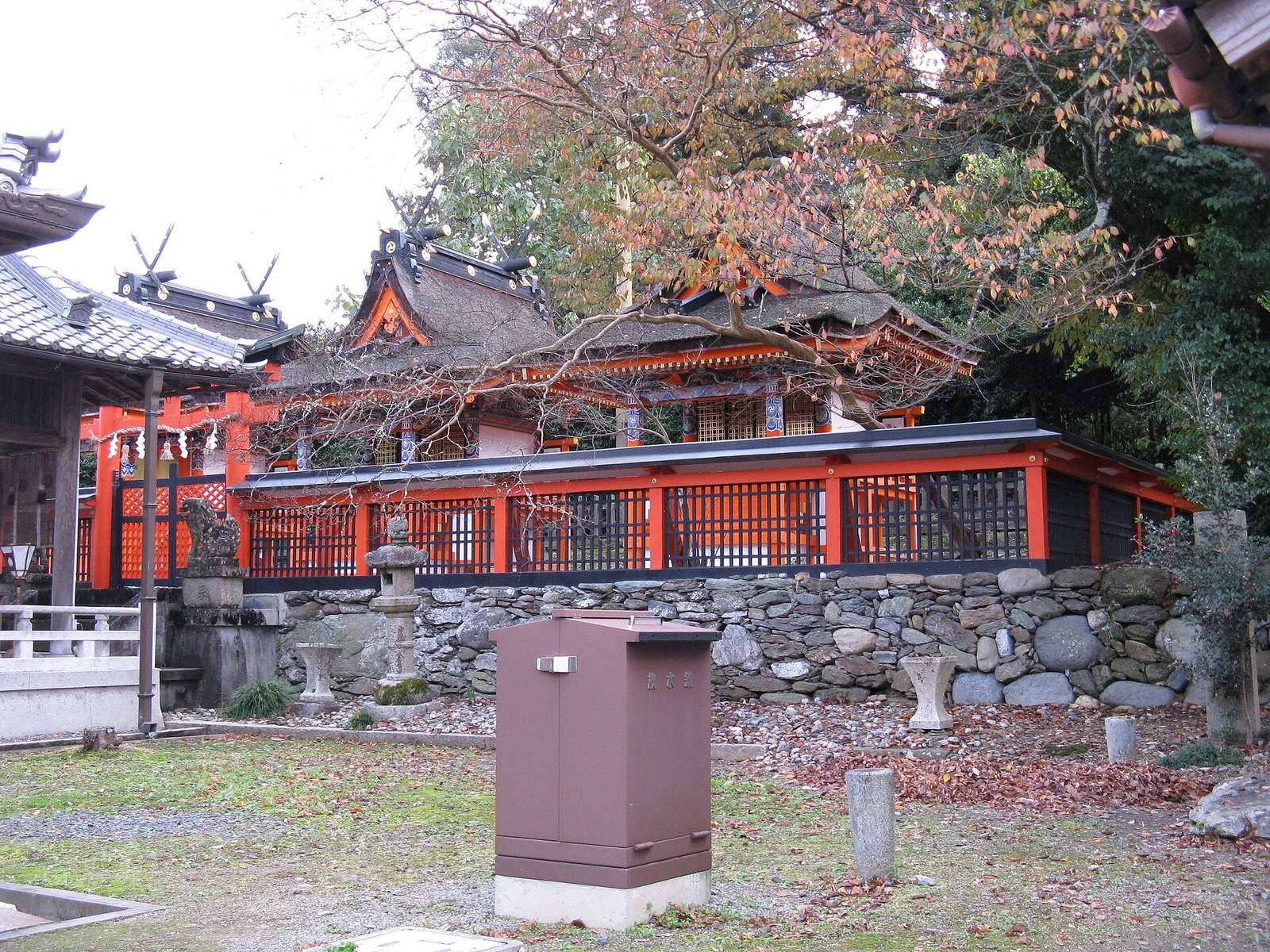
The shrine occupies the southern part of the Jison-in settlement. Its main sanctuary consists of three buildings, each one structural bay wide. Two were rebuilt in 1517 and the third in 1541. Their roofs use layers of cypress bark, and the buildings preserve the local shrine-building style in good condition.
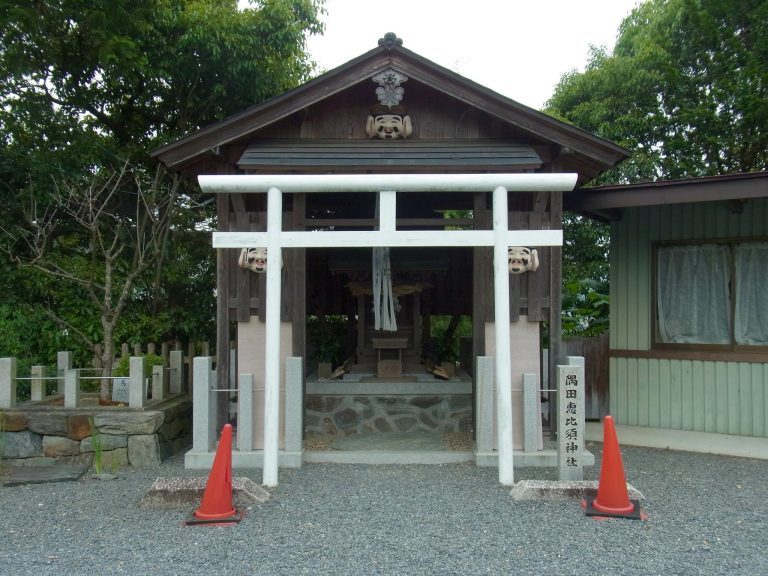
The three buildings house different deities. The first contains Niutsuhime-no-Ōkami, Kōyamiko-no-Ōkami, and Amaterasu; the second, Ōgetsuhime-no-kami, Hachiman, and Ame-no-Koyane; and the third, Ichikishimahime-no-Ōkami. The associated group also includes four miniature shrine structures and two ridgepole tablets. Steps descend from the northern side of the precinct toward Jison-in, with the pilgrimage route’s 180th stone marker partway down.