Sant’Emidio Rosso: A Neoclassical Church in Ascoli Piceno
Site at a Glance
- Country
- Italy
- Primary era
- Early Modern
- Eras represented
- Early Modern
- Civilizations
- Papal States
- Site type
- Religious
- Remains
- Church
On this page4 sections
History
Sant’Emidio Rosso is a Catholic church in Borgo Solestà, Ascoli Piceno, Italy, completed in 1633 in a Neoclassical style that revived forms associated with ancient Greek and Roman art. Dedicated to Saint Emidius, regarded as Ascoli Piceno’s protector, it commemorates the place associated with his beheading.
The martyrdom tradition and shrine
The traditional account of the saint’s life says that after his beheading he walked, carrying his head, to caves where he and his companions had sheltered during persecutions. The caves became their burial place, and an oratory there was converted into the Tempietto di Sant’Emidio alle Grotte in the first half of the eighteenth century.
The stone associated with Emidius’s beheading was revered as a relic. Early Christians enclosed it in a small devotional shrine, which protected the stone for centuries and became a lasting memorial to the saint. A historical reconstruction places the shrine in the care of cathedral canons, clergy belonging to the cathedral chapter, around 1500. In 1562 they installed a protective grille, paved the shrine and plastered parts of its walls. They improved the entrance paving with stones they supplied in 1571, then carried out more substantial work between 1592 and 1594, perhaps bringing the shrine to its final form. The initial octagonal structure has been tentatively attributed to the Lombard craftsman Marco Bonera.
Completion of the church
The church’s construction began before 1633, although its starting date is unknown. An inscription credits Sigismondo Donati da Correggio, bishop and prince of Ascoli, with building and dedicating the church at the martyrdom site. Its date reads 1623, corrected to 1633. A tentative attribution identifies stoneworker Fulgenzio Morelli as the person Donati commissioned to create the church in its present form. Morelli had died around the middle of the 1620s, leaving the artistic authorship unresolved. Sant’Emidio Rosso remains a focus of popular devotion in the city.
Remains
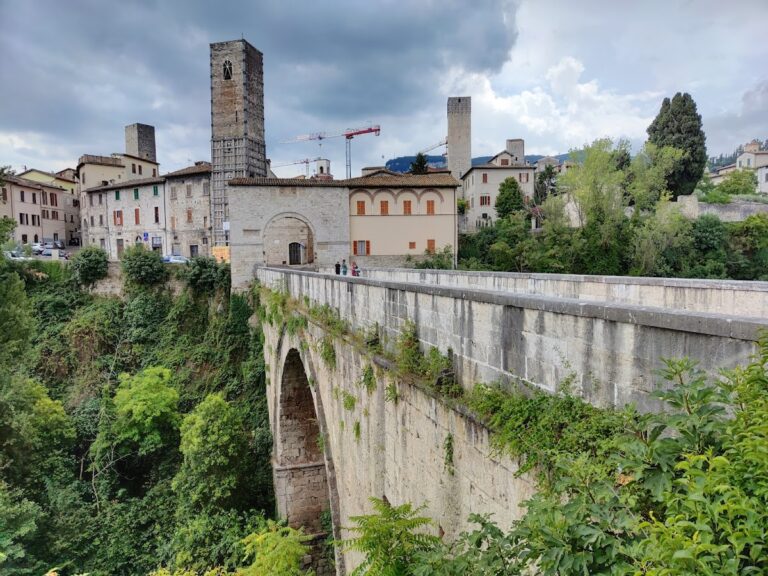
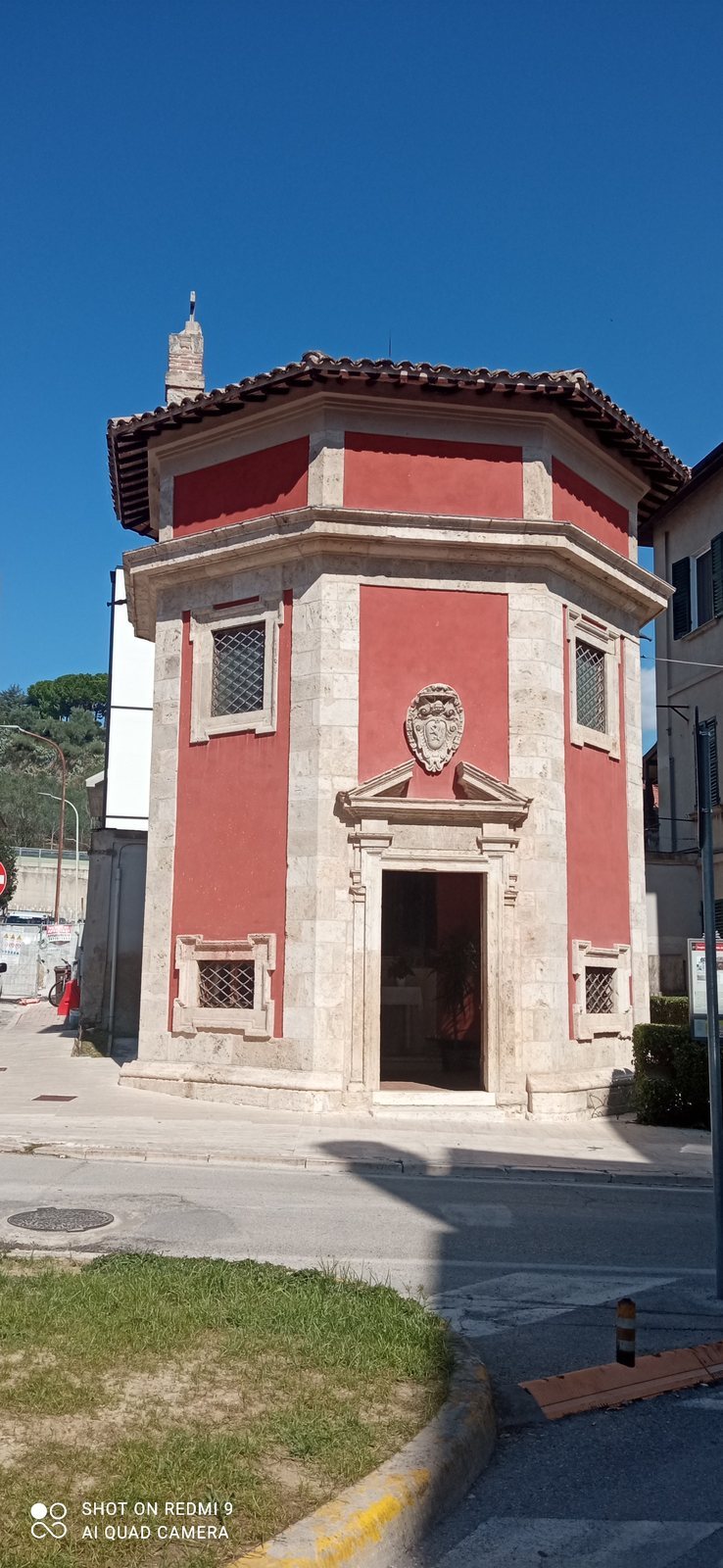
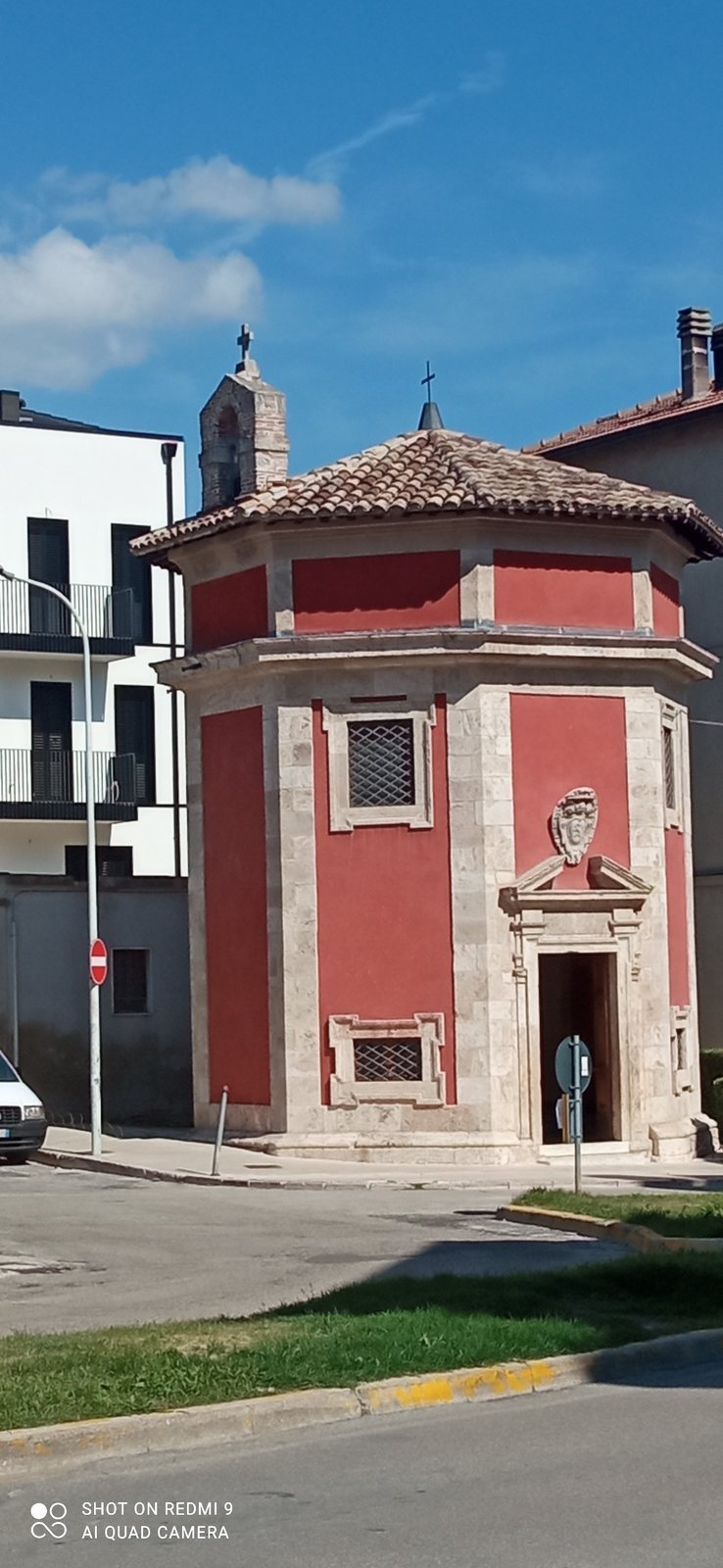
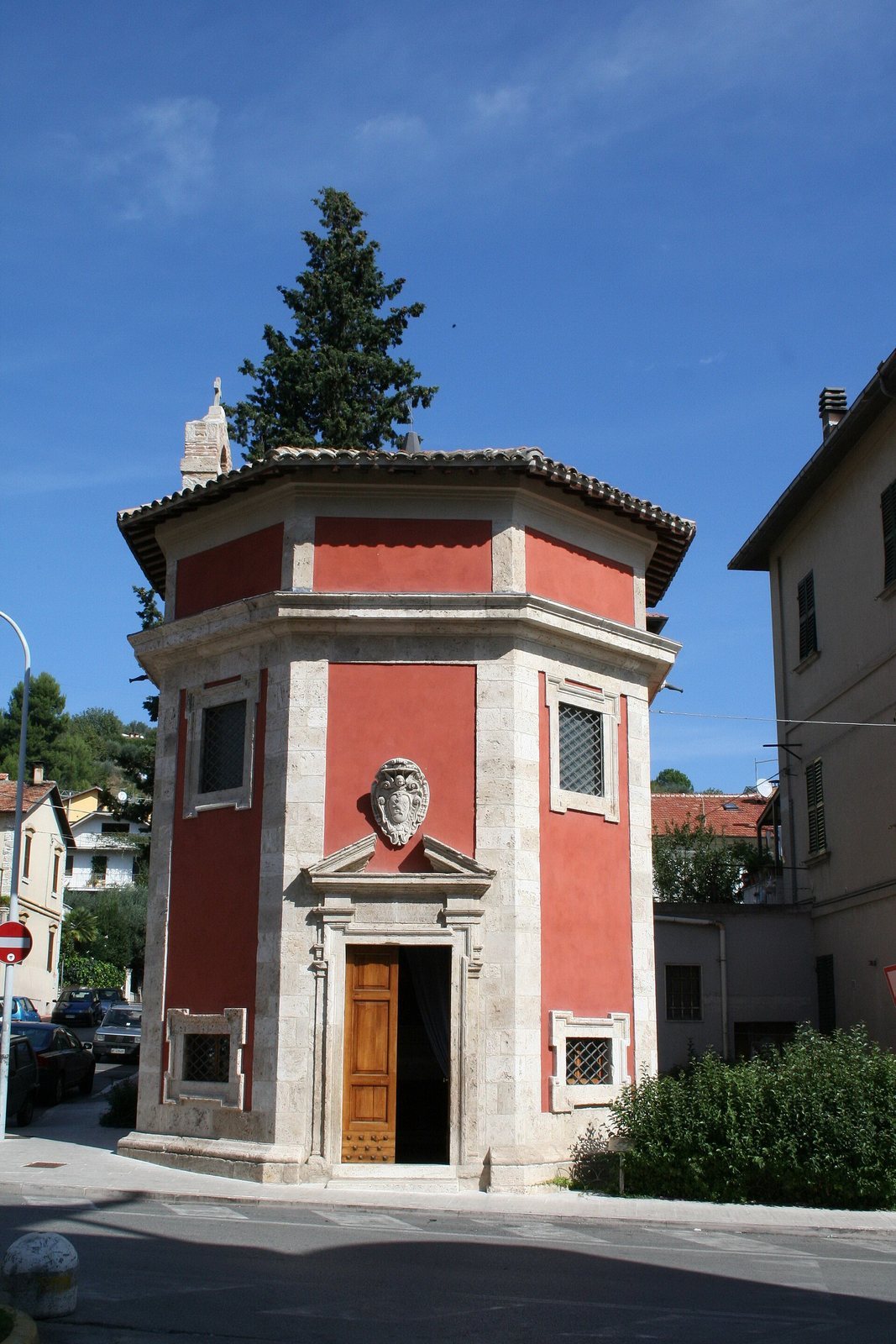
Outside Ascoli Piceno’s former walls, in the Porta Solestà district and not far from the Roman bridge and Fountain of Saint Emidius, the small church has an octagonal plan, windows and a smooth base of travertine, a limestone formed by mineral springs and used as building stone. Its exterior and interior are painted red, a color that recalls the martyr’s blood.
A Latin inscription is set on the portal, with Bishop Donati’s coat of arms above it on the façade. Inside, a single altar stands over the stone associated with Emidius’s beheading, traditionally said to be where he placed his head. A modest painting of the beheading appears above the altar, within a painted backing that uses illusionistic effects to suggest depth, in a style associated with eighteenth-century Ascoli.