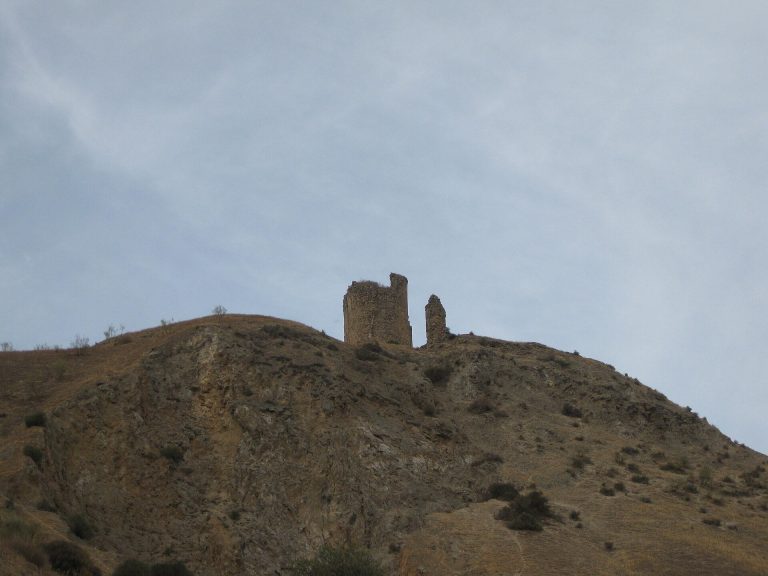
Dolmen of Menga: A Neolithic Passage Tomb in Antequera, Spain
Site at a Glance
- Country
- Spain
- Primary era
- Stone Age
- Eras represented
- Stone Age
- Civilizations
- Unclassified
- Site type
- Burial
- Remains
- Tomb
On this page12 sections
History
The Dolmen of Menga is a Neolithic passage tomb at Antequera, Spain, built around 3750–3650 BCE. The Neolithic was the later part of the Stone Age, associated in many regions with farming and settled communities. A passage tomb is a burial monument with a corridor leading into a chamber. Menga’s chamber has been interpreted as a possible burial place for ruling families. Built from very large stones, it is among Europe’s largest known ancient monuments of this kind.
Early references and traditions
The earliest known written reference connected with Menga dates to 1530, when the Bishop of Málaga licensed a small place of prayer on a nearby estate. The monument appeared in historical and artistic publications during the seventeenth and eighteenth centuries. A book published in 1842 described Menga as a tomb and also referred to another nearby tomb with a blocked entrance.
The alternative name Cueva de Menga, meaning Menga Cave, can be misleading: Menga is a structure built from stones, not a natural cave. One proposed explanation links its name to Dominga, a woman said to have discovered the tomb and later brought plague to Antequera. In this account, De Menga is a rearrangement of her name.
Nineteenth-century investigations
In 1847, architect Rafael Mitjana y Ardison published the first scientific monograph on Menga. He described digging in the passage and beneath a large stone in the chamber in a search for urns or human remains. These excavations found neither in the passage nor in the feature now called the well. Mitjana also reported probing the well to a depth of 20–26 feet and produced the first drawing of the entire monument.
A later nineteenth-century writer criticized Mitjana’s descriptions and listed Arab and Roman coins, as well as stone-working tools, among finds from the well. Other nineteenth-century examinations of the tomb uncovered the skeletons of several hundred people. In 1886, French prehistorian Émile Cartailhac published new drawings and other graphic records of Menga. Further architectural drawings followed in 1899, while a proposed building at the entrance was never constructed.
Modern research and protection
Studies published in 1922 and 1943 considered Menga alongside the nearby Dolmen of Viera, the Tholos of El Romeral, a circular, often domed tomb, and cultural-layer remains at Cerro del Marimacho. Another monograph appeared in the 1960s. Since the early twenty-first century, researchers from Spanish and international universities have taken part in a broad project on the region’s prehistory.
In a 2001 publication, archaeoastronomer Michael Hoskin reported Menga’s unusual orientation after measuring more than 2,000 dolmens around the Mediterranean. The relationship between Menga, Peña de los Enamorados, a mountain near Antequera, and the nearby Tholos of El Romeral has been interpreted as an example of landscape monumentalization: natural landmarks are understood as monuments, while built structures are seen as integrated with their surroundings. In 2018, researchers at the University of Seville published a high-resolution study of schematic paintings at the Matacabras rock shelter. They placed the paintings in the Neolithic, probably at least as early as the beginning of the fourth millennium BCE, and identified visual and symbolic links with Menga. The shelter may have served as a place of reference for Neolithic populations and possibly earlier communities.
Conservation and interpretation work carried out since the mid-twentieth century has not changed Menga’s structure or appearance. The tomb became a National Monument in 1886, and the designation was made jointly with the Dolmen of Viera in 1923. In 2009, Menga, Viera, and the Tholos of El Romeral formed part of an archaeological zone protected as a Site of Cultural Interest, a Spanish heritage designation. The three monuments were included in the UNESCO World Heritage Site known as the Antequera Dolmens Site in 2016.
Remains
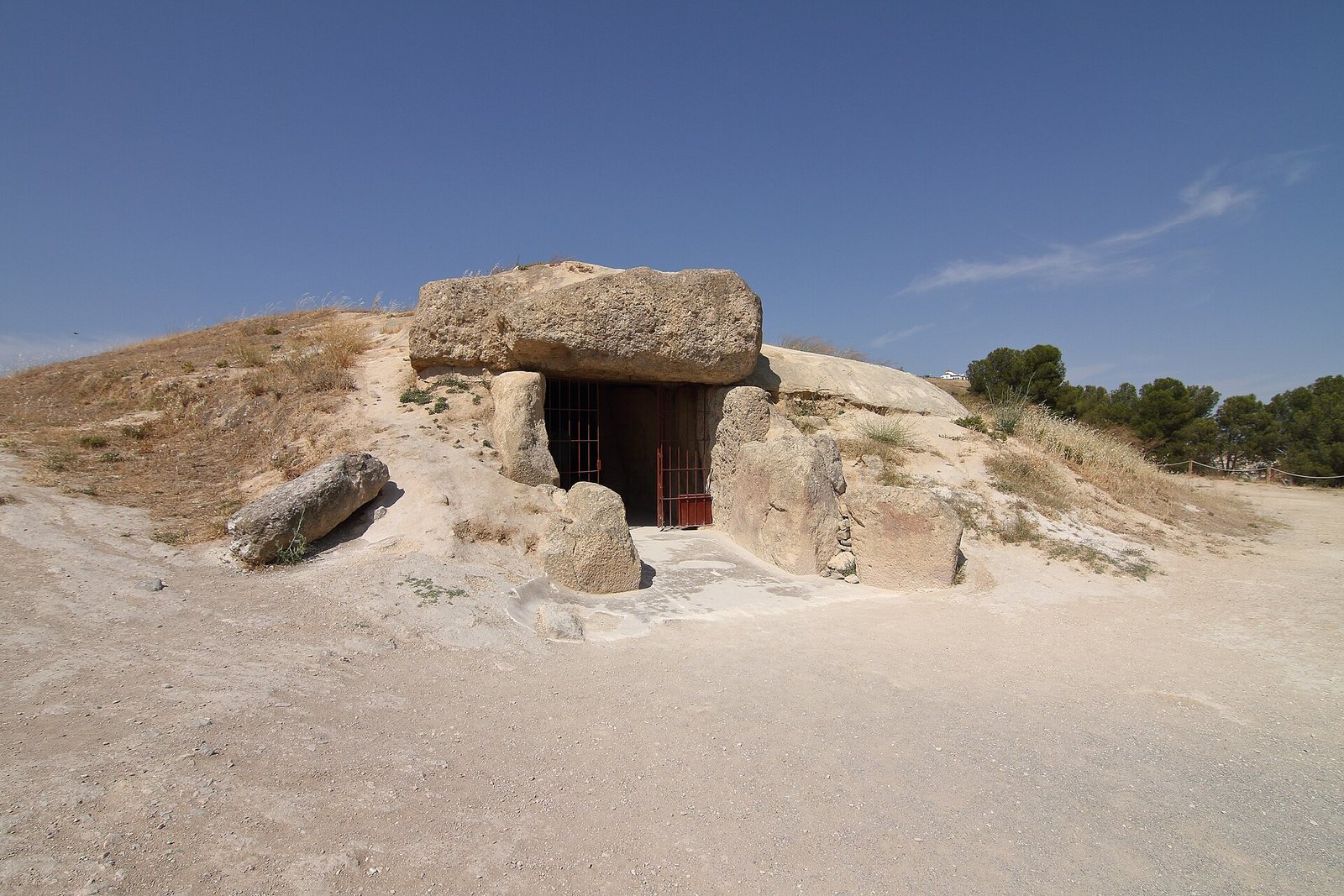
Menga is a covered-gallery tomb made from upright stones and horizontal roof slabs, arranged as an entrance, passage, and large burial chamber. Its overall dimensions are about 27.5 metres long, 6 metres wide, and 3.5 metres high, and its construction uses 32 large stones. The monument stands in the first enclosure of the Antequera Dolmens Site, in the area known as the Field of the Mounds. It is about 70 metres from the Dolmen of Viera and four kilometres from the Tholos of El Romeral.
Structure and setting
Entrance and passage
The square entrance is formed by two successive wall slabs. Its thick roof stone remains exposed and tilts markedly to the left. Beyond it, the passage runs in a roughly straight but irregular line for about 5 metres. It is approximately 3.5 metres wide and 2.7 metres high.
Burial chamber and well
The passage continues directly into an irregularly oval chamber about 19.5 metres long and an average of 6 metres wide. Four roof slabs rest on three intermediate pillars, an unusual arrangement in European stone-tomb construction. The largest, final roof slab weighs about 180 tonnes. Beyond the last pillar, a large stone stands opposite the entrance; seven more line the chamber’s sides. The floor is compacted earth, and small stones pack gaps between and behind the larger slabs.
A narrow, deep well cut into the rock lies at the rear of the chamber, beyond the last pillar. It is about 1.5 metres across and 17.5 metres deep, with a water source at the bottom.
Mound
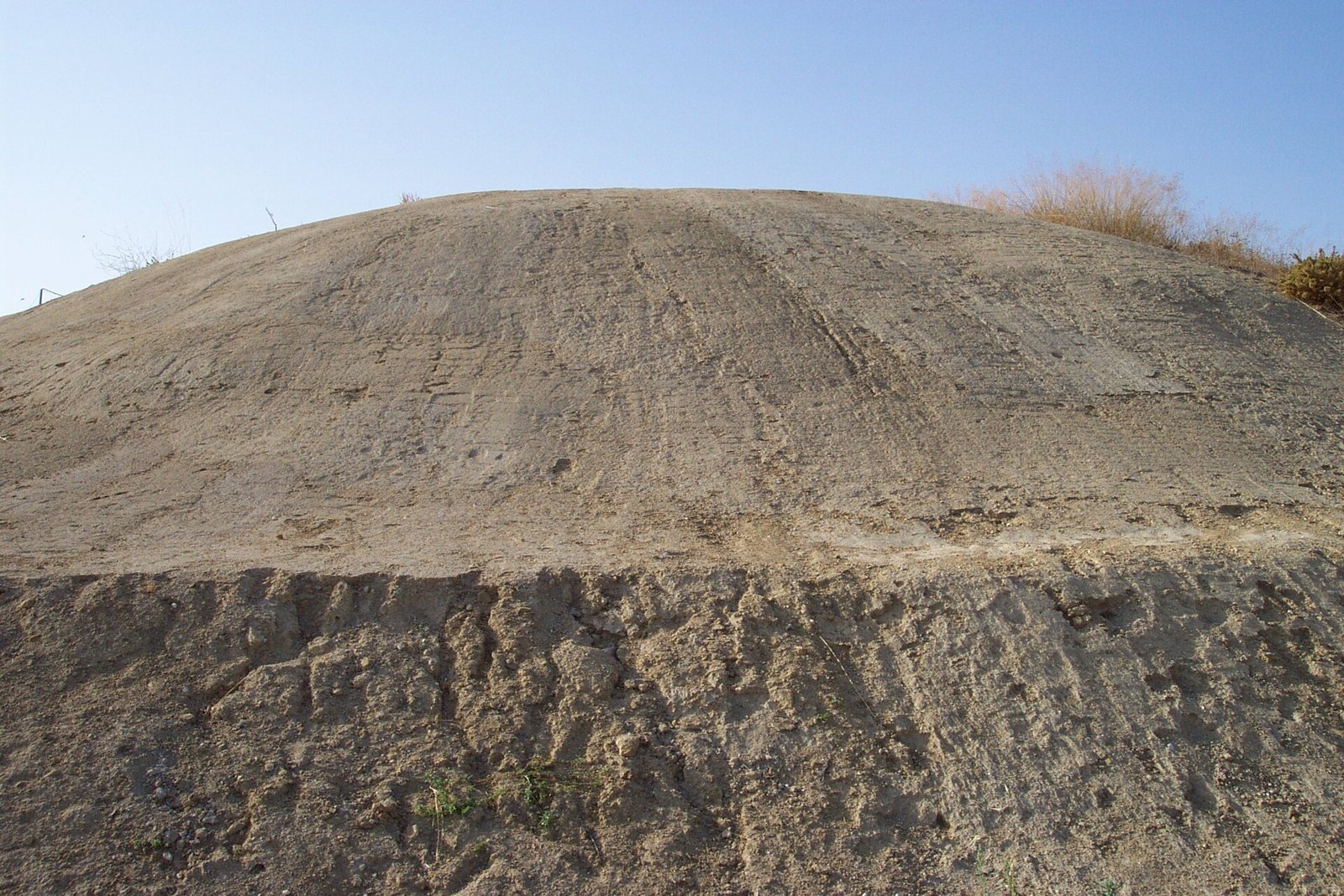
Stone rubble and earth cover the tomb beneath a mound whose stated diameter is 50 metres. Georadar surveys led by University of Southampton professor Simon Key, together with local archaeological excavations, have prompted a proposal that the mound may once have extended to 120 metres in diameter.
Engravings and alignment
Engraved stones
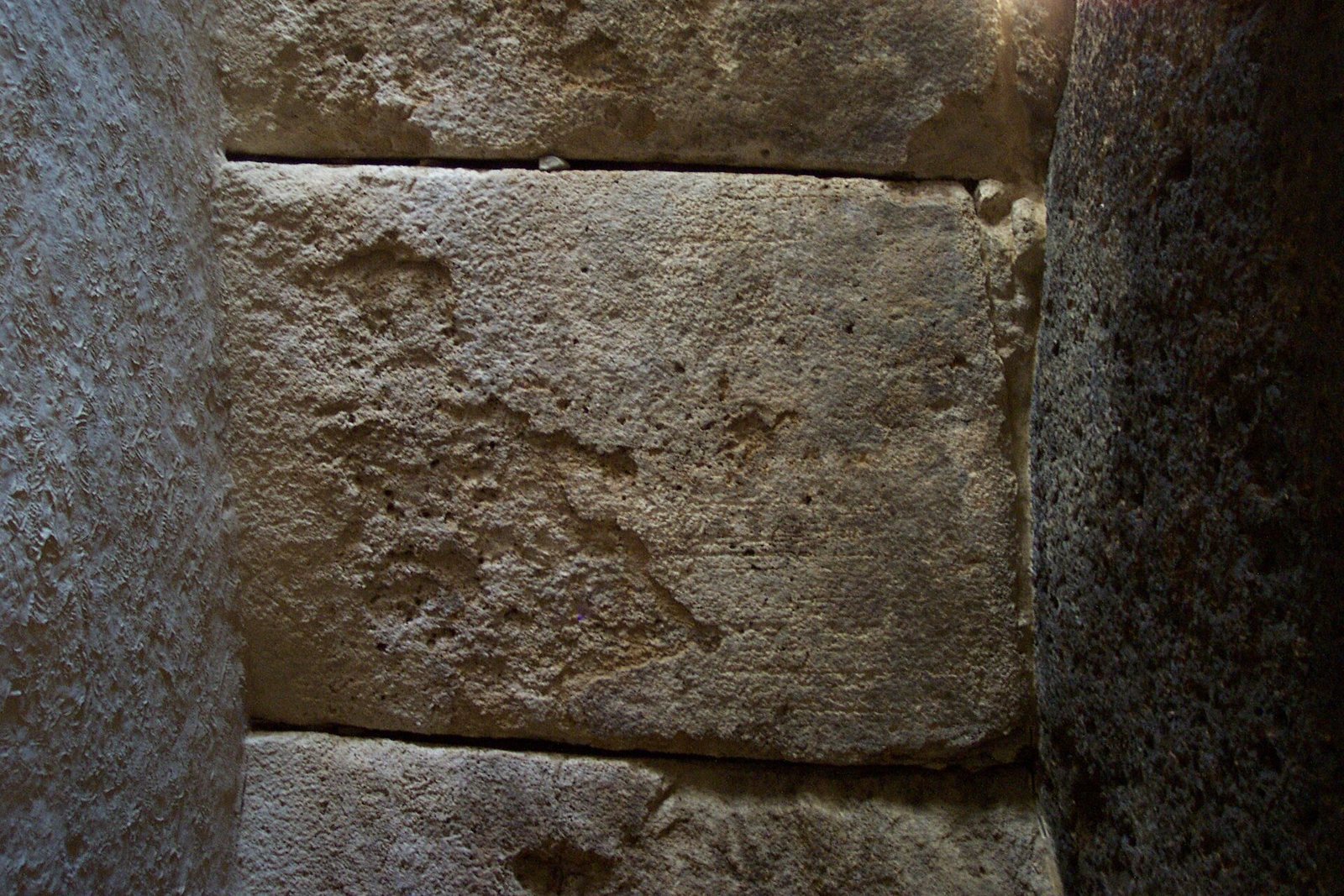
The first upright stone of the passage bears marks interpreted as human forms, including cross- and star-shaped designs. In 2006, archaeologist Juan Manuel Munoz Gambero discovered inscriptions on an entrance stone and assigned them an age of 4,000–5,000 years.
Orientation toward Peña de los Enamorados
Menga’s central axis points northeast toward Peña de los Enamorados and intersects the rock at the Matacabras shelter on the mountain’s northwest face. The tomb faces north of the direction of sunrise at the summer solstice. It may be the only known tomb with this orientation in its European cultural context.