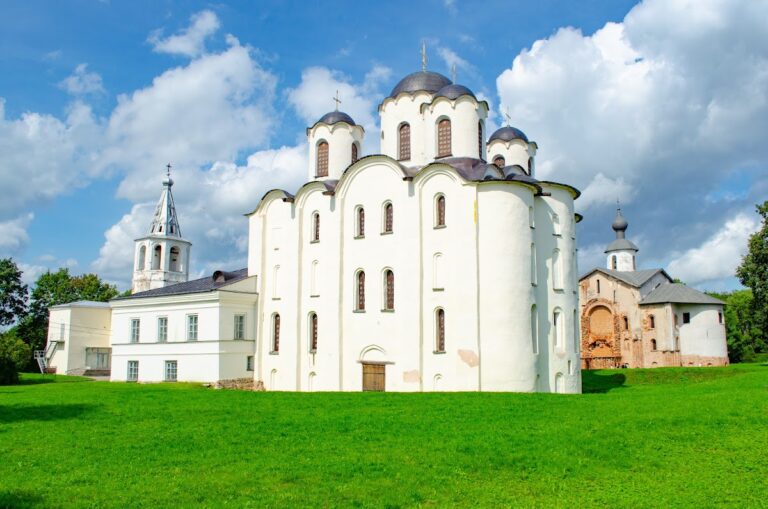
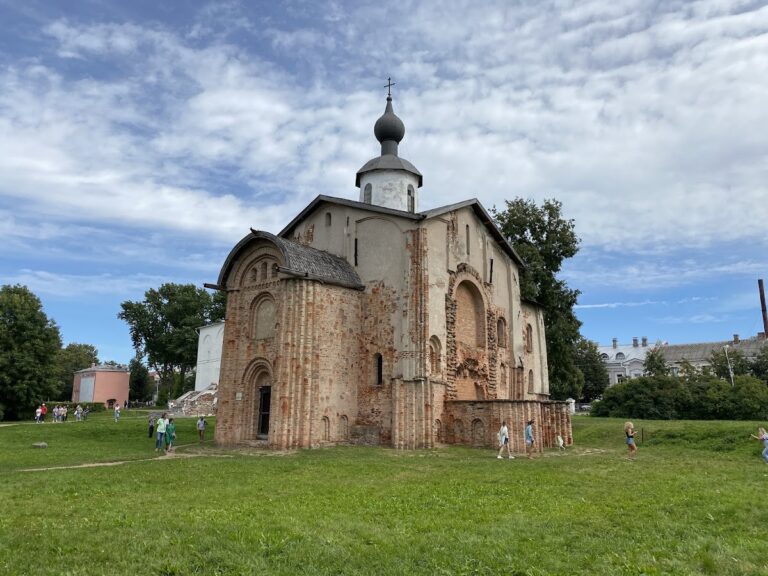
Saviour Church on Nereditsa: A Medieval Orthodox Church in Novgorod
Site at a Glance
- Popularity
- Very High
- Country
- Russia
- Primary era
- Medieval
- Eras represented
- Medieval
- Civilizations
- Novgorod Republic
- Site type
- Religious
- Remains
- Church
On this page8 sections
History
Foundation and medieval use
The Saviour Church on Nereditsa is a medieval Orthodox church in Spas-Nereditsy, Novgorod Oblast, Russia. Prince Yaroslav Vladimirovich of Novgorod initiated its construction in 1198, and the work probably took less than a year. Dedicated to the Transfiguration of Christ, a Christian feast recalling the revelation of Christ’s divine glory to his disciples, the church later became Yaroslav’s burial place, as he had requested.
Tradition connected the church’s foundation with the deaths of Yaroslav’s sons Izyaslav and Rostislav. However, the church was laid on June 8, 1198, before Rostislav died on June 20 and Izyaslav on July 9. The church’s feast is observed on August 6/19. The name Nereditsa has been tentatively linked to the site’s position beyond the Slovene End, one of Novgorod’s historic districts.
Monastery and prewar records
A men’s monastery associated with the church stood on nearby Gorodishche and was subordinate to Yuriev Monastery, an Orthodox monastery near Novgorod. First recorded in 1322, it was plundered by Swedish forces in 1611 and dissolved in 1764.
Artists and researchers copied and photographed the church’s paintings before World War II. Nikolai Martynov made watercolor copies in 1862; they were exhibited in Paris in 1867 and received a diploma and bronze medal. Architect Pyotr Pokryshkin led a major repair and restoration in 1903–1904. Artist Nicholas Roerich criticized the work and urged artists to record the church’s art, warning that it was at risk of disappearing. L. M. Brailovsky made another cycle of copies in 1904, an expedition photographed the frescoes in 1910, and N. Tolmachevskaya and L. Durnovo made further copies in 1918.
War, restoration, and later use
The church stood on the front line during World War II. Soviet forces used observation posts on its bell tower and dome, while German artillery shelled the area. The church was destroyed between August and October 1941, and the nearby village of Nereditsa was burned.
Conservation began in 1944. Novgorod’s specialist restoration workshops excavated and stabilized the ruins from 1944 to 1947 under S. N. Davydov. L. M. Shulyak led early excavation, recovery of fresco fragments, and conservation. Architect V. N. Zakharova surveyed the ruins, and restorer N. V. Pertsev continued conservation until 1954. G. M. Shtender completed a revised restoration plan in 1957, and the church’s architectural form was rebuilt by 1958. Most of its paintings could not be restored. Further architectural restoration and archaeological work took place from 2001 to 2004, when comprehensive architectural restoration was completed.
In 1992, the church became part of the UNESCO World Heritage listing for the Historic Monuments of Novgorod and Surroundings. It is also a federally significant cultural-heritage property in Russia. The church now functions as a museum, with services held occasionally.
Remains
Church structure
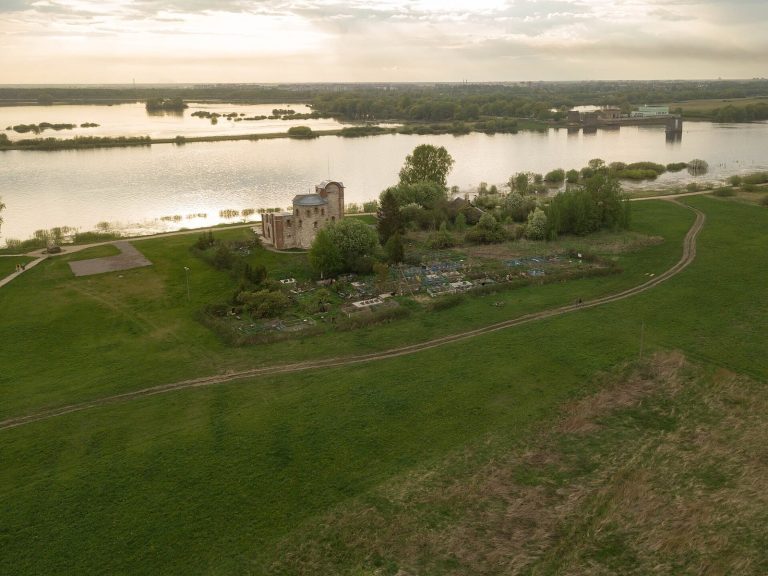
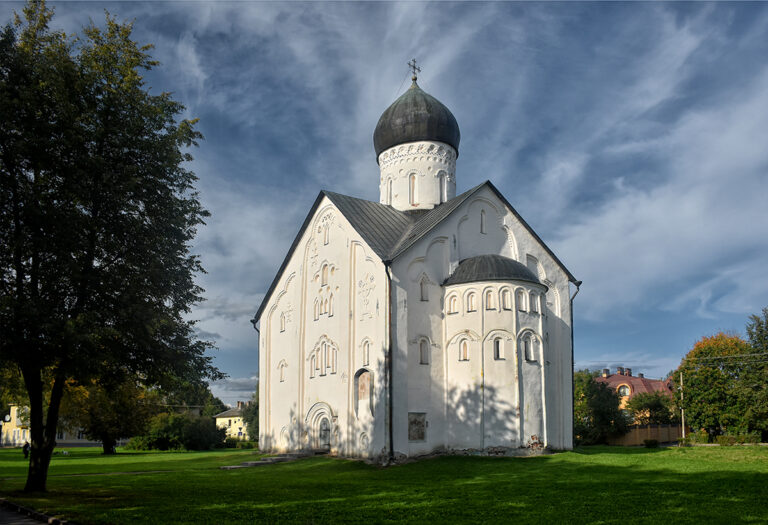
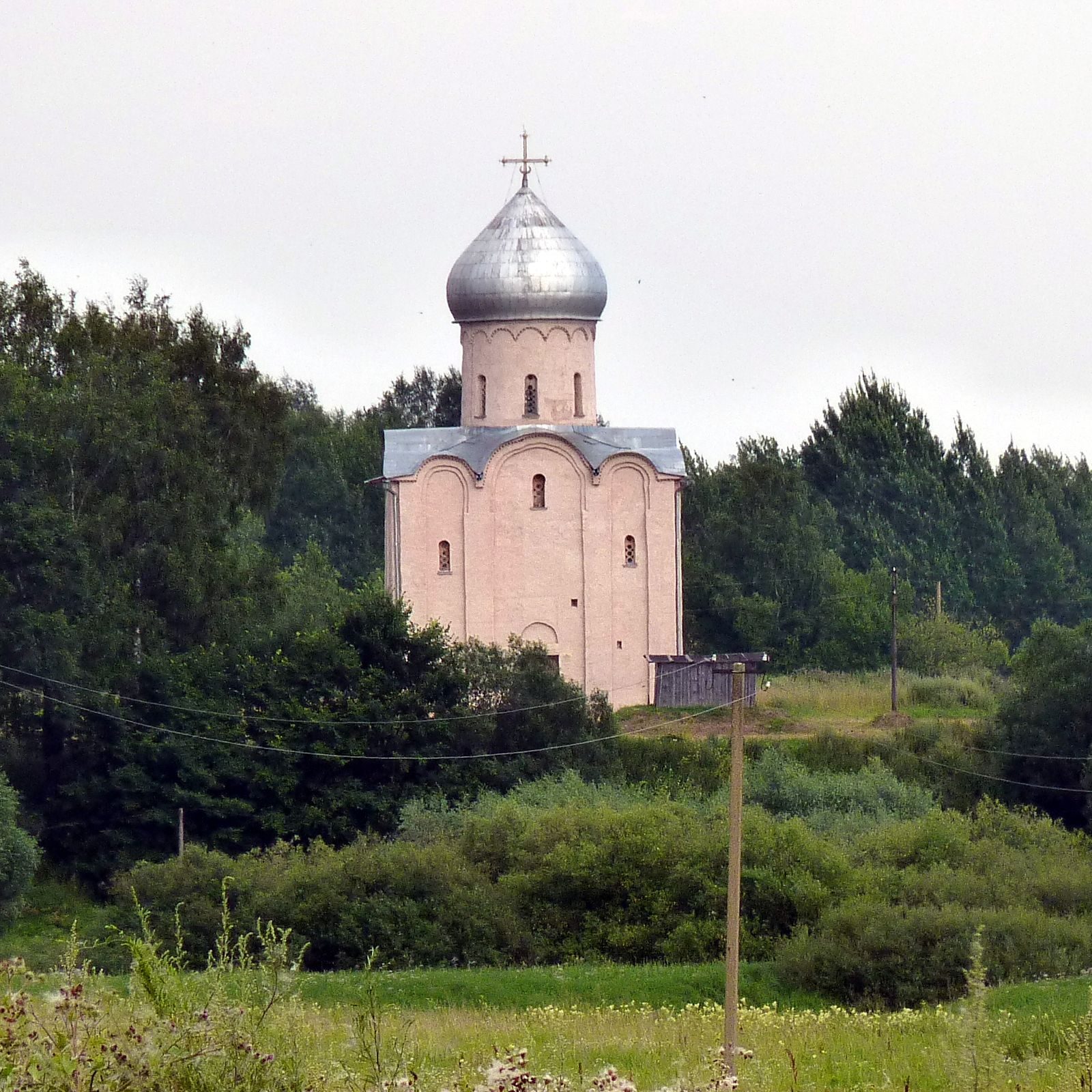
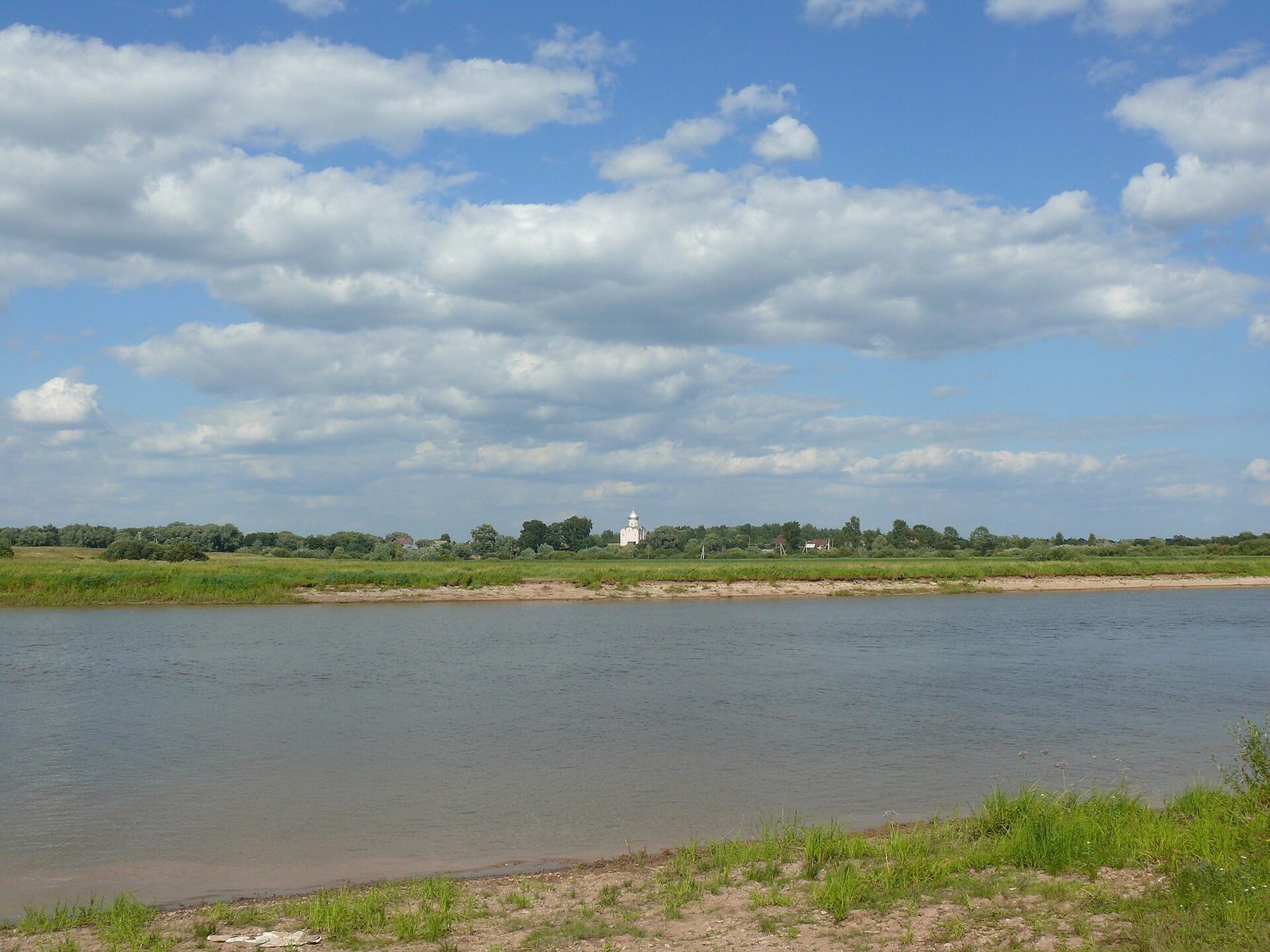
The stone church stands on a small rise beside the right bank of the former channel of the Maly Volkhovets, about 1.5 kilometres south of Veliky Novgorod and near the Rurik hillfort. Its compact, square building has a cubic form, four supporting pillars, three naves, three apses (projecting church ends) on the eastern side, and a single dome. The central nave forms the principal interior space, while the side naves are less prominent.
Plain facades, simple pilaster strips, and sparse, narrow windows give the exterior an austere appearance. The building’s form and window arrangement have been described as defensive in character. Inside, small wooden choir galleries served the prince and his close associates; narrow stairways hidden within the thick walls led to them, and secluded spaces occupied the western part. A porch and bell tower were later additions. The bell tower was not included in the postwar architectural reconstruction. Windows enlarged after the building’s defensive role diminished damaged parts of the painted figures and ornament. A fire in the mid-sixteenth century caused further losses, particularly to paintings on the vaults.
Frescoes
The first painted cycle dates to 1199 and was made by an estimated eight to ten artists. Wall paintings on plaster covered the pillars, walls, ceiling, and dome. Their styles varied, and some compositions crossed the divisions between architectural surfaces. Vivid colors stood out in the church’s dark interior. The dome showed the Ascension rather than the image of Christ commonly placed there in churches influenced by Byzantine tradition. This choice has been interpreted as reflecting the church’s position in a peripheral region. The Last Judgment covered the western wall.
A further painting, dated to 1246, depicted Prince Yaroslav II Vsevolodovich on the south wall. Other recorded subjects include the Ancient of Days, a biblical title associated with God; Yaroslav Vladimirovich presenting a model of the church to Christ; senior clergy; Peter of Alexandria; and Saint Timothy. Before World War II, the mural cycle was considered nearly complete, with comparatively minor losses. Today, only a small proportion survives, mainly in lower parts of the building, including fragments of the Last Judgment. Some damaged original fragments were mounted on wooden panels and transferred to the Andrei Rublev Museum of Old Russian Art in Moscow for exhibition.
Inscriptions and excavated evidence
Graffiti on the church walls include a sequence of abbreviated weekday names. Excavations inside the church in 2001 uncovered sections of the original 1199 painting beneath floor fill and a tomb containing the remains of Afanasy Danilovich. Chronicles record his burial at the church in 1322.