Corbie Abbey: A Merovingian Monastery and Center of Carolingian Learning
Site at a Glance
- Popularity
- High
- Country
- France
- Primary era
- Early Modern
- Eras represented
- Medieval, Early Modern
- Civilizations
- Carolingian, French, Merovingian
- Site type
- Religious
- Remains
- Fortified Monastery
On this page19 sections
History
Royal foundation and early community
Corbie Abbey, a monastery in Corbie, France, was founded between late 657 and 23 December 661 under Queen Balthild, regent for her son, King Clotaire III, in the Merovingian Frankish kingdom. The community occupied the site of a former Gallo-Roman villa near the meeting of the Somme and Ancre rivers, on land that had belonged to the royal official Guntland before returning to the crown. Balthild sought to strengthen royal influence east of Amiens, promote Christianity in the countryside, and secure prayers for her family. The abbey was also expected to give aid to the poor and welcome travelers.
Royal and private gifts endowed the monastery with extensive property. Its lands covered about 22,000 hectares on both sides of the Somme, much of it woodland, and extended north of Amiens from around Doullens toward the forest of La Vicogne. Balthild arranged for Valbert, abbot of Luxeuil, to send about sixty monks under Theodefrid, Corbie’s first abbot. The early community followed the monastic rule associated with the Irish missionary Columbanus, already influenced by the Rule of Saint Benedict; during the eighth century it adopted the Benedictine rule, which became the standard for Benedictine life.
From its foundation, Corbie answered directly to the pope in spiritual matters rather than to the bishop of Amiens, and its possessions received immunity from royal interference. In 664, Bishop Berthefrid formally gave up jurisdiction over the abbey and its dependencies. The community also received a share of customs collected at the port of Fos in Provence from 661, with the right to bring goods arriving by ship, including parchment and papyrus, to Corbie. Exemption from royal tolls and customs on goods in transit applied throughout the kingdom.
Carolingian scholarship and influence
Under the Carolingian dynasty, associated with Charlemagne, Corbie became a major center of learning, manuscript copying, and missionary work. Its scholars included Hadoard, the abbey librarian, and the theologians Paschasius Radbertus and Ratramnus, who debated transubstantiation, the Catholic teaching that bread and wine become Christ’s body and blood in the Eucharist. Monks copied religious and classical works, poetry, and mathematical texts, while also studying Greek and the developing Romance language. During the eighth century they translated the Greek astronomical poem Phenomena, by Aratus of Soli.
The False Decretals, forged church-law documents intended chiefly to protect bishops in criminal proceedings, were probably compiled at Corbie. Their authors used manuscripts from the abbey’s library, and Paschasius Radbertus may have taken part in the work. The community’s influence also extended through its leaders. Abbot Adalard’s ninth-century statutes set out rules for monastic life and charity; they point to a community of about 300 monks, although estimates as low as 150 have also been proposed. Adalard and his brother Wala carried out diplomatic missions, especially in Italy. Corbie monks founded Corvey Abbey in 815 under Wala, while Adalard and his brothers established a women’s convent at Herford in 822.
Corbie also received people of royal and political importance. Desiderius, the last Lombard king, was exiled there in 774 after Charlemagne’s defeat of the Lombards; he may have died at the abbey or on one of its estates. Charles, who later became archbishop of Mainz, was held at Corbie from 850 to 854. In 855 Pope Benedict III confirmed the abbey’s exemption and allowed its abbot to wear pontifical insignia, ceremonial symbols of episcopal office. Corbie’s abbots thereafter claimed standing equal to the bishop of Amiens, adding to disputes over authority.
Territorial lordship, reform, and civic disputes
Vikings probably sacked and burned Corbie in 881, destroying many charters. Abbot Francon responded by building defensive walls and taking on military and judicial powers. He required the abbey’s vassals to serve in its defense and held three courts each year. Corbie developed into the center of a territorial lordship, and its abbots exercised powers comparable to those of counts. Their successors issued coins from the ninth through the twelfth century. A later tradition says that in 893 Abbot Francon of Amiens arranged to take Saint Gentian’s relics from Amiens Cathedral. It relates that a sudden fog halted the pursuers as the relics were carried toward Corbie, an event people in Amiens accepted as a miracle.
As royal power weakened during the tenth century, the abbey’s political and feudal authority grew while its spiritual and cultural influence declined. Fire damaged the abbey church in 1022, and it was rebuilt in 1058. Corbie later adopted the Gregorian Reform, an effort to change church governance and clerical discipline, under the influence of Gossuin of Anchin. In 1142, Abbot Robert introduced the Statutes of Erembert, a set of Cluniac rules adapted to avoid offending the community, though presented under the name of an earlier Corbie abbot. Fires struck the abbey in the twelfth century, including a major blaze in 1137 and further outbreaks in 1147, 1149, and 1152.
Conflict with neighboring lords led the abbot to accept a chartered commune of Corbie in 1124 in exchange for the townspeople’s support. Louis VI confirmed its liberties, and Philip Augustus renewed and enlarged them in 1180. In 1185 Philip Augustus created the County of Corbie and assigned it to the abbot. The crown generally supported the abbey in its disputes with the commune. In 1310 the townspeople placed the commune and its rights under Philip IV. The monks offered to settle its debts in exchange for the domain of Vesly-sur-Aisne and 6,000 Parisian livres; the king accepted, and the commune was suppressed in favor of the abbey.
Arguments over the town’s marshes continued for centuries. In 1321 the townspeople recognized the abbey’s ownership in return for rights to use the land. They obtained half the marshes in 1633, while the abbey later claimed two-thirds. In 1736 the royal intendant of Amiens allocated residents 113 journals of marsh for hay and 12 for peat, but the monks challenged the decision and won a favorable ruling from the royal council in 1746. A dispute over the Barette canal lasted from 1749 to 1760. In 1750 the abbey gave up tolls on the five bridges toward Amiens, leaving their maintenance to the municipality.
War, reconstruction, and monastic change
Under the Treaty of Arras in 1435, Corbie passed to the Duke of Burgundy. During the rivalry between the French crown and the Burgundian state, French and Burgundian forces repeatedly seized and damaged the town and abbey. After Charles the Bold died, Picardy and Corbie were incorporated into the French kingdom in 1477. Imperial and English forces captured Corbie in 1492 and held it for almost a year, while Abbot Pierre d’Osterel took refuge in Paris. After his return, he began a new abbey church in 1501. Imperial troops occupied the town in 1536, and it faced another threat after Spanish forces captured Amiens in 1597. Corbie joined the Catholic League in 1588; Jacques d’Humières had helped write the League’s manifesto in 1577. The League recognized commendatory abbot Cardinal Charles de Bourbon as king in 1589 under the name Charles X; he died the next year.
The Concordat of Bologna, agreed in 1516, allowed the French king to appoint holders of church benefices while the pope retained the formal religious investiture. A commendatory abbot held the abbey’s title and income without necessarily living there. The arrangement led to long-running conflicts over revenue and the upkeep of buildings. A judgment in 1646 ended a thirty-year lawsuit between the monks and their abbot, but disputes continued. In 1680 the abbey’s assets were divided into three portions: one chosen by the abbot, one given to the monks, and one administered by the abbot for repairs, alms, and pensions. This gave the monks financial independence and exclusive use of the monastic precinct, though disagreements persisted into the eighteenth century.
Corbie joined the Congregation of Saint-Maur in 1618, ending its independence from monastic reform congregations. The Maurist movement sought stricter Benedictine observance and encouraged scholarly work. Its practices were introduced gradually amid resistance, and the abbey remained affiliated until its suppression. In 1636 Spanish forces captured Corbie, but French troops recovered it after a three-month siege. Monks accused of persuading the town governor to surrender were imprisoned for a year in Amiens. After a renewed investigation cleared them, the prior Laurent Féry and the other monks returned to Corbie in 1642.
Fighting by Spanish and French armies caused extensive damage, and reconstruction remained unfinished at the end of the eighteenth century after more than a century of war and declining income. In 1638, nearly 400 valuable manuscripts were sent to Saint-Germain-des-Prés in Paris for safekeeping. The Peace of the Pyrenees in 1659 moved the French frontier away from the Somme, ending Corbie’s role as a strategic frontier town. The French Revolution suppressed the abbey in August 1790. Its nineteen remaining monks dispersed, and the buildings and estates became national property and were offered for sale. Revolutionary authorities transferred about 300 manuscripts still at Corbie, along with roughly 10,000 other library books, to Amiens. Manuscripts held at Saint-Germain-des-Prés were looted and sold in 1792; some entered Russia after purchase by diplomat Pyotr Doubrovski.
Revolutionary and modern legacy
German shelling struck Corbie heavily from 22 April to 10 May 1918, hitting the abbey church many times. The church was designated a historic monument in 1919; the monumental entrance had received protection in 1907, and the western portal of Saint-Étienne is also protected. In 2012, a manuscript in Carolingian minuscule, a compact and clear medieval book hand, was identified as a Corbie manuscript and believed to predate Charlemagne’s rule. It added evidence that scribes were exploring the script before it became established.
Remains
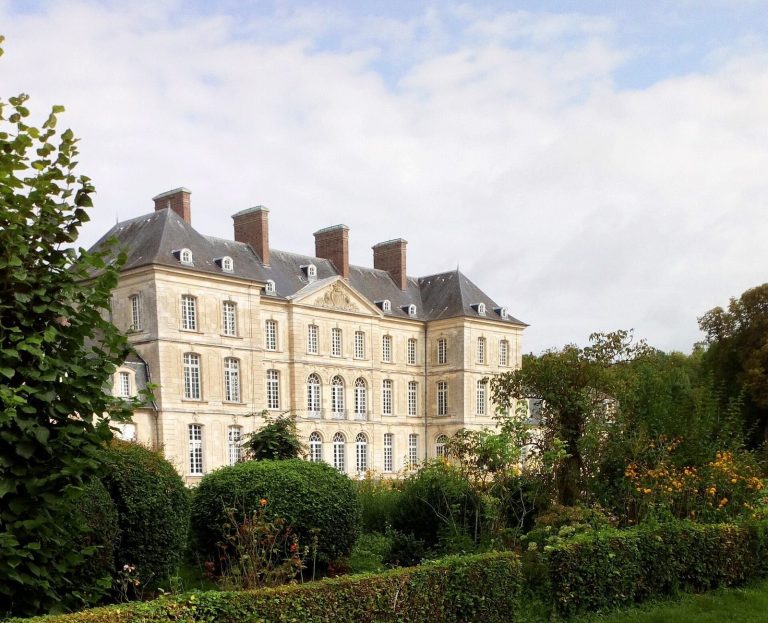
The abbey’s original complex contained two large churches within an enclosed monastic precinct near the Somme and Ancre. Its principal church was repeatedly rebuilt, and its surviving fabric includes later Gothic work. The enclosure wall still marks the bounds of the complex, while foundations of monastic buildings remain beneath the ground inside it. Some of Corbie’s sculpture, furnishings, manuscripts, and documents are preserved in museums and libraries elsewhere.
Churches and monastic buildings
Saints Peter and Paul
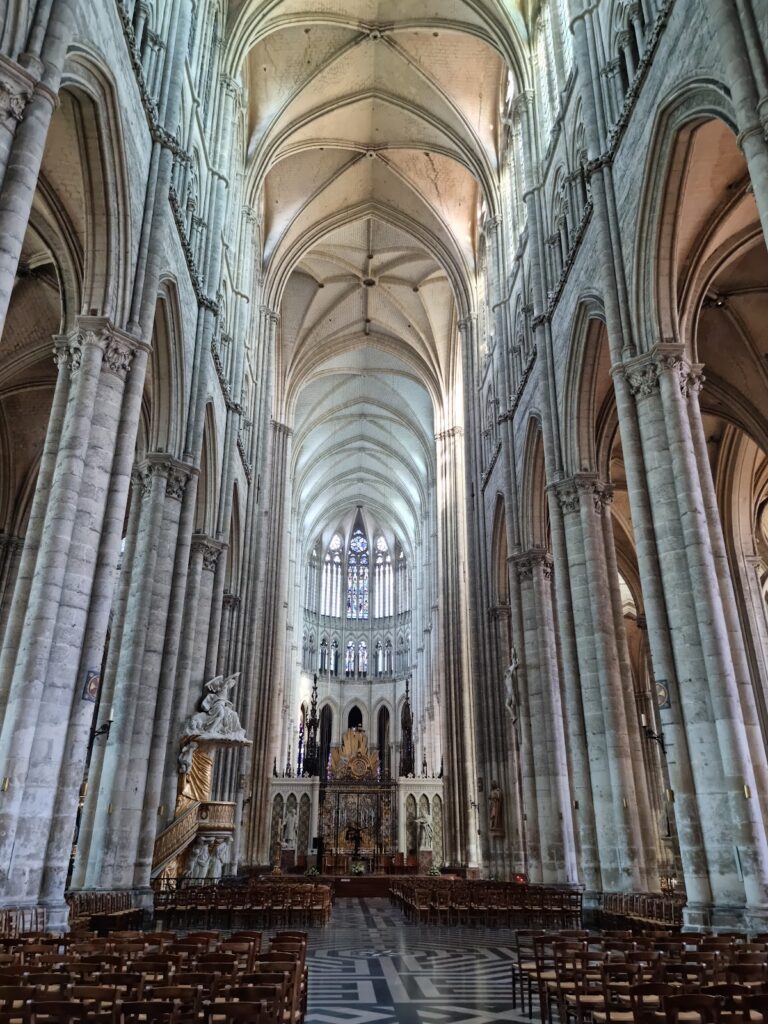
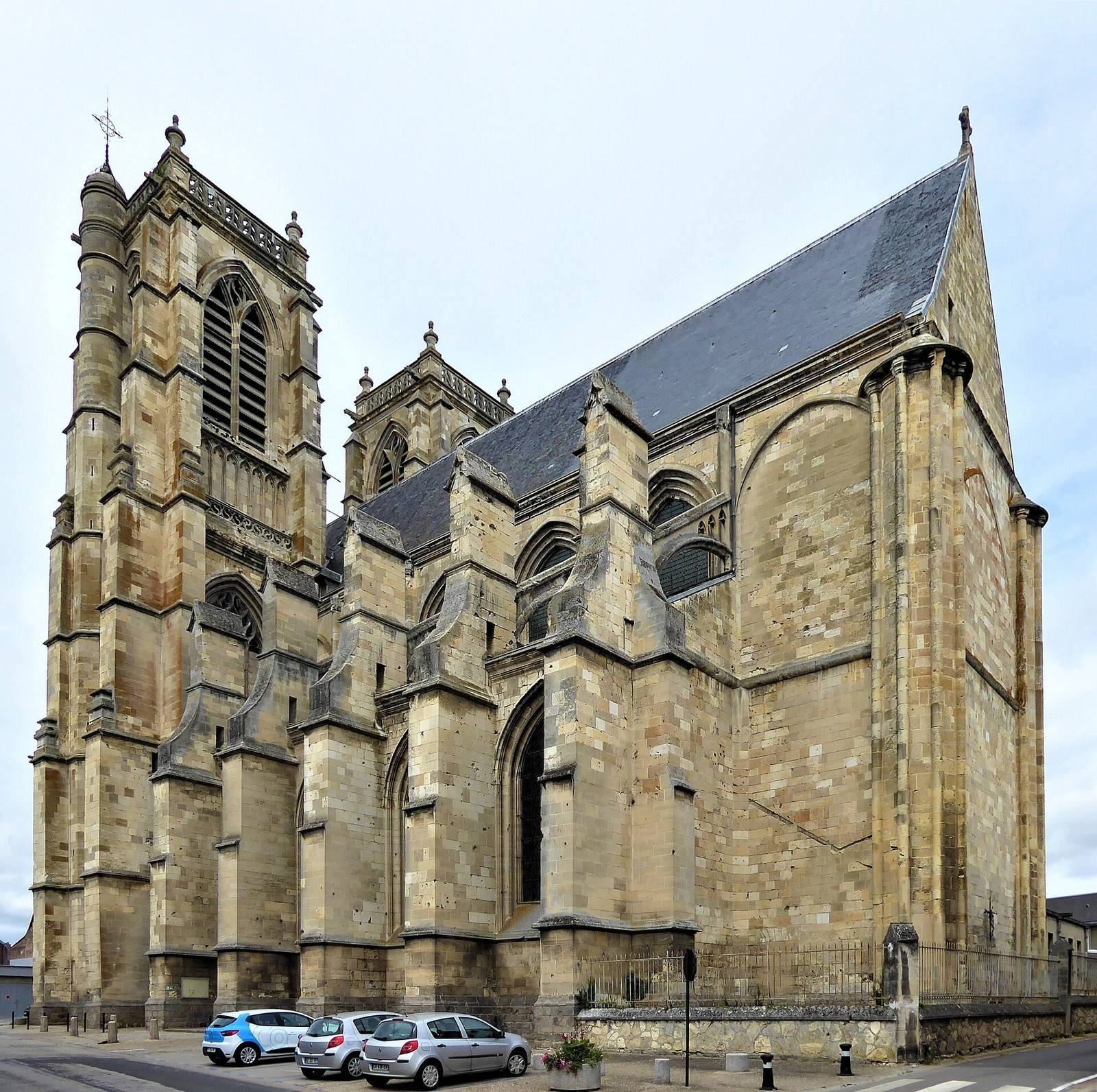
The church of Saints Peter and Paul served as the abbey church. By the sixteenth century it had a choir and transept topped by a spire, while its nave was rebuilt in Flamboyant Gothic, a late Gothic style known for flame-like tracery. Work on the nave was completed in 1775. The surviving part is now a parish church, with western towers. The church had eight chapels, including a burial chapel built for the Soyécourt family in 1297.
Saint-Étienne
Saint-Étienne was built at the abbey’s foundation and rebuilt in the late tenth century. Part of the church survives, including a western facade with a protected portal. The church was reserved for the Caritables, a confraternity whose members prayed for and helped the poor.
Saint John the Evangelist
Work on Saint John the Evangelist’s church began around 1160, and it was consecrated in 1201. It was used especially for funeral services.
Cloister and refectory
A cloister built in 1152–1153 was followed by a new cloister begun in 1267. A refectory attached to the south gallery of the later cloister was started around 1275. Its Gothic architecture was described as both bold and delicate.
Enclosure and entrance
The Porch
The abbey’s monumental entrance, known locally as the Porch, is an eighteenth-century work by architect François Franque. Mr. and Mrs. Baillet-Bailleul transferred it to the town in 1850. Pierre-Joseph Christophle designed its sculptural decoration, including two allegorical figures: Faith on the left and Charity on the right. A crowned medallion surrounded by foliage bears two ravens. The decorated shield below has a gold field, a blue upright crozier, a raven, and two red keys, and is framed by fleurs-de-lis. The figures were damaged during the shelling of 1918 and restored late in the twentieth century.
Enclosure and abbatial palace
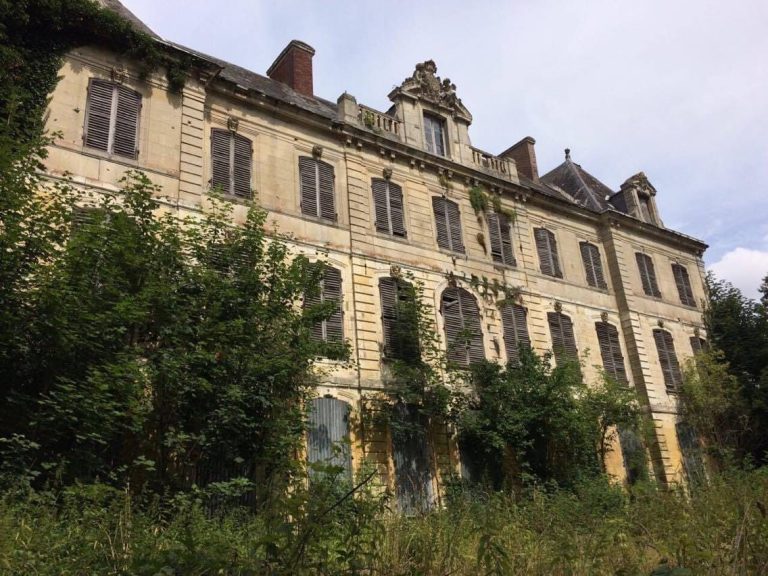
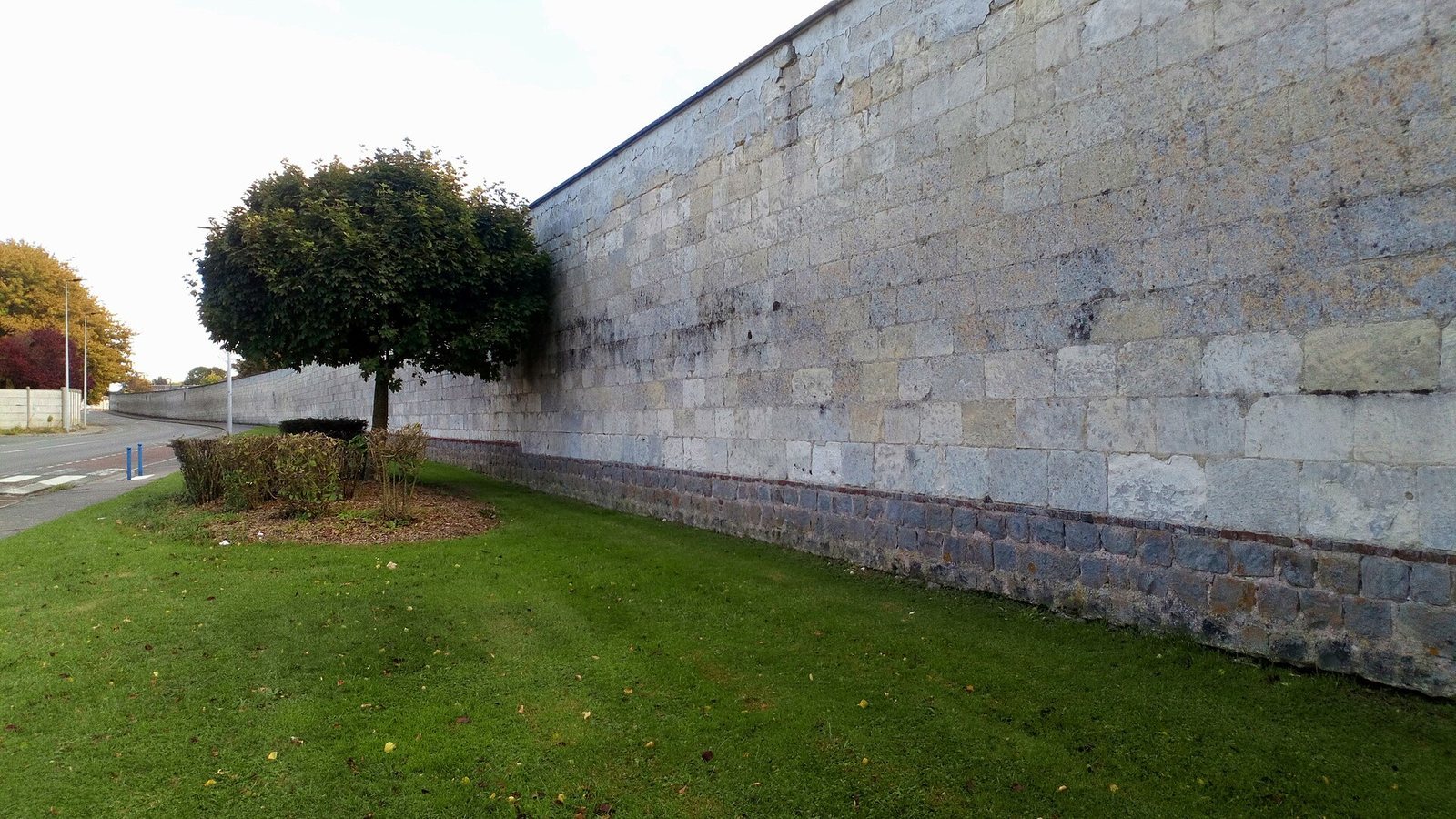
The surviving enclosure wall defines the former monastic precinct, where building foundations remain underground. A new abbatial palace was built opposite the abbey on the main square to plans by Parisian architect Nicolas Lhuillier de La Tour. The commendatory abbots never occupied it. After a town fire in 1788, it sheltered people left homeless, and it was demolished in the early nineteenth century.
Sculpture, manuscripts, and records
Carved stone and furnishings
Corbie’s museum, located within the enclosure, holds a thirteenth-century statue of Clotaire III that once stood on a column between the cloister and refectory. Its collection also includes column bases, the stone starts of vaults, a carved stone bearing heraldic arms, and sculptural pieces from the old cloister. The Museum of Picardy in Amiens holds a Romanesque capital from the abbey cloister. Its carved scenes show the creation of Adam and Eve, Original Sin, and the expulsion from Paradise, alongside geometric ornament with features associated with early Gothic architecture in the Île-de-France. Corbie’s museum keeps a plaster cast of the capital.
Two white-marble reliefs from the abbey are preserved at Saint-Rémi church in Amiens. One depicts the Last Supper and the other the Adoration of the Magi. An inscription records their donation in 1579 by the abbey provost Claude Caurrie, who appears kneeling beside the manger in the second relief. Woodwork from the abbey, made in the eighteenth century, was installed between the world wars in the library of the Hôtel de Berny museum in Amiens. Earlier abbey furnishings included choir stalls by Charles Cressent, an organ made by Charles Dallery in 1736, and an ironwork choir canopy made by Jean Veyren in 1764.
Manuscripts and the scriptorium
Corbie’s scriptorium, or manuscript-copying workshop, developed several forms of Latin handwriting, including Corbie Merovingian script and Carolingian minuscule. A Bible made under Abbot Maurdramne between 771 and 780 uses seven different scripts, one of them Carolingian minuscule. The abbey’s library included religious and early Christian writings, grammar, and works by classical authors. Surviving examples include the only known copy of Sallust’s speeches and a manuscript containing fragments of letters by Fronto on pages reused after an earlier text was erased. Corbie also preserved distinctive copies of works by Tertullian, writings by Seneca the Elder, part of Livy’s history, and one of the two known witnesses to Columella’s agricultural work, De re rustica.
Manuscripts from Corbie are now divided among several collections. The Louis Aragon Library in Amiens holds 177, including 17 dating from before the tenth century; the Bibliothèque nationale de France holds 75, and the Russian National Library in Saint Petersburg holds 25. Other examples are kept in Berlin, the British Library, the Laurentian Library in Florence, the Vatican Apostolic Library, and Leiden University Library. The Bible produced under Maurdramne is among the evidence for the abbey’s experiments with handwriting, while its monks also copied geometrical works by Boethius and Cassiodorus.
Charters and coins
The Somme departmental archives preserve a charter issued at Aachen in 825 by Louis the Pious and his son Lothair, confirming the abbey’s privileges at Adalard’s request. This square parchment measures 57 centimeters on each side. Its text uses a narrow formal handwriting associated with official documents, and a more legible Gothic version was added to the reverse around 1220. It is the oldest known authentic document concerning Corbie and was restored in 2020. The Louis Aragon Library also holds Pope Benedict III’s confirmation of the abbey’s privileges, issued on 3 October 855. The papyrus is about six meters long and retains the pope’s lead seal.
The Bibliothèque nationale de France holds silver coins struck at Corbie. Royal issues include coins associated with Charles the Bald, Louis the Stammerer, Charles the Fat, and Odo. Coins issued under the abbots include pieces associated with Francon, Fulk of Corbie, Jean de Bouzencourt, Josse, and Hugues II, as well as issues attributed to the pseudo-abbot Evrard and to Saint Ansgar.