Vodovzvodnaya Tower: A Water-Lifting Tower in the Moscow Kremlin
Site at a Glance
- Popularity
- High
- Country
- Russia
- Primary era
- Medieval
- Eras represented
- Medieval, Early Modern, Modern
- Civilizations
- Russian
- Site type
- Military
- Remains
- Tower
On this page9 sections
History
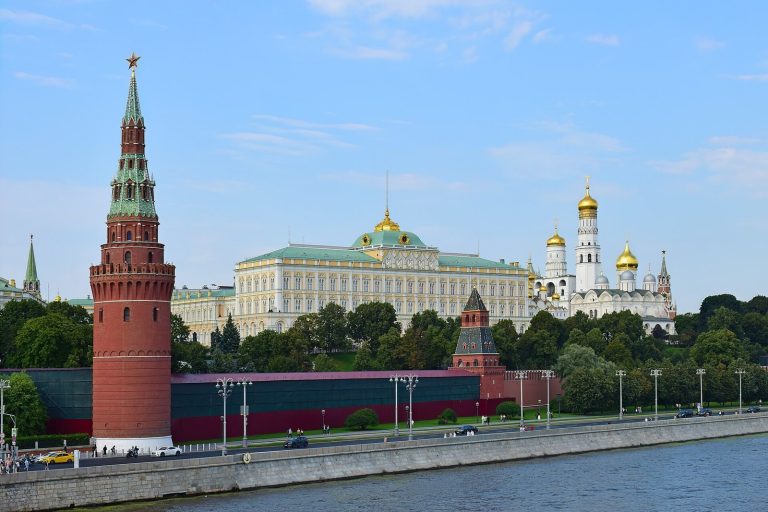
Vodovzvodnaya Tower is a defensive tower at the southwestern corner of the Moscow Kremlin in Moscow, Russia. An Italian architect built it in 1488, as the Kremlin’s white-stone fortifications were being replaced with brick. The tower became part of the southwestern defenses and later housed Moscow’s first pressurized water system.
Construction and the first water system
A predecessor fortification stood at this corner by 1462. Vodovzvodnaya was the second new tower built in the Kremlin’s rebuilding, after Taynitskaya. Together with Beklemishevskaya Tower, it completed a defensive triangle in the southwestern fortifications. It was first called Sviblova Tower, after the 14th-century Sviblo family, whose courtyard stood inside the Kremlin beside it. A boyar was a member of the high-ranking Russian nobility. The name Vodovzvodnaya, meaning Water-Lifting Tower, came into use in 1633, when a water-raising machine was installed.
From the 13th to the 15th centuries, Kremlin residents drew drinking water from wells and used the Moscow and Neglinnaya rivers for other needs. By the early 17th century, workshops and services such as breweries, kitchens, laundries, baths, gardens, and stables for 150 horses added to demand. More than 300 hired workers served the Armoury and Gun-Barrel departments. Before the tower’s waterworks, carts hauling water up the steep Kremlin slope had to follow a long, winding route, and a bucket cost three altyns, a historical Russian unit of money.
In 1621, Christopher Galloway entered the tsar’s service as a clockmaker and water-lifting specialist, with instructions to bring water from the Moscow River into the Kremlin. He adapted and improved on a London system for raising water from the Thames. Installed in 1633, the machinery created Moscow’s first pressurized water system, which moved water through pipes under pressure. Its maintenance cost 200 rubles a year, and the machine cost several barrels of gold. Once it was operating, the price of delivered water fell several times.
Repairs, damage, and rebuilding
A waterworks specialist born in Paris arrived in Moscow in 1650 and helped maintain Galloway’s system. Work to replace the Kremlin towers’ low wooden roofs with high stone upper structures began in 1680. Galaktion Nikitin took responsibility for the Kremlin water supply in 1683, and Vodovzvodnaya’s stone upper section was in place by 1686. A fire in 1737 badly damaged the tower, and the waterworks were probably not restored.
After bricks fell from the tower in 1773, architect Vasily Bazhenov warned that it might collapse. Empress Catherine II ordered repairs rather than demolition, but Bazhenov argued that digging outside and beneath the foundations could make the damage worse. In 1792, a commission found that the cracks had not grown and the tower was not in immediate danger. It recommended repairing the damp-damaged lower wall, where earth had accumulated against it, and sealing the lower cracks with alabaster.
The tower was dismantled in 1805 because of its poor condition, then rebuilt on its old foundations using archival drawings. Work finished in 1807. In 1812, retreating French troops blew it up during Napoleon Bonaparte’s campaign in Russia. Reconstruction from 1817 to 1819 changed the tower’s exterior.
Restoration and heritage status
The tower and other parts of the Kremlin wall were restored in 1868. After the 1917 Revolution and the establishment of Soviet rule, the government replaced imperial symbols on Kremlin towers with red stars; Vodovzvodnaya received its star in 1937. A major restoration from 1973 to 1981 repaired the tower’s stone decoration and renewed its exterior finishes. Since December 1990, the tower has formed part of the Moscow Kremlin ensemble on UNESCO’s World Heritage List. It is also a Russian federal cultural heritage site.
Remains
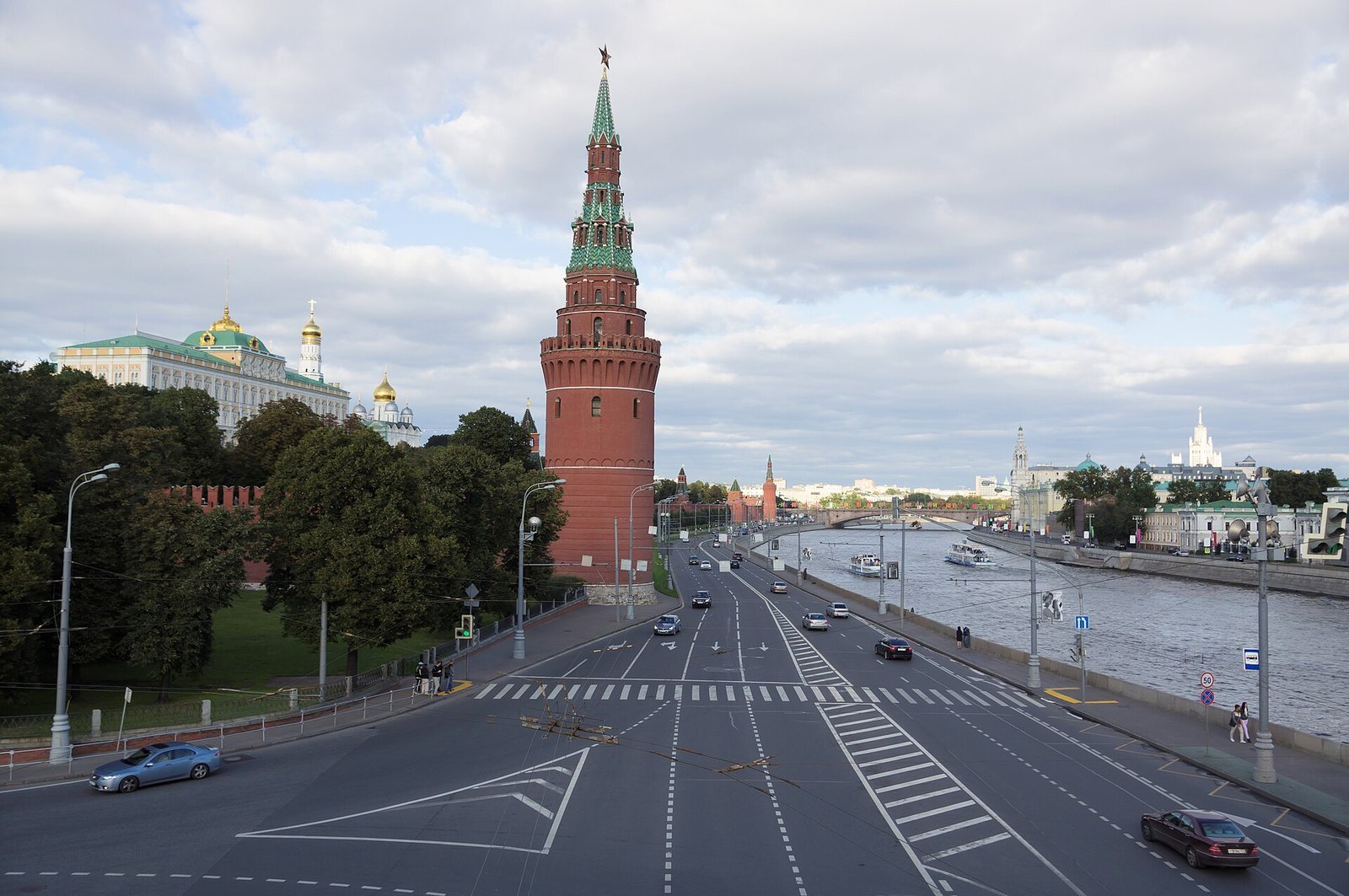
Where Kremlin Embankment meets Alexander Garden beside the Moscow River, the tower rises from a cylindrical base. It stands 61.25 metres tall with its star and 57.7 metres without it; its walls are three metres thick. The structure combines brickwork with white-stone decorative elements and a tall upper section beneath a tent-shaped roof.
Early defensive design
The late-15th-century tower is thought to have been a squat cylinder that widened toward its base and ended in a broad, flat roof. Its early defenses included small circular firing openings above the base, brick courses that alternated between projecting and recessed sections, and a decorative band of shallow arches in white stone. Projecting openings allowed defenders to drop objects below, while the wall top had raised sections with forked tops alternating with gaps.
Water-lifting equipment
A concealed well in the basement was intended for use during a siege. The tower’s lower-level well also supplied the water-lifting equipment. Water rose into a lead-lined basin above, then passed through lead pipes to a pressurized reservoir near the Old Money Yard and Upper Embankment Garden before reaching Kremlin buildings and workshops. The machinery’s precise arrangement is uncertain, and it probably occupied only part of the tower’s limited interior. A contemporary map and an engraving show a large building marked as a waterworks, along with other buildings beside the tower. These structures have been interpreted as a horse-powered drive, stables, and staff accommodation; the proposed drive required an open area at least seven metres across.
Reconstructed exterior
The 19th-century rebuilding gave the exterior masonry deeply emphasized joints. Circular and semicircular windows took the place of the earlier firing openings. Porches supported by plain columns and topped with triangular pediments frame the dormer windows. The 1868 restoration left the tower approximately in the exterior form seen today.
Roof and star
The high stone upper section replaced an earlier low wooden roof. The later tent-shaped roof is covered with copper sheets formed to resemble the tiles they replaced during the 1973–1981 restoration. Deteriorated white-stone decorations were replaced with exact copies, and the brick exterior was steam-cleaned, coated with silicate paint, and treated with a water-repellent finish. A ruby-red star crowns the tower, with rays spanning three metres. When installed, it held a 3.7-kilowatt incandescent lamp; from 2015, incandescent lamps in the Kremlin stars were replaced with lower-power metal-halide lamps while retaining their brightness. Lightning once melted part of the star’s ruby glass, which was repaired.