Valley of the Kings: Egypt’s New Kingdom Royal Burial Ground
Site at a Glance
- Popularity
- Very High
- Country
- Egypt
- Primary era
- Bronze Age
- Eras represented
- Bronze Age, Iron Age, Modern
- Civilizations
- Egyptian
- Site type
- Burial
- Remains
- Necropolis
On this page17 sections
History
Royal burial in the New Kingdom
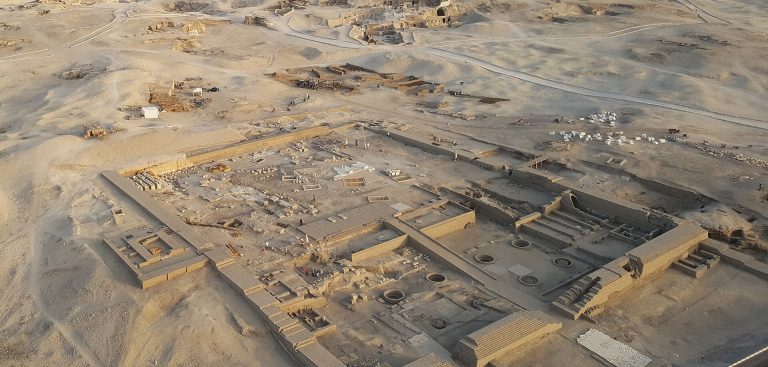
The Valley of the Kings is a royal burial ground in Egypt’s Theban hills, used by Egyptian rulers from the Eighteenth through Twentieth Dynasties of the New Kingdom, the era of those three ruling lines, from about the sixteenth to the eleventh century BC. Over nearly 500 years, it became the principal royal burial place at Thebes. About twenty tombs held kings, while others were used for royal wives and children, nobles, people connected to the royal household, and, in some cases, animals.
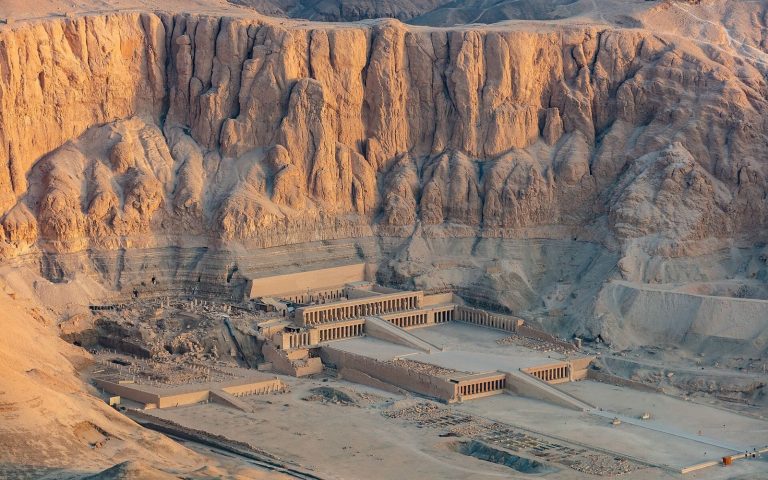
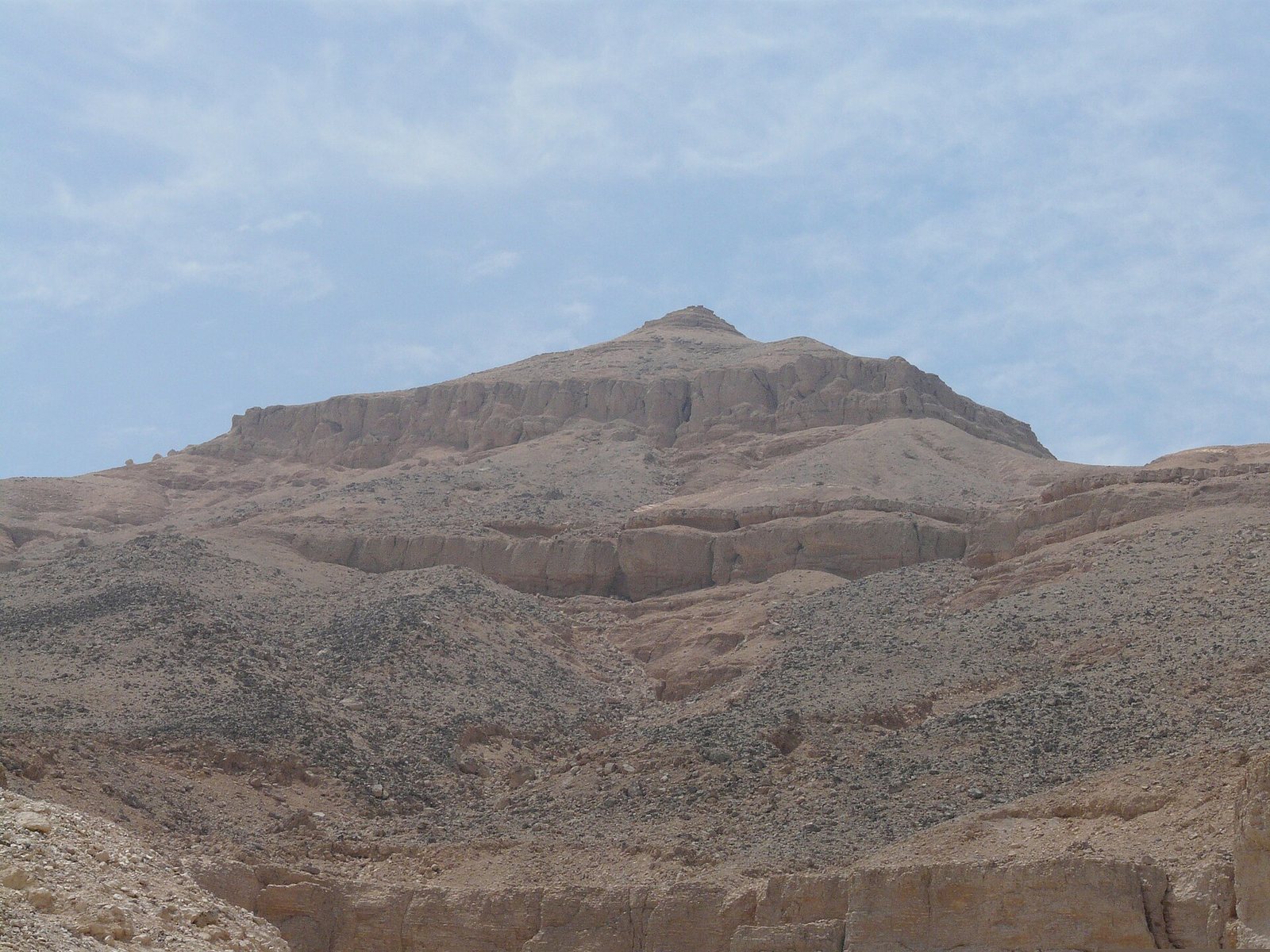
The earliest royal burials in the Valley are uncertain. The first tombs have been attributed either to Amenhotep I or to Thutmose I, while the burial places of Ahmose I and Amenhotep I may instead have been in the earlier cemetery at Dra Abu el-Naga. The Valley’s selection may have been shaped by its secluded setting, access to workable limestone, a principal approach, and proximity to the Nile for funerary processions and transport. The peak above the Valley resembles a pyramid, and the surrounding Theban mountain landscape had religious associations with the goddesses Hathor and Meretseger.
After Ahmose I defeated the Hyksos, foreign rulers who had controlled parts of Egypt, and reunified the country, Theban rulers built elaborate tombs that expressed their restored authority. Kings were initially buried in large Valley tombs, while some non-royal people were placed in smaller chambers near their masters. Royal burials returned to Thebes after Akhenaten moved his royal centre and tomb project to Amarna. Tutankhamun, Ay, and Horemheb were among the later Eighteenth-Dynasty rulers buried in the Theban royal necropolis.
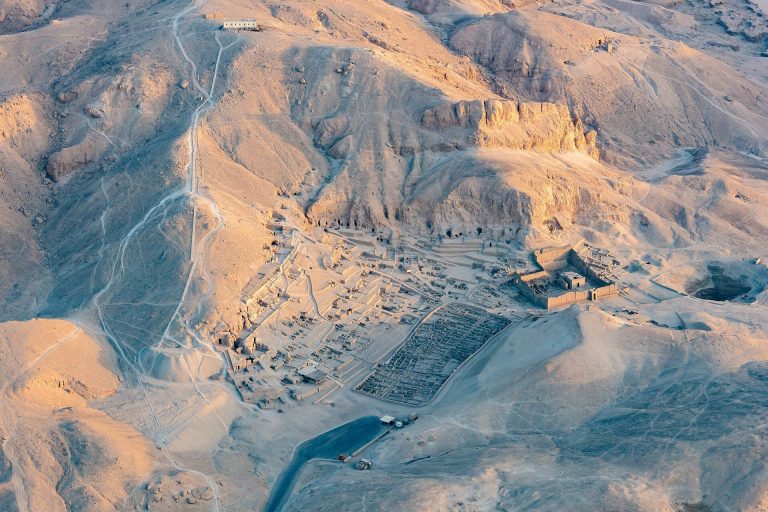
The Valley was not reserved solely for kings. Separate burial grounds served queens and royal children at the nearby Valley of the Queens, where construction began around the reign of Ramesses I. Royal funerary temples stood nearer the cultivated land, facing Thebes, rather than beside the hidden tombs. During the Beautiful Festival of the Valley, ceremonial boat-shaped shrines of Amun-Re, Mut, and Khonsu travelled from Karnak to temples and shrines on the west bank. Specialist tomb builders lived at Deir el-Medina and crossed the hills to work. Records from their community include an account of a workers’ strike preserved in the Turin Strike Papyrus.
Tomb building expanded during the Nineteenth and Twentieth Dynasties. Ramesses II and Ramesses III commissioned large tombs for their sons as well as for themselves, although not every New Kingdom ruler was buried in the Valley. Setnakhte began KV11, but abandoned it after the excavation broke into another tomb; he took over KV14, the tomb of Tausert. Ramesses III later completed and enlarged KV11 for his own burial.
Plunder, reburial, and reuse
Tombs were repeatedly robbed, with major episodes associated with the end of the Eighteenth Dynasty and the Twentieth Dynasty. A later wave of theft unfolded amid administrative corruption, famine, and incursions by Libyan groups. Some guardians may have aided intruders. Officials and priests restored and resealed some tombs where possible. By the twenty-ninth regnal year of Ramesses III, Ramesses II’s tomb, KV7, had been robbed at least twice.
During the Twenty-first Dynasty, priests of Amun moved many royal mummies to other tombs for protection. Many were eventually gathered at Deir el-Bahari, while others were stored in KV35. Some were placed in coffins that had belonged to other people, and valuable ornaments were removed. In later periods, tombs were reused for non-royal burials. During the Coptic period, when Egyptian Christians lived in the area, some accessible tombs served as churches, stables, or dwellings.
Visitors and archaeological exploration
Greek and Roman visitors came to the Valley, and visitors over many centuries left thousands of inscriptions. Greek writers Diodorus Siculus and Strabo reported counts of 47 and 40 tombs, respectively, based on information from Egyptian priests. The earliest dated visitor inscription is from 278 BC in KV1. An inscription from AD 537 bears the name of Orion, a governor of Upper Egypt.
European interest revived in the sixteenth century, and sustained archaeological exploration began in the late eighteenth century. In 1799, members of Napoleon Bonaparte’s Egyptian expedition mapped known tombs. Prosper Jollois and Édouard de Villiers du Terrage surveyed the Valley, identified the West Valley, and contributed work to the publication Description de l’Égypte. Giovanni Battista Belzoni identified Ay’s tomb in the West Valley in 1816 and Seti I’s KV17 in 1817. In 1827, John Gardner Wilkinson established the tomb-numbering system still used today. A Prussian expedition led by Karl Richard Lepsius surveyed 25 tombs in 1844–45, and later investigators continued the work. Victor Loret recorded 16 additional tombs in 1898–99.
Howard Carter, who became chief inspector of antiquities in Upper Egypt in 1899, worked on several tombs and carried out conservation and restoration in the Valley. Theodore Davis’s excavation concession operated in the early twentieth century, but Davis concluded in 1912 that the Valley had been exhausted. Carter believed deposits over the original valley floor could conceal further burials. Working for Lord Carnarvon, he resumed excavation in 1915; work paused during the First World War and began again in 1917. On 4 November 1922, his team found the entrance to KV62, Tutankhamun’s tomb. Clearance and conservation continued until 1932.
Work in the Valley continued after Carter’s discovery. Excavation of KV5, the tomb associated with the sons of Ramesses II, began under the Theban Mapping Project in 1995 and revealed a far larger complex than previously understood. Radar surveys examined the valley floor between 1998 and 2002. Excavation near KV10 uncovered KV63 in 2005; its discovery was announced the following year. The Valley forms part of Ancient Thebes with its Necropolis, a UNESCO World Heritage property since 1979.
Remains
Setting and geology
Branches and terrain
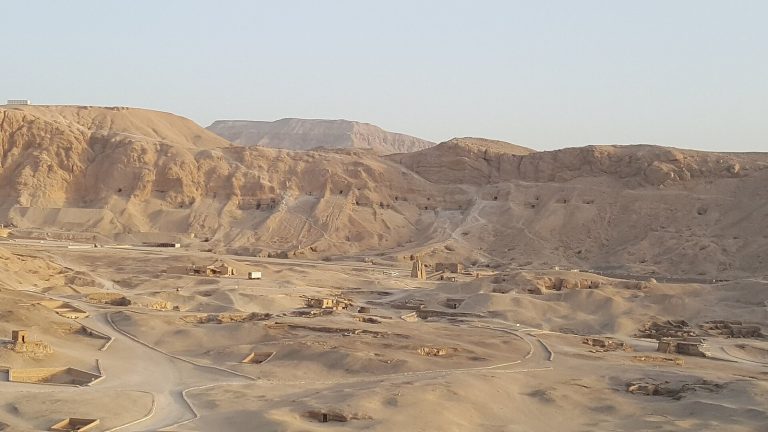
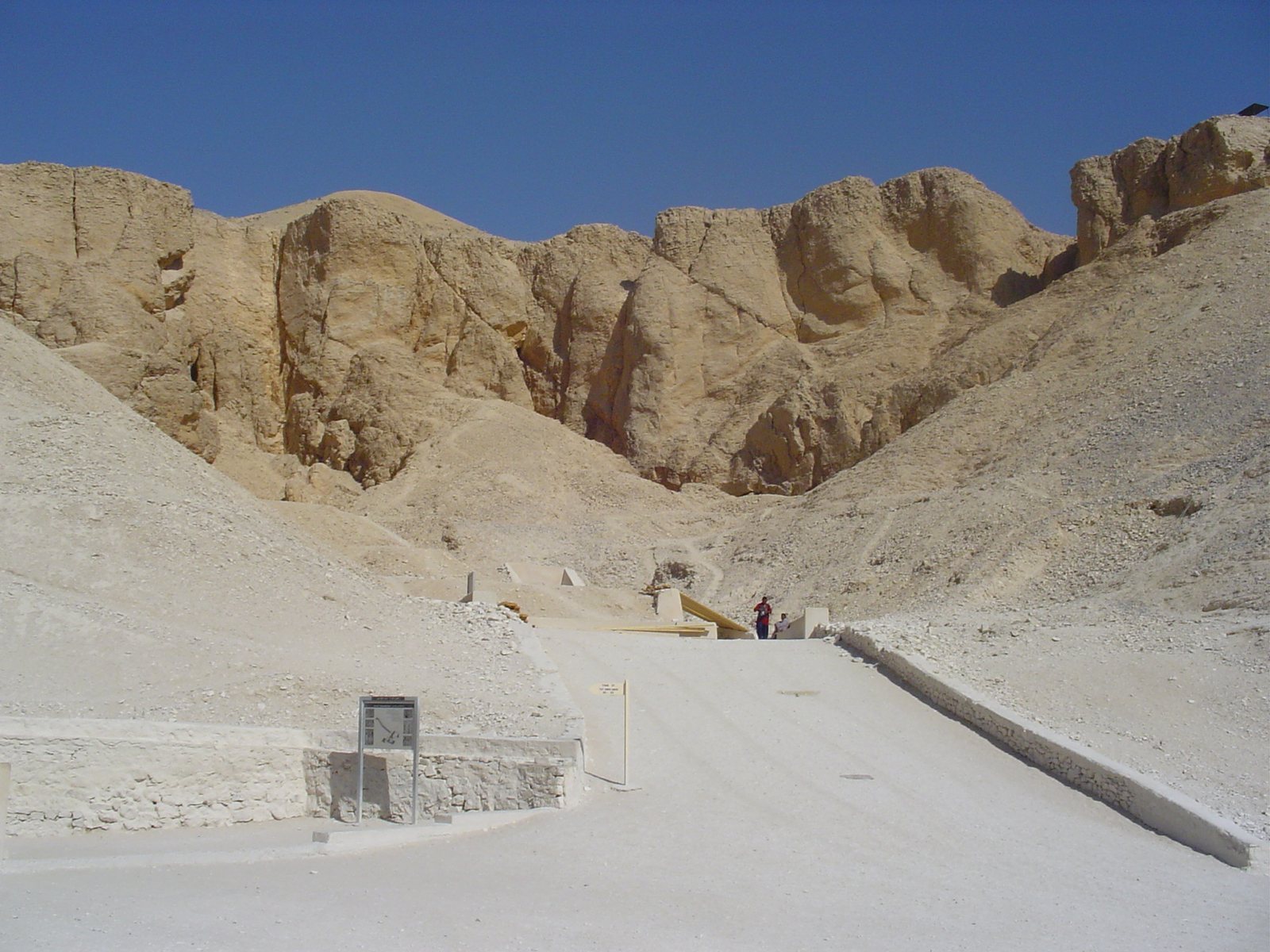
The Valley covers about 0.7 square kilometres and has two connected branches. The larger East Valley contains most known royal tombs, while the West Valley has fewer burials. The site is a wadi, a valley shaped by water flow, cut into limestone by ancient streams and rainfall. Tombs were fitted into natural clefts, behind slopes of loose rock, and along ridges left by ancient flood channels. The peak above the Valley has a pyramid-like profile when viewed from below.
Rock and flood processes
The bedrock changes with elevation: white Theban limestone lies at roughly 300 to 150 metres, Esna shale at about 150 to 90 metres, and Dakhla gypsum below that. Some tombs cross more than one rock layer. Because shale expands when wet, it can split surrounding stone and allow water into tombs. A geological fault runs along the Valley’s western side, where movement has displaced the ground by as much as 30 metres. At least seven active flood channels lead into the central Valley. A major flood near the end of the Eighteenth Dynasty buried tombs beneath metres of debris; KV55, KV62, and KV63 were cut into the original valley bedrock, more than five metres below today’s surface. Later ground levelling directed flood deposits farther down the Valley, while flash floods still carry debris into open tombs.
Tomb plans and decoration
Plans shaped by terrain and period
A typical tomb descends through a rock-cut corridor and one or more halls to a burial chamber. Early tombs were often placed high in cliffs beneath channels where storm water ran; as deposits accumulated, later tombs occupied the Valley floor, and builders also cut into slopes. Eighteenth-Dynasty plans commonly turn sharply at least once, with stairs and sometimes an oval chamber shaped like the frame around a royal name. The turns may reflect both the natural lines of the rock and religious ideas about the sun god’s journey through the night. The stone coffin was generally set across the approach corridor.
Nineteenth-Dynasty tombs usually follow a straighter, though still offset, route, sometimes using steep stairs. Wooden doors replaced the earlier practice of sealing entrances with stone, making inspection easier. Some tombs contain a finished side chamber that may have served as a false burial chamber. By the Twentieth Dynasty, plans were generally more direct: entrances opened at ground level, corridors widened, and the burial chamber and coffin were aligned with the entrance. A vertical shaft or a room intended for one could help collect rainwater and provide added security. After burial, builders sometimes filled upper corridors with rubble and concealed the entrances.
Wall decoration and burial objects
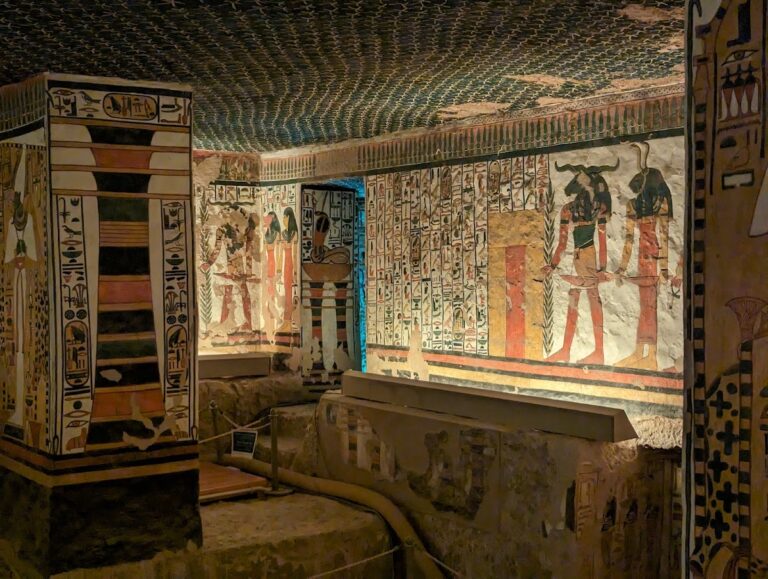
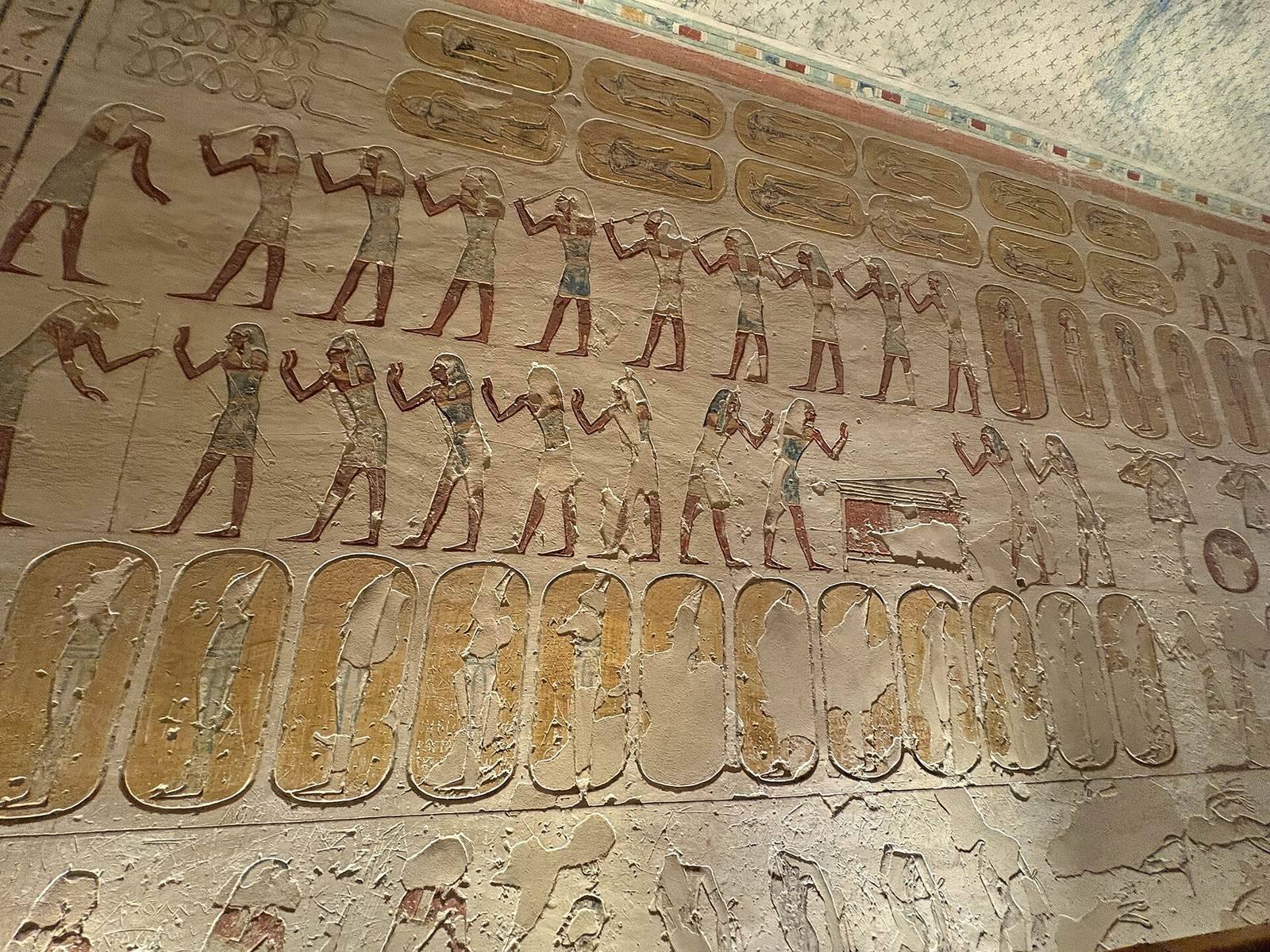
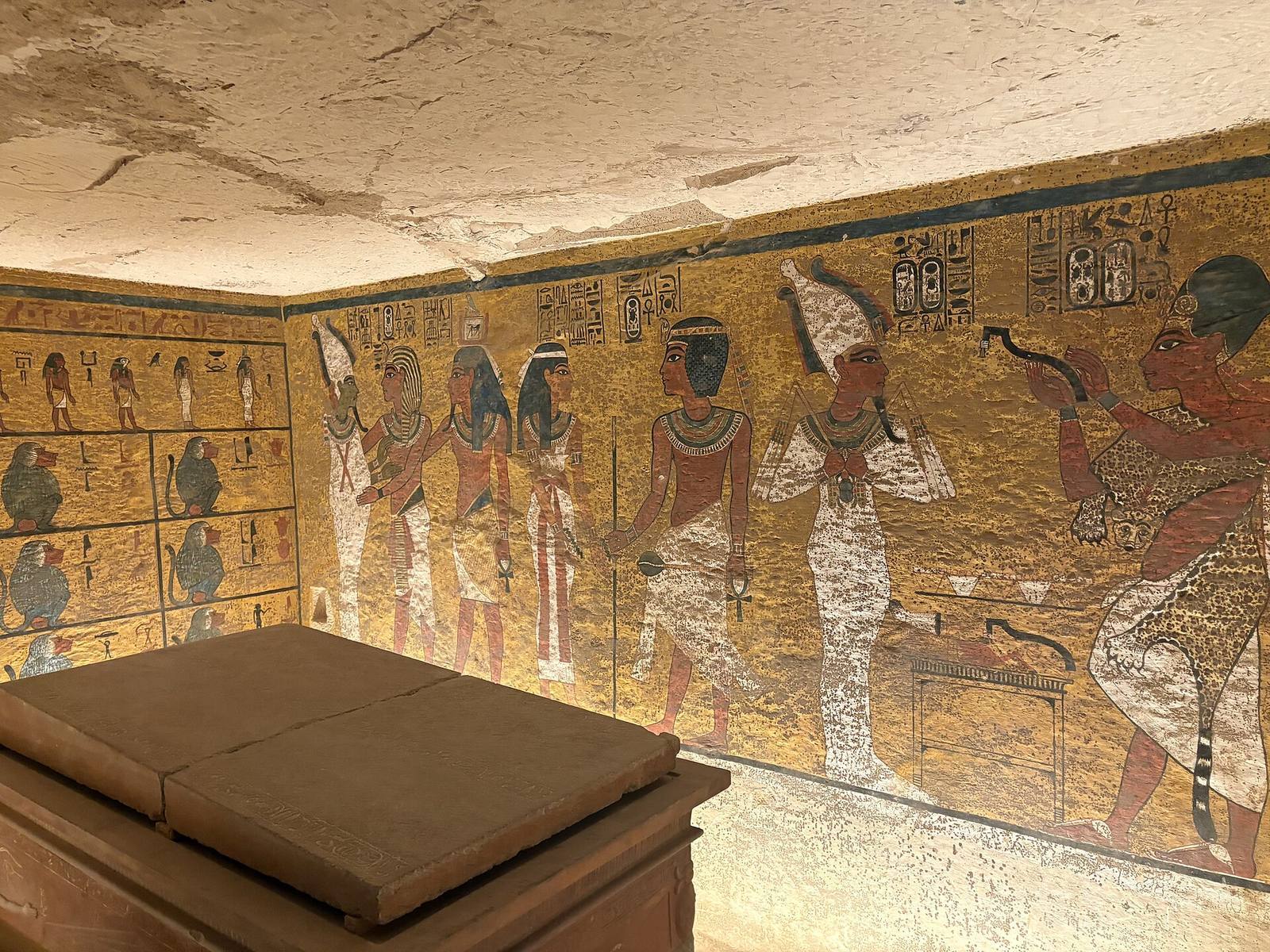
Royal tomb walls could carry carved reliefs, paintings, and religious texts. The Amduat describes the sun god’s passage through twelve hours of night. From the time of Horemheb, the Book of Gates, a funerary composition about passage into the afterlife, became prominent. Later tombs include the Book of Caverns, with a complete version in KV9, and the Book of the Earth in KV11. From the burial of Seti I onward, ceilings could also bear the Book of the Heavens; the Litany of Re appears in tomb decoration as well. Burial equipment included ritual objects, divine figures, and shabtis, small funerary figures intended to serve the deceased in the afterlife. Some items had belonged to their owners in life; Tutankhamun’s sandals are one such possession.
Examples of individual tombs
KV20 and the early cliff tombs
KV20, associated first with Thutmose I and later enlarged for Hatshepsut, descends in a winding course for more than 200 metres. Its burial chamber lies about 97 metres below the surface. KV34, the tomb of Thutmose III, and KV43, associated with Thutmose IV, are examples of early tombs cut into cliffs. KV43 has a sharply turning plan and an oval burial chamber shaped like the frame used for a royal name.
KV5
KV5 is a low-lying, extensive tomb associated with the sons of Ramesses II. More than 120 chambers are known, and about 150 rooms had been identified by 2017. Its position exposed it to flash flooding, and accumulated deposits concealed much of its extent.
KV6, KV8, KV11, and KV14
KV6, associated with Ramesses IX, extends about 105 metres into the hillside. Its substantial side chambers remain unfinished and undecorated, while a completed pillared hall served as the burial chamber. KV8, used for Merenptah, runs about 160 metres to a burial chamber that held four nested sarcophagi, or coffins, often made of stone. KV14, used by Tausert and later Setnakhte, extends more than 150 metres and has two burial chambers. KV11, later completed for Ramesses III, is among the Valley’s largest tombs.
KV9 and KV62
KV9, begun for Ramesses V and later taken over by Ramesses VI, has a corridor that passes above the entrance to KV62. Debris from work on KV9, followed by workers’ huts, helped cover the entrance to Tutankhamun’s relatively small tomb. KV62 was found largely intact, although robbers had entered it in antiquity. Its objects included personal possessions such as the king’s sandals. KV9 also preserves about a thousand visitor inscriptions, including a Greek text that associated the tomb with Memnon, a hero of the Trojan War.
KV63
KV63 is a single-chamber burial space found beneath the remains of workers’ huts. It contained wooden coffins shaped to resemble human bodies, painted funerary masks, and about twenty large pottery vessels bearing royal seal impressions. The chamber dates to the Eighteenth Dynasty.