Piprahwa: A Buddhist Stupa and Monastic Site in Uttar Pradesh
Site at a Glance
- Popularity
- Very High
- Country
- India
- Primary era
- Classical
- Eras represented
- Classical
- Civilizations
- Kushan, Mauryan
- Site type
- Religious
- Remains
- Stupa
On this page12 sections
History
Piprahwa is an archaeological site near Siddharthnagar in Uttar Pradesh, India, in the historical homeland of Gautama Buddha. About nine miles from Lumbini, believed to be the Buddha’s birthplace, it is associated with a Buddhist stupa, a monument built to enshrine relics or commemorate sacred events. Excavations have led to the interpretation that the stupa held a share of the Buddha’s ashes allotted to his Shakya clan, the group associated with him.
The Buddha’s relics and the stupa
The Mahāparinibbāna Sutta, a Buddhist text about the Buddha’s final days and death, recounts that his cremation around 480 BCE was followed by a dispute over his remains. The Brahmin Dona proposed dividing them among eight kingdoms. The Shakya received one portion, and the kingdoms enshrined their shares in eight stupas. Two more were built over the cremation-pyre ashes and the vessel used to gather the bones and ashes. Piprahwa’s stupa has been identified as the Shakya monument.
The stupa developed through several building phases. Its first structure is associated with the Shakya; a major enlargement is linked to Ashoka, an emperor who ruled in the third century BCE and became a patron of Buddhism. A later phase added monastic buildings and is thought likely to date to the Kushan period, roughly 250 years after Ashoka’s reign.
In the centuries that followed, Buddhism declined in the Buddha’s homeland amid a Hindu revival and successive invasions by Persians, Arabs, Mongols, Mughals and Huns. Statues were destroyed or decapitated during these invasions.
Excavations and the Kapilavastu question
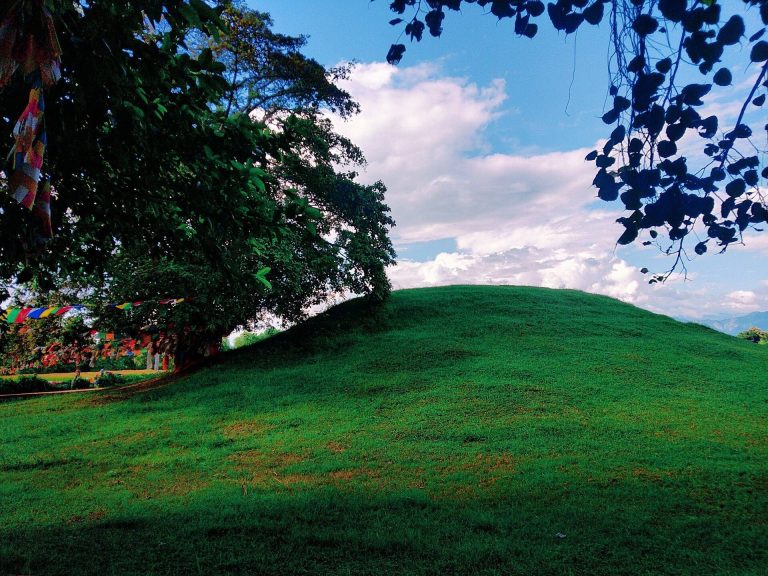
William Claxton Peppé, a British colonial engineer and landowner, began excavating a large mound at Piprahwa in 1897. The discovery of the Lumbini pillar had drawn his attention to the area. The famine of 1896–97 had also left tenant farmers on his estate in need of work. An Indologist had advised Peppé that the mound was an unusually early Buddhist stupa, probably dating to Ashoka’s era. The excavation uncovered containers and offerings, including a vase with an inscription that prompted debate about whether the bone fragments were remains of the Buddha.
Early readings, including one by Georg Bühler, interpreted the inscription as referring to relics of the Buddha. John Fleet later argued that it named relics belonging to the donors, but withdrew that reading after it was rejected. Specialists in inscriptions ultimately favored Auguste Barth’s interpretation, that the text described a gift associated with the Buddha’s relics. Harry Falk later supported Barth’s reading. The inscription’s date remains disputed: Ahmad Hasan Dani placed it in the first half of the second century BCE, while comparisons with Ashokan Brahmi, an early Indian writing system, have supported a third-century BCE date. Both datings have been used to argue that the stupa was built after the Buddha’s lifetime. Ashoka’s conversion to Buddhism and his order to build stupas and redistribute the Buddha’s remains have been proposed as an explanation for the interval.
In the 1970s, archaeologist K. M. Srivastava led an Archaeological Survey of India excavation that went deeper than Peppé’s and recovered further bone reliquaries. His work in the surrounding area also uncovered the Piprahwa–Ganwaria monastic complex. An inscription in Kushan script, found on terracotta sealings and a pot, refers to “the community of the monks of great Kapilavastu.” This has led some scholars to identify Piprahwa as Kapilavastu, the capital of the Shakya kingdom. Others place the ancient city at Tilaurakot, about 16 kilometres northwest in present-day Nepal. The question matters because Kapilavastu is associated with the Buddha’s early life.
Later speculation about interference in Peppé’s discovery was associated with Alois Anton Führer, a government archaeologist working about 18 miles away who was later exposed as a plagiarist and forger. A subsequent review of correspondence between Peppé, Vincent Smith and Führer concluded that Führer had not interfered with the find.
The relics after excavation
In 1899, the bone relics recovered by Peppé were given to an emissary of Rama V, king of Siam, the historical name for Thailand, and taken to Bangkok. Prince Prisdang, a former diplomat who had become a Buddhist monk, had advocated giving them to the king so they could be shared with Buddhist communities abroad. The relics were later distributed among the Golden Mount Temple in Bangkok, the Shwedagon Pagoda in Rangoon, the Arakan Pagoda in Mandalay, Dipaduttamarama Temple in Colombo, Waskaduwe Vihara in Kalutara and the Marichiwatta Stupa in Anuradhapura.
Some relics were offered to the monastic community of Ratanawan Monastery in December 2011 and enshrined there the following month. In 2025, India took legal steps to prevent the planned auction of gem relics retained by the Peppé family. The auction was postponed, and the Ministry of Culture later said the relics had been recovered for public display.
Remains
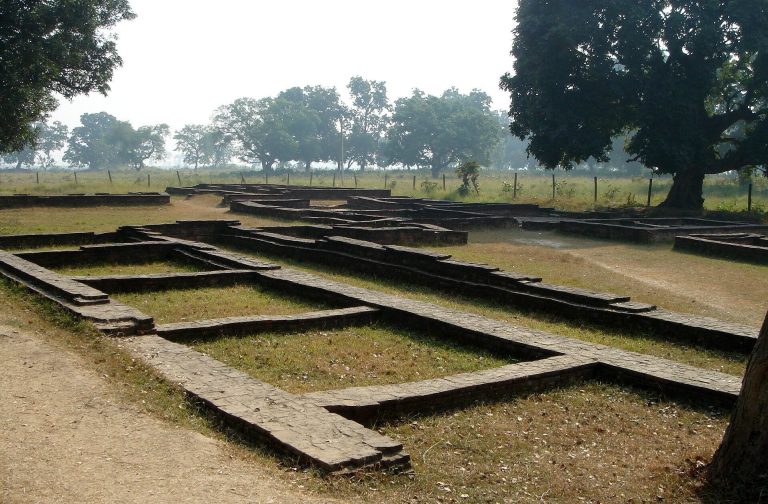
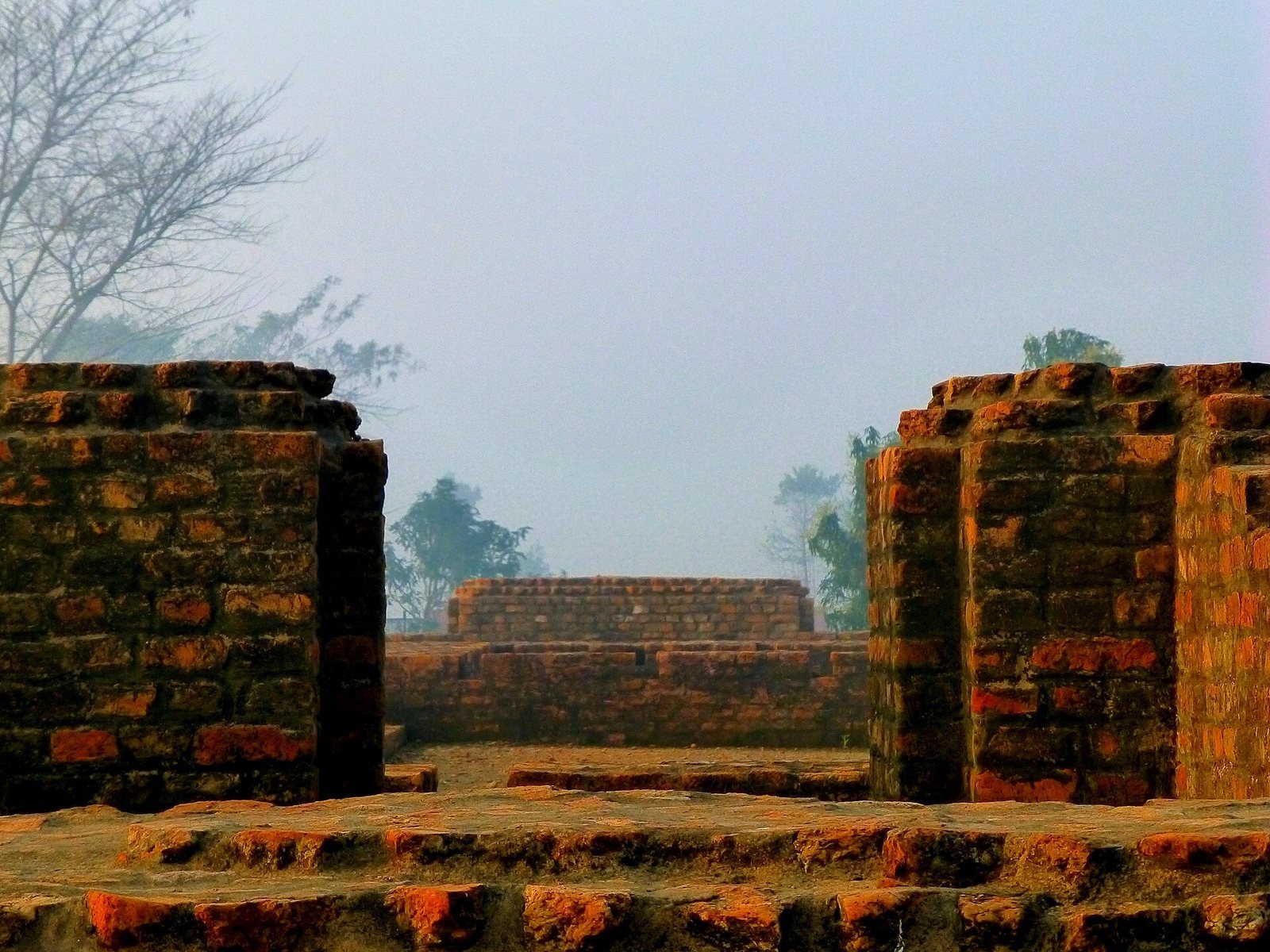
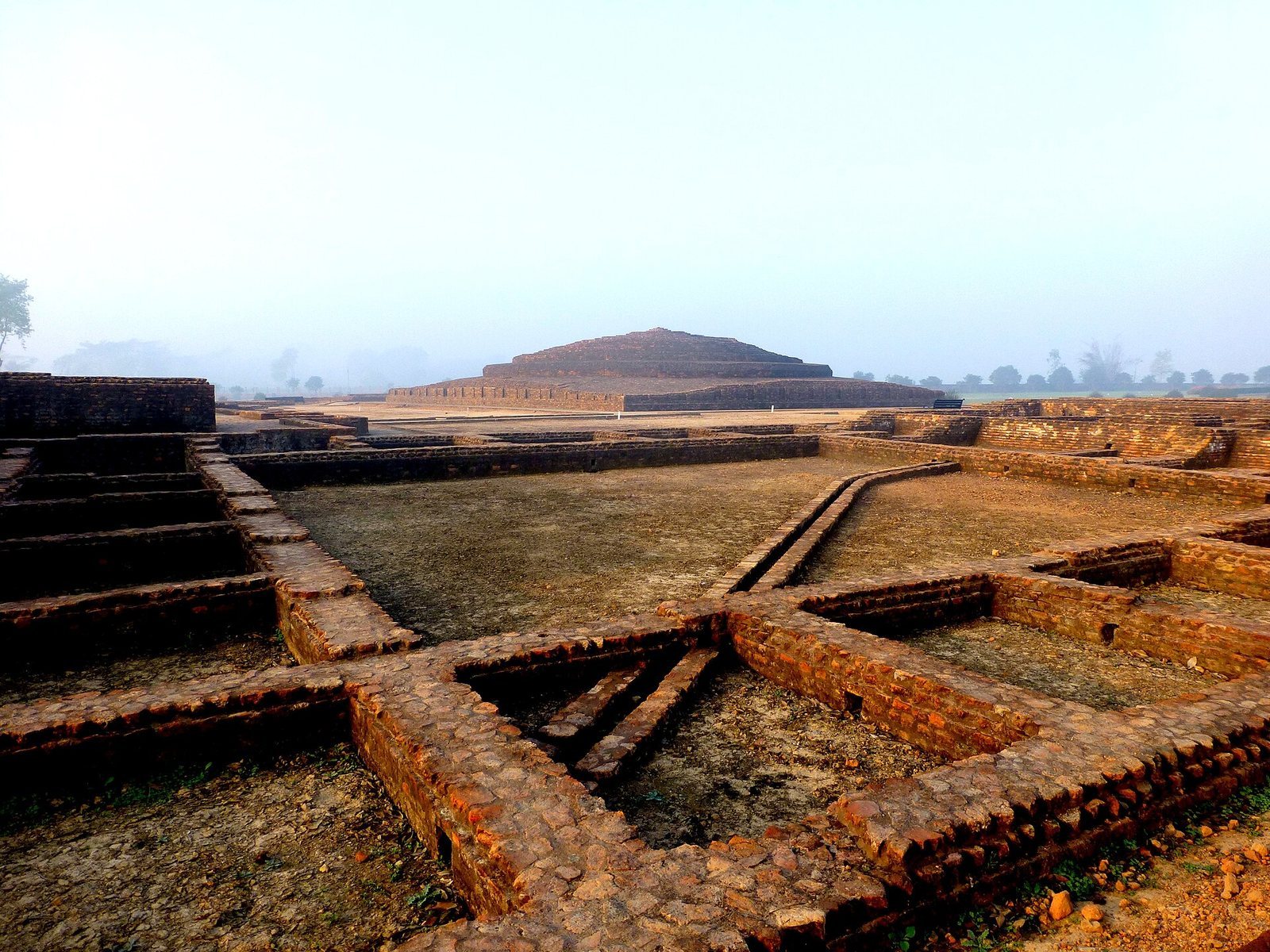
The archaeological area is organized around a large stupa built in successive mud, adobe and brick forms, with monastery ruins nearby. Excavations on the adjacent mound at Ganwaria revealed residential complexes and shrines. The surviving remains include deposits of bone fragments, objects and inscriptions associated with the stupa and monastic site.
The stupa
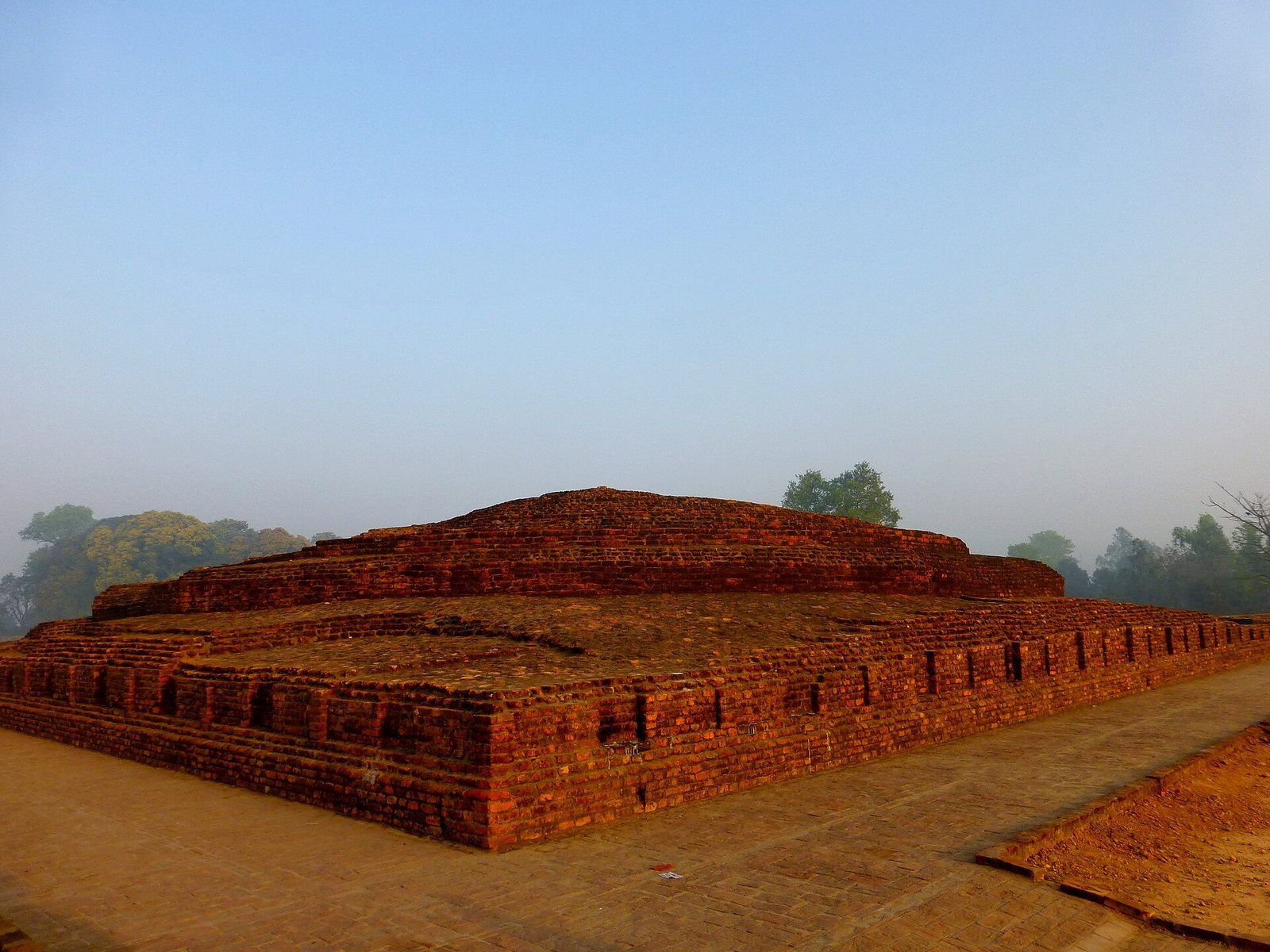
The earliest proposed structure was circular, made of mud and adobe, and measured 62 feet across and 12 feet high. It may have followed the Buddha’s instructions for burial beneath a mound placed beside a crossroads, where passersby could stop to pay their respects. A later enlargement, associated with Ashoka, used well-fired mud bricks mixed with rice and straw. The bricks were laid in concentric circles with clay mortar; the base measured 116 feet across and the structure stood 22 feet high. The enlargement may have continued for years after Ashoka’s death. In a third phase, the stupa was raised and its base squared off. The date of this work is unknown, though it is considered likely to belong to the Kushan period.
Relic deposits and inscriptions
Before Peppé’s excavation, vegetation covered the mound, which had remained intact for more than 2,000 years. His trench passed through 18 feet of brickwork before reaching a large stone coffer containing five small vases. The vases held bone fragments, gold ornaments and finely worked jewelry. The offerings included about 1,800 gemstones and semiprecious stones, many shaped and drilled, as well as rock crystal, pearls, shell, coral, embossed sheet gold and silver, granulated gold, bone and ash.
One vase bears a Brahmi inscription. Falk interpreted its wording for the enshrinement as referring not just to a container but to the stupa built to house the Buddha’s relics. Most of the gold and jewelry from Peppé’s discovery went to the Indian Museum in Kolkata, where a replica urn is displayed. Peppé kept some duplicate objects, while pieces from the find were also given to Prince Prisdang and his Buddhist teacher, Sri Subuthi. Objects from the discovery have been exhibited in museums in Zurich, New York, Singapore and Seoul.
Further reliquaries
Srivastava’s excavation uncovered two soapstone caskets containing small bone fragments. They lay in two burnt-brick chambers, each 32 inches square and 14 inches deep. Broken dishes that may have covered the caskets were identified as Northern Black Polished Ware, a distinctive polished pottery used to help date ancient deposits, and dated to 400–500 BCE. The bone fragments recovered by Srivastava’s team are held at the National Museum in New Delhi.
Monastic remains
Eastern Monastery
The Eastern Monastery, the largest structure after the stupa, measures 45.1 by 41.1 metres. Its courtyard is enclosed by more than 30 cells.
Other monasteries
The complex also includes Southern, Western and Northern Monasteries. Terracotta sealings and a pot bear the Kushan-script inscription referring to the community of monks of great Kapilavastu.
Ganwaria
On the mound adjacent to Piprahwa, excavations at Ganwaria uncovered ancient residential complexes and shrines, forming part of the surrounding monastic landscape.