Kapilavastu: Capital of the Shakya Polity and Childhood Home of the Buddha
Site at a Glance
- Rating
- 4.7
- Popularity
- Very Low
- Country
- India
- Primary era
- Iron Age
- Eras represented
- Iron Age, Classical
- Civilizations
- Unclassified
- Site type
- City
On this page8 sections
History
Kapilavastu was an ancient city-state and political center of the Shakya clan, associated with locations in present-day Nepal and India. It flourished in the eastern Gangetic plains during the sixth and fifth centuries BCE, in the late Iron Age, and is remembered in Buddhist tradition as the home of Siddhartha Gautama before he became the Buddha.
Origins and the Shakya polity
Buddhist foundation traditions connect the Shakyas with Okkaka, a legendary ancestor who ruled from Saketa before exiling his children. Four princes traveled toward the Himalayan foothills and settled near the hermitage of the sage Kapila. One tradition names Okkaka-mukha as the first ruler of the new kingdom. The name Kapilavastu is linked to Kapila and to vastu, or its Pali form vatthu, meaning land or place. Other Buddhist interpretations associate the name with a tawny or reddish landscape, perhaps referring to the area’s sand.
The Shakyas governed through a clan-based republic, or ganasangha, in which leading families selected a raja, a chief ruler. Important matters were discussed in an assembly chaired by that figure. Kapilavastu served as the center of the Shakya aristocracy, while surrounding villages retained considerable autonomy under Shakya protection and paid taxes to the polity. The territory was placed at the foot of the Himalayas, with Kosala to the west, the Licchavis and Magadha to the east, and the Rohini River separating it from Koliya lands to the north.
Traditional accounts describe the wider population as consisting mainly of farmers and livestock keepers living in dispersed forest villages. Craft workers practiced carpentry, metalworking, and pottery either in ordinary villages or in specialized settlements. Brahmin priests could be called upon for funerals and weddings. Kapilavastu had markets and small shops, but it was not described as having the large merchant communities associated with some other ancient Indian cities. Traditional figures for the population are based on genealogical and household information rather than an archaeological census.
The Shakya royal family
The Shakya succession is described as passing from Jayasena to his son Sihahanu and then to his grandson Shuddhodana. During Shuddhodana’s time, Kapilavastu was an urban center and a dependent state influenced by Kosala. Buddhist tradition identifies Shuddhodana as the father of Siddhartha Gautama and Maya as his mother. Siddhartha is said to have spent his youth at Kapilavastu before leaving his princely life at the age of 29 to seek liberation.
Kosalan king Pasenadi sought an alliance with the Shakyas through marriage. Mahanama, Shuddhodana’s successor, gave Pasenadi his daughter Vasabha as a secondary wife, although she had been born to a servant woman. Their son Virudhaka later took the Kosalan throne. Buddhist texts associate Virudhaka, also known as Vidudabha, with a retaliatory attack on the Shakya clan because of his mother’s status. These accounts state that Kapilavastu was destroyed and that surviving Shakyas migrated to establish or join other polities.
Abandonment and the search for the city
Kapilavastu remained a Buddhist pilgrimage destination for roughly a millennium after the Buddha’s death. Faxian visited in the early fifth century CE, traditionally dated to 403, and described an abandoned city overgrown with vegetation and containing only several dozen households. Xuanzang visited in the seventh century, traditionally dated to 636. Their pilgrimage accounts later became central evidence in attempts to identify the ancient city.
Buddhist influence eventually declined in the region as Hinduism and Islam became predominant, and by about the fourteenth century the precise location of Kapilavastu had been forgotten. Its rediscovery in the nineteenth century depended heavily on the records of Faxian and Xuanzang. Modern debate has centered on Tilaurakot in Nepal and Piprahwa in India. Nepal generally identifies Tilaurakot as Kapilavastu, while India identifies Piprahwa with the city and regards Tilaurakot as another Shakya-related site. Some interpretations place both within the wider Shakya territory, while others regard Piprahwa as a later settlement connected with descendants who escaped the destruction attributed to Virudhaka.
Excavations at Tilaurakot and other Tarai sites were carried out by Japanese researchers and Nepalese authorities in the 1970s, followed by work involving Hideichi Sakazume and others in the late 1980s. A 2001 investigation associated with UNESCO recovered pottery from approximately the eleventh to the sixth century BCE at Tilaurakot, but judged the surviving structural remains to be later than the Buddha’s lifetime. Nepal submitted Lumbini and Tilaurakot to UNESCO in 1996 as part of a proposed heritage area connected with the Buddha’s birthplace. Lumbini entered the tentative list in 1997, while Tilaurakot underwent further expert assessment concerning its archaeological evidence, development pressures, and management.
Remains
The physical remains associated with Kapilavastu cannot yet be assigned with certainty to a single archaeological plan. Tilaurakot in Nepal’s Tarai region and Piprahwa in Uttar Pradesh, India, near the modern border, offer different bodies of evidence. Both sites contain material connected with the period of early Buddhism, but their surviving remains have not resolved the question of which location was the ancient Shakya city described in Buddhist literature.
Tilaurakot
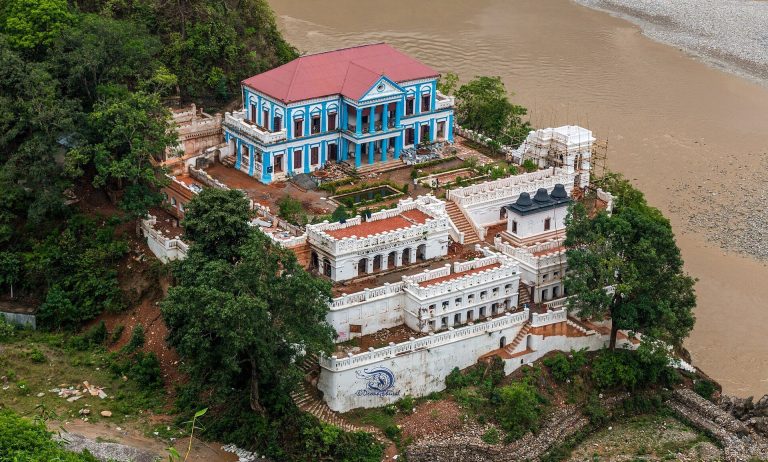
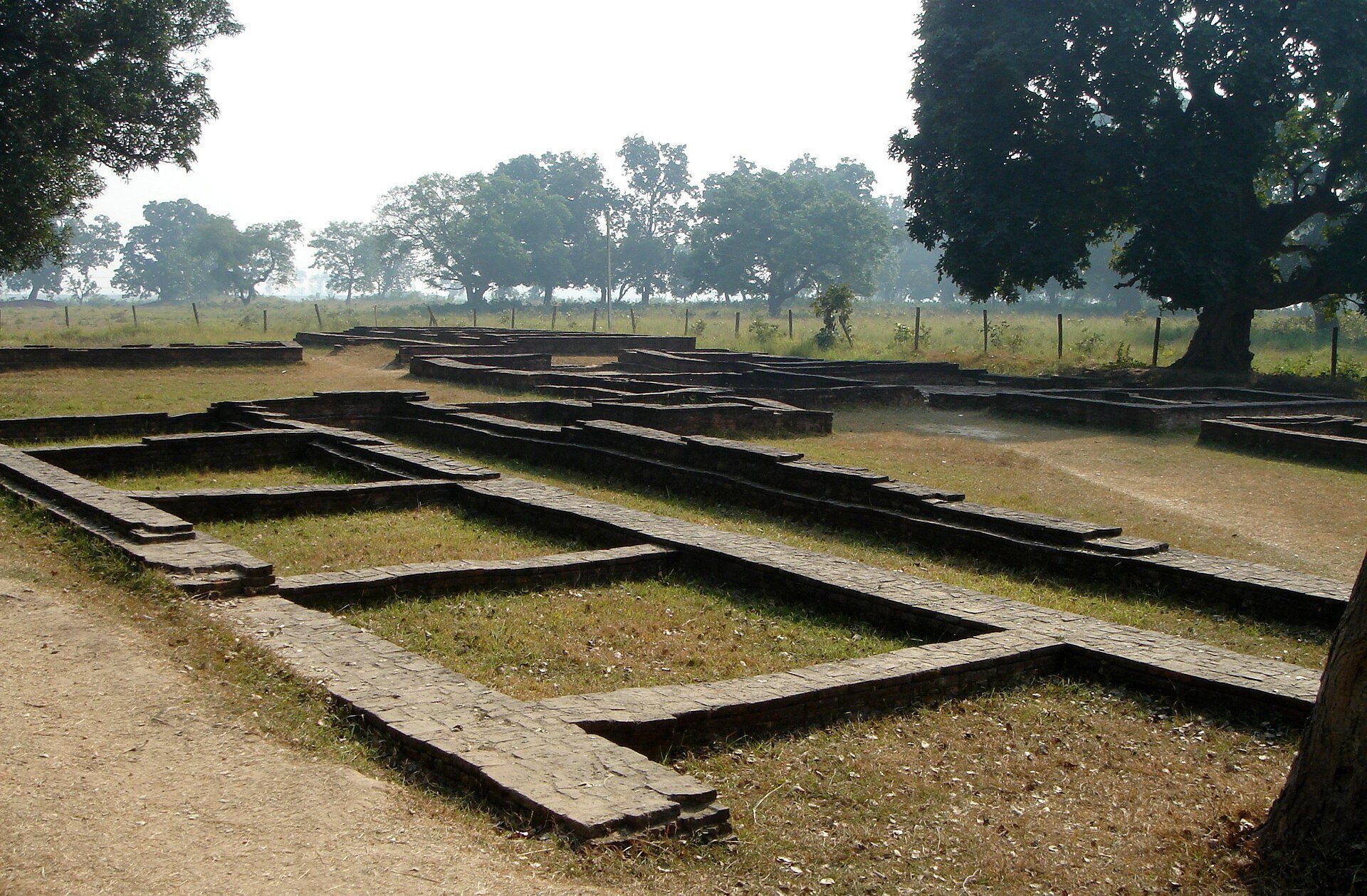
Tilaurakot contains archaeological remains interpreted by some researchers as those of Kapilavastu, including a proposed location for Shuddhodana’s palace. Pottery from the area dates approximately from the eleventh century BCE to the sixth century BCE, indicating early activity in the region. This material establishes the antiquity of occupation around the site, while the surviving structures have been judged in some investigations to date later than the Buddha’s lifetime. The difference between the early pottery and the later structural remains is central to the continuing debate over Tilaurakot’s identity.
Piprahwa
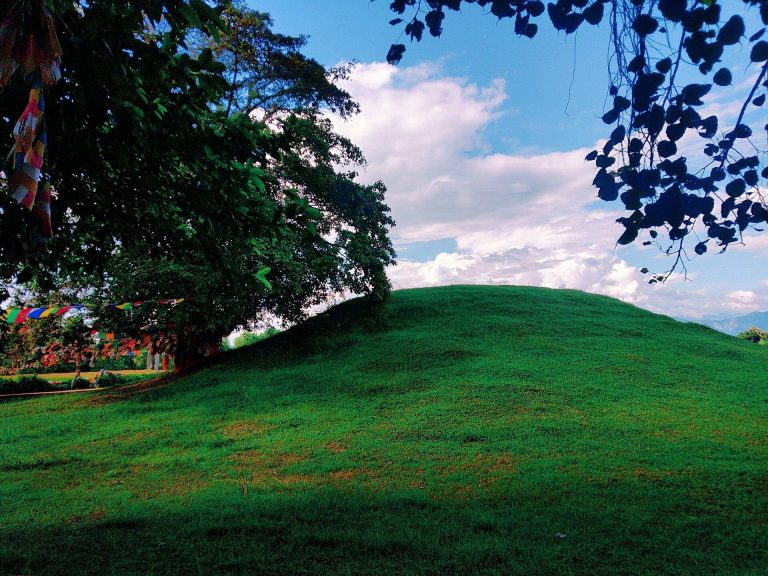
Piprahwa contains a stupa and monasteries associated with an important early Buddhist complex. In 1898, William Claxton Peppe excavated a mud stupa and recovered a reliquary, a container for sacred remains, together with other vessels and objects. An inscription on one of the vessels refers to the relics of Gautama Siddhartha and his family. Some of the finds were later presented to Rama V of Siam. The Buddha image and relics were subsequently enshrined at Nittai-ji in Nagoya, while the texts were held by Otani University Library in Kyoto.
Excavations at Piprahwa during the 1970s recovered seals or sealings bearing the word Kapilavastu. These objects have been used to support the identification of Piprahwa with the ancient city, although that interpretation remains contested. Other interpretations regard the site as an important early Buddhist establishment or as a later settlement associated with Shakya descendants rather than the principal royal center itself.
Images and associations
Early Buddhist art preserves a scene of the Buddha’s departure from Kapilavastu on the northern gateway of Stupa 1 at Sanchi. Another motif associated with the city is the elephant dream of Queen Maya, an episode linked with the Buddha’s birth tradition and treated as an identifying symbol of Kapilavastu.