Ramagrama Stupa: A Buddhist Relic Monument in Nepal
Site at a Glance
- Rating
- 4.5
- Popularity
- Low
- Country
- Nepal
- Primary era
- Classical
- Eras represented
- Classical
- Civilizations
- Kushan
- Site type
- Religious
- Remains
- Stupa
On this page7 sections
History
Ramagrama Stupa is a Buddhist relic monument in Ramgram Municipality, Parasi District, Nepal. Associated with Theravada Buddhism, it was constructed between the Mauryan and Gupta periods, and repairs may have taken place during the Gupta period. The stupa has remained a place of Buddhist reverence and pilgrimage since its construction.
The Koliya kingdom and the original relic stupas
Buddhist tradition connects Ramagrama with the Koliya kingdom, whose capital was also called Koliyanagara. After Gautama Buddha’s Mahaparinirvana, meaning his final passing and release from rebirth, his cremated remains were divided among eight of the sixteen mahajanapadas, the major states of ancient northern India associated with the Buddha’s lifetime. Each recipient is said to have built a stupa to preserve its share of the relics.
The other seven original relic stupas were traditionally linked with Allakappa, Kapilavastu, Kusinara, Pava, Rajagaha, Vesali, and Vethadipa. The locations of Allakappa and Vethadipa remain unknown, while the position of the Kapilavastu stupa is disputed, with evidence connecting it to Piprahwa. Within this traditional group, Nepalese archaeologists regard Ramagrama as the only intact original stupa believed to preserve relics of the Buddha.
Ashoka and the relic tradition
About three centuries later, the Mauryan emperor Ashoka sought to open the eight original stupas and redistribute their relics among 84,000 new stupas planned across his empire. Buddhist textual tradition states that a powerful naga, a serpent-associated guardian being in South Asian religious traditions, protected Ramagrama and prevented the removal of its relics. This tradition explains why the monument is regarded as the only one of the original eight that was left undisturbed.
Theravada texts, including the Mahavamsa, a major Sri Lankan Buddhist historical chronicle, add a later account of damage and recovery. A major flood is said to have damaged the stupa and carried away the reliquary containing the Buddha’s corporeal relics. According to the tradition, nagas recovered the relics and enshrined them in their realm before the Buddhist sangha, the monastic community, transported them to Sri Lanka in 140 BCE. They were then said to have been placed in the Ruwanwelisaya Stupa at Anuradhapura, built by King Dutugamunu.
Archaeology and modern conservation
Research by Nepal’s Department of Archaeology places the construction of the monument between the Mauryan and Gupta periods, while also allowing for repairs during the Gupta period. UNESCO added Ramagrama to its World Heritage Tentative List in the cultural category on 23 May 1996.
On 23 October 2023, the Lumbini Development Trust and the Promised Land, with support from the Moksha Foundation, signed a memorandum concerning the protection, preservation, conservation, development, and management of the stupa. The initiative was undertaken by Lharkyal Lama, vice-chairman of the Lumbini Development Trust. On 12 December 2023, a World Peace Program at Ramagrama was associated with the unveiling of a conservation and enhancement master plan involving Nepal’s Prime Minister Pushpa Kamal Dahal and architect Stefano Boeri.
Remains
The brick-and-earth stupa
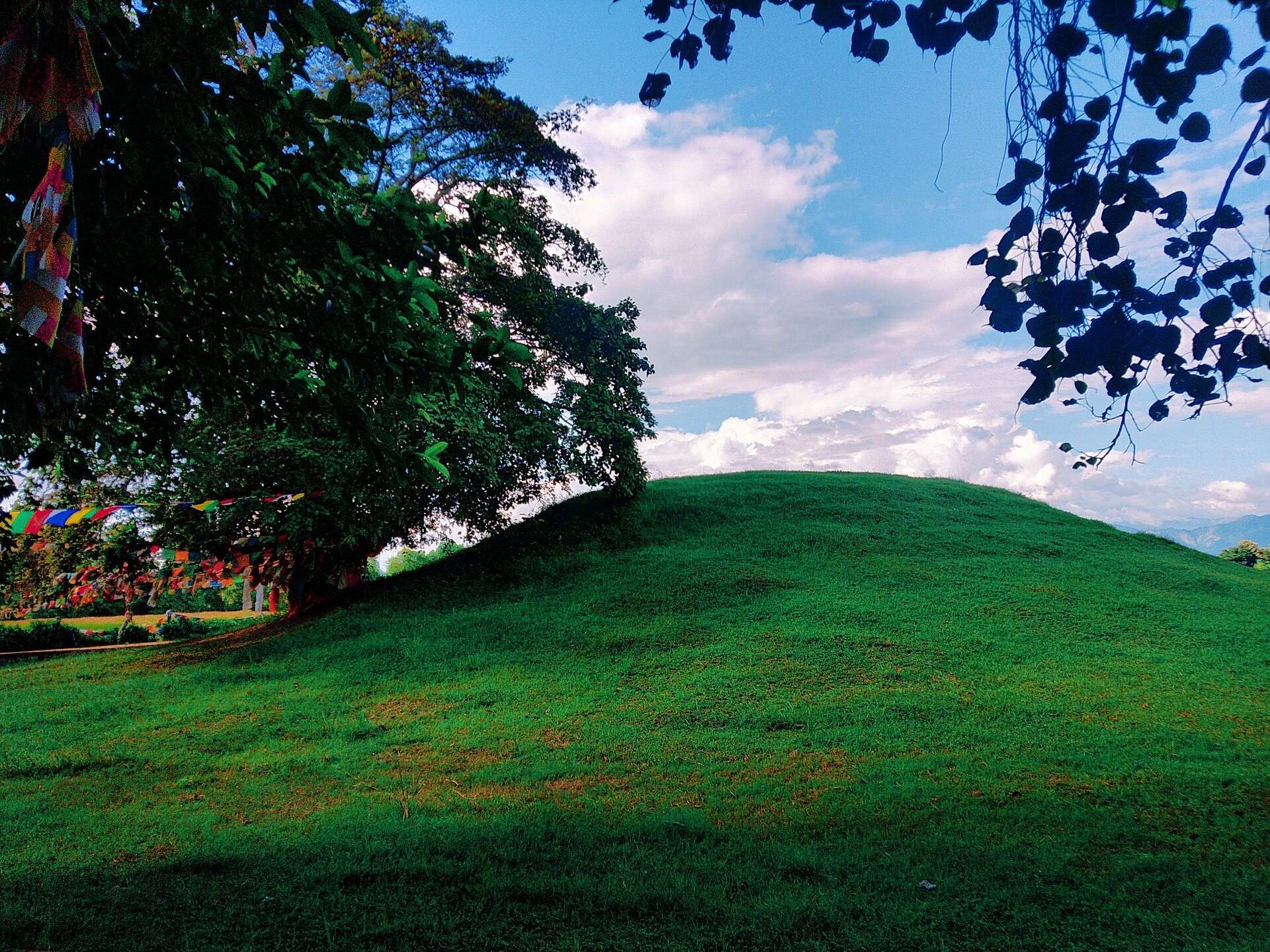
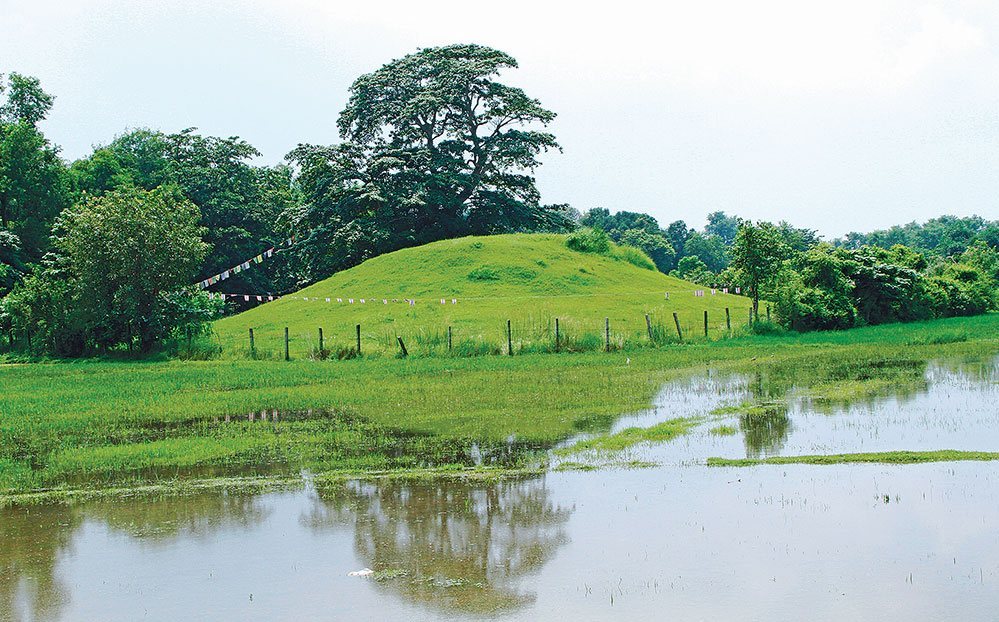
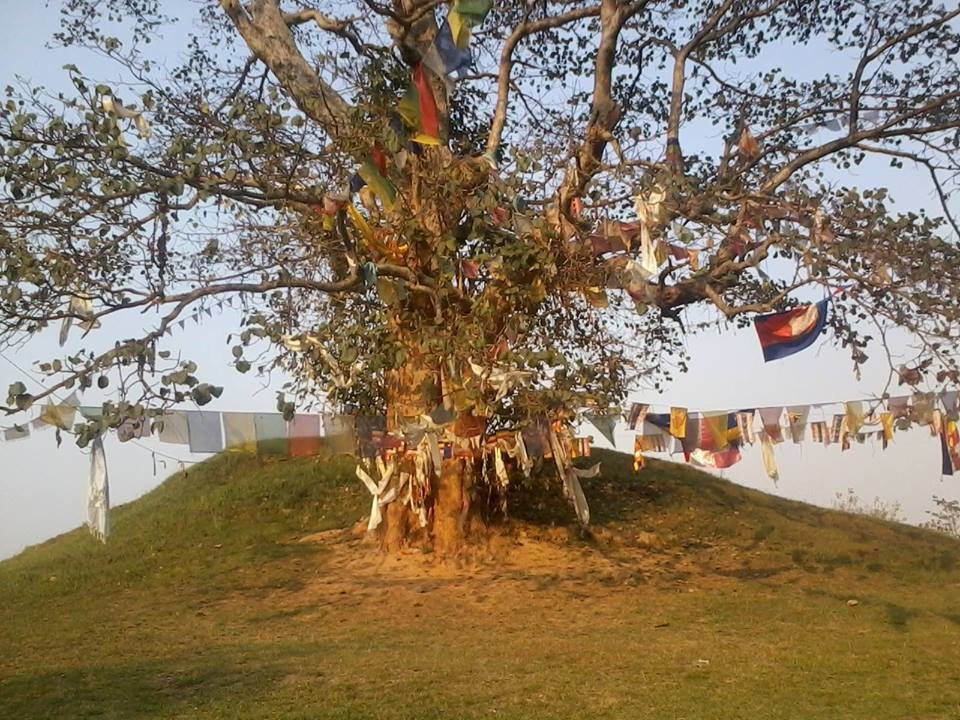
Ramagrama Stupa is built of brick and earth and survives beneath an earthen mound. The monument is listed as approximately 50 metres long and 50 metres wide. The surviving stupa is about 7 metres high, while the stupa complex is described as approximately 10 metres high and 23.5 metres in diameter. Its central core, believed to contain the relics, remains unexcavated and awaits further archaeological research.
A sacred bodhi tree, identified as Ficus religiosa, stands near the stupa. Its presence forms part of the religious setting surrounding the relic monument and its continuing Buddhist associations.
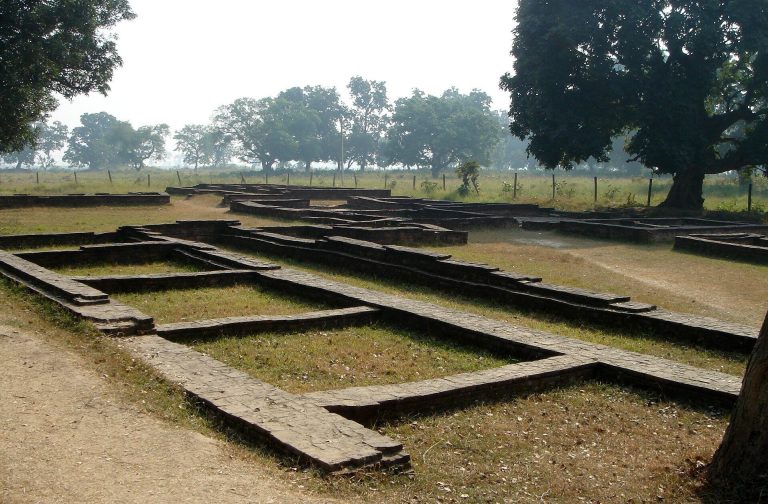
The buried monastery
A geophysical survey revealed a complete quadrangular monastery beneath the surface. The structure dates to the Kushan period, an era when the Kushan Empire supported Buddhist institutions and urban development across parts of Central and South Asia. Its dense concentration of bricks prevented crops from growing, and the area consequently became known as the “unlucky field.”