Lapley Priory: A Medieval Benedictine House in Staffordshire
Site at a Glance
- Popularity
- Low
- Country
- United Kingdom
- Primary era
- Medieval
- Eras represented
- Medieval, Early Modern
- Civilizations
- English
- Site type
- Religious
- Remains
- Monastery
On this page10 sections
History
Lapley Priory was a Benedictine religious house in Lapley, Staffordshire, United Kingdom, dependent on the Abbey of Saint-Remi at Reims in northern France. Its members followed the Rule of Saint Benedict, a guide to communal monastic life. As an alien priory, an English house subordinate to a religious institution abroad, it was vulnerable to royal seizure during wars with France. Its origins lie in a land grant made around 1061, while a distinct priory is securely evidenced only in the twelfth century. The house was dedicated to St Peter and belonged to the Diocese of Coventry and Lichfield.
Land grant and establishment
The foundation tradition links the grant to Burchard, son of Ælfgar, Earl of Mercia. While travelling to Reims with Ealdred, Archbishop of York, Burchard became mortally ill and asked to be buried at Saint-Remi in return for a donation of land. Ælfgar then gave the abbey properties at Lapley, Hamstall Ridware, Meaford, Marston in Church Eaton, and Silvington for his son’s soul. Edward the Confessor consented to the grant, which was intended to support two chaplains saying Mass each day at the abbey. The grant’s date does not establish when a priory began operating at Lapley.
Saint-Remi held these lands before the Norman Conquest. The Domesday Book lists the abbey’s holdings in 1086, including a small presence at Marston, where two of its men held one hide. The survey places Lapley and Marston under Northamptonshire while also associating them with Cuttlestone Hundred in Staffordshire. The date at which the abbey established a separate house at Lapley remains uncertain. One may have existed in the early twelfth century, but the community is securely attested during the abbacy of Peter Cellensis, from 1162 to 1181, when he wrote to a prior there and referred to the brothers.
Under Henry I, Saint-Remi’s rights to Marston and lands in Shropshire were confirmed, and its monks were exempted from attending hundred and shire courts. A monk called Godric, also known as Godwin and probably an early prior, successfully challenged Robert of Rouen, the king’s chaplain, over a claim to Lapley church. The king confirmed the monks’ rights to the church, its tithes, and payments associated with burials. Pope Alexander III also appears to have confirmed Saint-Remi’s titles to land and property.
Parish, estates, and local authority
The priory could nominate the priest of Lapley church, a right known as an advowson. In 1266 a bishop’s visitation found the vicarage inadequately funded and ordered the priory to provide better support. In 1319 Bishop Walter Langton recognized the priory’s rights over Lapley church and its chapel at Wheaton Aston, including the assignment of church income and duties to the house.
The community usually numbered only two or three monks, most of them French. The abbot of Saint-Remi appointed the prior, whom the Bishop of Coventry and Lichfield formally installed. The priory’s monks managed Lapley and nearby Marston themselves, with lay assistance, while leasing more distant estates. Its holdings also made it a local landowner with secular responsibilities. Tenants owed services or payments, and the priory claimed the right to hold a view of frankpledge, a system making groups of tenants responsible for local order. It also claimed rights to maintain gallows and hunt specified game on its lands. A 1292 charter confirmed a weekly fair and annual market at Aston.
The house’s authority could lead to disputes. After Walter of Ridware died in 1242, the prior became involved in a contest over the dower rights to land at Hamstall Ridware and had to compensate the manor lord when Matilda’s claim succeeded. In 1382 tenant Geoffrey Cartwright challenged the seizure of his horse at Wheaton Aston, which the prior’s representatives said they had taken because Cartwright had failed to supply workers for the priory’s land. A jury found for Cartwright and awarded him damages.
War, royal seizure, and declining fortunes
Lapley’s connection to France repeatedly brought royal intervention. In 1204, after King John lost Normandy to Philip II of France, the Crown seized the alien priories. Prior Inganus regained control after making payments to the king. Priors also needed permission to travel overseas to visit their mother house. The priory was seized again in 1324 during war with France, then restored on condition that it pay the Crown an annual rent. Edward III restored the alien houses in 1327 and ended those payments, but the Hundred Years’ War, a series of conflicts between the English and French crowns, began in 1337 and brought further seizures.
In the 1330s a bitter contest over the priory’s leadership added to its difficulties. Baldwin de Spynale successfully challenged Gobert de Lapion’s claim to office before Bishop Roger Northburgh’s court in 1334, and Gobert was excommunicated. Baldwin accused the vicar of Lapley and others of raiding his residence and taking livestock. Further accusations followed, and Edward III ordered inquiries into the dispute and claims to the priory’s advowson. As the Crown took control of the house and repeatedly leased it to different holders, its income and religious life deteriorated. By 1338 the rent had been reduced because the priory could no longer support Baldwin or maintain its usual worship.
Baldwin regained control in 1346, but the Black Death, a devastating plague pandemic, and a major fire in 1354 further impoverished the house. The Crown pardoned substantial arrears, and in 1361, after peace with France, it restored the alien priories’ lands and property. Renewed warfare again brought financial pressure. In 1384 Richard II granted Lapley to his esquire Richard de Hampton, and later leases and grants continued to place the priory under lay control. These changes reflected the Crown’s treatment of the house as both a religious community and a source of revenue.
Dissolution and later ownership
In 1402 Henry IV required the heads of alien houses to show whether their communities governed themselves through a monastic chapter. Lapley was treated as a dependent cell rather than a self-governing house, and the Crown assigned its revenues to successive leaseholders. Henry V dissolved the priory in 1415 as part of his suppression of alien religious houses while preparing for the campaign that culminated at Agincourt. On 15 June that year, its estates were granted to Tong College, a collegiate institution served by clergy rather than a community of monks.
The lands remained with Tong College until the suppression of collegiate churches and chantries under Henry VIII and Edward VI. The Crown took possession of the college in 1546, and the Lapley estate was subsequently conveyed with it to Sir Richard Manners. Manners received permission to sell Lapley to Robert Broke in 1548. The Broke family retained the estate until after the English Civil War; by 1667–1668, Sir Theophilus Biddulph held the estate and the right to nominate the church’s priest. All Saints’ Church is now Grade I listed, and Lapley Manor is Grade II listed.
Remains
Precinct and fire damage
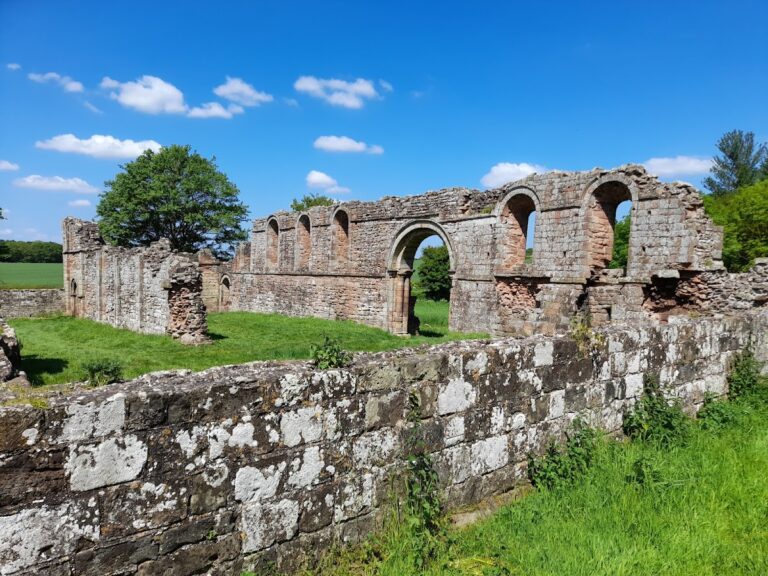
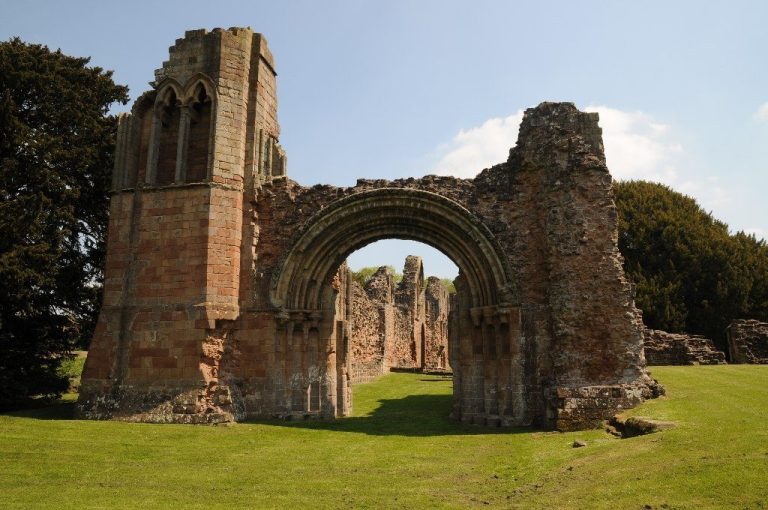
The priory stood north of the parish church, and both buildings were surrounded by a moat. A fire in 1354 devastated the priory church and living quarters. An inquiry that year valued the four buildings then surviving at one shilling each. Two watermills and a windmill were out of operation, and three ponds had dried up.
Surviving buildings
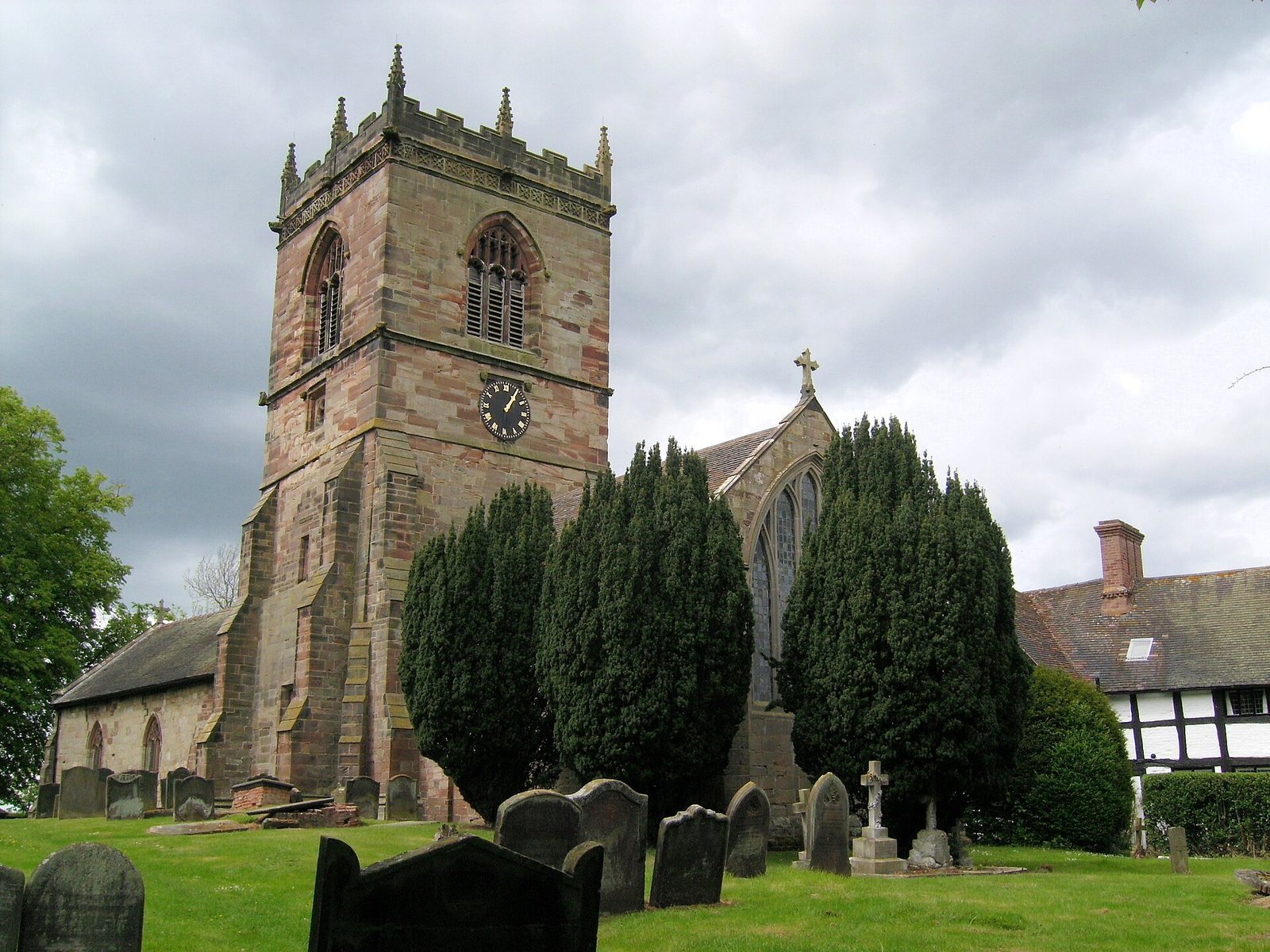
All Saints’ Church
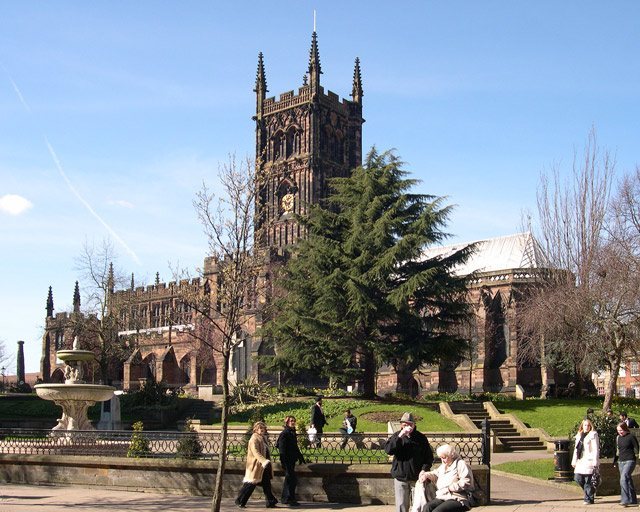
All Saints’ Church retains substantial fabric from the twelfth century, around the period when a priory was established at Lapley. Its walls are built of red and white sandstone blocks. In the fifteenth century, probably during Tong College’s ownership, new windows and a tower were added. The church remained largely unchanged into the early modern period and was restored in the nineteenth century.
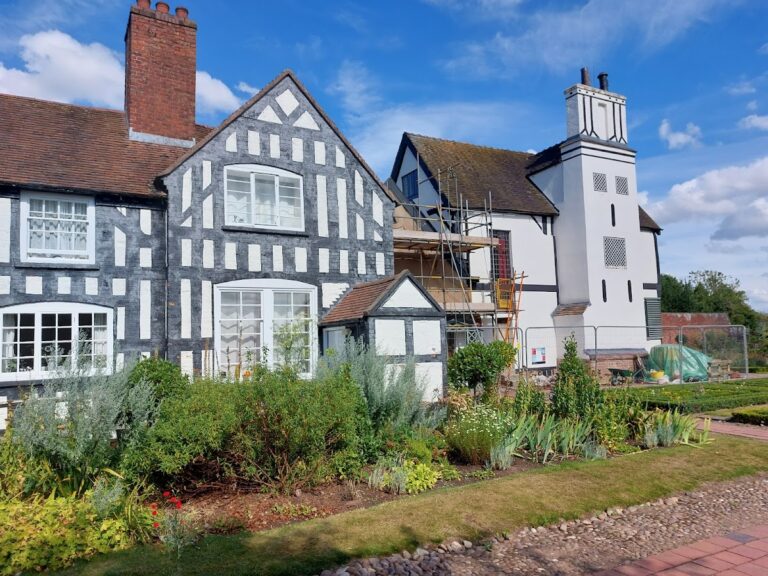
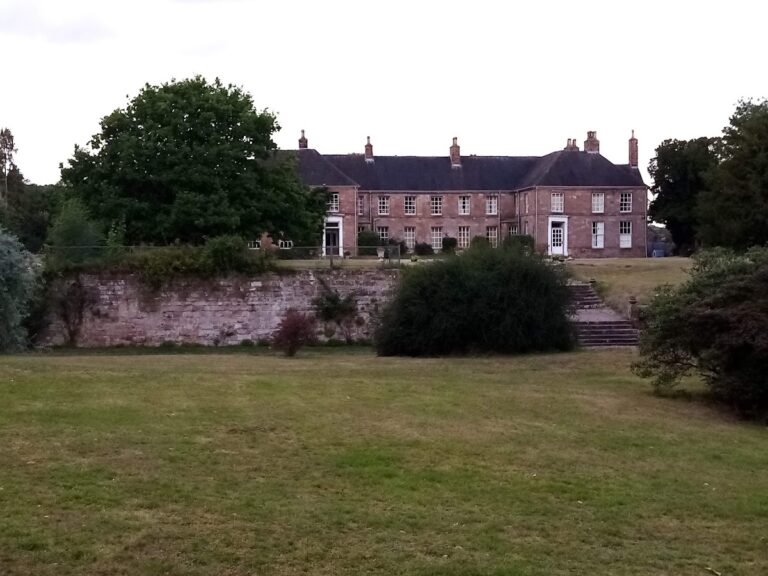
Lapley Manor
Lapley Manor is a timber-framed building behind the church, on the site of the former priory buildings. The manor dates to the late sixteenth century and was probably built by the Broke family.