Eccleshall Castle: A Medieval Fortress and Episcopal Residence in England


Site at a Glance
- Rating
- 4.5
- Popularity
- Very Low
- Country
- United Kingdom
- Primary era
- Medieval
- External website
- Open
- Eras represented
- Medieval, Early Modern
- Civilizations
- English
- Site type
- Domestic
- Remains
- Castle
On this page10 sections
History
Eccleshall Castle is a medieval castle and later episcopal residence in Eccleshall, England, United Kingdom. Originally built in the thirteenth century, it became an important base for the Diocese of Lichfield because it stood on the main road between the diocesan centres of Chester, Lichfield, and Coventry.
Medieval origins and rebuilding
The land was reputedly granted to St Chad, a seventh-century Christian bishop associated with the establishment of the see of Lichfield. In 1200, Bishop Geoffrey de Muschamp received from King John a licence to crenellate, meaning royal permission to fortify a residence or build defensive works at Eccleshall.
The first castle was replaced in 1305 by a larger one commissioned by Bishop Walter Langton, who also served as Chancellor of England. This rebuilding created the principal medieval stronghold whose surviving fragments later became part of the present house and its associated buildings.
The Wars of the Roses and Civil War
Eccleshall Castle entered the conflicts known as the Wars of the Roses, the fifteenth-century dynastic struggles between the houses of Lancaster and York for the English throne. After the Battle of Blore Heath in 1459, Margaret of Anjou, queen consort of Henry VI, took refuge at the castle.
In June 1643, during the English Civil War, Sir William Brereton and Parliamentary forces besieged the castle. Parliament supported the forces opposing King Charles I, while Royalists supported the king. The besiegers established their camp around the church, and their guns severely damaged the walls. The castle held out until its capture on 30 August.
Bishop Robert Wright sheltered inside during the siege and died of a heart attack. When the castle fell, most of its defenders were drunk or had left for taverns in the town. The captured stronghold was then slighted, meaning deliberately damaged or partly demolished so it could no longer function effectively as a fortress. Surviving parts were later used as a prison for Royalist gentry. The castle and grounds were confiscated and sold before being bought back by the diocese.
Later episcopal residence
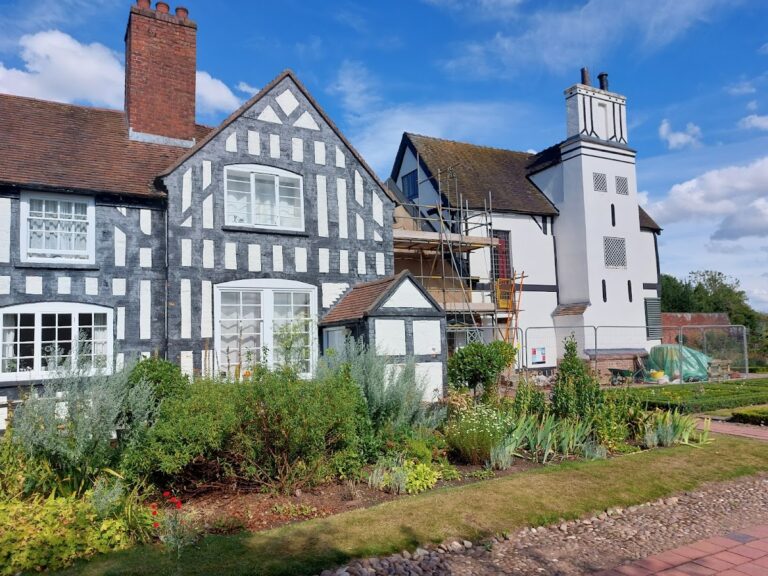
In 1693, William Lloyd, Bishop of Lichfield and Coventry, built the present house among the medieval ruins. The house incorporated fragments of the slighted fourteenth-century castle and remained the home of successive bishops of Lichfield. Sir Walter Scott, the nineteenth-century Scottish novelist and poet, frequently stayed there as a guest of James Cornwallis, the bishop at the time. John Lonsdale was the last bishop to live in the house; he died there in 1867.
Eccleshall Castle is now privately owned and has been the home of the Carter-Motley family for more than a hundred years. It is a Scheduled Monument, a nationally protected archaeological or historic site in England, and a Grade II* listed building, a designation for a building of particular importance with more than special interest.
Remains
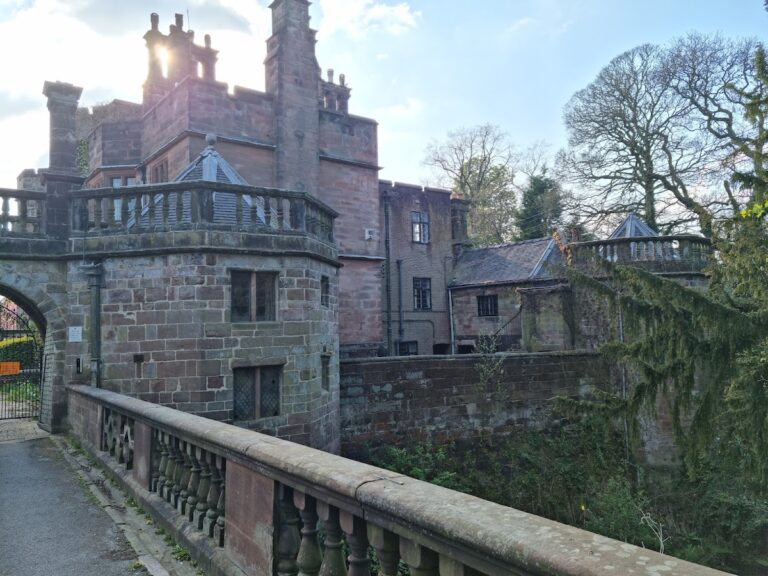
The present house occupies the medieval castle site among surviving fragments of the fourteenth-century structure. The remains include parts of an unusual nine-sided tower, the walls of the moat, and a medieval bridge. These elements survived the seventeenth-century slighting and were later connected with the castle’s use as a prison.
Surviving medieval fabric
Nine-sided tower
The unusual nine-sided tower is one of the surviving elements of the medieval castle. Its remains form part of the physical fabric retained among the later buildings after the castle was damaged and partly demolished in the seventeenth century.
Moat walls
Sections of the moat walls also remain. They belong to the defensive works surrounding the medieval castle and were among the structures retained after the site was slighted. The moat itself was later drained.
Medieval bridge
A medieval bridge survives as another part of the castle’s earlier layout. Like the tower and moat walls, it was later used in connection with the prison established within the remaining castle structures.
Later house and grounds
The house built in 1693 stands within the medieval ruins and incorporates surviving castle fragments. An eighteenth-century gatehouse was later demolished, while the drained moat altered the defensive landscape. The castle stands at approximately 92 metres above sea level in predominantly flat, grass-covered surroundings.