Sainte-Marie de Florièyes: A Cistercian Abbey near Tourtour
Site at a Glance
- Popularity
- Medium
- Country
- France
- Primary era
- Medieval
- Eras represented
- Medieval, Early Modern
- Civilizations
- County of Provence, French, Holy Roman Empire
- Site type
- Religious
- Remains
- Monastery
On this page9 sections
History
Sainte-Marie de Florièyes was a Cistercian abbey near Tourtour, France, founded on 14 April 1136 by Abbot Paulin and about twelve monks from Mazan Abbey, with support from Raymond de Saint-Gilles, also known as Raymond IV, Count of Toulouse. The Cistercians were a monastic order rooted in the Benedictine tradition that stressed disciplined religious life and manual work. Florièyes was the first Cistercian abbey in Provence and belonged to the Catholic Diocese of Fréjus-Toulon.
Foundation and move to Le Thoronet
The first monks lived in wooden dwellings in a narrow, poor valley before building the abbey in masonry. The decision to transfer the abbey seat to Le Thoronet was probably taken shortly before 1157. Construction there began around 1157–1160. The first building later served as a cellar, and the church followed; work was completed around 1176. The community could move once the new buildings were ready to house it.
The reasons for leaving Florièyes are uncertain. One explanation is that the monks sought distance from the nearby Commandery of Ruou, an estate belonging to a military religious order. Both institutions held extensive properties. Another possibility is that Florièyes’s dry, windy setting made farming difficult for the Cistercians.
Abbey and priory life
Paulin was the first abbot. Jean held the office in 1149, while a confirmation in 1157 concerning a donation of the church of Saint-Pierre-de-Beaumont names Abbot Pons. Guilheim served as prior in 1188–1189. Jourdan, lord of Vidauban, was a monk at Florièyes in 1218, and Jean de Pontevès was prior in 1439. Folquet de Marseille became abbot of Le Thoronet in 1201; abbots of Le Thoronet were also often called abbots of Florièyes.
Although the abbey seat moved, Florièyes remained a religious centre. Le Thoronet’s abbots were installed at Florièyes, the mother abbey from which their community derived, and customarily prayed at its chapel. The journey took about six hours. A forearm relic of Guilheim, kept at Tourtour, was carried in procession on the Sunday nearest 13 June. Depending on the period, one or two solemn processions were held each year at Notre-Dame de Florièyes. During a pastoral visit, an official episcopal inspection, in 1743, the bishop specified processions for the Sunday after 23 June and for 5 September. They continued until the French Revolution, during which the abbey closed in 1789.
A person named Sapa may have been buried at Florièyes shortly after 1209. Guilhem, described as one of the early monks, was also buried there. His ashes were transferred first to Le Thoronet and later to the church at Lorgues.
Priory, closure and modern assessment
After the monks moved, the former abbey continued as a priory, a dependent monastic house headed by a prior. Religious residents apparently remained there at the time of an inspection in 1699. The estate covered 127 hectares until the state sold it to a farmer as national property, meaning property nationalized and sold by the state, in 1789.
A request for historic-monument protection was submitted on 5 December 2013. On 14 May 2014, the regional heritage commission opposed continuing the process without a more detailed archaeological study and called for an archaeological protection perimeter. Study of the buildings was also considered necessary to establish more precise dates for the medieval remains at Florièyes and Arquinaut.
Remains
Setting and old route
The largely ruined abbey complex stands beside an old route between Tourtour and Flayosc, traditionally called the Roman road, though its Roman origin is uncertain. Medieval paths may have succeeded earlier secondary routes in the area. The site overlooks the Florièye, a small stream that is deeply cut into the ground in places before joining the Argens. Beside the route, an engraved stone bears a small cross and the date 30 June 1748; a possible link with a pilgrimage is uncertain.
Chapel and convent
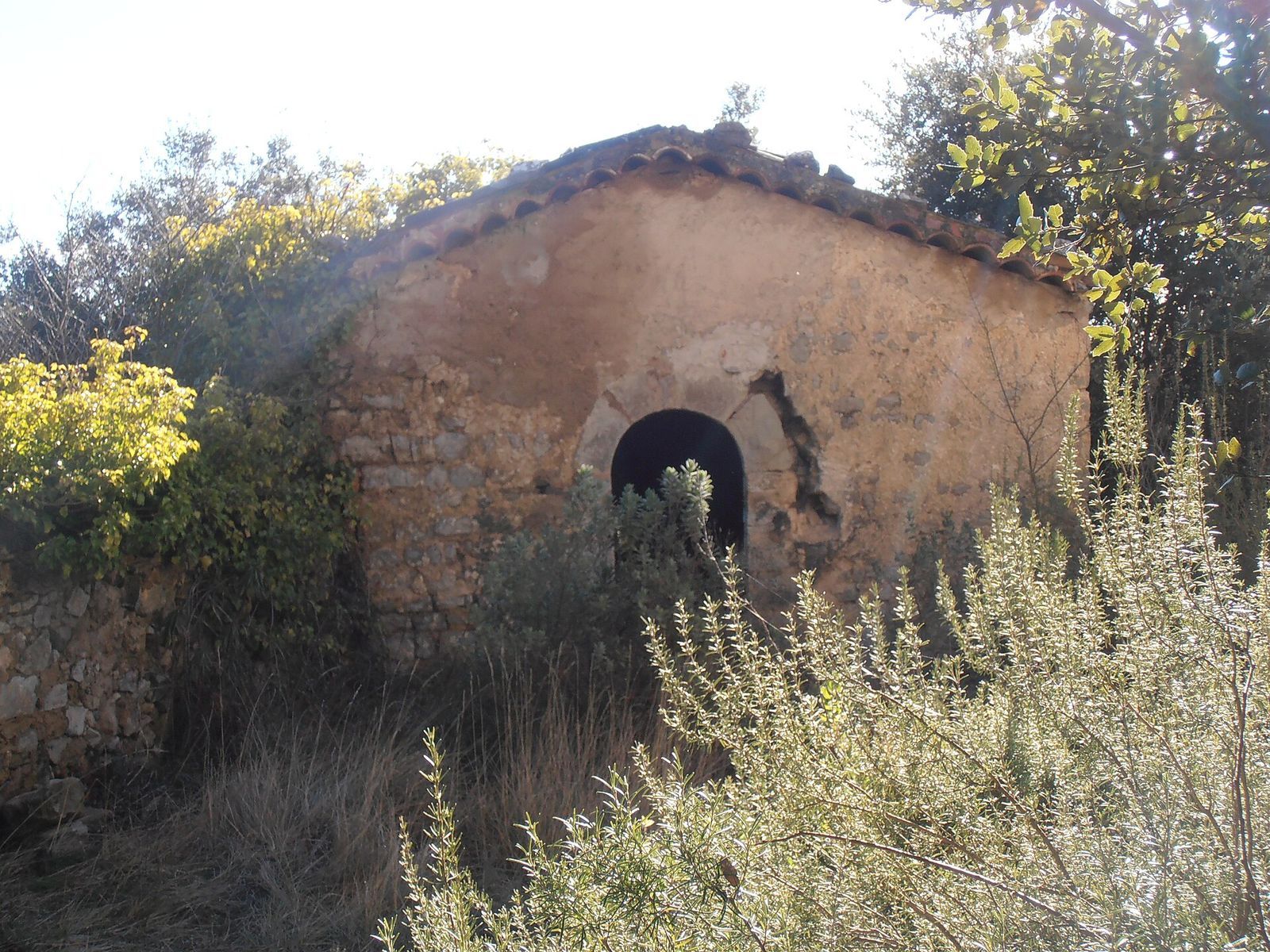
The surviving complex includes a chapel and remains of the former convent, much of whose original fabric is preserved. The chapel’s apse belongs to the twelfth-century building, while the nave was rebuilt later, at least in its upper part. A tomb with a cover sloping on two sides, a form associated with early Christian burial grounds, was found at the apse in the early twentieth century. Dated to the fifth or sixth century, it remains visible.
Other buildings and bridge
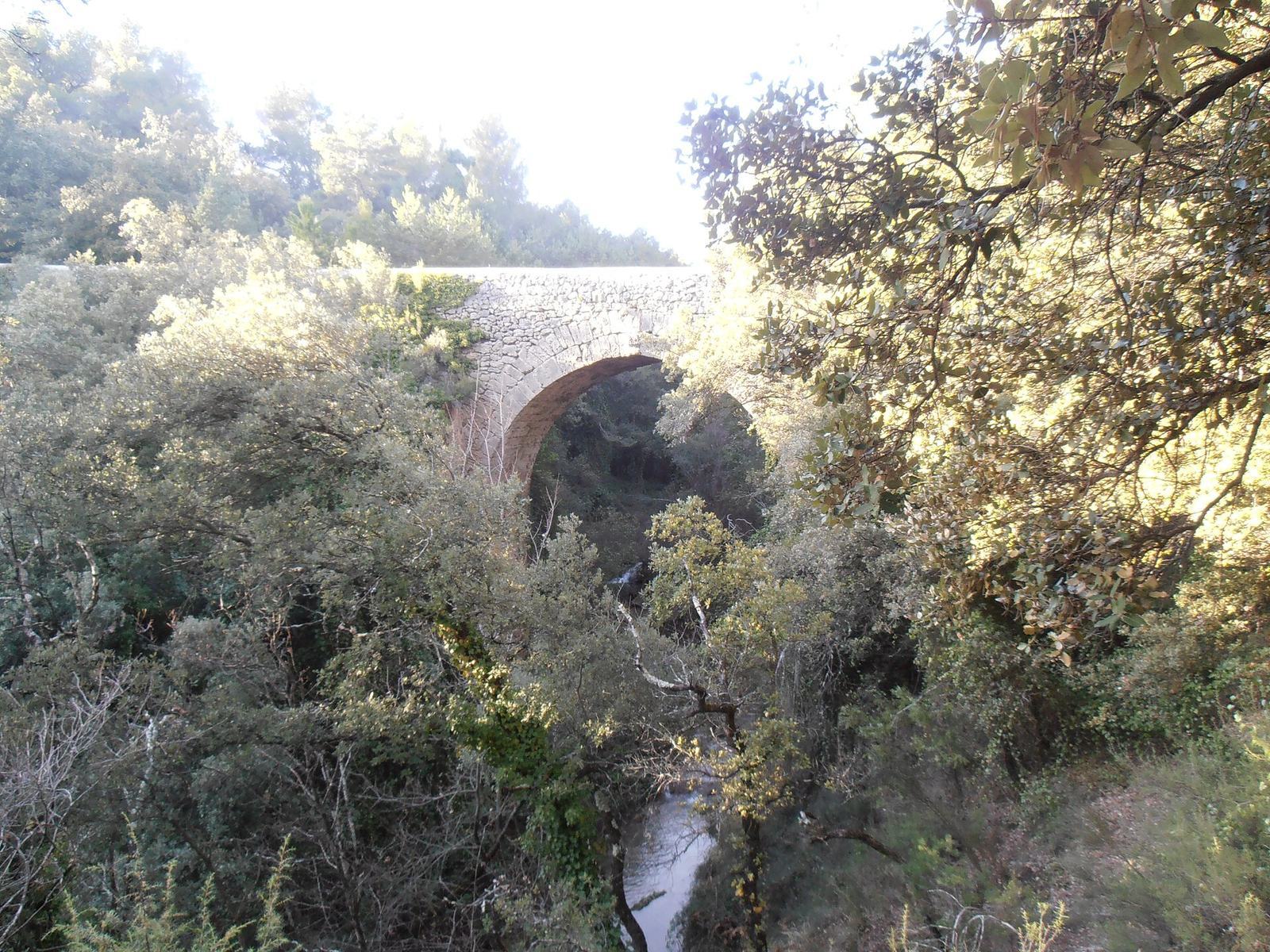
Parts of the walls of a twelfth-century sheepfold survive, along with sections of eighteenth-century stables and pigsties. A farmhouse adjoining the chapel was built around 1792–1793 and occupied until the 1950s; deterioration and vandalism hastened its decline. A medieval bridge crosses the Florièye. Dating to the end of the thirteenth century, it survives apart from its later deck.
Earlier archaeological remains
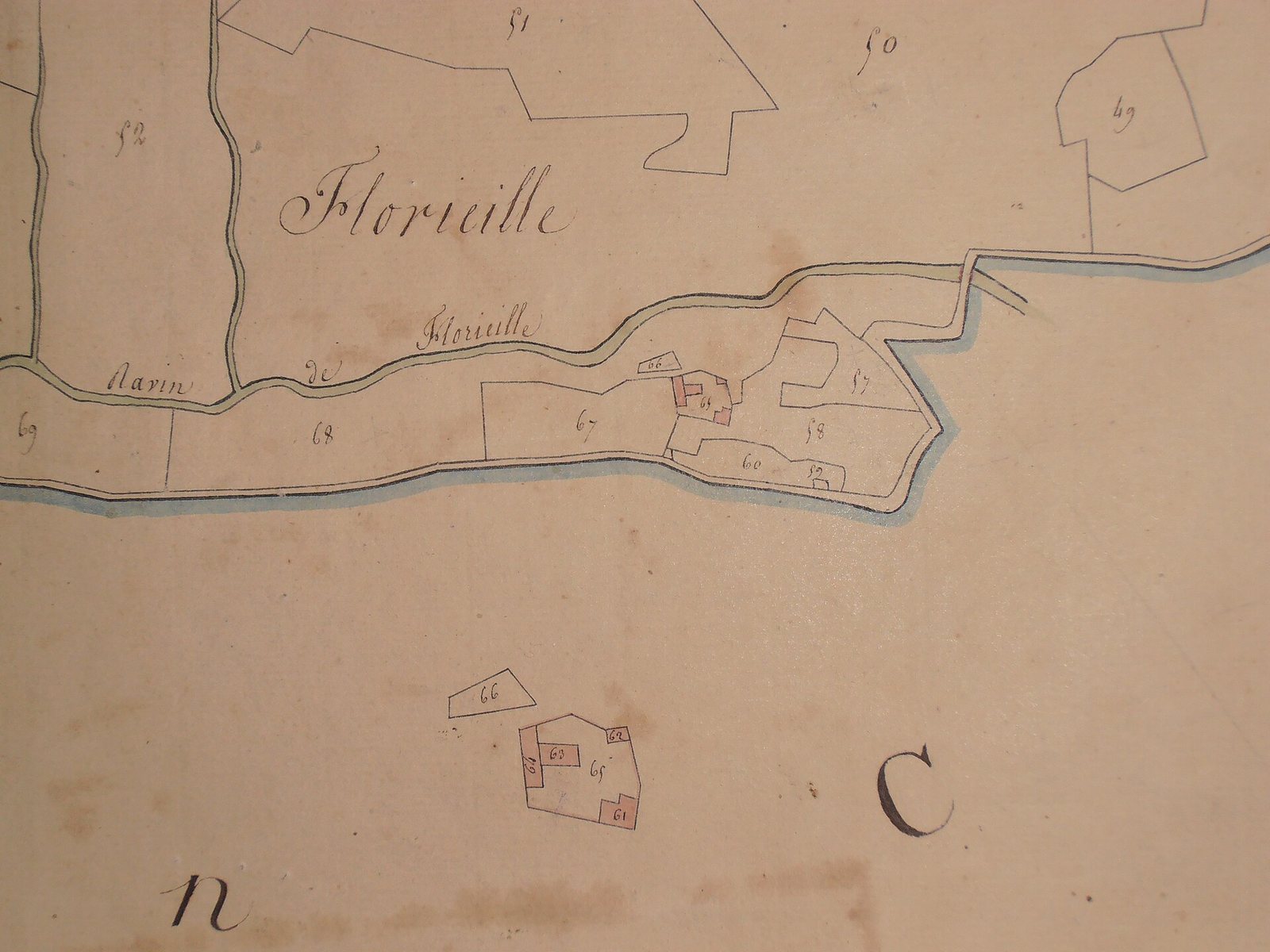
Human occupation in the surrounding area spans the Late Bronze Age, Early Iron Age, Gallo-Roman period, the Roman-era culture of Gaul, and medieval times. The nearby area of Arquinaut has Neolithic remains and medieval building remains. Five fortified settlements and a lookout post in the Florièye valley indicate Iron Age presence. Gallo-Roman tombs and tiled burials have been found at Arquinaut and Florielle.