Coruña del Conde Bridge: A Roman River Crossing in Spain
Site at a Glance
- Rating
- 4.4
- Popularity
- Very Low
- Country
- Spain
- Primary era
- Classical
- Eras represented
- Classical
- Civilizations
- Roman
- Site type
- Infrastructure
- Remains
- Bridge
On this page4 sections
History
Coruña del Conde Bridge is a Roman-origin bridge in Coruña del Conde, Spain, attributed to the 2nd century and associated with the settlement’s importance under Roman rule. It carried the Roman road Ad Asturica per Cantabriam Caesar Augustam, which linked important settlements across northern Hispania, the Roman name for the Iberian Peninsula, in connection with Clunia.
Roman Origins and Clunia
The bridge formed part of the communications network around Clunia, a major Roman city in Hispania. Some of its stone blocks were taken from the ruins of Clunia, and at least one reused block preserves an inscription in Roman capital letters. These materials connect the surviving crossing with the earlier urban and road landscape of the region.
Medieval and Later Phases
After the Roman period, the settlement came under Visigothic rule and then Muslim control following the Muslim conquest. In the 11th century, the settlement and its bridges were incorporated into the Kingdom of Castile. The bridge was subsequently altered several times. Axe-work on ashlar blocks in the central vault indicates a repair completed before the 12th century, while further maintenance took place during the modern period.
Coruña del Conde Bridge is also associated with the Camino del Cid, a historical route linked with the exile of El Cid, the medieval Castilian military leader and literary hero. Of the many Roman-period bridges that once gave access to the city, the Puente Barrusio and Coruña del Conde Bridge are the surviving examples. Both were modified during the Middle Ages while retaining Roman construction.
Remains
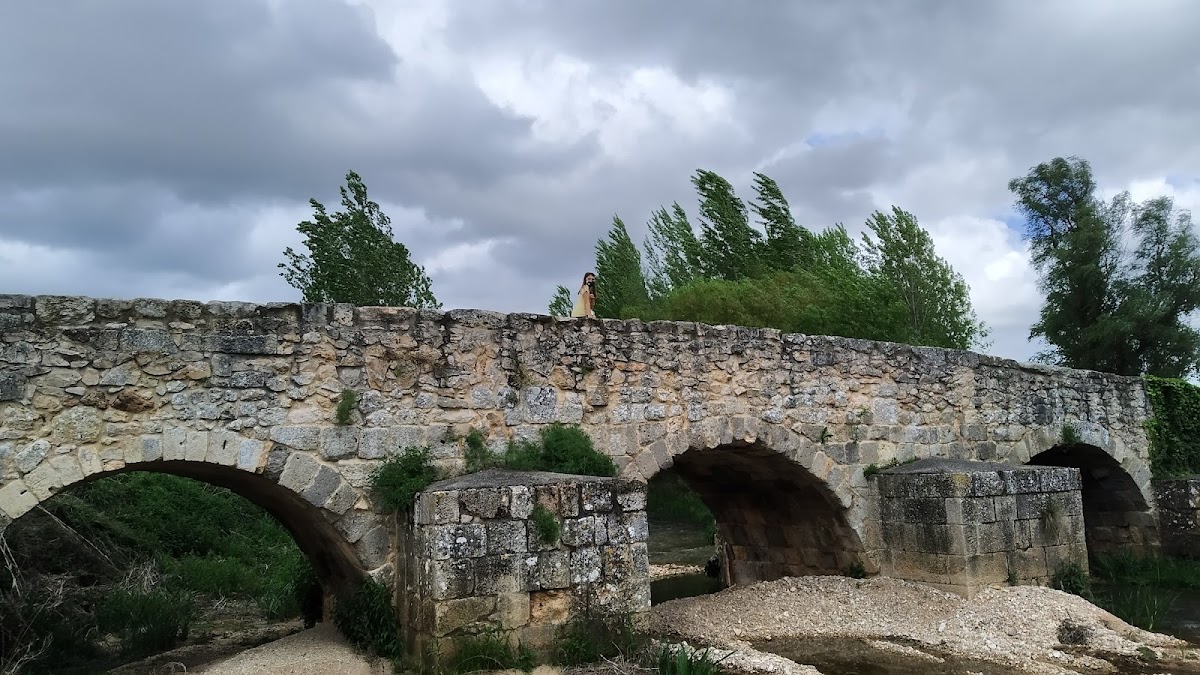
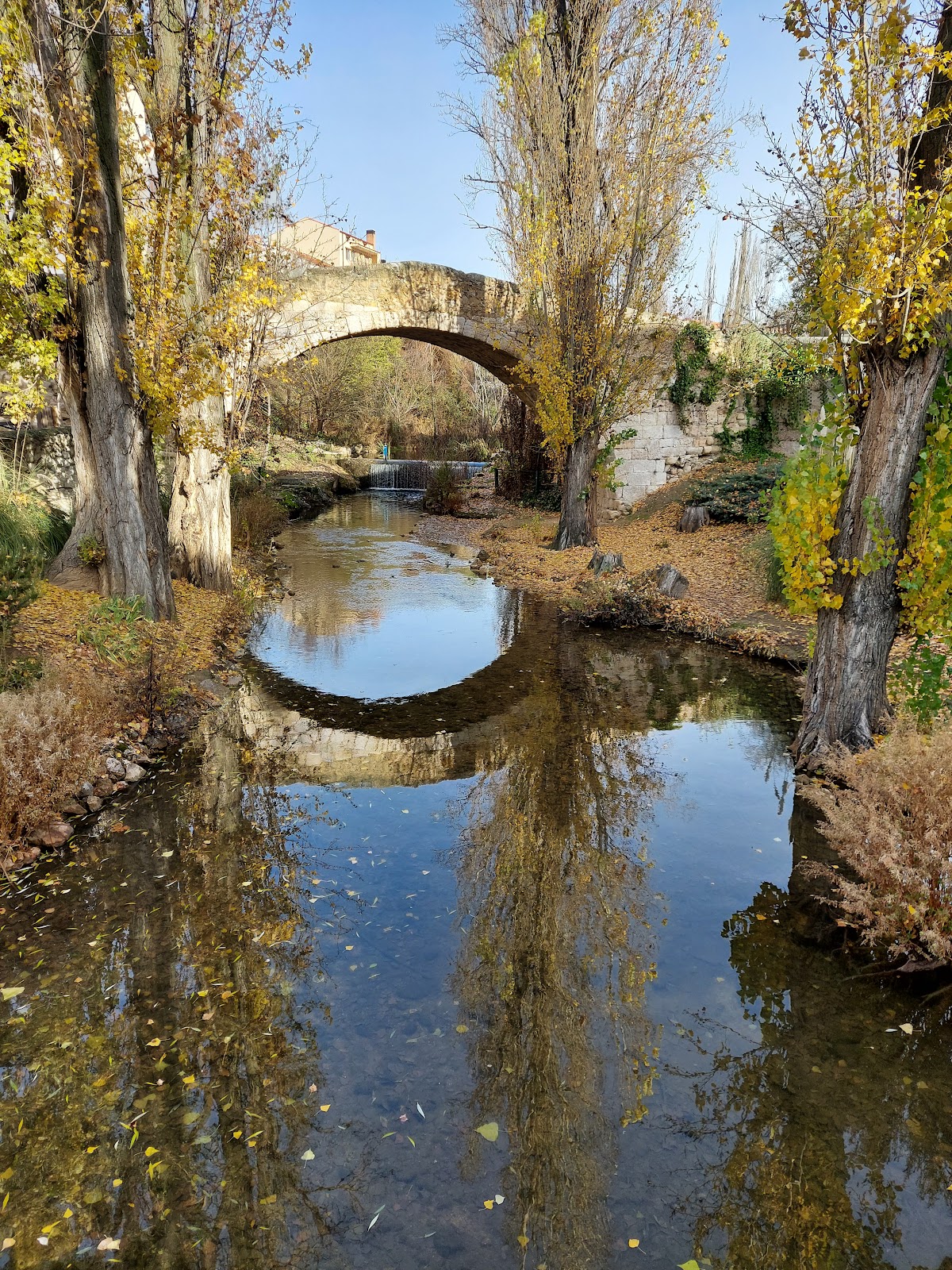
The bridge crosses the Arandilla River west of Coruña del Conde, on the road toward Arandilla. The Arandilla is a tributary of the Duero. The structure is 20 metres long, 4 metres wide, and 3.2 metres high. Its irregular plan has a gently humped profile and three semicircular arches, with spans ranging from 4 metres to 3.2 metres. The bridge currently supports pedestrian traffic.
The vaults and spandrels are built from small ashlar blocks. The first opening on the left when viewed downstream is a lowered arch. Pointed cutwaters protect the upstream side, while the downstream side has rectangular cutwaters and a polygonal central cutwater. Much of the masonry parapet has been rebuilt.
Substantial Roman-period fabric survives in the bridge’s overall design, the breadth of its deck, the consistent dimensions of the vaults, and the downstream wall face. Carefully arranged voussoirs, the wedge-shaped stones forming the arches, and the keystone also remain. Reused blocks from Clunia are incorporated into the masonry, with some retaining Roman capital-letter inscriptions.