Lavinium: Ancient Latin Sacred City in Italy




Site at a Glance
- Rating
- 4.7
- Popularity
- Low
- Country
- Italy
- Primary era
- Classical
- External website
- Open
- Eras represented
- Bronze Age, Iron Age, Classical
- Civilizations
- Roman
- Site type
- City
On this page16 sections
History
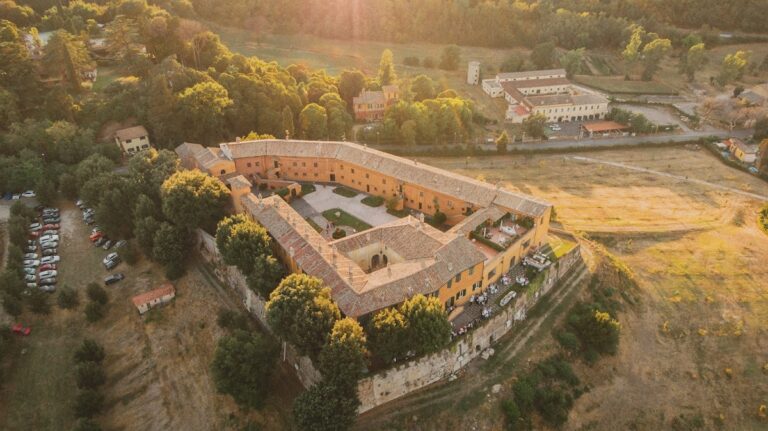
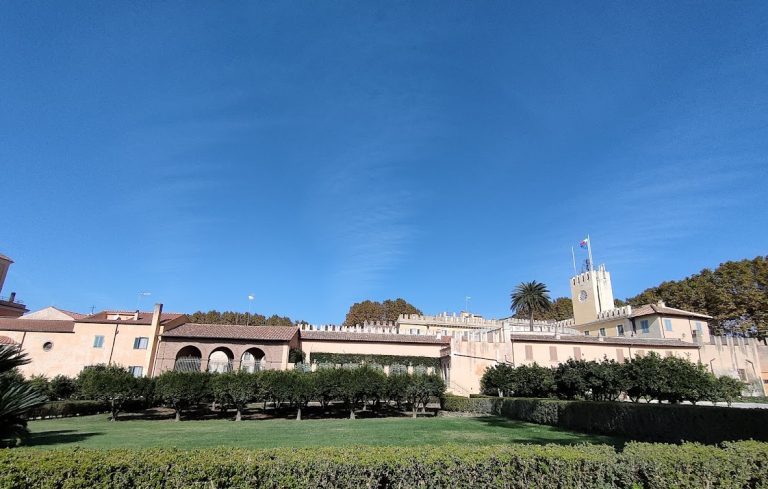
Lavinium was an ancient Latin city in Italy, located at modern Pratica di Mare in the municipality of Pomezia, south of Rome. Its occupation began in the Bronze Age and continued from the early Iron Age through Late Antiquity, while its historical identity was shaped by Latin religious traditions and its association with Rome’s legendary Trojan origins.
Origins and the Aeneas tradition
Roman tradition attributed Lavinium’s foundation to Aeneas, the legendary Trojan hero who became an ancestor of the Roman people, and to the Trojan exiles who arrived in Latium with him. The city was said to have taken its name from Lavinia, daughter of Latinus, the legendary king of the Latins. According to the traditional chronology, it was founded in summer, two years after the fall of Troy, and became the new home of the Trojan Penates, the protective household and ancestral gods believed to have been brought from Troy.
Historical criticism treats this foundation story as a later construction rather than evidence of an actual migration from the Aegean. The local version of the legend probably developed around Lavinium’s cults and was later promoted by Rome for political purposes, particularly after the foedus of 338 BC, a formal treaty that placed the Latins under Roman hegemony. The earliest surviving explicit connection between Aeneas and Lavinium is attributed to Timaeus, who recorded that Aeneas brought sacred objects identified with the Roman Penates to the city.
Later genealogies linked Aeneas to Romulus through the kings of Alba Longa, and the Julian family used Trojan ancestry as a form of political legitimation. In the traditional sequence, Aeneas’s son Ascanius left Lavinium about thirty years after its foundation to establish Alba Longa. Lavinium nevertheless retained the Penates and continued as a sacred centre for the Latins. Its early religious authority is clear, while the extent to which it also exercised political leadership over Latin communities remains uncertain.
Religious and political importance
Lavinium was regarded as the sacred city and mother-city of the Latins because it preserved ancestral gods and maintained important federative cults. Its principal religious role centred on the Penates, alongside deities including Vesta, Pater Indiges, Venus Frutis, Ceres, Minerva, Juturna, Liber, Anna Perenna, and the Dioscuri. Pater Indiges, also called Jupiter Indiges or Aeneas Indiges, represented the divine or heroic form of Aeneas in Roman religious tradition.
Lavinium’s early narratives also included the traditional killing of Titus Tatius during a sacrifice, the exile there of Lucius Tarquinius Collatinus after the fall of the Roman monarchy, and the siege or capture of the city by Volscian forces led by Gaius Marcius Coriolanus around 489 BC. In Plutarch’s version, the Volsci besieged the city but did not take it.
After the Latin War, in 338 BC, Lavinium renewed a religiously formulated but politically important treaty with Rome. The agreement was associated with the sacred principles of the Roman people and the Latin name, expressing the unity of the Latins under Roman leadership. Roman intervention after this date probably included the rebuilding of an urban gate and the reorganization of the forum area.
Roman consuls, praetors, and dictators traditionally travelled to Lavinium at the beginning of their terms to sacrifice to the Penates and Vesta. This ceremony formed part of a three-stage route from Rome’s Capitoline Hill, through the Alban Mount for the Latin Festival, and finally to Lavinium. The sequence symbolically reversed the mythical order of Lavinium, Alba Longa, and Rome.
Roman and Late Antique phases
Lavinium entered the Roman political sphere while retaining an independent civic identity for much of its history. Its political importance declined after the third century BC, but its symbolic and religious importance grew because of its association with Rome’s Trojan foundation traditions.
During the imperial period, probably under Emperor Trajan, Lavinium became a colonia, a Roman settlement established for citizens or military veterans, and was administratively combined with nearby Laurentum as Laurolavinium. The precise nature of this union is uncertain. Under Emperor Vespasian, army veterans were settled in the area, and the territory of Lavinium was merged with that of Laurentum.
The combined community continued at least into the late fourth century AD. Lavinium remained a municipium, a self-governing community incorporated into the Roman state, in AD 391 and was still associated with its ancient religious functions. The city appears in Late Antique itineraries, including the Tabula Peutingeriana and the Antonine Itinerary. Its final decline probably followed the end of pagan religious practice, which had been the principal force sustaining its importance.
Archaeological recognition
The site was recognized in the sixteenth century by the antiquarian Pirro Ligorio. Systematic archaeological exploration began in 1955–1956 under Ferdinando Castagnoli and Lucos Cozza, initially concentrating on the city walls and the limits of the urban area. Later work clarified the prehistoric, archaic, Republican, and imperial phases of the settlement.
The Lavinium Archaeological Museum, established in Pomezia in 2005, preserves finds from the archaeological area. The protected area was also designated the “Antica Lavinium–Pratica di Mare” Site of Community Importance under the European Union Habitats Directive in 2005.
Remains
Plateau, settlement, and defenses
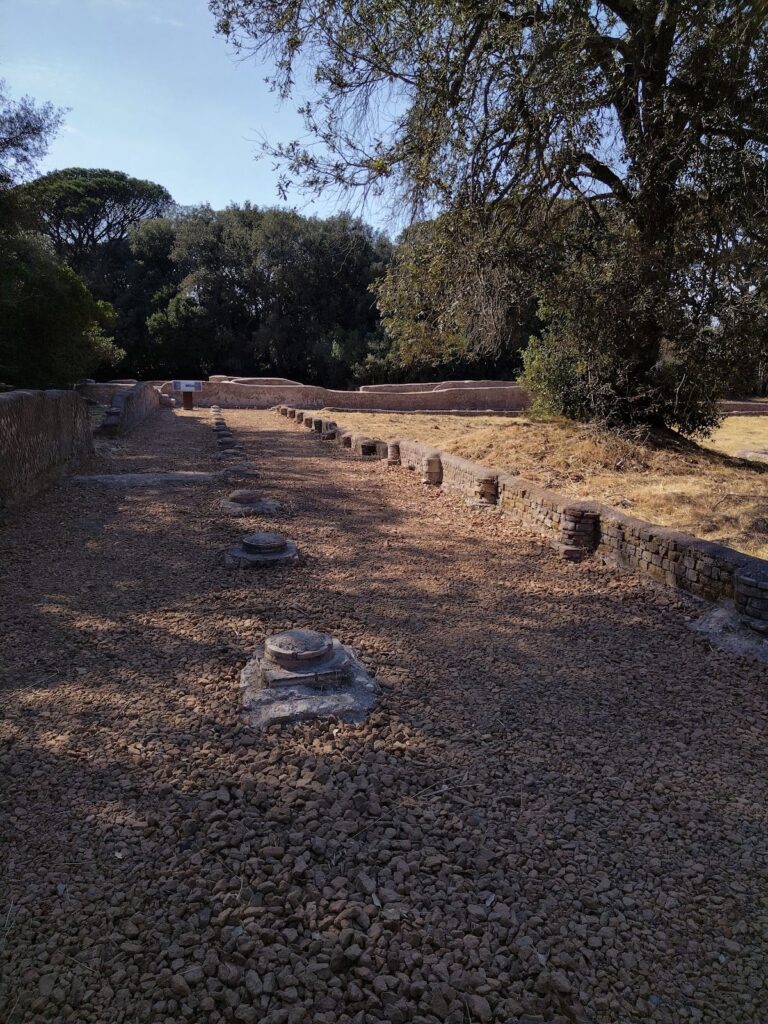
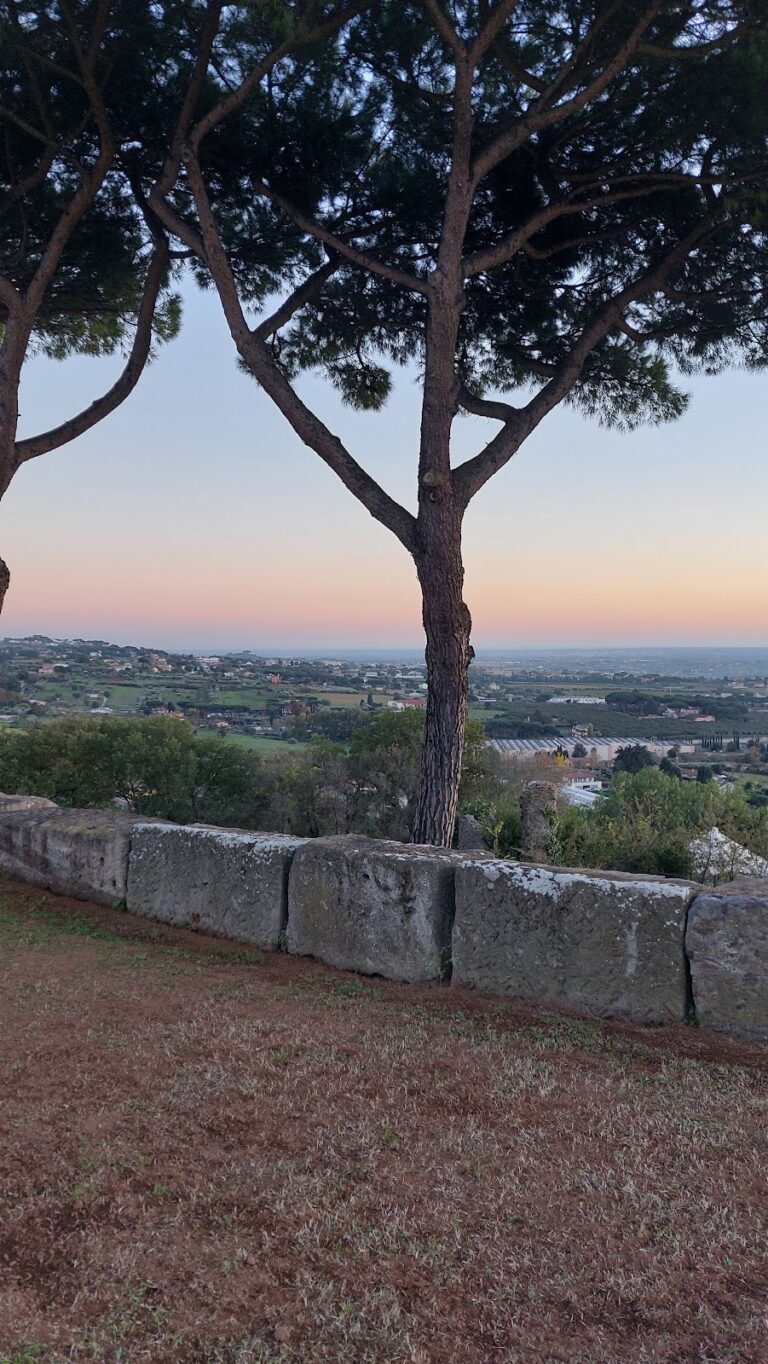
Lavinium occupied a flat-topped tuff plateau partly enclosed by ravines. The acropolis stood on the elevated portion, while the urban settlement extended mainly south and west. The site lay near the ancient Tyrrhenian coast, where the Numicus reached a coastal lagoon and the sea, giving Lavinium an ancient port function. The modern watercourse is the Fosso di Pratica. The surrounding landscape included the coastal lagoons called the stagna Numici and visual relationships between the acropolis, the Alban Mount, the hills of Rome, and the sea.
Settlement on the future acropolis continued from the Middle Bronze Age through the Final Bronze Age, the early Iron Age, and the Archaic period. A complex pre-urban settlement existed by at least the Final Bronze Age, probably in connection with a contemporary cemetery in the later forum area. Permanent occupation across the urban plateau is securely attested from the Latin IIb phase. Four fortification phases have been identified, one belonging to the pre-urban settlement and three to the developed city.
Ardea Gate
Excavations in 1969–1970 at the Ardea Gate revealed a substantial earth-filled bastion, or projecting defensive platform, faced with large blocks of cappellaccio tuff. Cappellaccio is a soft local volcanic stone widely used in early Roman construction. The bastion protected a gate of the scea type and had a reconstructed elevation of at least seven metres. Beneath the squared-block wall was an earlier defense made from irregular cappellaccio fragments mixed with earth, with a corner formed by large stones that vaguely resembled polygonal masonry, in which irregular blocks are fitted together without regular horizontal courses.
The earliest bastion phase dates uncertainly between the first and second halves of the seventh century BC. The principal squared-block phase belongs to the middle of the sixth century BC. The gate was later rebuilt with larger blocks of non-local tuff, probably from the territory of Ardea. This rebuilding postdated 338 BC and accompanied the Roman reorganization of the forum area. The earliest fortification system also included a ditch separating the so-called Small Acropolis, a northwestern projection of the hill.
Forum and urban installations
The forum included a western temple and, farther south, an imperial sanctuary dedicated to Augustus. Other excavated features within the urban walls include remains of bath houses, kilns, and artificially steepened rocky slopes that formed part of the city’s defenses. Local and imported pottery, Greek-style sculpture, inscriptions, and votive objects have also been recovered from the settlement. Their distribution indicates maritime contacts with Greece and a role for Lavinium in transmitting Greek cultural and especially religious influences to Rome.
Sanctuaries and religious features
Sanctuary of the Thirteen Altars
The Sanctuary of the Thirteen Altars lay south of the principal settlement, near the later church of Santa Maria delle Vigne. Its earliest altars date to the end of the sixth century BC. Thirteen large altars arranged beside one another survive in situ from the sixth to the second century BC, while a fourteenth altar was identified nearby during modern investigations.
The sanctuary has been identified with the common Latin sanctuary of Venus, the Aphrodision mentioned by Strabo. The group of altars has been interpreted either as evidence of the cult’s federative character or as provision for simultaneous sacrifices during festivals.
Inscriptions and cult objects
A bronze sheet from the sanctuary carries an archaic Latin dedication to the Dioscuri, Castor and Pollux, dating to around 500 BC. It is among the oldest surviving documents in the Latin language and indicates the direct introduction of a Greek-derived cult at Lavinium. Another bronze inscription from the area records regulations for sacrifices to Ceres.
Two extra-urban sanctuaries and several votive deposits have also been identified. One Republican deposit was dedicated to Minerva. A fourth-century BC temple stood outside the modern settlement, while finds associated with a Minerva sanctuary east of Lavinium include a two-metre-high statue of the goddess and smaller terracotta figures.
Sanctuaries by the Numicus
A coastal sanctuary at the mouth of the Numicus was associated with Sol Indiges. A nearby site was linked with Jupiter Indiges and with the landing of Aeneas. The river, identified with the modern Fosso di Pratica, was also associated in tradition with Aeneas’s arrival and with the mythical battle between the Latins and the Rutuli.
Heroon and foundation traditions
Heroon of Aeneas
The Heroon of Aeneas is a seventh-century BC burial mound that was remodelled at the end of the fourth century BC as a heroon, a monument or shrine associated with a hero and often built over or near a burial. It was later identified with the monument connected to the disappearance and divinization of Aeneas as Pater Indiges.
Archaeologically, the monument is a cenotaph rather than Aeneas’s actual tomb, since its connection with the hero developed after the original burial. It was also described in antiquity as Aeneas’s tomb. A burial beneath the heroon has been tentatively connected with the builder of Lavinium’s earliest defensive circuit, but that attribution remains a proposal.
Symbols of Lavinium
Ancient traditions placed images of an eagle, wolf, and fox on the forum as signs connected with Lavinium’s foundation. Another tradition associated the city with a sow that gave birth to thirty piglets. Priests were said to display a bronze representation of the animal and a vessel containing pieces of its meat preserved in vinegar.