Greco-Roman Museum: Alexandria’s Museum of Ancient Mediterranean Culture
Site at a Glance
- Rating
- 4.6
- Popularity
- Medium
- Country
- Egypt
- Primary era
- Classical
- External website
- Open
- Eras represented
- Bronze Age, Classical, Medieval, Early Modern
- Civilizations
- Ancient Greek, Byzantine, Egyptian, Ottoman, Ptolemaic, Roman
- Site type
- Museum
On this page16 sections
History
The Greco-Roman Museum in Alexandria, Egypt, is an archaeological museum founded in 1892 to gather and protect discoveries from the city and its surrounding region. Its collections trace cultural interaction between Egyptian, Greek, Roman, Coptic, and Byzantine traditions, with material ranging from the period before Alexander the Great to the Byzantine period. Objects from earlier pharaonic and later Islamic and Ottoman periods are also held. The museum is especially important for the study of Alexandrian art and the development of civic and funerary beliefs during the Ptolemaic and Roman periods.
Foundation and First Premises
The museum was established on the initiative of Giuseppe Botti, an Italian archaeologist who became its first director. Its original purpose was to assemble archaeological finds from Alexandria and prevent them from being lost or permanently transferred to the Bulaq Museum in Cairo. The first premises consisted of five rented rooms on Rosetta Street, formerly part of the Canopic Avenue and now known as Horriya Avenue.
Khedive Abbas II Hilmi, the hereditary ruler of Egypt from 1892 to 1914, inaugurated the first museum on 17 October 1892. As discoveries increased in and around Alexandria, the rented rooms could no longer accommodate the growing collections. The foundation stone of a purpose-built museum was laid on 12 September 1894 near the present Gamal Abdul Nasser Road, on Fouad Street. The new building opened in 1895 and was inaugurated by Abbas II Hilmi on 26 September of that year.
Scholarly Development and Collections
Botti’s directorship was followed by Evaristo Breccia from 1904 to 1931 and Achille Adriani from 1932 to 1940 and again from 1948 to 1952. Their archaeological work formed part of the museum’s continuing development, alongside excavations directed by successive museum leaders in Alexandria and its environs. Soheir Bakhoum served as curator from 1970 to 1974, and Mervat Seif el-Din was director from 2004 to 2010.
The holdings grew through private donations, transfers from the Organization of Antiquities in Cairo, and excavations in Alexandria, Fayoum, Benha, and other areas. The museum continues to receive archaeological discoveries recovered from Alexandria’s archaeological subsoil. Approximately 6,000 objects are displayed, while the documented holdings, including material in storage, exceed 40,000 pieces. Sculptures, mosaics, architectural decoration, woodwork, coins, ceramics, glass, jewelry, textiles, paintings, wall paintings, mummies, stone coffins, funerary objects, and other archaeological materials together illuminate the changing relationships between Egyptian and Greco-Roman culture.
The museum also published the Bulletin of the Alexandria Archaeological Society, which records archaeological studies and discoveries. Its historic library contains multilingual books, rare volumes, primary sources, and historical maps relating to excavations in Alexandria and its environs since the late nineteenth century. The library and associated facilities support research in classical archaeology across the Mediterranean region.
Renovation and Reopening
The museum closed in 2005 for a major renovation after deterioration affected the old building’s structural condition. Work stopped in 2011 because of funding difficulties and the Egyptian Revolution, then resumed in 2018 under an architectural vision prepared in 2015. The museum reopened on 11 October 2023 in the presence of Prime Minister Mostafa Madbouly.
The renovation strengthened the walls with load-bearing steel structures, restored the neoclassical facade, added an upper floor, and modernized exhibition, lighting, and monitoring systems. It also introduced accessibility measures including electric lifts, ramps, Braille signs, equipped toilets, and educational spaces where visitors with disabilities can engage with archaeological replicas.
Remains
Neoclassical Building and Courtyard
Facade and Courtyard
The present museum is a neoclassical building designed by Giuseppe Botti. Its marble facade has six columns and a triangular pediment bearing the Romanized Greek word MOUSEION, meaning a place of the Muses, or museum. The building is organized around a landscaped courtyard, also called a patio, enclosed by a corridor with columns. Statues and other objects are arranged in the garden, including monumental pieces displayed in relation to the courtyard.
Administrative and Exhibition Sections
The complex is divided into an administrative building and a main exhibition building. The administrative section has a basement, a ground floor, and three additional floors for administrative and academic work and the management of archaeological departments. The main exhibition building has a ground floor known as the patio or museum garden, 27 exhibition halls arranged in historical sequence, archaeological storage areas, and specialized conservation laboratories.
An intermediate floor, or mezzanine, functions as an educational and research center. Its four halls are devoted to museum education, archives and registration, study, and a gypsum collection of historical plaster models based on internationally known works of art. The first floor follows a thematic arrangement and contains specialized galleries and visitor-service facilities. Earlier room arrangements began with 11 rooms in the western wing, while later additions and the renovation changed the internal organization.
Egyptian, Ptolemaic, and Roman Collections
Religious Sculpture
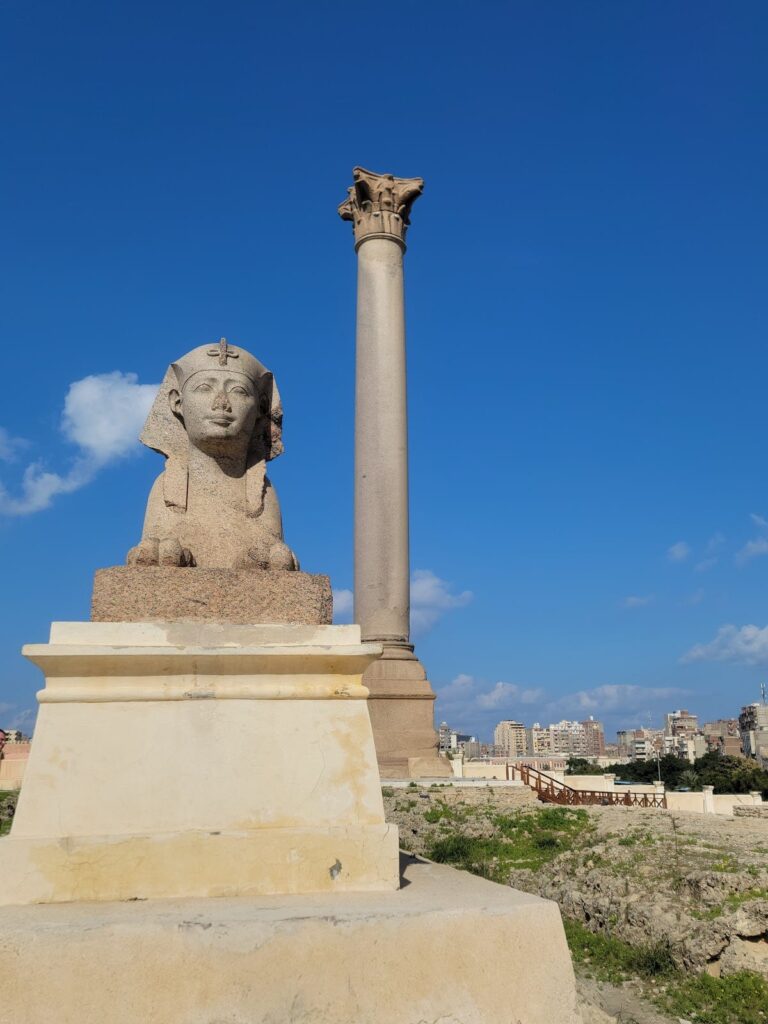
The museum holds material associated with religious traditions that joined Egyptian and Greek ideas. A black-granite statue of the Apis bull was found in Alexandria’s Serapeum area, west of the column known as Pompey’s Column. Dating from the reign of Hadrian, it combines Greek naturalism with an Egyptian conception of the sacred bull. Apis was an ancient Egyptian bull associated with the god Ptah and later incorporated into the worship of Serapis, a Ptolemaic deity that combined Greek and Egyptian religious concepts.
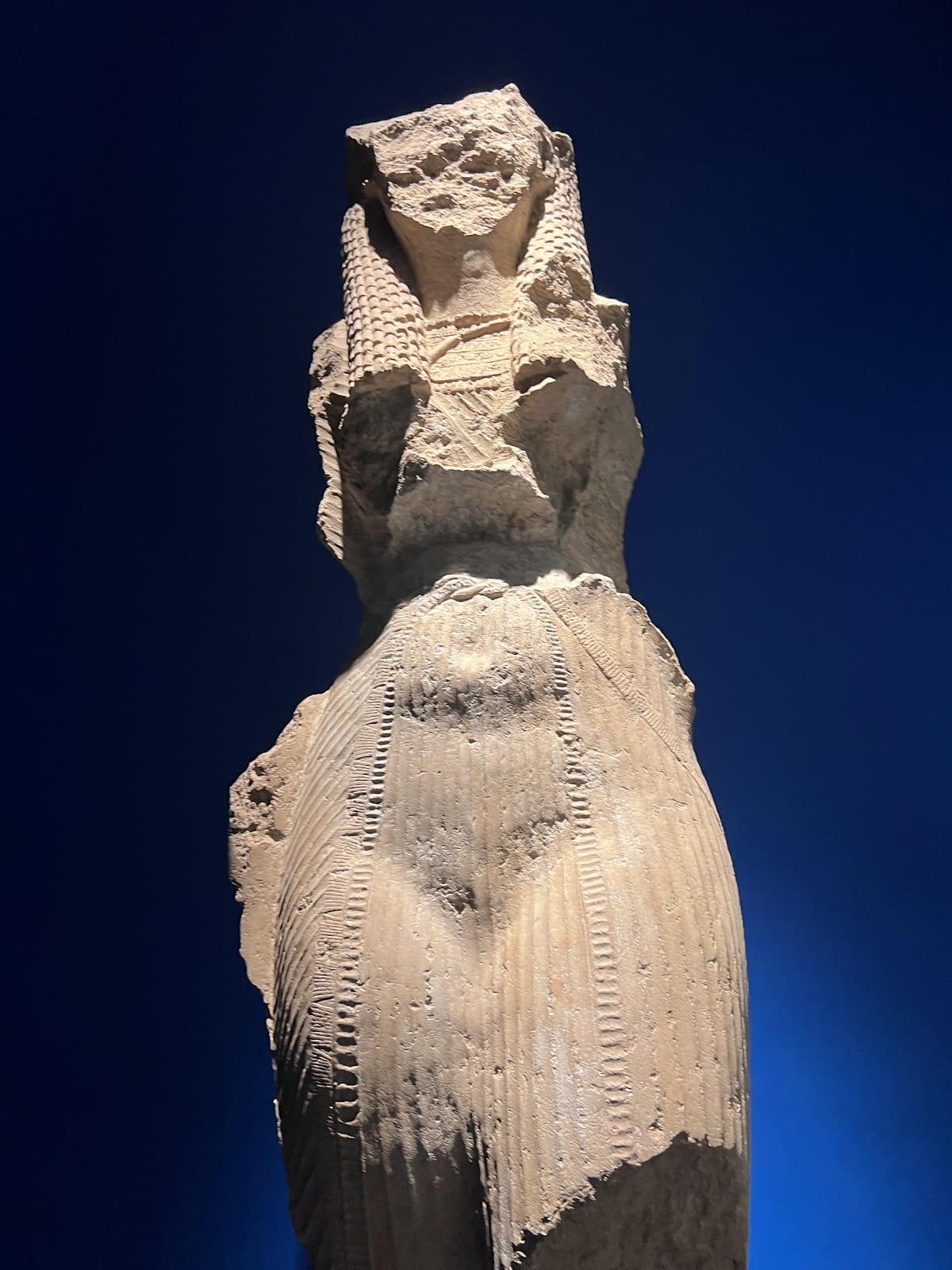
A fine white-marble head of Serapis was also found near Pompey’s Column. Other objects are associated with the temple of the crocodile and with the Black Head Temple. A gallery devoted principally to Sobek presents material relating to the crocodile god, whose worship was connected with the Nile, fertility, royal power, and protection. The collections also include statues of Isis, a major Egyptian goddess whose worship continued and developed during the Ptolemaic and Roman periods.
Pharaonic and Hellenistic Material
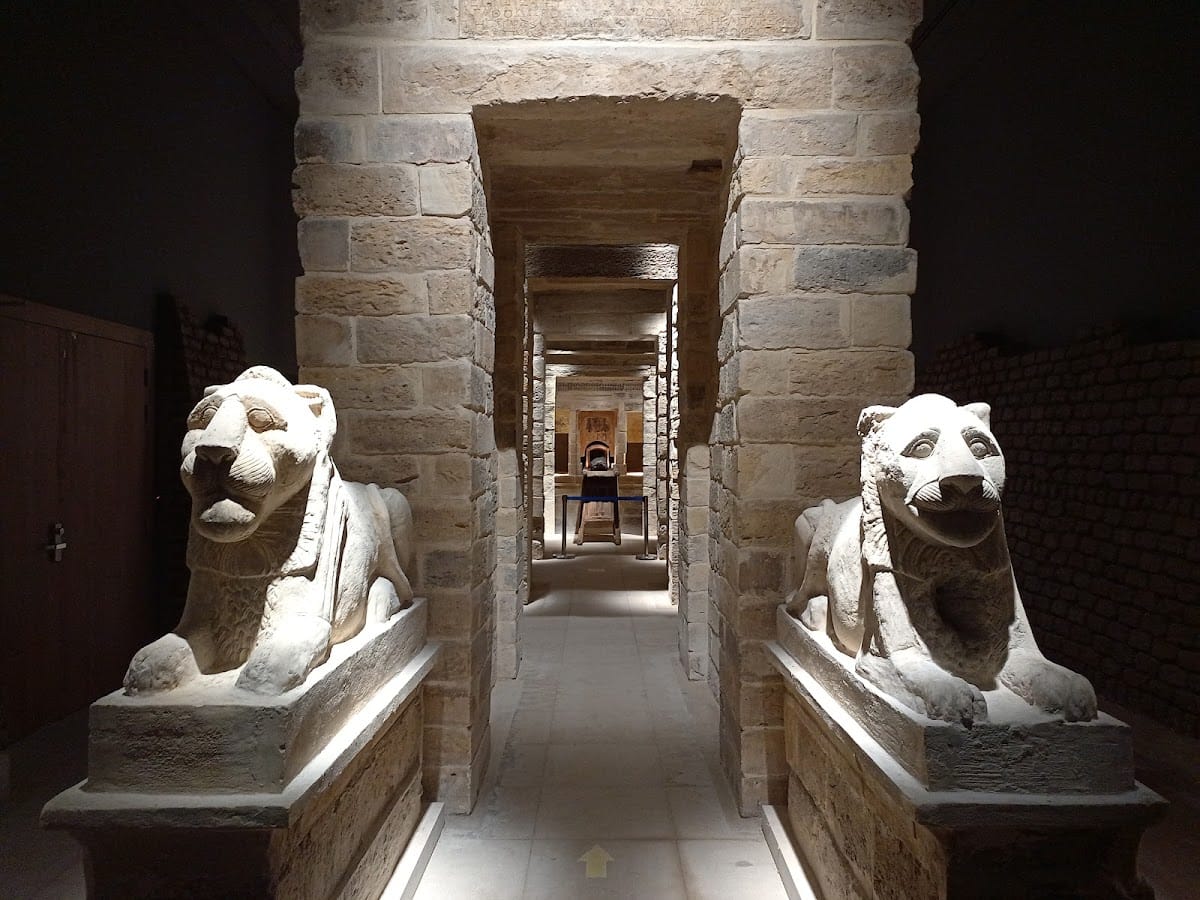
Earlier Egyptian material includes a large granite statue of Ramesses II, a New Kingdom pharaoh, and sphinxes dating to the Twelfth Dynasty. Two headless sphinxes were made under Amenemhat IV, a Middle Kingdom ruler, while two headless black-basalt statues of Isis display the Tyt knot, a symbol associated with the goddess. A marble head of Alexander the Great represents the Macedonian conqueror whose conquest began the Hellenistic era in Egypt. The museum also contains statues of Aphrodite, Heracles, and Apollo.
The Ptolemaic period, the dynasty founded by Ptolemy I after Alexander’s conquest of Egypt, lasted from 305 to 30 BC. Material from this era includes a red-granite head of Ptolemy IV wearing Egypt’s double crown, found at Abu Qir, and a silver torso of Aphrodite dating to the second century BC. A funerary amphora from Chatby dates to the end of the fourth century BC. The museum also holds a statue of Heracles carrying a palm in his left hand and a lion-skin cloak in his right.
Roman Portraits and Funerary Art
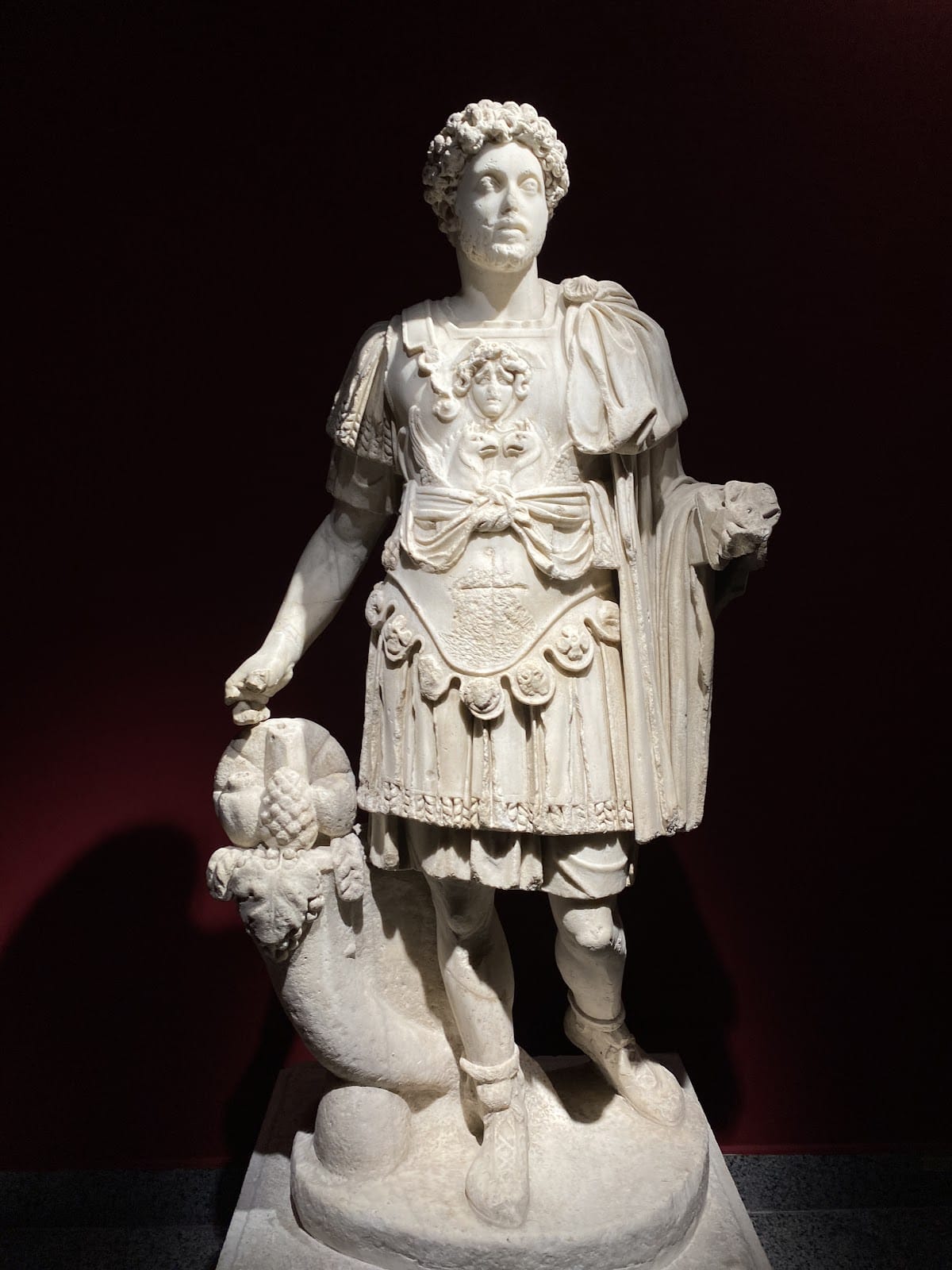
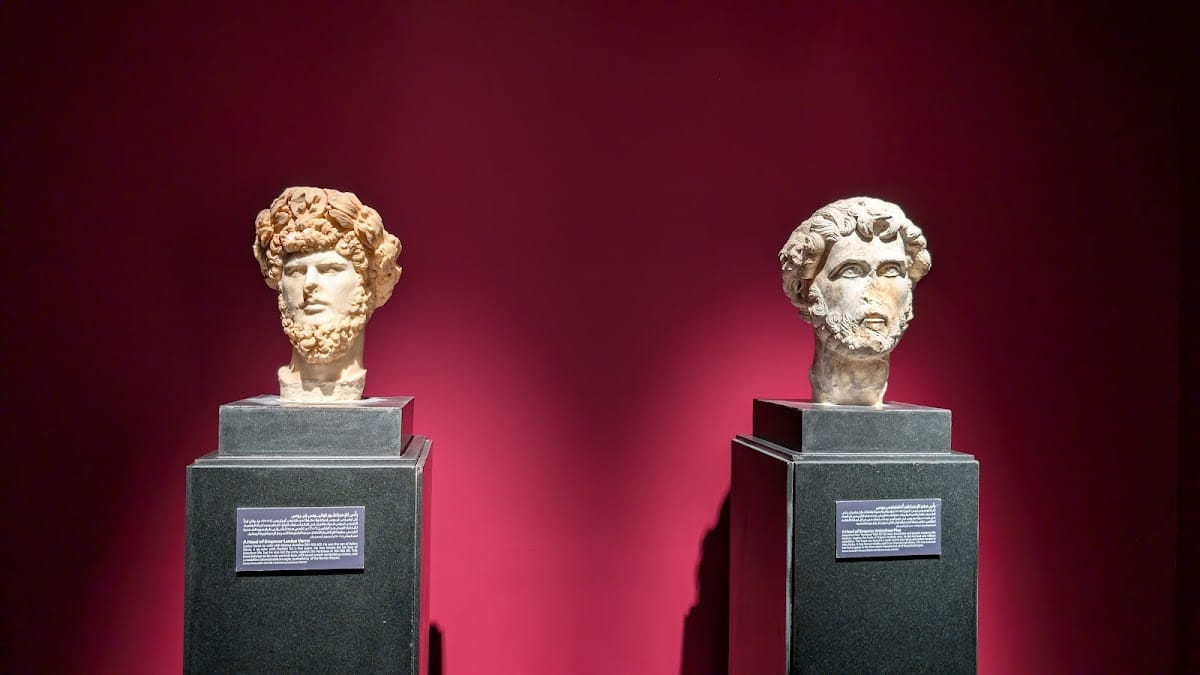
The Roman collections include imperial sculptures and portraits of Hadrian, Vespasian, Augustus, and Marcus Aurelius. A colossal white-marble statue of Marcus Aurelius was discovered beneath the Sayyed Darwish Theatre in Alexandria, while a bronze head of Hadrian stood at the end of the gallery devoted to colored glass. A mosaic of Medusa and large marble sarcophagi add to the material from the Roman period, which followed the Roman annexation of Egypt in 30 BC.
Fayum portraits, naturalistic painted funerary portraits made in Roman Egypt, illustrate the development of ancient portrait painting. The museum also contains amulets, canopic vessels used to contain preserved internal organs, coins, Roman mummies, textiles, and funerary objects. These materials show how Egyptian funerary practices persisted and adapted during the Greco-Roman period.
Selected Galleries and Artistic Traditions
Terracottas, Jewelry, and Sarcophagi
Tanagra terracotta figurines dating from the third century BC to the first century AD depict women’s clothing, hairstyles, hats, and dresses. Ancient jewelry appears in varied colors, while the sarcophagus gallery places gilded and painted pharaonic cartonnage beside floral sarcophagi of the Ptolemaic period. Cartonnage was made from layers of linen or papyrus covered with plaster and decorated.
One sarcophagus depicts Ariadne asleep on the island of Naxos. Hypnos stands at her head, Dionysus before her, and Heracles appears elsewhere in the scene in a state of intoxication. The mythological imagery connects the funerary object with Greek stories of sleep, wine, heroic strength, and the worship associated with Dionysus.
Mixed Egyptian and Greek Imagery
Another gallery presents Egyptian scenes and techniques combined with Greek influence. Its material includes stelae showing Agathadaimon, the divine serpent, and stone fragments from a temple at Athribis near Benha. A marble statue of Isis as the goddess of the Nile reclines against a sphinx and holds a vessel in her left hand. Eight children rise above her, representing the eight cubits by which the Nile was expected to rise during an ideal inundation.
Christian and Byzantine Material
The collections extend into the Coptic and Byzantine periods, preserving textiles, friezes, and objects associated with Christian artistic traditions. A former gallery included an alabaster Good Shepherd, an early Christian image of Christ as a shepherd, whose large eyes and long robe were described as developments of a Coptic model. Other objects were made at the Monastery of Saint Menas west of Alexandria. Fine Alexandrian mosaics made from colored pebbles include a representation of a sailing boat.