Civic Archaeological Museum Bologna: History and Collections in Palazzo Galvani

Site at a Glance
- Rating
- 4.5
- Popularity
- Medium
- Country
- Italy
- Primary era
- Classical
- External website
- Open
- Eras represented
- Stone Age, Bronze Age, Iron Age, Classical
- Civilizations
- Ancient Greek, Celtic, Egyptian, Etruscan, Ptolemaic, Roman
- Site type
- Museum
On this page23 sections
History
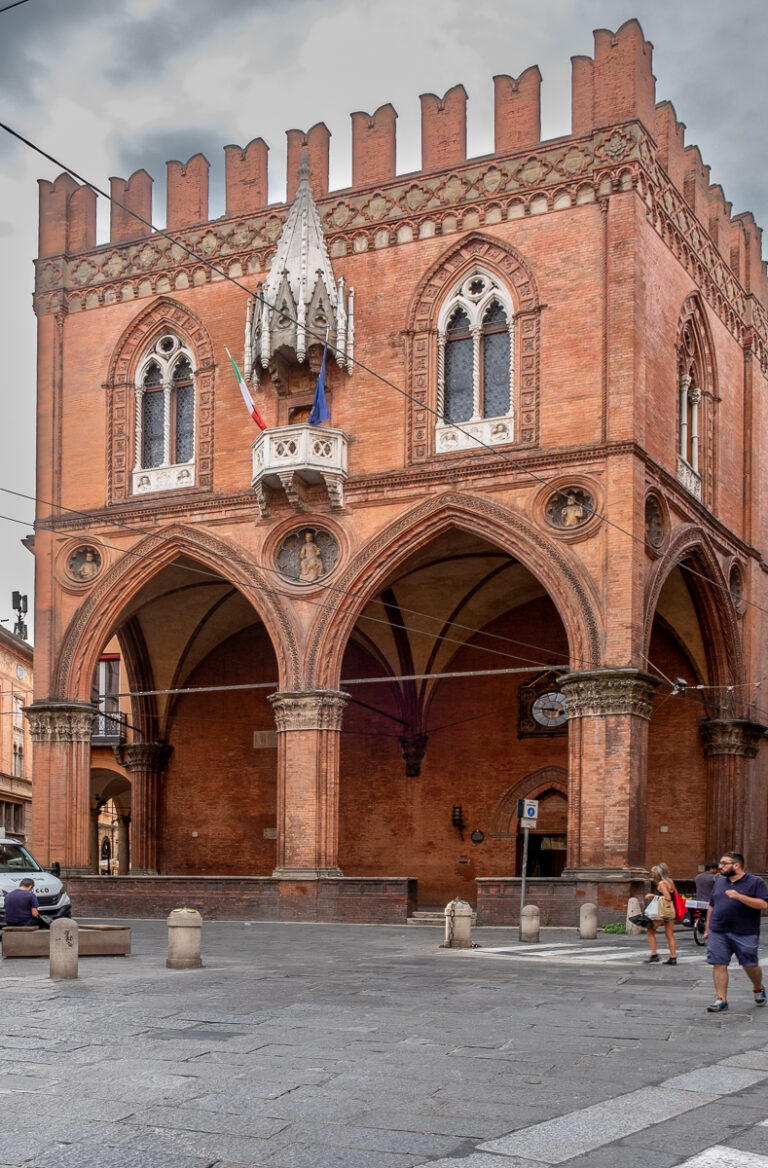
The Civic Archaeological Museum Bologna is an archaeological museum in Bologna, Italy, inaugurated on 25 September 1881 in a fifteenth-century building known as Palazzo Galvani. Its creation brought together the museum of the University of Bologna and the municipal museum under the direction of the archaeologist Count Giovanni Gozzadini. The resulting institution traces the history of Bologna and its territory from the Lower Paleolithic to the Roman period, while also preserving major collections from Egypt, Greece, central Italy, and other regions.
Formation of the museum
The university collection grew from the Room of Antiquities established in 1714 by Luigi Ferdinando Marsili within Bologna’s Academy of Sciences. The municipal collection was enlarged in 1860 by the antiquities assembled by the painter and collector Pelagio Palagi, as well as by finds from excavations in Bologna and the surrounding territory. Their merger created the museum inaugurated in 1881. The institution is regarded as one of Italy’s important archaeological collections, and its Egyptian holdings are described as among the most important in Europe.
Between 1972 and 2012, the museum hosted more than 150 archaeological and art exhibitions. From 2012 to 2022, it belonged to the Bologna Museums Institution. That body was subsequently replaced by the Civic Museums Department administered by the Municipality of Bologna. The museum also developed an educational department, a specialized library with reading room, historical and photographic archives, a restoration laboratory, temporary-exhibition rooms, and a conference room.
Prehistoric Bologna
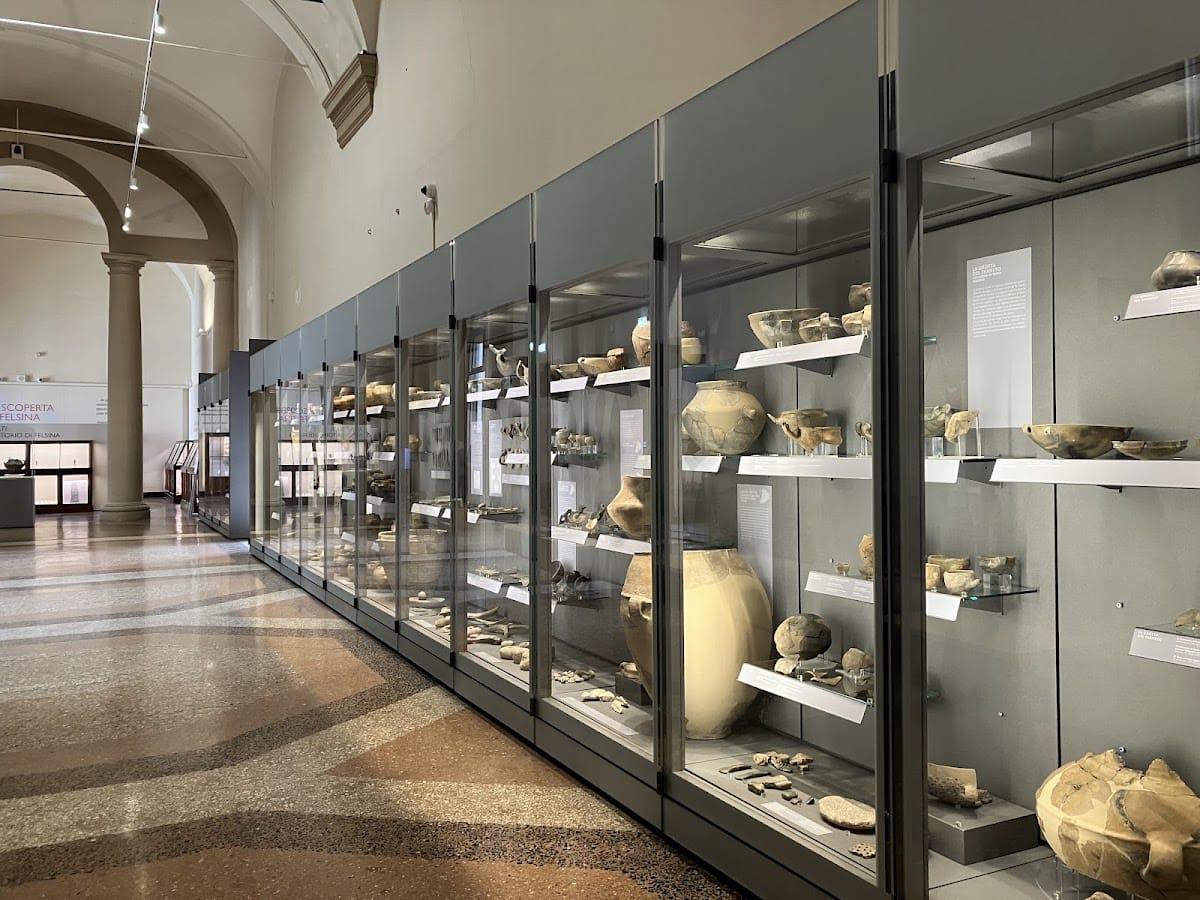
The prehistoric holdings cover the Lower Paleolithic, beginning approximately 700,000 years ago, through the Late Bronze Age in the tenth century BC. Evidence from the Mesolithic, about 11,000 years ago, and the Neolithic, approximately 4500 to 3000 BC, is comparatively scarce, while Bronze Age material becomes more numerous. Together, these collections place the later history of the Bologna area within a long sequence of human occupation and technological change.
Etruscan and Celtic phases
The Etruscan section follows the development of the settlement that became Felsina, the Etruscan settlement at the site of present-day Bologna. Its earliest phases, including the Villanovan and Orientalizing periods from the ninth to the middle of the sixth century BC, are represented by approximately 4,000 funerary assemblages. The urban phase of Felsina, from the middle of the sixth to the beginning of the fourth century BC, is represented mainly by graves from the Giardini Margherita necropolis.
Etruscan society in Bologna ended at the beginning of the fourth century BC with a Celtic invasion. The Boi, a Celtic tribal group, settled in the Bolognese area, and the museum’s Celtic section preserves material from Gallic necropolises associated with this later phase. These collections present the change from an Etruscan settlement to a community shaped by Celtic settlement and traditions.
Roman and early Christian history
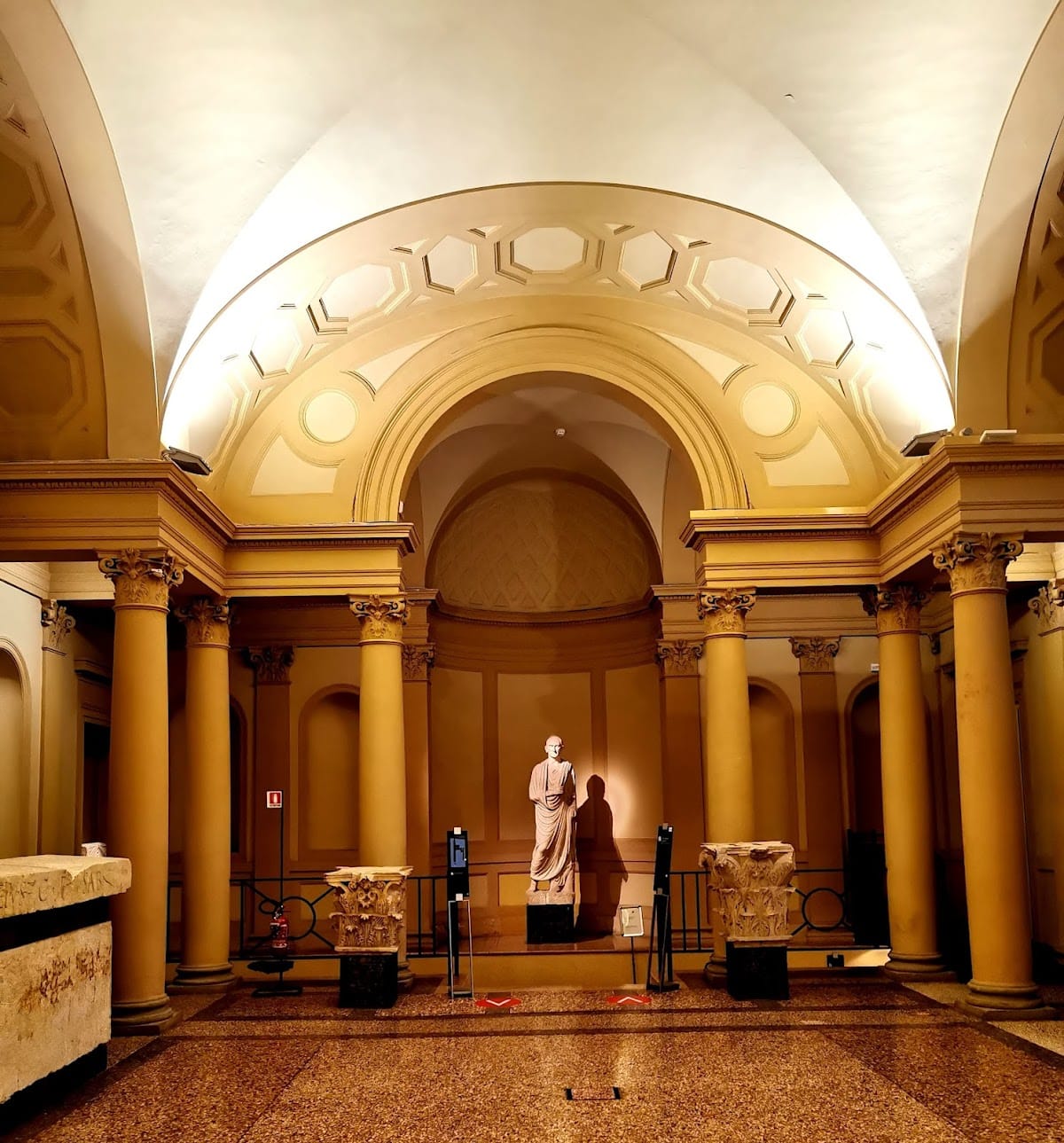
The Roman collections extend the history of the area into the period of Roman rule. The lapidarium, a display of stone monuments such as inscriptions and tombstones, documents funerary practices from the middle of the first century BC to the middle of the second century AD. A statue of the emperor Nero, found in the fifteenth century at Piazza de’ Celestini, came from the area of Bologna’s former Roman theatre.
The Roman holdings also include domestic equipment, glass vessels, figured bronze objects, marble sculptures, and Early Christian ivories. The ivories include fifth-century AD diptychs and small containers decorated with sacred and secular motifs. Together with public and private portraits associated with Roman Imperial workshops, these materials extend the museum’s historical range beyond the Republican and Imperial periods into Late Antiquity.
Egyptian, Greek, and wider collections
The Egyptian collection presents approximately 3,000 years of Egyptian civilization, from the Old Kingdom to the Ptolemaic period. Its holdings include more than 3,500 objects, while its displays address funerary equipment, writing, and amulets. Reliefs from the tomb of Horemheb at Saqqara date to the thirteenth century BC. Horemheb was a military commander who became pharaoh at the end of Egypt’s Eighteenth Dynasty, and the tomb was rediscovered through later excavations.
The Greek collection includes the head of the Lemnian Athena, an Augustan-period marble copy of a bronze statue made by the fifth-century BC sculptor Phidias. It also contains a large group of Greek ceramics, mostly Attic, together with numerous examples from Magna Graecia, the Greek cities and territories of southern Italy. Ancient and modern gems and jewellery form part of the same collection.
Numismatics and continuing interpretation
The numismatic collection contains approximately 100,000 coins, medals, and coin dies. Particularly substantial groups include Roman Republican and Imperial coins, coins from Italian mints, and papal medals. Its database can be consulted at the museum by appointment. The library, archives, restoration laboratory, and educational facilities support the study and interpretation of the museum’s archaeological holdings.
Remains
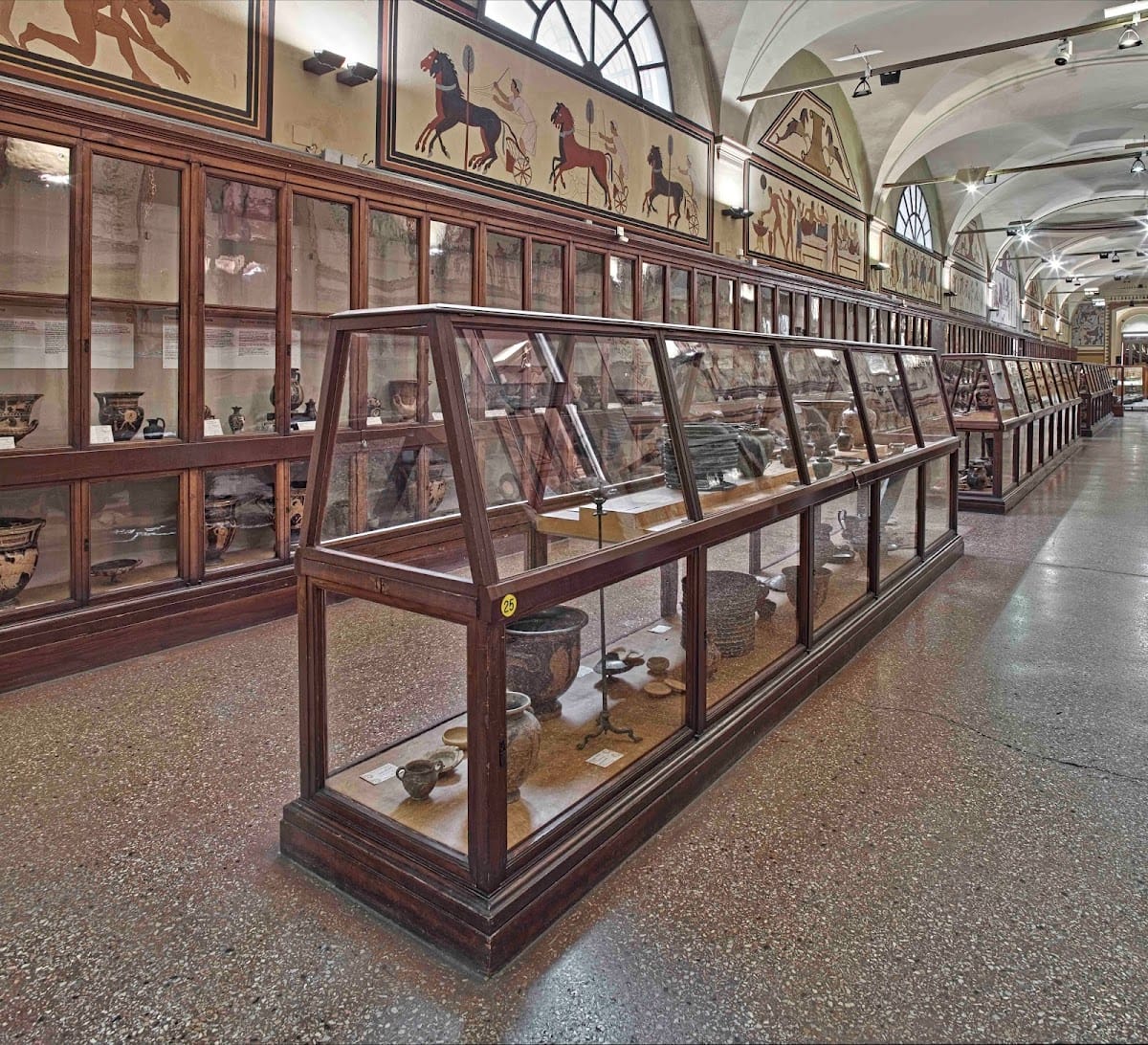
The museum occupies Palazzo Galvani, a fifteenth-century building on Via dell’Archiginnasio. Formerly known as the Hospital of Death, the building is organized around an internal courtyard that contains the lapidarium. The collections are arranged in rooms and display areas by period, culture, and material, creating a sequence that moves from prehistoric tools and Bronze Age objects through Etruscan, Celtic, Roman, Greek, Egyptian, and numismatic material.
Prehistoric collections
The prehistoric section contains flint and chert tools, including bifacial tools, points, scrapers, and cores. Bronze Age material includes ceramic vessels, bone and antler objects, metal tools, and casting moulds found in large settlements on the plain dating to the first half of the second millennium BC. The section also includes prehistoric material from Italy, other parts of Europe, and regions beyond Europe.
Etruscan and Villanovan material
Funerary assemblages
The earliest Etruscan funerary assemblages include bi-conical vessels for cremated ashes, personal objects, bronze tools, and ceramic and bronze vessels. The Benacci askos, a vessel for holding oil used in lamps, represents a particularly rare form. The material gives physical form to the early funerary traditions associated with Bologna’s Villanovan and Orientalizing phases.
Foundry deposit
The San Francesco hoard consists of a foundry deposit preserved in a large dolium, an ancient storage jar. It contains more than 14,000 bronze pieces, forming one of the museum’s major groups of Etruscan material.
Felsina tombs and luxury objects
The funerary material from urban Felsina includes the assemblages called the Great Tomb and the Tomb of the Footstool. Excavated in the wealthy Giardini Margherita necropolis, they contain fine Greek-imported vessels used for drinking wine and luxury objects such as a large candelabrum and an ivory seat.
Certosa Situla
The Certosa Situla is a refined bronze vessel with a bucket-like form. Its decoration presents scenes of military, civic, and religious life, making the object both a work of metalcraft and a source for understanding the society represented in the Etruscan collection.
Verucchio princely tomb
A room devoted to the Villanovan culture of Verucchio contains a princely tomb with offering tables, vessels, a wooden throne, and a wooden footstool. These objects are described as exceptionally well preserved, including the wooden elements that rarely survive from ancient burials.
Celtic and Roman remains
Celtic funerary assemblages
The Celtic section contains funerary assemblages from Gallic necropolises in the Bologna area. Their contents include iron weapons of trans-Alpine tradition and Etruscan-made vessels used for banquets, reflecting the material combination preserved in the burials.
Lapidarium
The lapidarium in the internal courtyard consists mainly of Roman funerary inscriptions and tombstones from Bologna and its surrounding area. It also includes a series of milestones from the Via Emilia, the Roman road whose remains connect the collection to the infrastructure of the Roman period.
Statue of Nero
The statue of Nero is a mid-first-century AD figure wearing military body armour. It was discovered in the fifteenth century at Piazza de’ Celestini, where Bologna’s Roman theatre had stood. The statue therefore preserves a physical link to the area of the former theatre and to the Roman phase of the city.
Roman domestic and sculptural material
The Roman collection includes glass vessels, figured bronze objects, and domestic equipment such as keys, brooches, needles, spoons, bells, weights, scales, and vessels. Marble reliefs, statues, and public and private portraits are associated with Roman workshops of the Imperial period. Early Christian ivories include fifth-century AD diptychs and pyxides, small containers used for precious contents or cosmetics, decorated with sacred and secular motifs.
Greek and Etruscan-Italic collections
The Greek collection displays the head of the Lemnian Athena, an Augustan-period marble copy of a fifth-century BC bronze associated with Phidias. Most of the other marble works in the room are Roman reinterpretations of Greek originals. Greek ceramics, chiefly Attic, are shown with examples from Magna Graecia, while ancient and modern gems and jewellery are also included. Two computer terminals provide access to the section’s database.
The Etruscan-Italic collection contains finds from central Italy, including bucchero, a distinctive black Etruscan ceramic, Etruscan mirrors decorated with relief and engraving, and Etruscan terracotta and marble urns.
Egyptian galleries
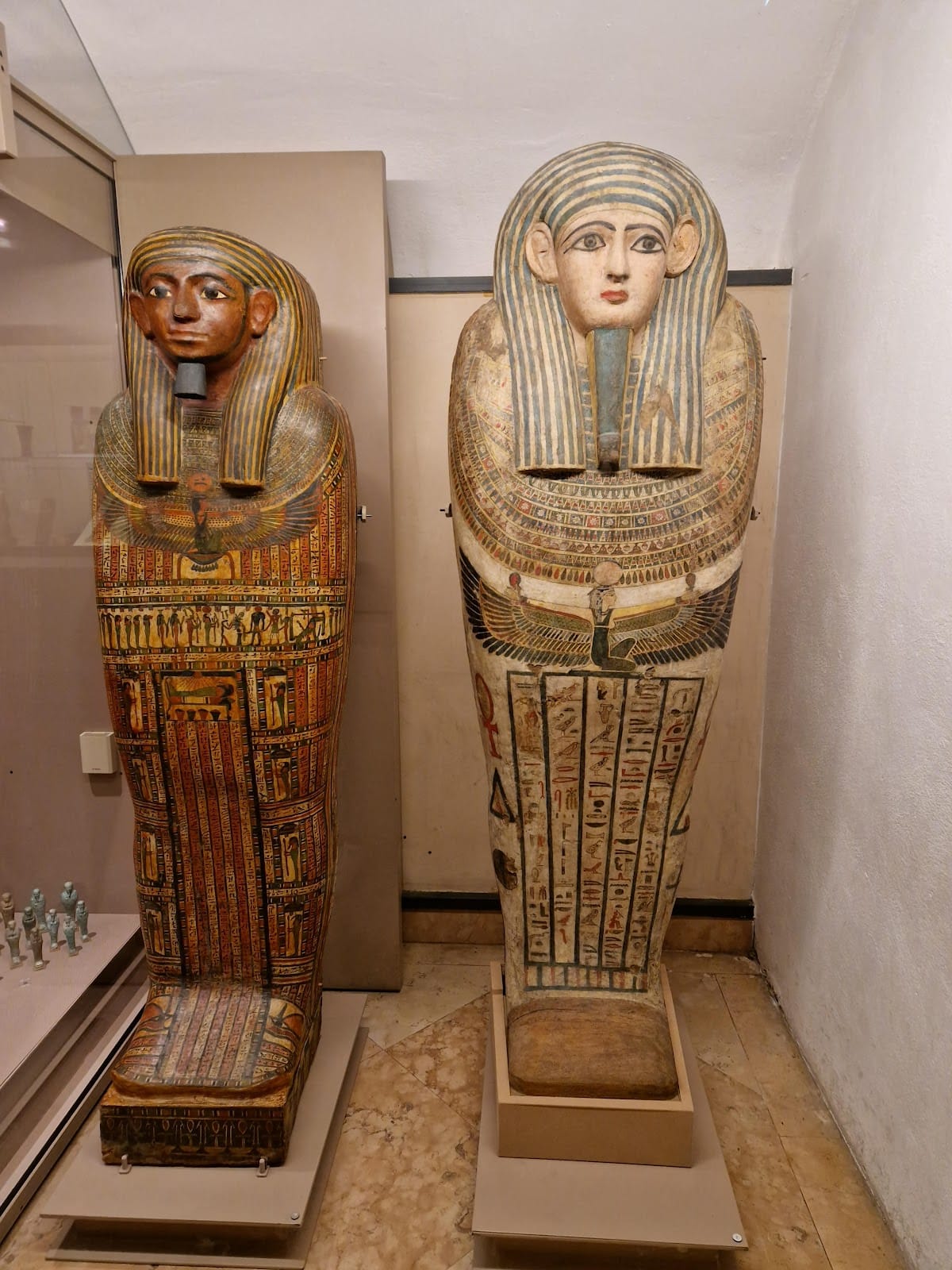
The Egyptian collection is arranged chronologically from the Old Kingdom to the Ptolemaic period. Sarcophagi, stelae, and ushabti form its principal groups. Ushabti are small funerary figures intended to perform work for the deceased in the afterlife, while stelae are upright carved or inscribed stones. The galleries also address funerary equipment, writing, and amulets.
Reliefs from the tomb of Horemheb at Saqqara date to the thirteenth century BC. The tomb is presented as a monument rediscovered through later excavations, and a computer-generated video is devoted to it. The gipsoteca, a collection of plaster copies, also includes a statue of Neferhotep I and the mummy of Usai, son of Nehket, from Egypt’s Twenty-Sixth Dynasty.
Gipsoteca and numismatic displays
The gipsoteca contains plaster copies of celebrated Greek and Roman sculptures. Its listed examples include a head of the Lemnian Athena, a funerary cippus, a copy of the statue of Neptune, copies of the Dying Gauls and Dying Amazons, a statue of Neferhotep I, and a copy of an Etruscan tomb. The originals of the Dying Gauls and Dying Amazons, once part of the Farnese Collection, are preserved at the National Archaeological Museum of Naples.
The numismatic collection brings together approximately 100,000 coins, medals, and coin dies, including substantial groups from the Roman Republic and Empire, Italian mints, and the papal series. Its database is available for consultation at the museum by appointment, complementing the physical display of the collection.