Rivieren Castle: A Medieval Gothic Stronghold in Belgium
Site at a Glance
- Rating
- 4.2
- Popularity
- Low
- Country
- Belgium
- Primary era
- Medieval
- External website
- Open
- Eras represented
- Medieval, Early Modern, Modern
- Civilizations
- Duchy of Brabant, Holy Roman Empire
- Site type
- Military
- Remains
- Castle
On this page6 sections
History
Rivieren Castle is a medieval castle in Ganshoren, Belgium, whose surviving stone donjon dates from the thirteenth century and forms part of a Gothic complex. Its history is associated with the Lords of Rivieren d’Aerschot, whose name the castle bears. The estate is recognized as the unique surviving medieval, feudal-style remnant in the Brussels-Capital Region.
Medieval origins and aristocratic status
The site is attested from the medieval period, when its principal fortified tower served as the stronghold’s central defensive and residential structure. Only this square stone tower remains from the original fortification. The estate’s changing status later reflected the position of its owners within the feudal and aristocratic hierarchy. In 1628, François I de Kinschot, treasurer-general of the Spanish Netherlands, acquired the castle. From 1638, the estate was elevated to a barony, a territorial title within the European feudal order. On 9 November 1659, it became the County of Saint-Pierre-Jette.
François II de Kinschot, the son of François I, held several important offices under the Archdukes Albert and Isabella, the Habsburg rulers of the Spanish Netherlands in the late sixteenth and early seventeenth centuries. He served as financial councillor, treasurer-general of the Netherlands, and chancellor of Brabant. He transformed Rivieren into a pleasure domain, giving the estate much of the character it retained into the early twenty-first century. The castle and its grounds also appear on a map of Brussels and its surroundings dating from 1665.
Neglect, renovation, and survival
Gérard-François de Villegas, grandson of François II de Kinschot, inherited the entire estate. During the eighteenth century, the castle was neglected until it appeared almost ruined. In the nineteenth century, Count Ulric de Villegas de Saint-Pierre-Jette, a descendant and heir of the Villegas family, began renovation works that helped restore the property.
Several fires later damaged the castle, leading to another phase of renovation at the beginning of the twentieth century. The estate survived the major urban expansion of Brussels during the 1950s and 1960s. Elisabeth de Botmiliau, widow of Albert de Villegas de Saint-Pierre-Jette, was the last resident lady of the castle. Her sons sold the property in 1977 to a Swiss company, which restored the castle and its outbuildings.
Rivieren Castle and its park were protected as classified cultural heritage in 1983. The park underwent restoration in 1993 under the direction of Emmanuel d’Hennezel, a landscape architect and garden historian. The twentieth-century restoration left the castle well preserved while retaining the distinction between the medieval tower and the later parts of the complex.
Remains
The medieval tower and later wings
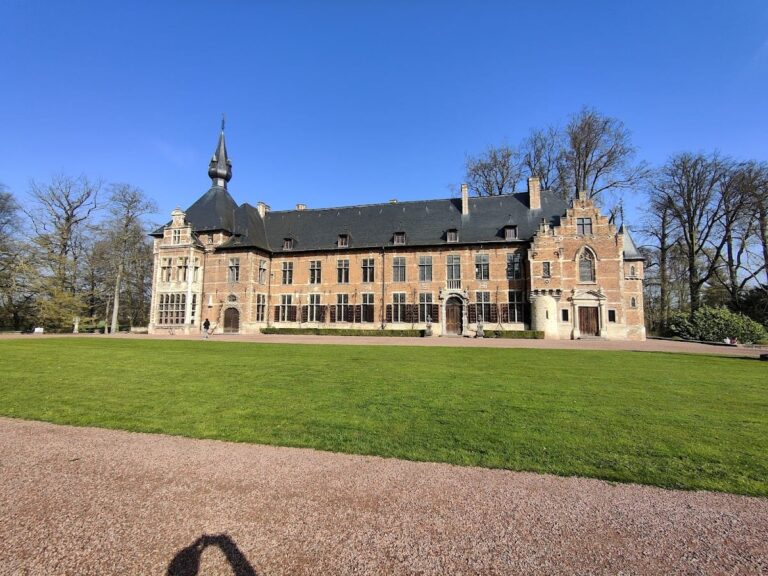
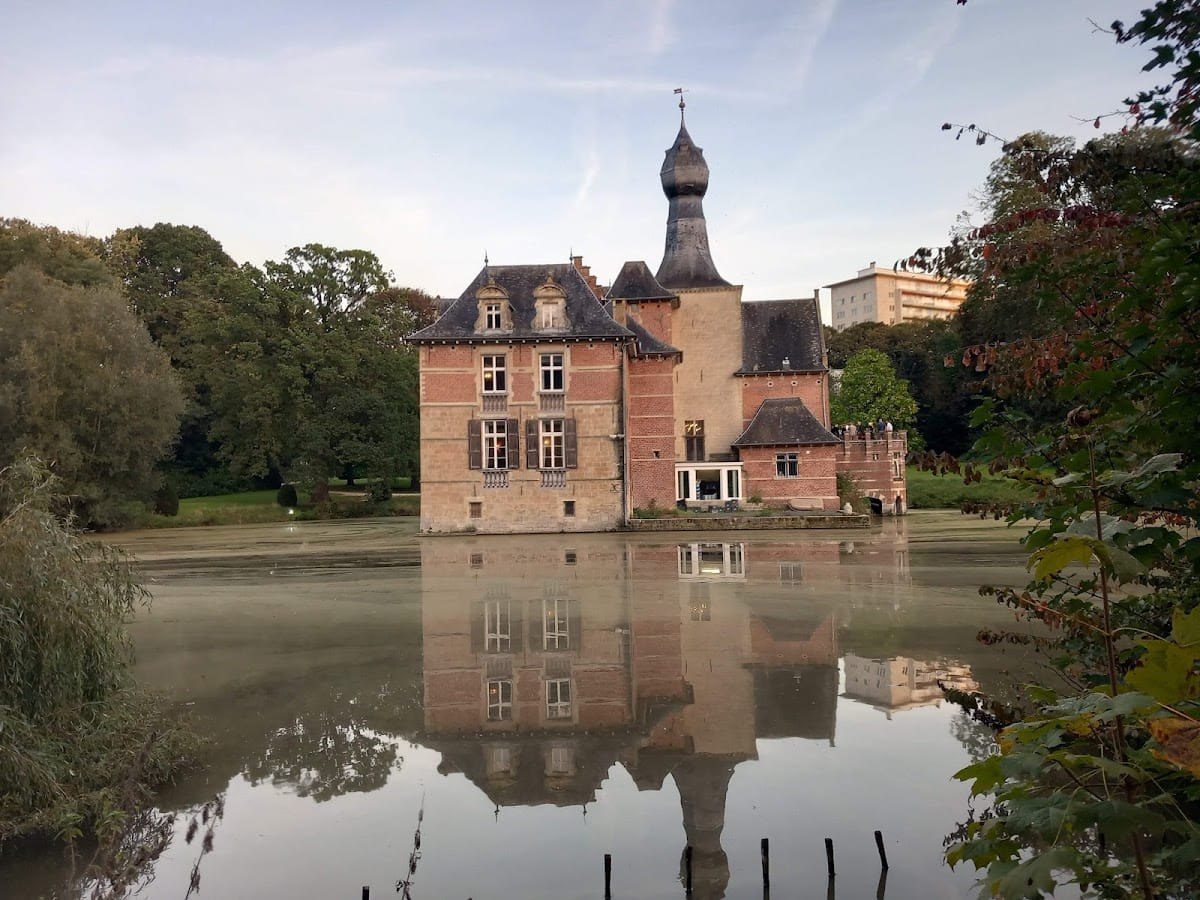
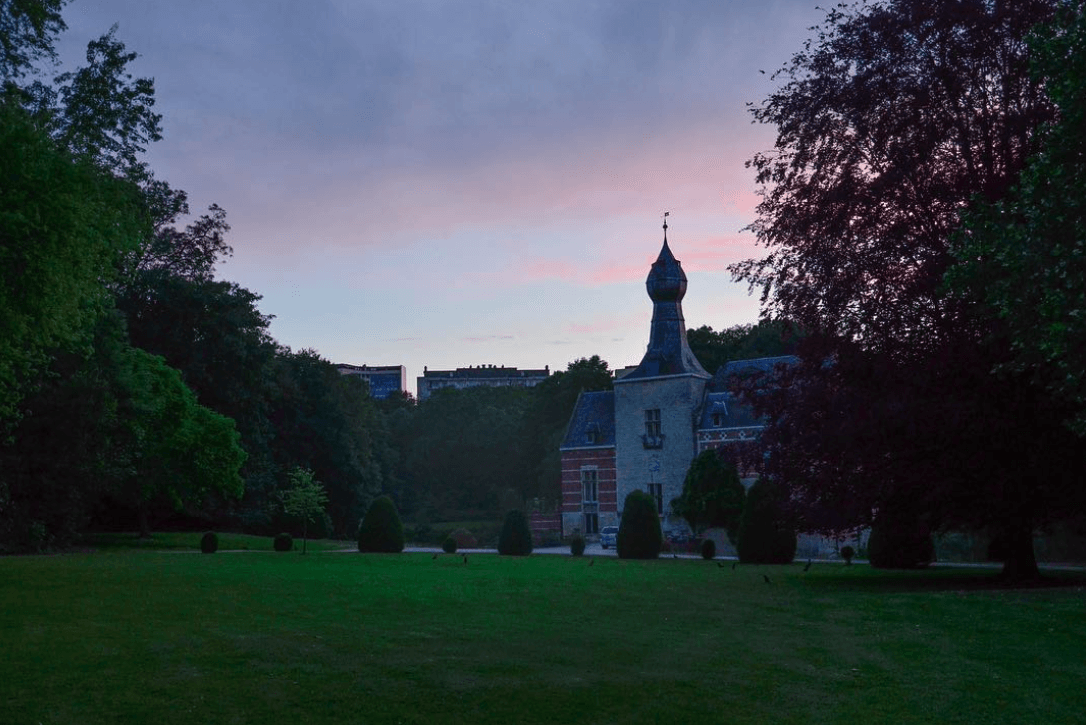
Rivieren Castle is organized around a thirteenth-century square donjon, the principal fortified tower of a medieval castle. Built entirely of stone, it is the main surviving element of the original stronghold. The donjon now forms the medieval core of a larger Gothic complex whose several wings were added between the fifteenth and nineteenth centuries.
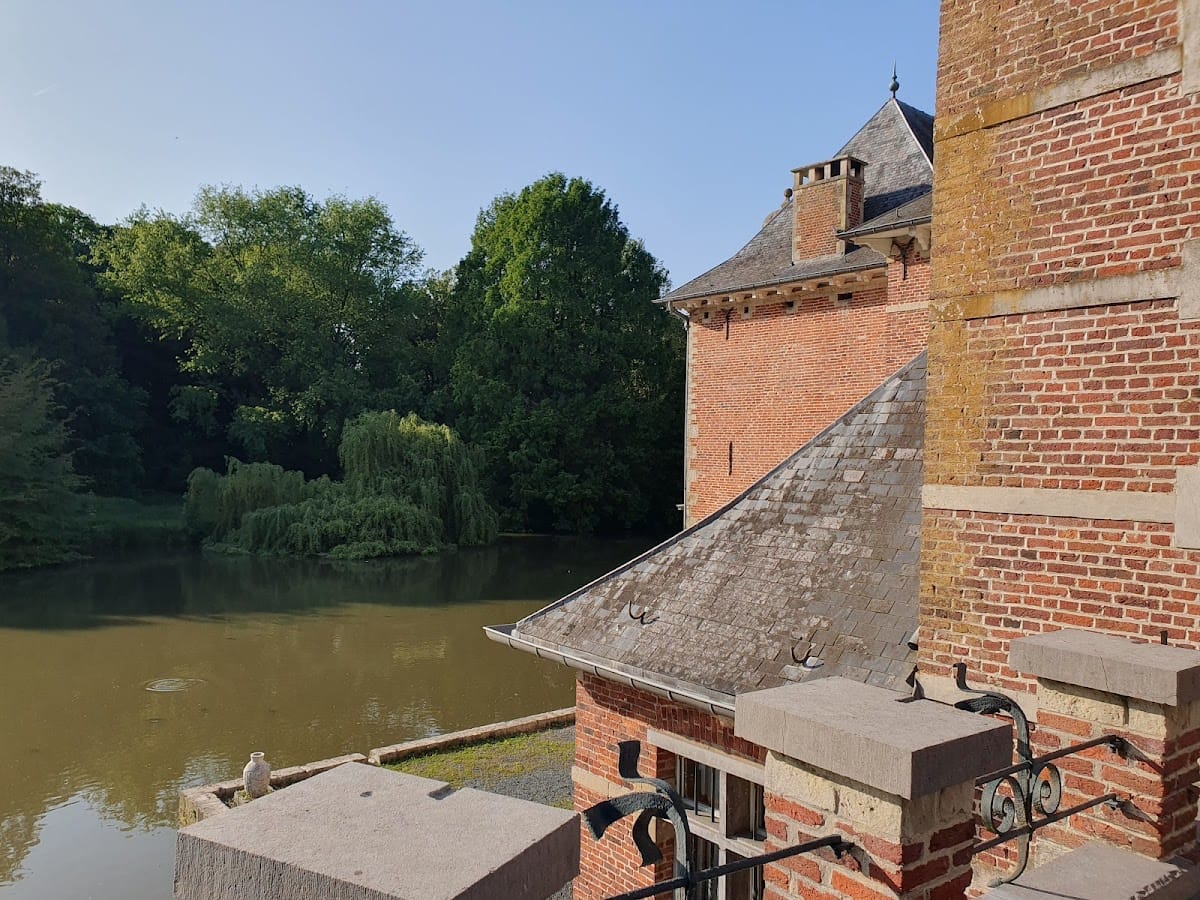
The later wings were built in brick and their façades are articulated with stone bands, stone window surrounds, and stone wall anchors, also called masonry chains. These additions created the residential and architectural character associated with the castle after its transformation into a pleasure domain. The associated outbuildings were restored after the property changed hands in 1977. The surviving complex therefore combines the stone fortification with later brick construction, preserving the physical record of successive building phases.
Moat and park
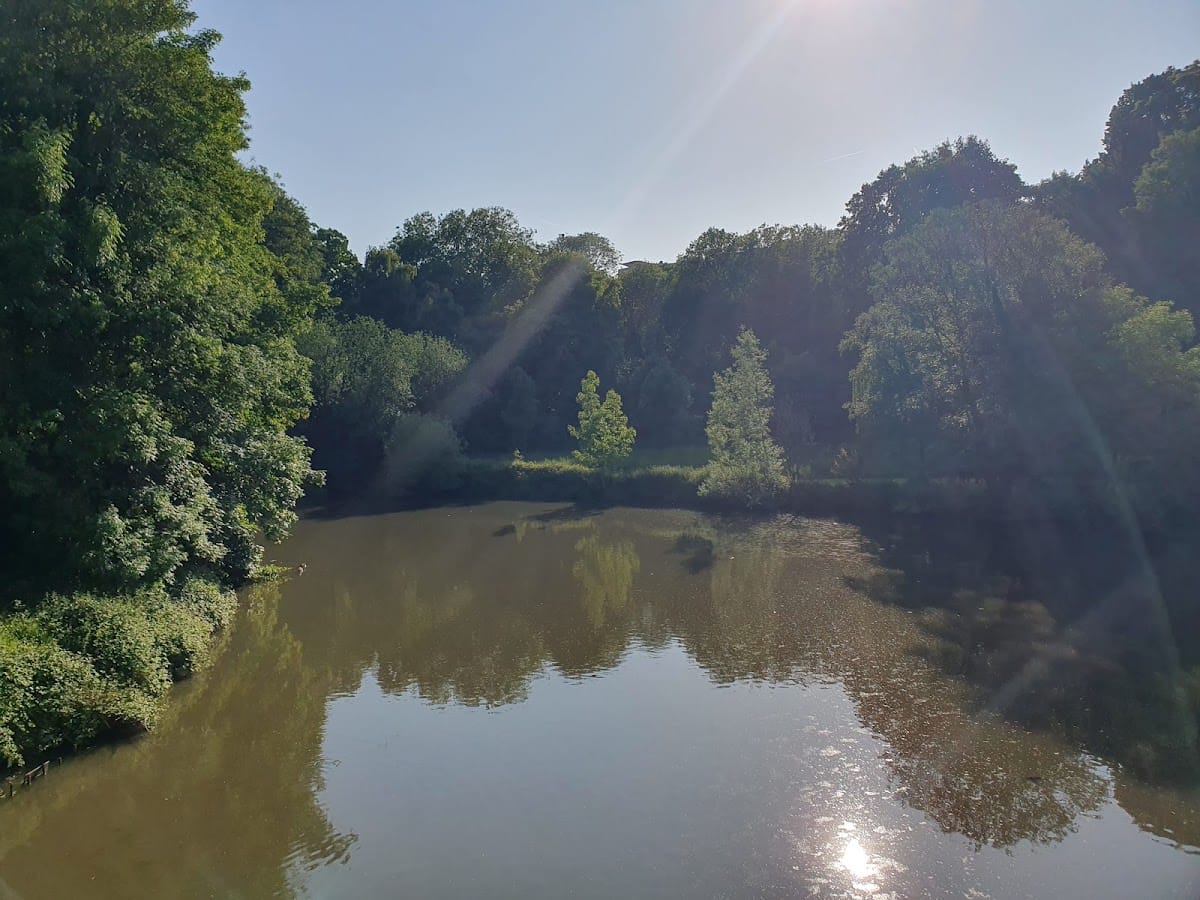
A pond surrounds the castle and represents a surviving part of the large medieval moat system. This water feature remains physically connected to the castle’s fortified origins, even though the present complex includes substantial later additions.
The castle stands within the 10-hectare Albert I Park, also known as Albert Park. Several trees in the grounds have protected status. The park was restored in 1993, while the castle and its outbuildings retain the effects of the twentieth-century restoration that followed the fires and the property’s acquisition by the Swiss company.