Santiago do Cacém Castle: A Medieval Fortification in Portugal


Site at a Glance
- Rating
- 4.2
- Popularity
- Low
- Country
- Portugal
- Primary era
- Medieval
- Eras represented
- Medieval
- Civilizations
- Portuguese
- Site type
- Military
- Remains
- Castle
On this page12 sections
History
Santiago do Cacém Castle is a military fortification in Portugal, built by Muslim rulers probably between the eighth and tenth centuries on a site with much earlier occupation. Its position above the settlement allowed control of the neighboring plain and placed it within the long history of conflict and political change in southern Iberia.
From Miróbriga to Kassen
Human occupation of the site and its surroundings reaches back to Celtic tribes. Under Roman rule in Iberia, the settlement was called Miróbriga and belonged to the conventual jurisdiction of Pax Julia, a Roman administrative district organized around its principal town at present-day Beja.
The settlement was occupied by the Alans during the first decades of the fifth century and abandoned in the sixth century, when its population moved to a neighboring hill nearer the sea. The later settlement came under Visigothic rule before Muslim forces occupied it in 712. At that time, it was known as Kassen.
The Moors built the castle, probably during the period between the eighth and tenth centuries. Elements of this earlier Islamic fortification remained within later defenses, linking the surviving stronghold to the Muslim settlement of Kassen.
Christian conquest and the Order of Santiago
Portuguese forces first captured Santiago do Cacém in 1158, during Afonso Henriques’ conquest of Alcácer do Sal. Almohad forces, a North African Muslim dynasty that ruled parts of the Maghreb and Iberia, recaptured the town in 1190 or 1191 when they retook Alcácer do Sal.
In 1186, Sancho I granted Almada, Palmela, and Alcácer do Sal to the Order of Santiago. This military religious order combined monastic life with the defense and administration of territories conquered by Christian rulers. Almada and Palmela had returned to Christian control before 1194, while Alcácer do Sal remained under Muslim rule until 1217.
During the reign of Afonso II, Santiago do Cacém definitively came under Portuguese control in 1217. Its territories were granted to the knights of the Order of Santiago, who rebuilt the defenses. The settlement adopted its present name, and its first charter was issued during this period. A charter was a formal grant defining a town’s legal, administrative, economic, and social privileges.
Later medieval and early modern changes
From 1315 to 1336, during the reign of Denis I, the castle was held by Vataça Lascaris, a Byzantine-born noblewoman and companion of Queen Elizabeth of Portugal. It later returned to the domains of the Order of Santiago.
During the Portuguese crisis of 1383–1385, a succession struggle that led to the accession of John I, Santiago do Cacém was among the first towns to declare support for him. Fernando Afonso de Albuquerque, master of the Order of Santiago, placed the order’s resources at John’s service.
The town received a new charter during the reign of Manuel I in 1512. In 1594, during the Philippine Dynasty, Philip II of Spain granted the castle to the dukes of Aveiro.
After the Portuguese Restoration War in the second half of the seventeenth century, the defenses lost their strategic importance. Control returned to the Crown in 1759, after which the castle was gradually abandoned and fell into pronounced ruin. During the nineteenth century, its interior dependencies were used as the town cemetery.
Preservation and traditions
The castle was classified as a National Monument by a decree published on 23 June 1910. Later consolidation and restoration works were undertaken by the Directorate-General for National Buildings and Monuments.
Local tradition attributes the castle’s foundation to the daughter of a wealthy Moorish lord. According to the legend, she requested only as much land as could be covered by an ox hide, then cut the hide into strips to enclose a much larger area. After three days of dense fog, a castle was said to have appeared through magical means.
Another tradition identifies Vataça Lascaris as a Byzantine princess who fled the eastern Mediterranean and reached Sines with an armed fleet. The story says that she defeated and killed an Islamic lord named Kassen and seized his castle on Saint James’s day, 25 July. It connects this episode with the name Santiago de Kassen.
Remains
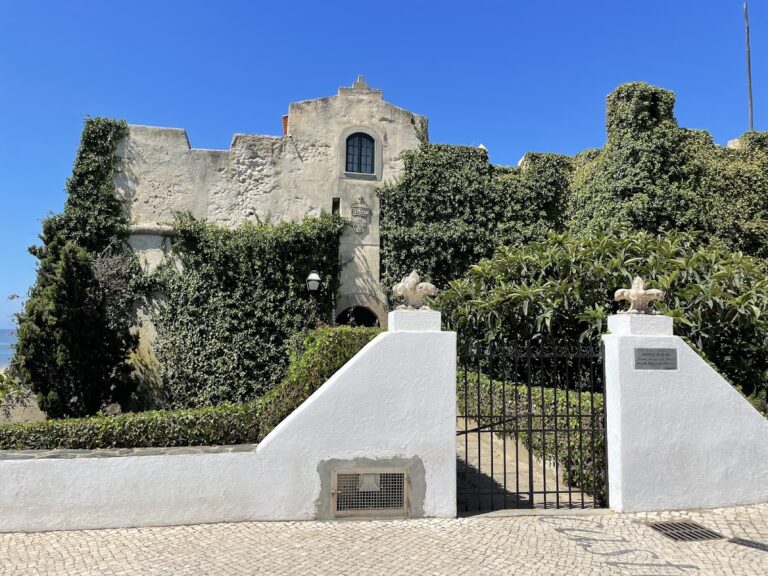
The castle occupies a dominant position on a modest hill approximately 250 metres high, about 15 kilometres from the Atlantic coast and the port of Sines. Its plan is approximately rectangular, with a slightly parallelogram-shaped outline and a longest side of about 190 metres. The surviving fabric is concentrated chiefly in the defensive walls and associated structures.
Fortifications and citadel
Walls and outer defenses
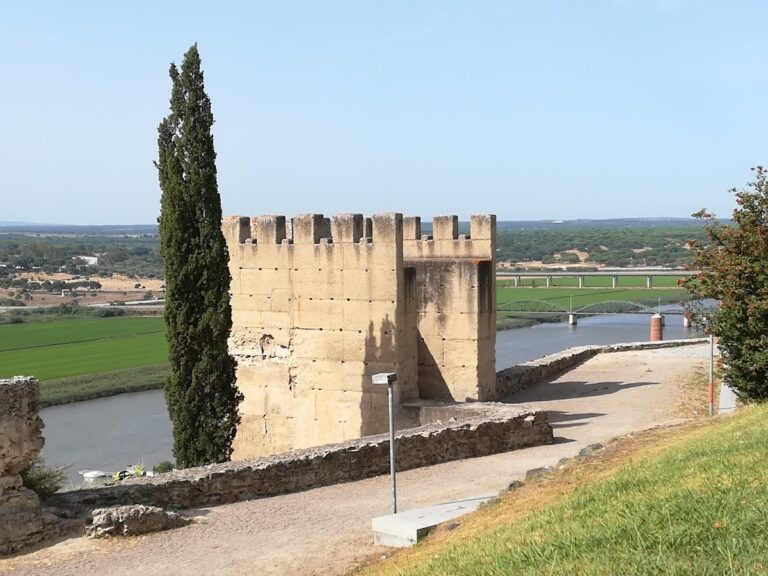
The crenellated walls preserve traces of the Islamic fortification and are reinforced by ten quadrangular towers and semi-cylindrical turrets. A barbican, an outer defensive work protecting an entrance or wall, strengthens the exterior and is itself reinforced with turrets. Together, these elements define the principal defensive enclosure.
Donjon and alcazaba
A donjon, the principal fortified tower of a medieval castle, forms part of the defensive complex. Within the medieval citadel, remains of the original alcazaba also survive. An alcazaba is a fortified inner enclosure of a Muslim settlement or castle complex, providing a physical link between the castle’s Islamic origins and its later medieval form.
Church of Santiago
Former parish church
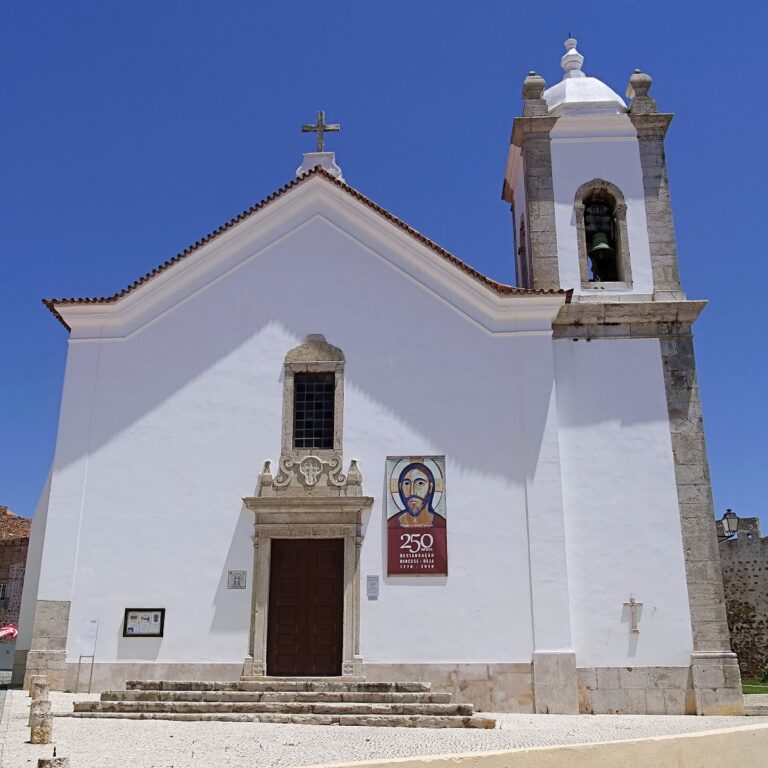
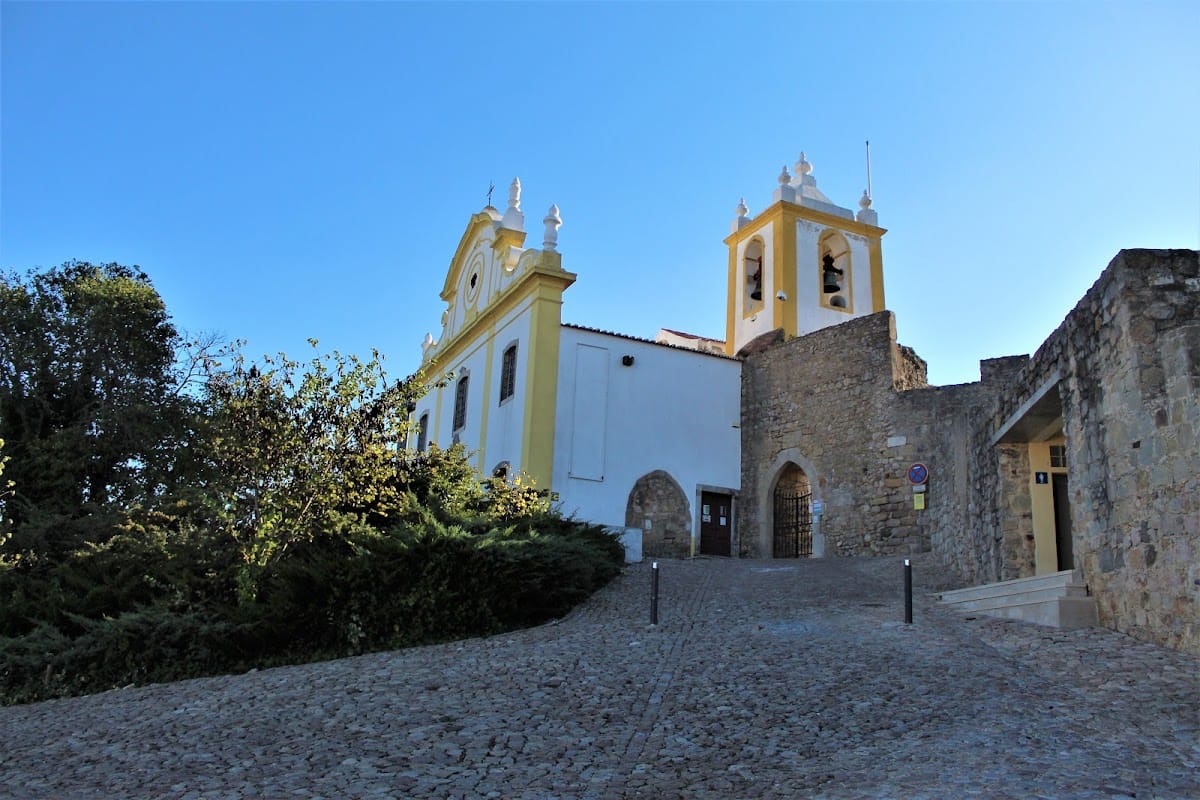
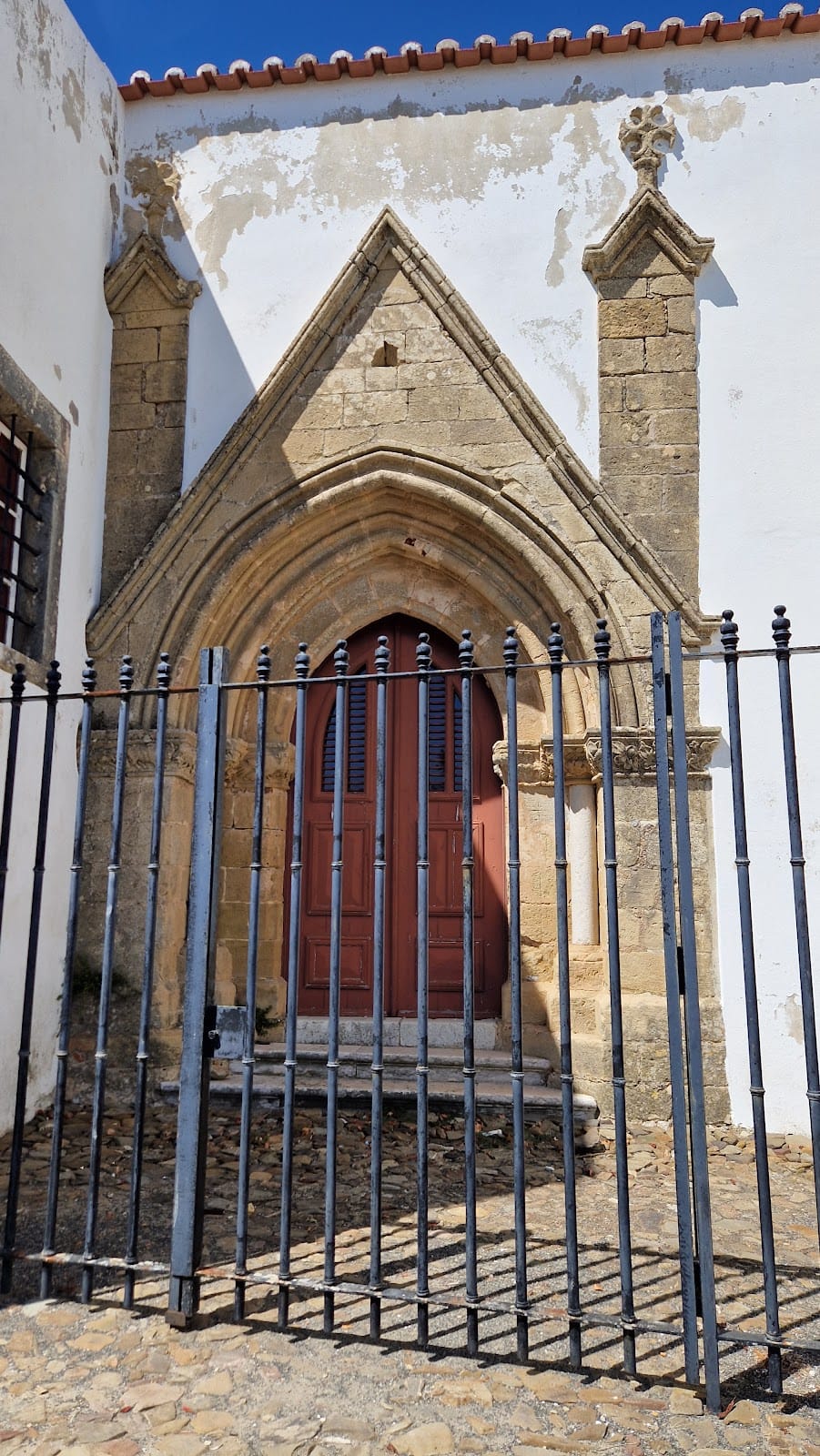
The former parish church of Santiago is attached to the southeastern section of the walls. Its fabric contains traces of early Romanesque and Gothic styles, together with later alterations. The church interior includes a relief sculpture of Saint James fighting the Moors.
Southern portico
The church’s southern portico is decorated with zoomorphic motifs. This sculptural detail forms part of the surviving religious architecture attached to the castle’s southeastern defenses.