Cerrado do Castelo Roman Archaeological Site: Baths and Tile Kilns in Portugal
Site at a Glance
- Popularity
- Very Low
- Country
- Portugal
- Primary era
- Classical
- Eras represented
- Classical
- Civilizations
- Roman
- Site type
- Sanitation
- Remains
- Baths
On this page8 sections
History
The Cerrado do Castelo Roman Archaeological Site lies within the grounds of Basic School No. 1 in Grândola, Portugal. Its broad chronology includes the Bronze Age, the Roman period, and the Middle Ages, while the best-defined phase is a bath complex used from the 1st to the 4th century CE.
Roman use
The baths probably served a Roman villa, a rural estate or residence, or an inn. They may have received water from the Roman dam of Pego da Moura. A burial ground at nearby Cerrado do Arraial was probably associated with the same villa. Two tile kilns appear to have been built later in the Roman period, after the original buildings had been abandoned.
Identification and later work
Portuguese archaeologist José Leite de Vasconcelos identified the ruins in 1904. Construction of the school heavily damaged the remains. Disturbed deposits and rubble yielded objects dating to the 1950s. Excavations in 1989 and 1990 identified two groups of Roman remains, the baths and the kilns. In 1997, the site received Portugal’s Property of Public Interest designation, a heritage category for places recognized as being of public interest.
Test excavations in the school grounds in August and September 2016, carried out as part of a redevelopment program, produced indications of possible occupation during recent prehistory. Rehabilitation work in 2023 aimed to improve conservation, make future maintenance easier, and make visits safer. The work also sought to support the site’s use as a teaching resource for the school community.
Remains
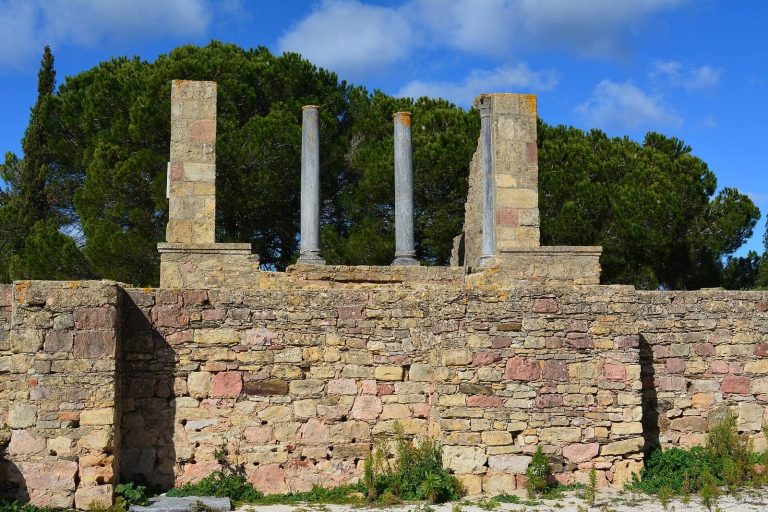
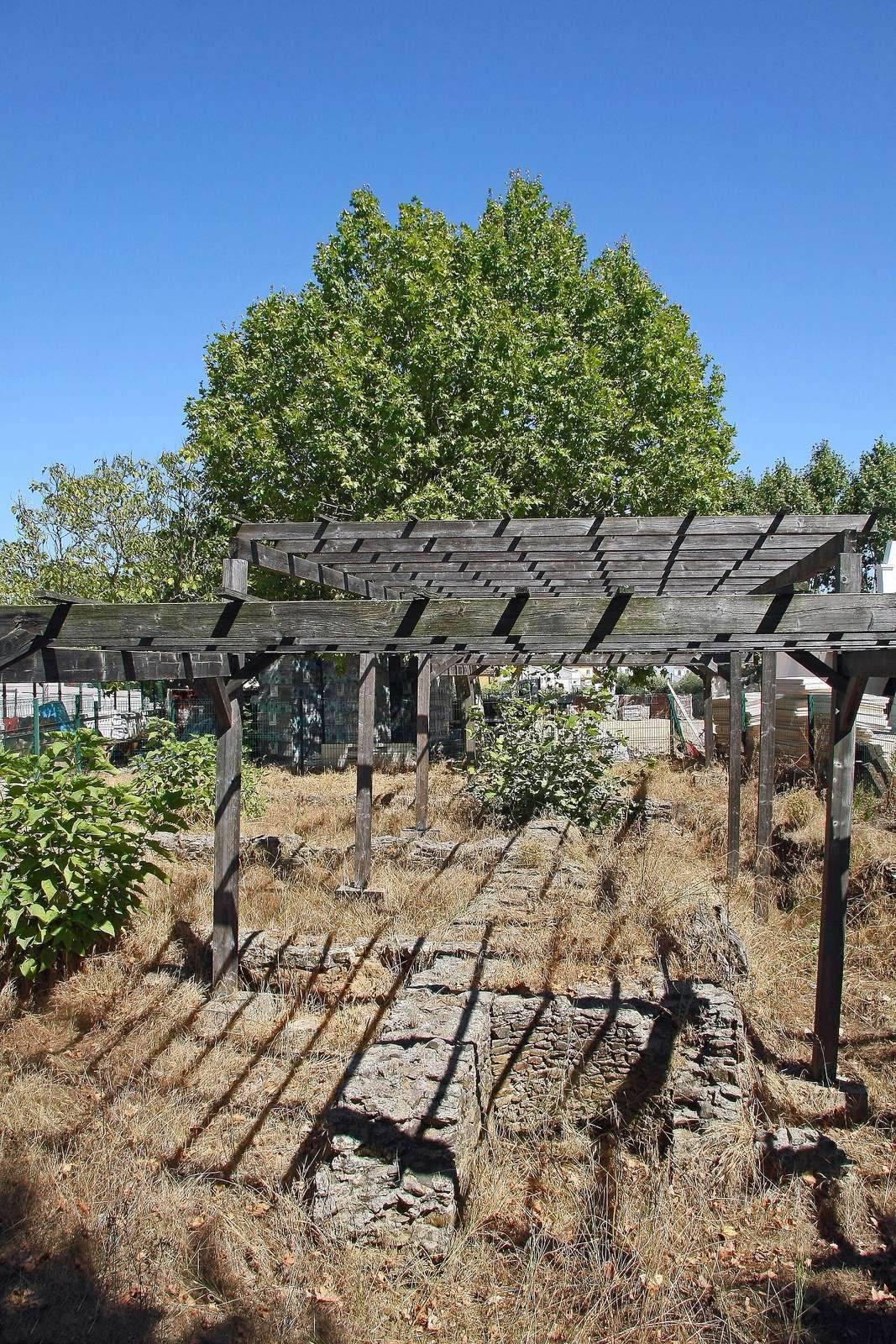
The remains occupy part of the school grounds in the Alentejo region, behind Classroom Building No. 1. The excavated Roman features include a bath complex and two tile kilns.
Baths and kilns
Bath complex
The baths included four small tanks and a larger pool, as well as two rooms with schist walls. The pool pavement provides a spatial reference for the kilns, which lie beneath it.
Tile kilns
Each kiln had a circular chamber built from brick units bonded with mortar. Its base consisted of clay-rich earth mixed with brick fragments and stones. Fragments of tiles, pots, and ceramic plates were found inside the kilns.
Excavated finds
Finds from the site include part of a Lusitanian type 2 amphora, a handled vessel used for storage or transport and classified within a regional type from Roman Lusitania in western Iberia. Other pottery includes a fragment of a dolium, a large storage jar, and terra sigillata, fine Roman tableware with a distinctive red surface, including pieces made in South Gaul. Coins associated with the reigns of Augustus, Rome’s first emperor, and the later emperors Alexander Severus and Constantine were also recovered.