Kimpulan Temple: A Ninth- or Tenth-Century Shaivite Shrine in Indonesia
Site at a Glance
- Rating
- 4.7
- Popularity
- Low
- Country
- Indonesia
- Primary era
- Medieval
- External website
- Open
- Eras represented
- Medieval
- Civilizations
- Unclassified
- Site type
- Religious
- Remains
- Temple
On this page6 sections
History
Kimpulan Temple, also known as Pustakasala Temple, is a Hindu Shaivite shrine in Lodadi, Sleman Regency, Indonesia. Its carvings and sculptures place it approximately in the ninth or tenth century, probably during the Mataram Kingdom, an early medieval Javanese kingdom associated with major Hindu and Buddhist monuments in Central Java. Shaivism is a Hindu tradition centered on Shiva, and the shrine incorporates several symbols linked to his worship.
Construction during the Mataram period
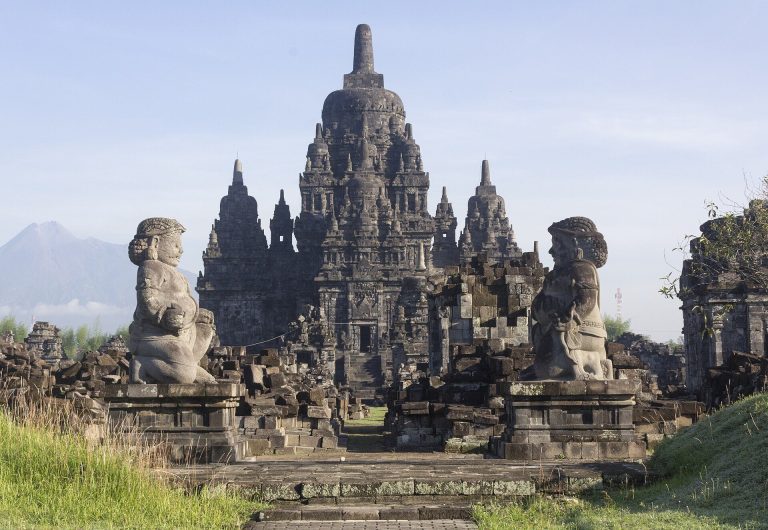
Kimpulan was probably built as a modest local shrine during the Mataram period. Archaeologists have proposed that it formed part of a network of temples between Borobudur, a major Buddhist monument, and Prambanan, a major Hindu complex. This network was closely connected with wet-rice cultivation. The temple’s small scale and restrained decoration contrast with the monumental character of Prambanan, and it has been characterized as a village shrine built by local people near the Mataram capital.
The shrine is thought to have been buried by an ancient eruption of nearby Mount Merapi, an active volcano near Yogyakarta, probably about a millennium ago. Volcanic burial preserved the remains underground and later encouraged speculation that other early temples might survive beneath deposits in the surrounding area.
Discovery and naming
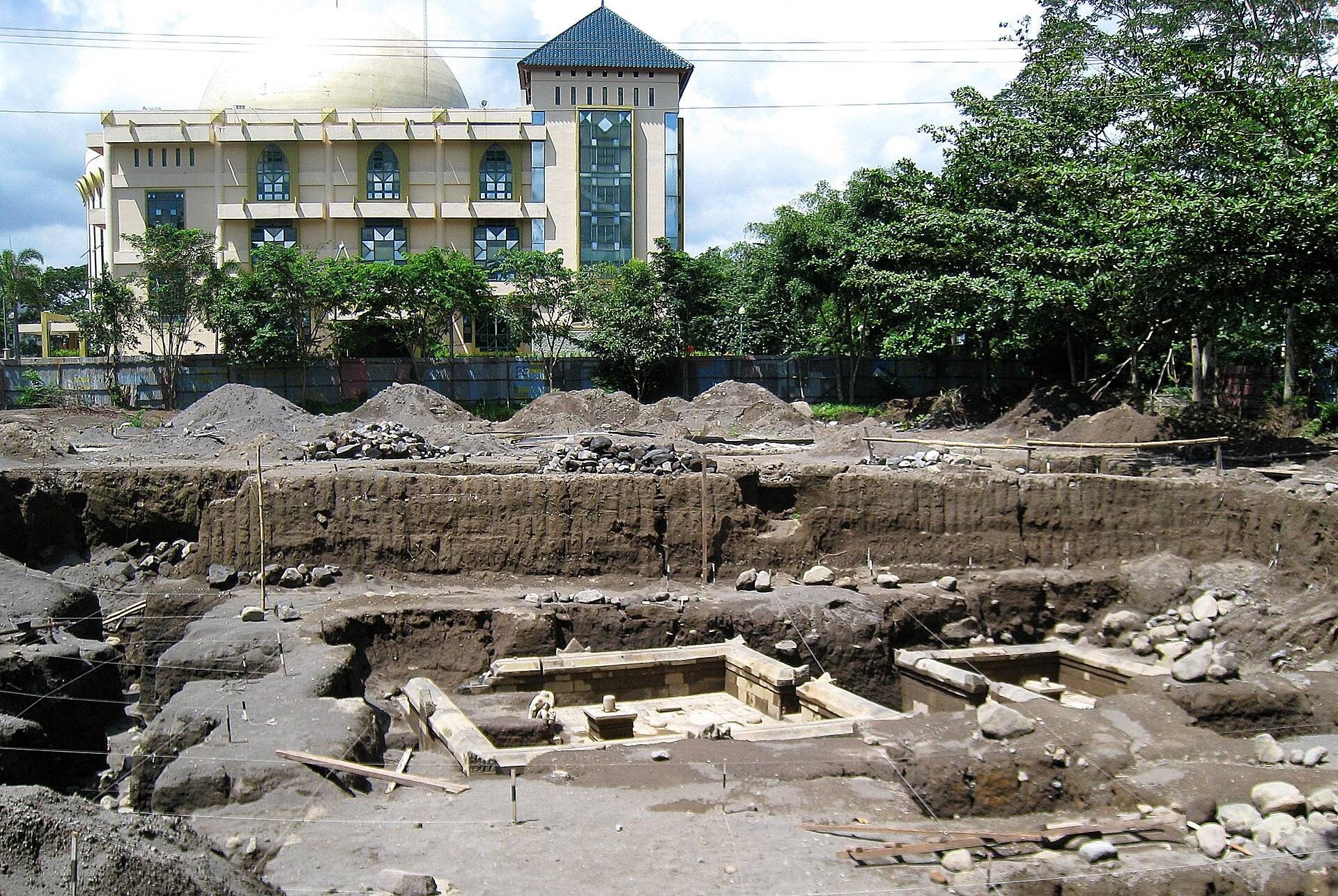
The temple was found by chance on 11 December 2009, when workers excavated foundations for a new library at the Islamic University of Indonesia. Because it stood on the university campus, it was initially called Candi UII. The Yogyakarta Archaeological Office later named it Candi Kimpulan after the village where it is located.
The university’s Wakf Foundation Board proposed the name Pustakasala, a Sanskrit term meaning “library.” The name referred to the planned library and to the university’s educational character. The discovery of a Ganesha statue also supported this association, since Ganesha is traditionally linked with learning, intellect, wisdom, and knowledge.
Archaeological study and excavation have been conducted by the Yogyakarta Archaeological Office. The discovery attracted large numbers of visitors, prompting concern about damage to the excavation and possible looting. Authorities enclosed the area with tin fencing and closed it to visitors while investigation continued.
Remains
Buried stone foundations
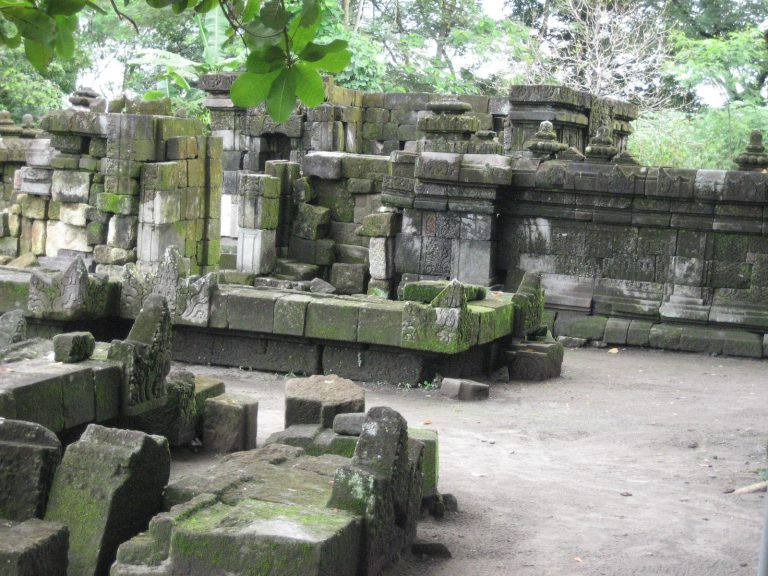
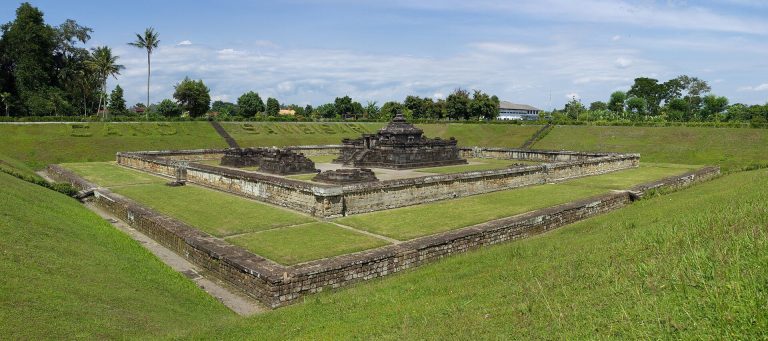
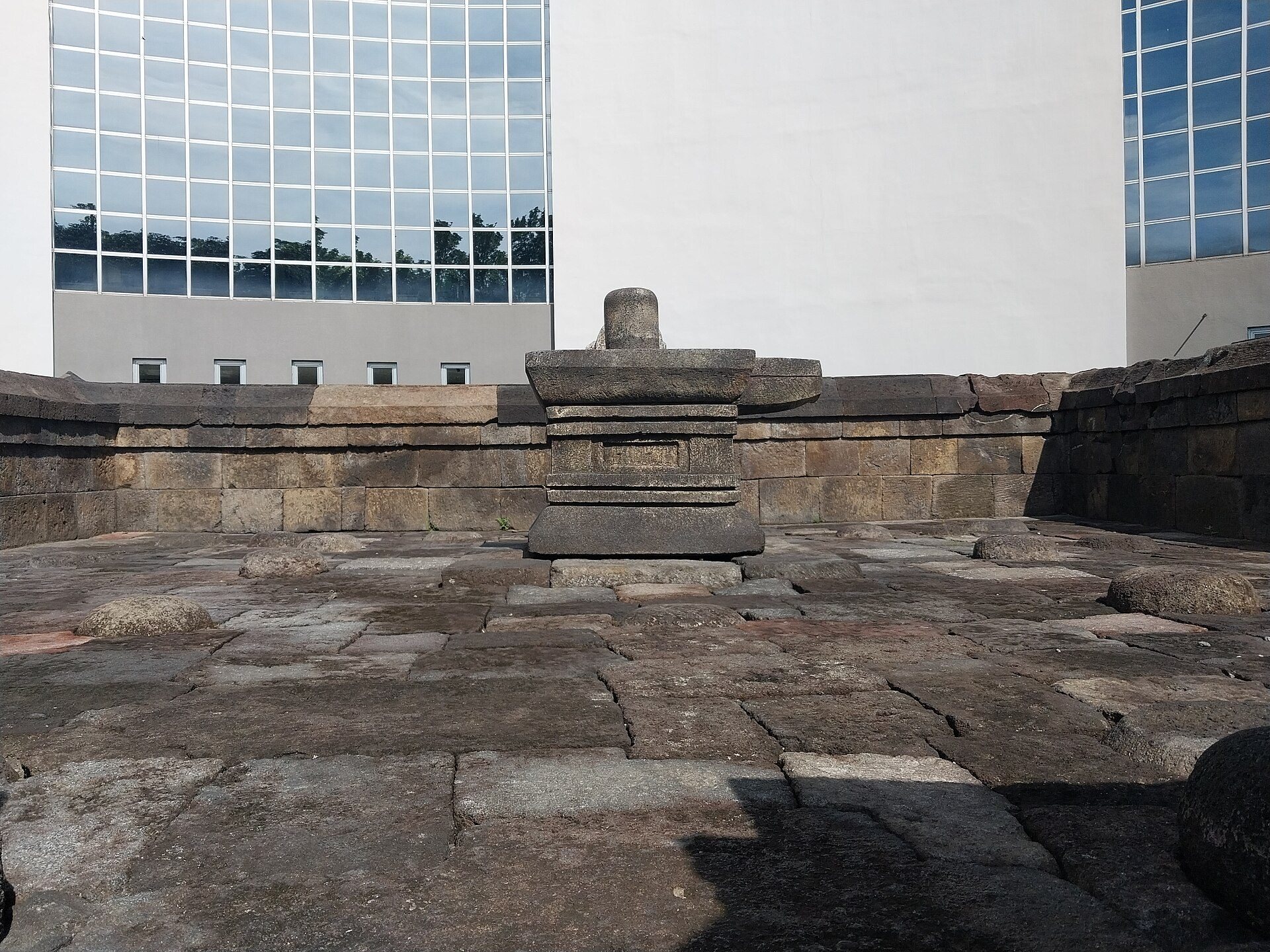
The temple lay about five metres below ground in the area of the university library and Ulil Albab Mosque on Kaliurang Road. Excavation has revealed square, walled bases built from andesite stone, together with several small square sections and stairways. These remains form a compact arrangement rather than the elevated mass of a large stone temple.
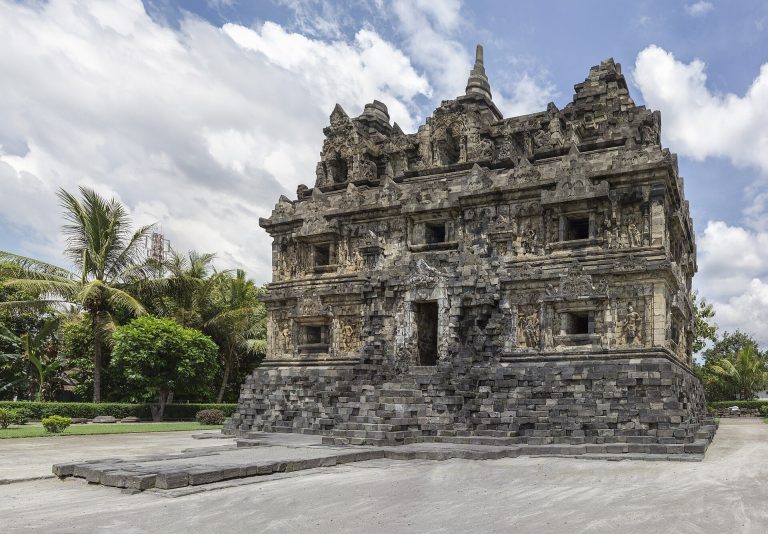
Kimpulan is unusually small and simply decorated when compared with contemporary Central Javanese Hindu temples. It has no surviving stone superstructure or towering roof. The temple body, columns, and roof were probably made from wood or another organic material that decayed, leaving the stone foundations and carved elements visible today.
Carved religious features
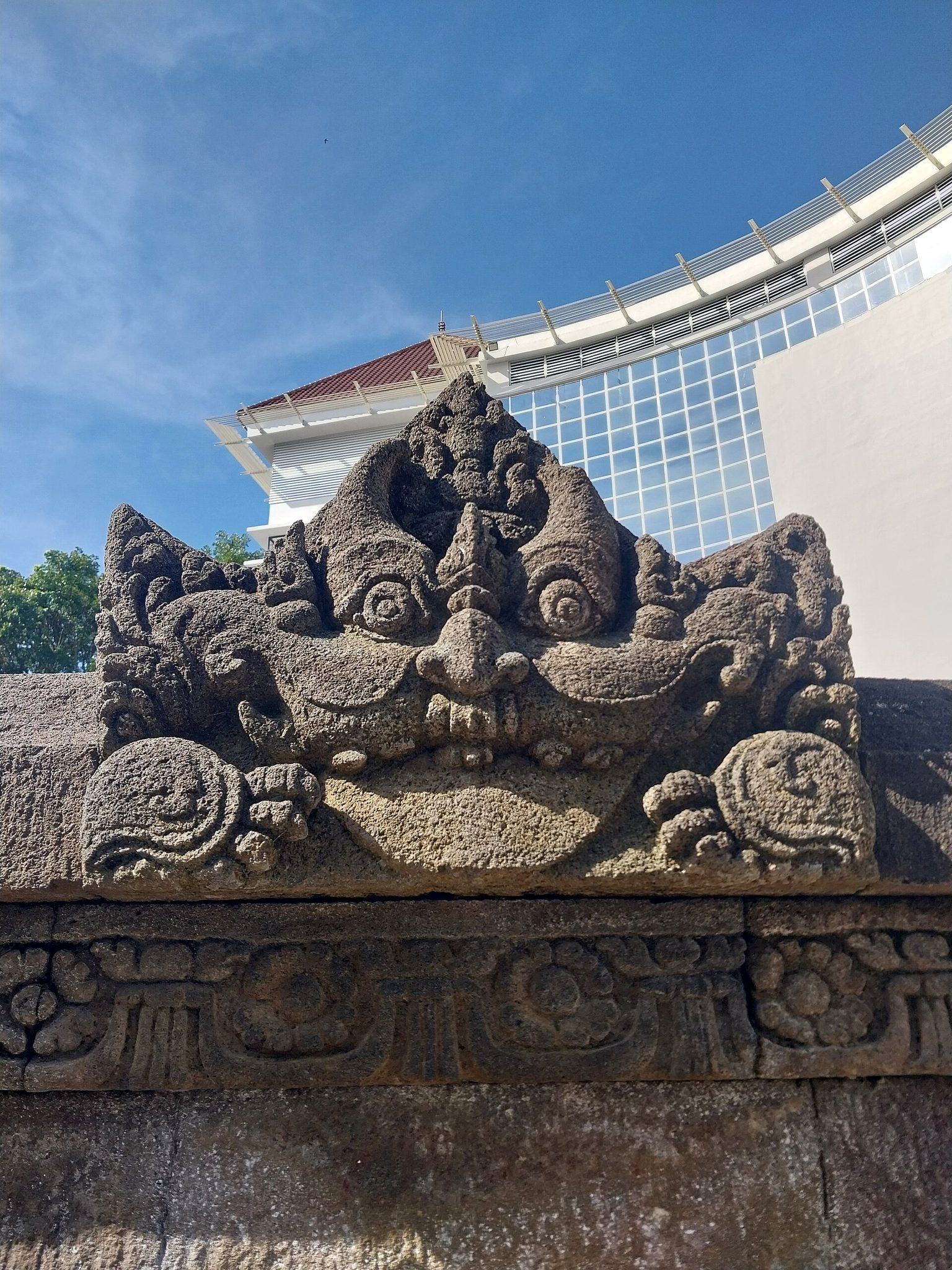
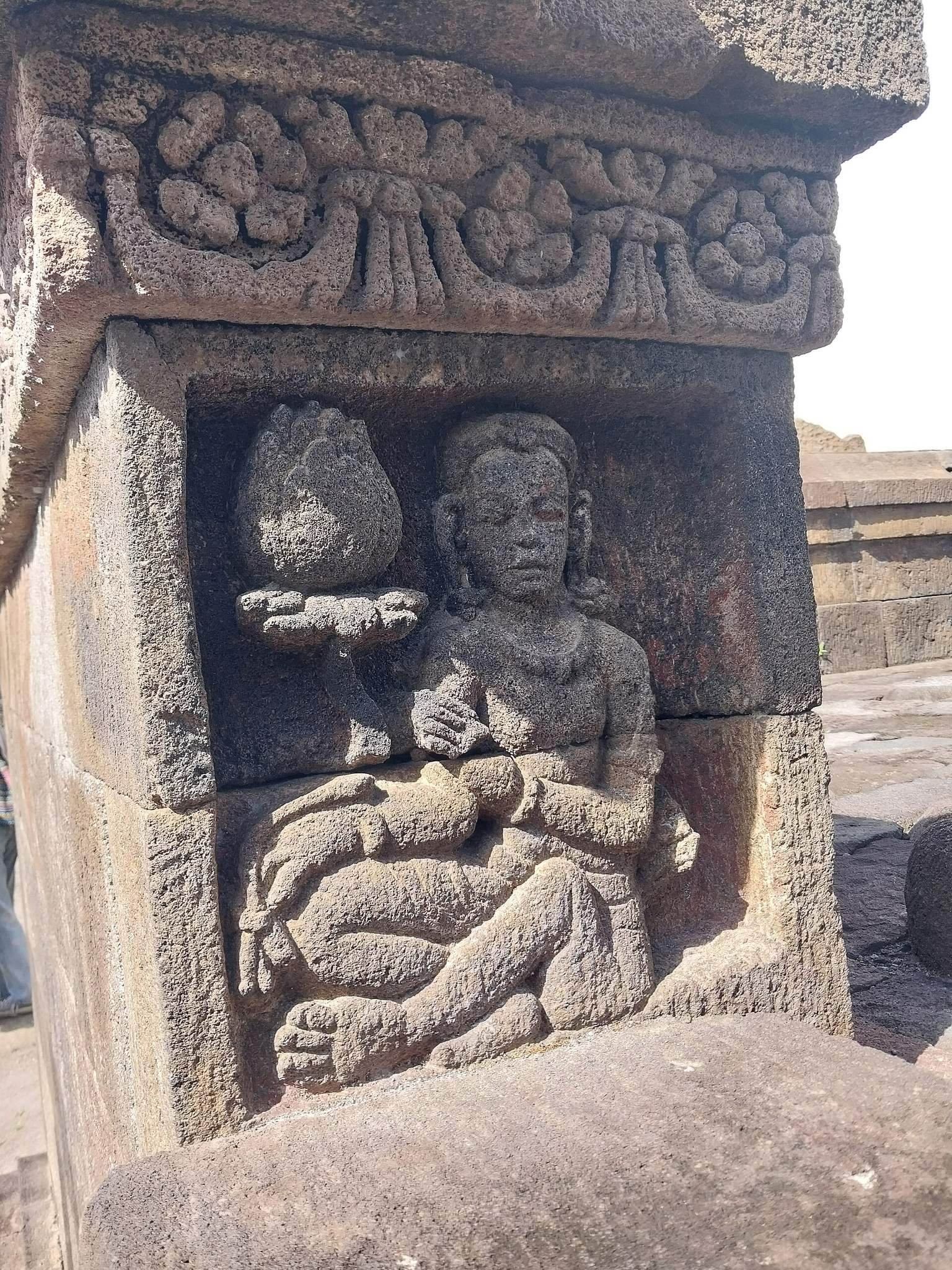
Carvings of Kala, a fierce protective figure commonly placed around temple entrances and stairways, appear on the steps. The inner chambers contain statues of Ganesha and Nandi, the bull traditionally associated with Shiva, as well as a lingam-yoni. This combined symbol joins Shiva’s lingam with its yoni base and expresses complementary generative principles in Hindu religious imagery.
The original shrine may have had a tall, tiered Meru-style roof, a mountain-like form especially associated with Balinese Hindu temple architecture. Its artistic character may have resembled later Balinese temples, although the organic materials of the upper structure have not survived. The excavated remains therefore preserve the temple’s stone plan and religious sculpture while leaving its original elevation partly unresolved.