Ancient Tombs in Bojeong-dong, Yongin: A Silla-Period Cemetery

Site at a Glance
- Rating
- 3.9
- Popularity
- Very Low
- Country
- South Korea
- Primary era
- Medieval
- Eras represented
- Medieval
- Civilizations
- Silla
- Site type
- Burial
- Remains
- Necropolis
On this page11 sections
History
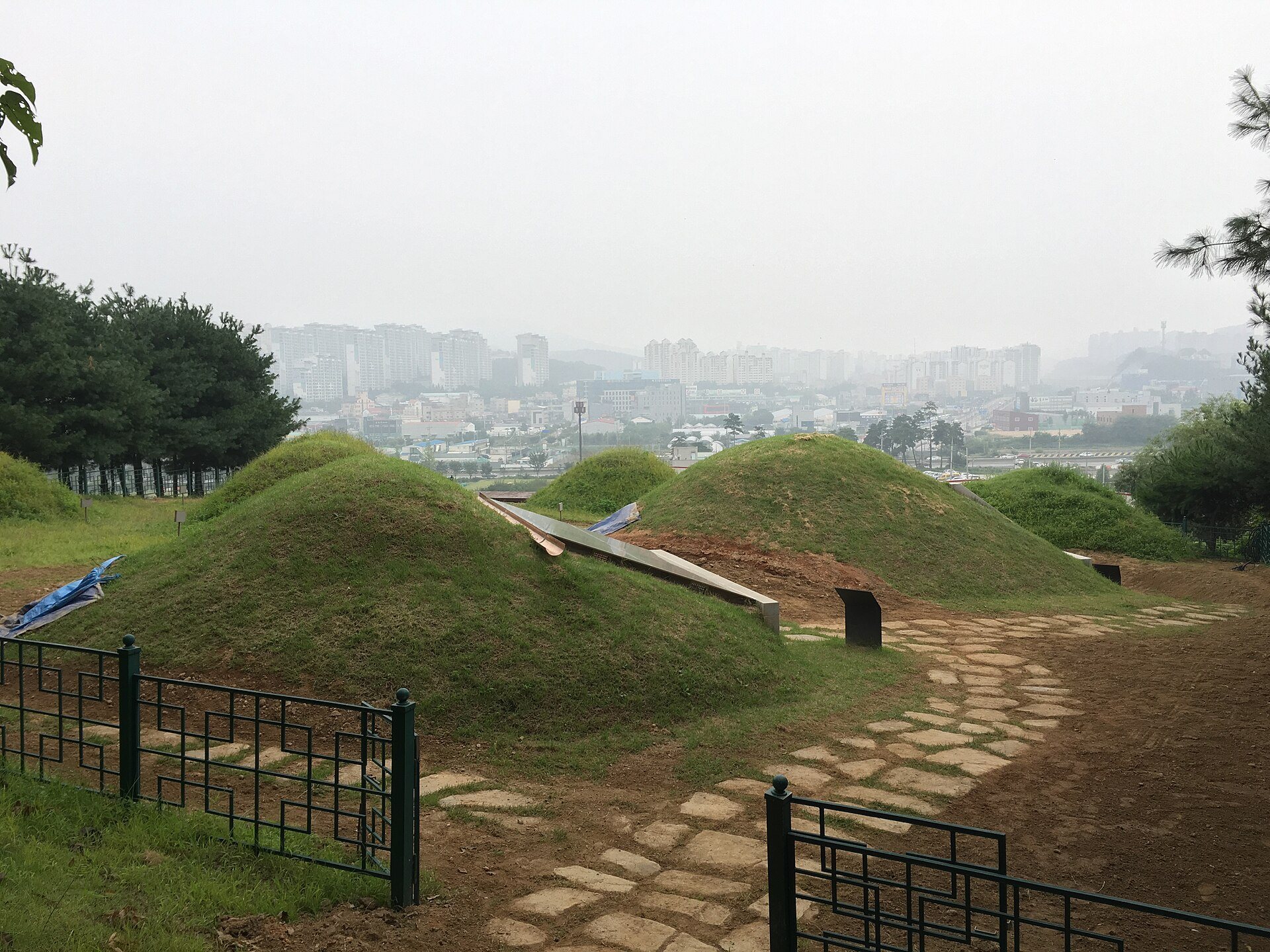
Ancient Tombs in Bojeong-dong, Yongin is a Silla-period cemetery in Yongin, South Korea, used from the latter part of the sixth century to the ninth century. Its main period of use followed Silla’s advance into the Han River basin and continued while the kingdom controlled the central region of the Korean Peninsula.
Silla Expansion into the Han River Basin
During Silla’s expansion, the area around the Tancheon and its tributary, Seongbokcheon, formed an important bridgehead. The cemetery, together with nearby Halmisanseong Fortress and Seokseongsanseong Fortress, reflects the growth of Silla power in this part of the peninsula.
Investigations in Dongcheon-dong, Mabuk-dong, Seongbok-dong, Jukjeon-dong, and Pungdeokcheon-dong have revealed remains from several phases of the Three Kingdoms period. These include Baekje residential remains from the Hanseong period, Goguryeo tombs with grave goods, and Goguryeo and Silla settlement remains. Together, the discoveries show that the surrounding area was a strategic foothold contested among Baekje, Goguryeo, and Silla.
A Cemetery of Powerful Elites
The cemetery was used on a large scale over several centuries. Few Silla burial grounds in the central region combine such an extensive area with such a long period of use, and among Silla cemeteries north of Chungcheong Province it is described as the longest-used example. Its historical and scholarly importance is compared with the tomb groups at Nuam-ri in Chungju and Maeryong-ri in Yeoju.
The burials and their grave goods have been associated not only with local elites but also with ruling groups connected to Gyeongju’s Jin-gol, or “true-bone,” rank. This was the highest aristocratic level in Silla’s bone-rank system below the royal line, suggesting a possible relationship between the cemetery and powerful aristocrats linked to the Silla capital.
Protection and Investigation
Ancient Tombs in Bojeong-dong, Yongin was designated Historic Site No. 500 of the Republic of Korea on June 24, 2009. Its original designation name was changed to the present name on July 28, 2011. Construction controls within the site’s historical and cultural environment preservation zone were announced in 2020. Some of the approximately 130 tombs have been excavated and investigated.
Remains
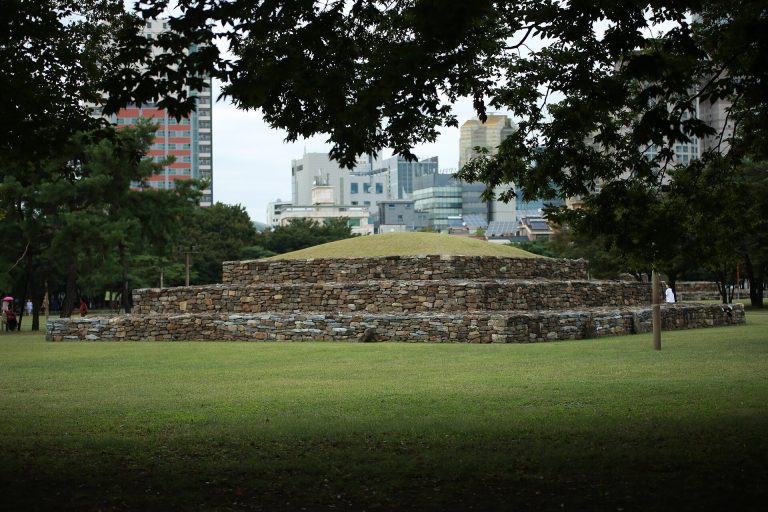
The cemetery occupies the main ridge extending south from Sosilbong and its subsidiary ridges, within an area of 18,473 square metres. Approximately 130 tombs, including estimated locations, are distributed across the ridge system. The burials are principally stone-lined tombs and stone chamber tombs, formed by arranging stones into rectangular spaces and covering them with capstones.
Burial Structures
Stone Chambers
The excavated tombs are predominantly side-entrance stone chamber tombs. In this form, an entrance leads laterally into a stone-built burial chamber rather than opening from directly above. Stone retaining rings have also been identified around the Silla tombs, adding a visible boundary to some burial structures.
Stone-Lined Tombs
Other burials were made as stone-lined tombs. Stones were arranged to create a rectangular space for the deceased, after which capstones covered the chamber or grave. These forms make up the principal burial structures distributed across the cemetery’s main and subsidiary ridges.
Grave Goods and Pottery
Vessels and Belt Fittings
Excavated objects include pedestal long-necked jars, pedestal dishes, short-necked jars, covered pedestal cups, covered pedestal bowls, and covered pedestal vessels. Bronze and gold belt fittings were also recovered, along with iron coffin nails.
Late Silla Ceramics
The pottery includes forms characteristic of the later Silla period before Unified Silla, when Silla had expanded into the Han River basin and defeated its principal rivals. These include short-footed mounted cups and long-necked mounted jars with added rims and stands. Stamped-pattern pottery associated with the Unified Silla style also occurs among the finds.