Aten: An Ancient Egyptian Settlement at Luxor
Site at a Glance
- Rating
- 4
- Popularity
- Very Low
- Country
- Egypt
- Primary era
- Bronze Age
- Eras represented
- Bronze Age
- Civilizations
- Egyptian
- Site type
- City
On this page10 sections
History
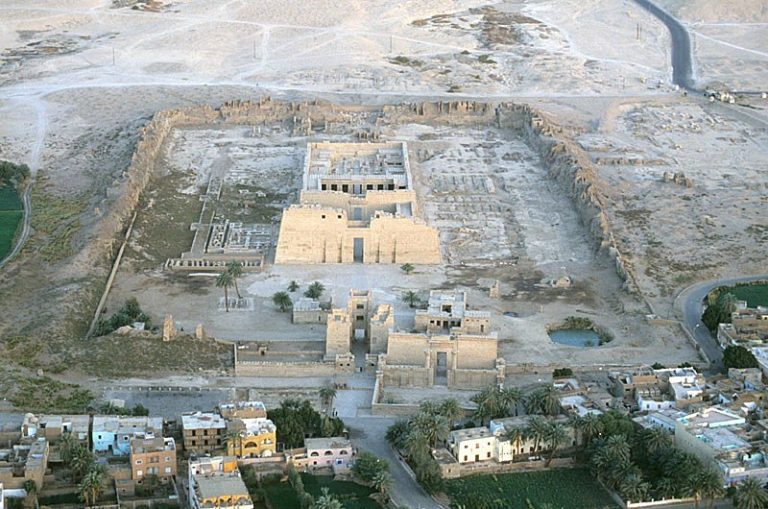
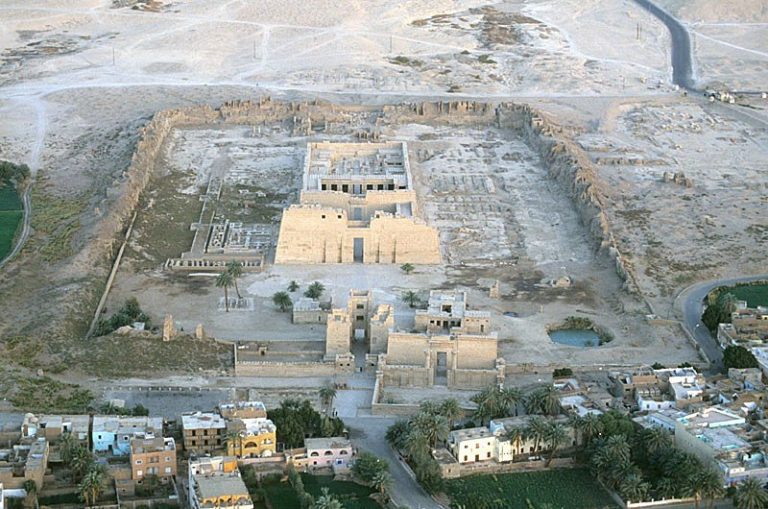
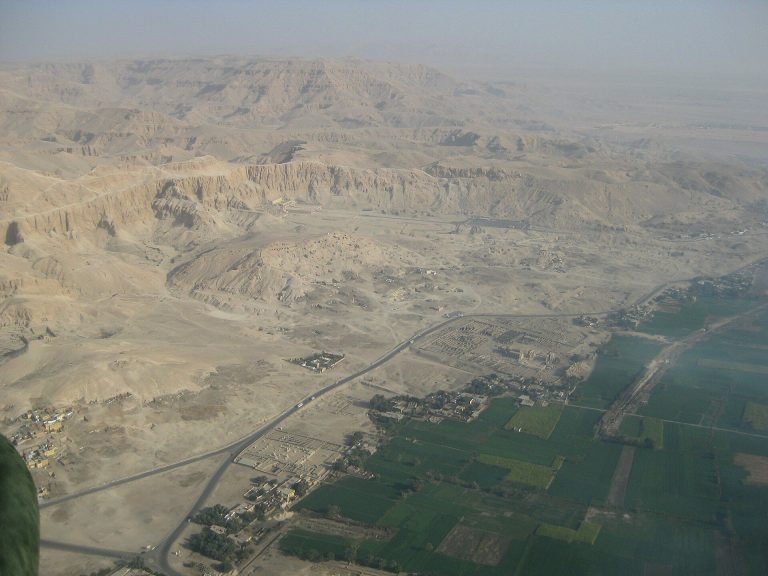
Aten is the remains of an ancient Egyptian settlement on the west bank of the Nile near Luxor, Egypt. Founded during the reign of Amenhotep III, around 1386–1353 BCE, it belongs to the New Kingdom, a major period of Egyptian imperial power, and was named after Aten, the solar deity whose worship later became especially prominent under Akhenaten. The settlement appears to have been a major administrative and industrial centre, preserving an unusually extensive picture of urban life during the Eighteenth Dynasty.
Foundation under Amenhotep III
The city was originally called The Dazzling Aten. Archaeologists initially referred to it as the Rise of Aten. It formed part of Amenhotep III’s palace complex at Malkata, which was itself also known as The Dazzling Aten and lies immediately north of the excavated settlement. The city’s buildings and working areas belonged to an organised royal centre serving administrative, residential, industrial, and food-production needs.
Akhenaten and the later Eighteenth Dynasty
Inscriptions provide evidence for the settlement’s continuing importance. One inscription is dated to 1337 BCE, during the reign of Akhenaten, the son and successor of Amenhotep III. Akhenaten is believed to have moved the royal capital to Akhetaten in the following year. The settlement later came under Tutankhaten, who changed his name to Tutankhamun in honour of another Egyptian god, and it continued in use during the reign of Ay, the penultimate ruler of the Eighteenth Dynasty.
Later occupation and discovery
Four settlement layers indicate renewed occupation during the Coptic-Byzantine period, from the third to the seventh century CE, when Christian Egyptian and Byzantine cultural influences were present. Excavations began in September 2020, led by the Egyptian archaeologist Zahi Hawass and his team. They were searching for Tutankhamun’s funerary temple in the area between the mortuary temple of Ramses III and the temple of Amenhotep III when they exposed the settlement’s southern quarters. Earlier missions had tried unsuccessfully to locate the city.
The discovery was formally announced on 8 April 2021. Its preservation prompted comparisons with Pompeii, while Egyptologist Betsy Bryan described it as one of Egypt’s most important archaeological discoveries since the excavation of Tutankhamun’s tomb. Excavation has continued since 2020. Initial reports indicated that about one-third of the settlement had been exposed, while investigation continued farther across the site, including around the possible location of Tutankhamun’s funerary temple. Aten lies within the UNESCO World Heritage property Ancient Thebes with its Necropolis, designated in 1979 under criteria i, iii, and vi.
Remains
Urban layout and mudbrick buildings
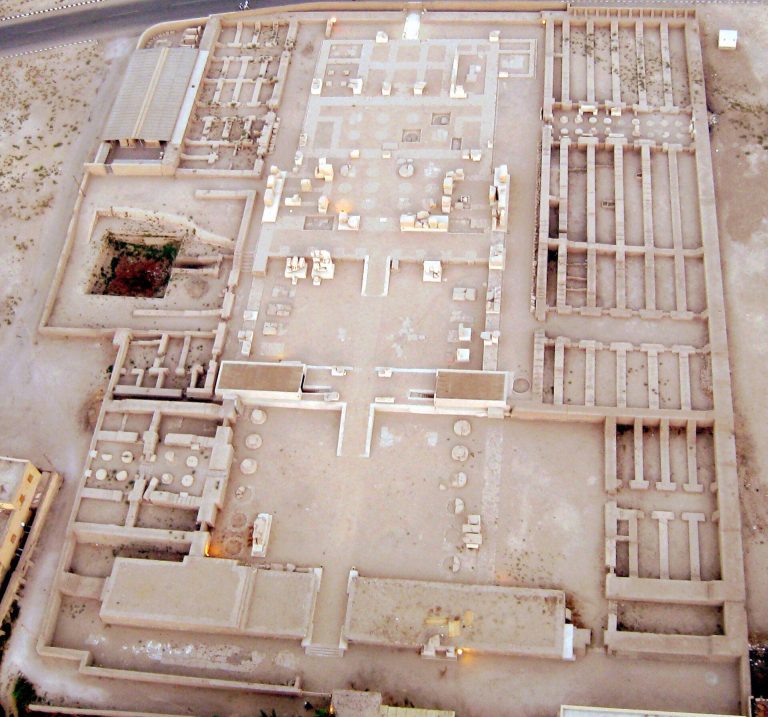
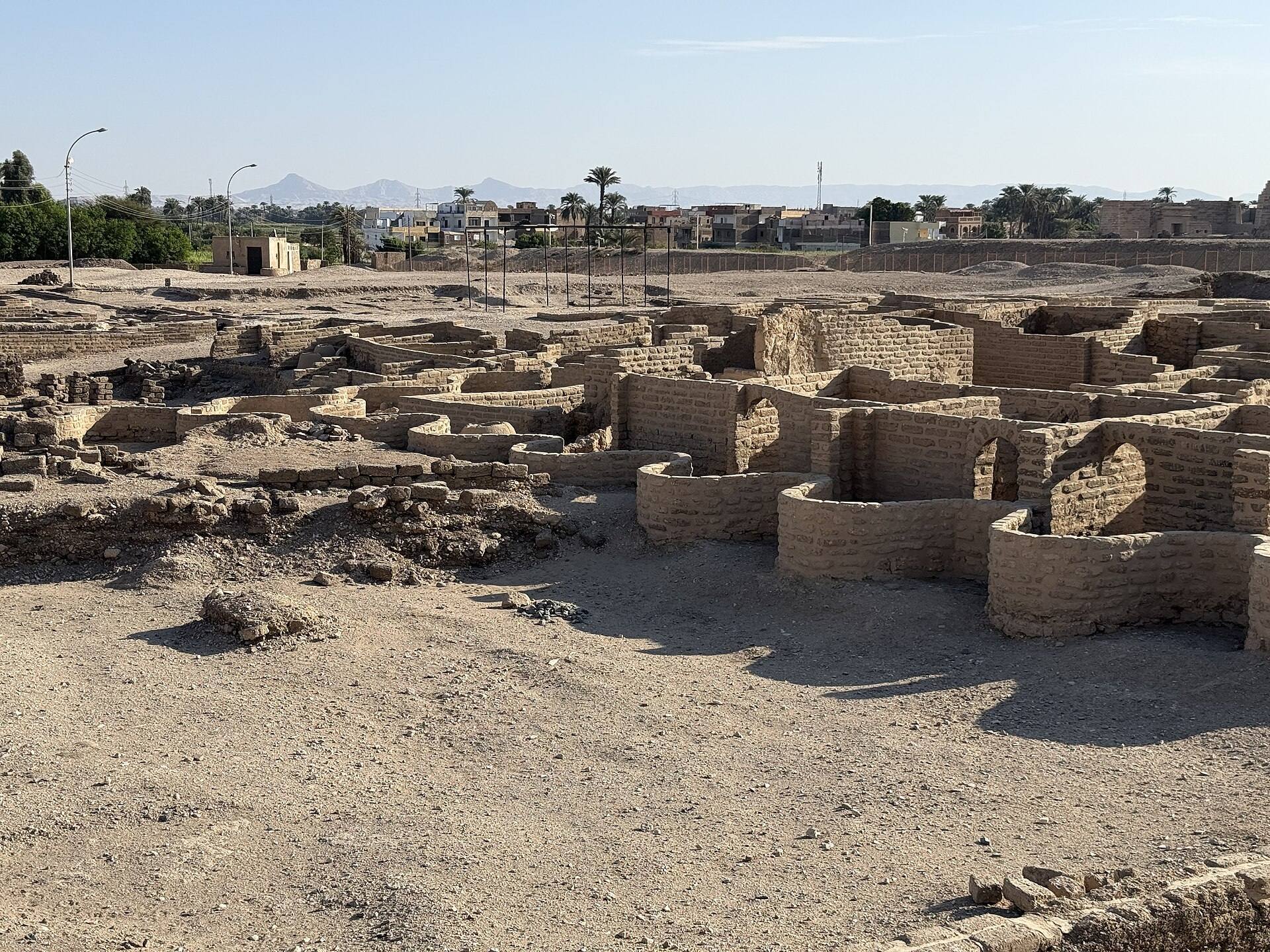
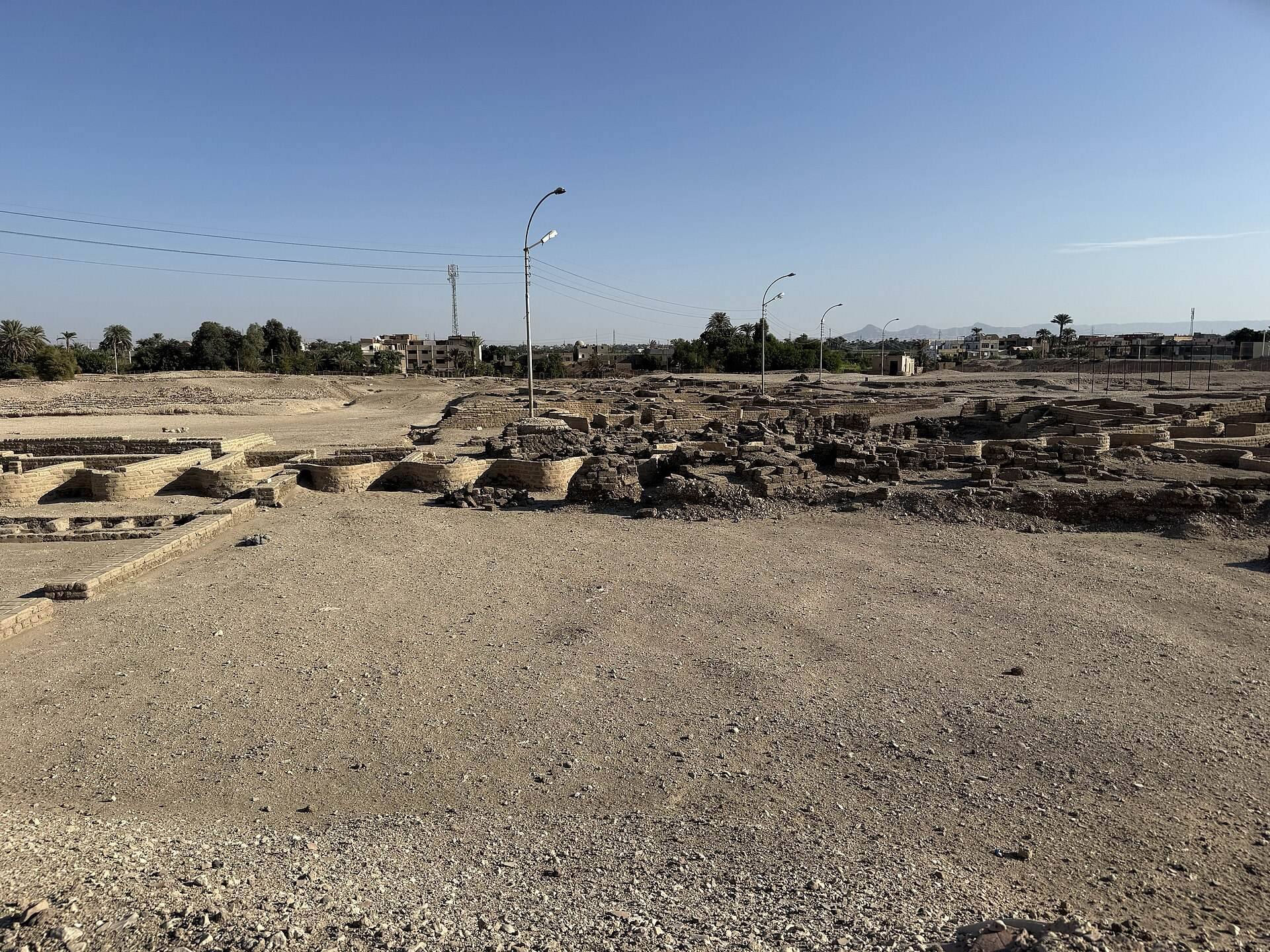
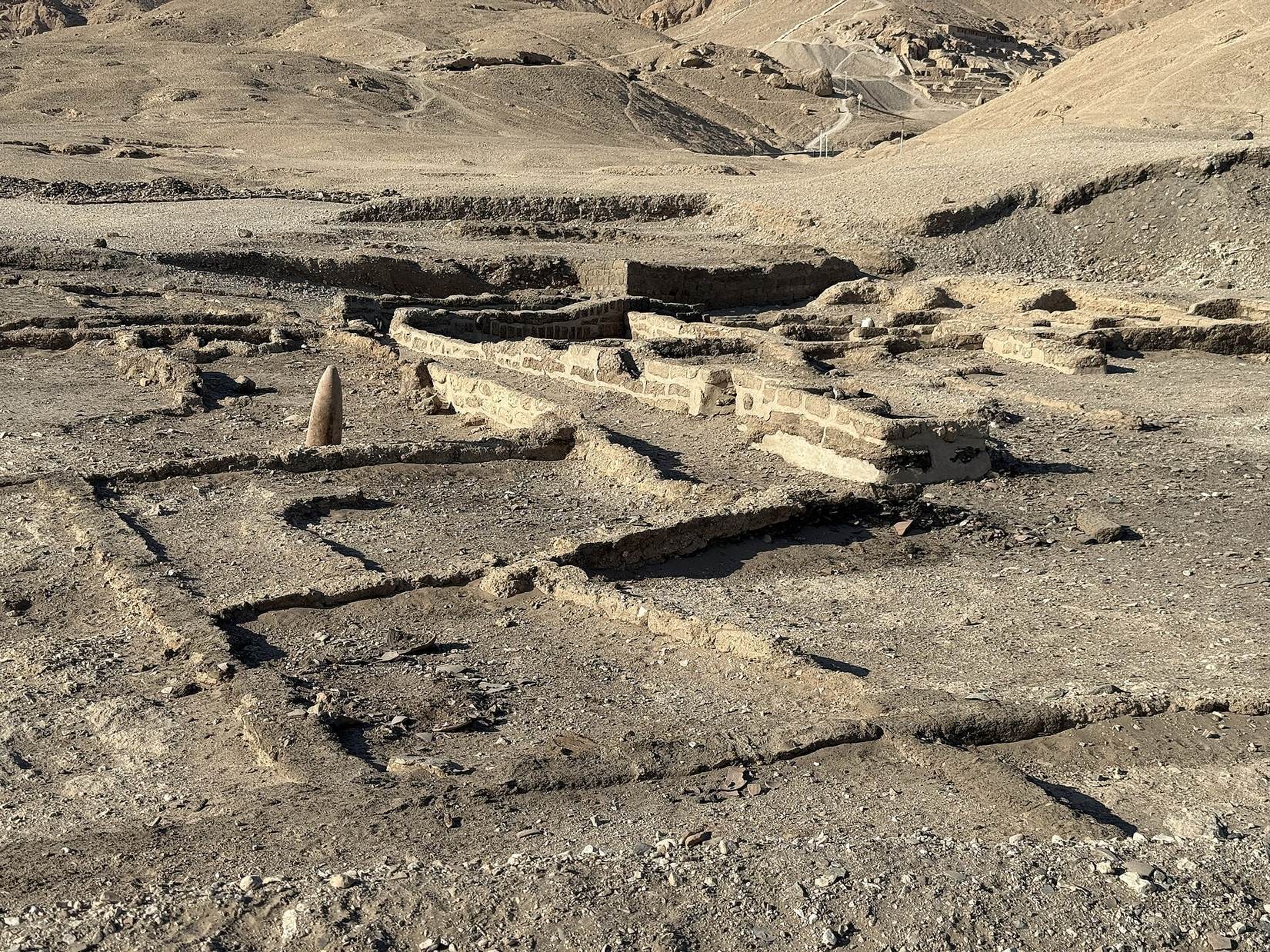
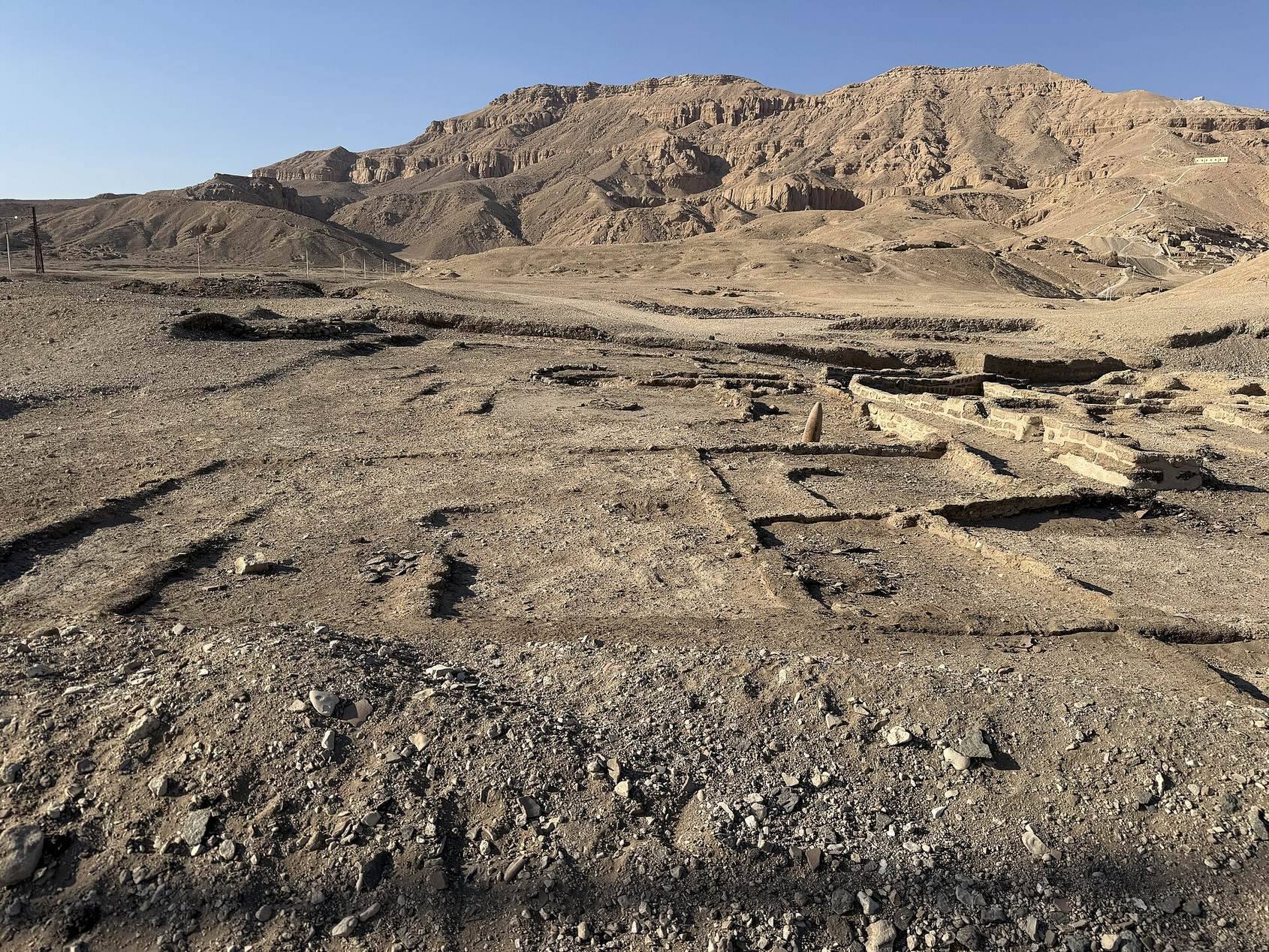
The settlement consists of extensive urban ruins arranged along streets and divided into neighbourhoods by zigzagging mudbrick walls. Some walls survive to about three metres high. The mudbrick construction preserves rooms, buildings, passages, and archaeological layers that remained largely undisturbed for more than three thousand years, allowing the settlement’s different working and residential areas to be understood as parts of a connected urban environment.
Food production and residential administration
The southern quarter contains a bakery, cooking and food-preparation spaces, ovens, and pottery storage vessels. These facilities served large numbers of workers and employees and formed part of the city’s daily economic activity. Another quarter contains larger, carefully organised administrative and residential units enclosed by a zigzag wall. A single entrance led into internal passageways and residential spaces, and the restricted access indicates a security function. Zigzag walls were an unusual feature of ancient Egyptian architecture, particularly toward the end of the Eighteenth Dynasty.
Workshops and royal production
A workshop quarter includes an area where mudbricks were produced for temples and associated buildings. The bricks carry impressions of Amenhotep III’s royal cartouche, the oval enclosure around a king’s hieroglyphic name, including the name Nebmaatre. Moulds for amulets and decorative elements show that ornamentation for temples and tombs was made at the settlement. Tools connected with spinning and weaving were also recovered, together with metal and glass debris, although the principal production area for those materials has not been identified.
Palaces and cemetery
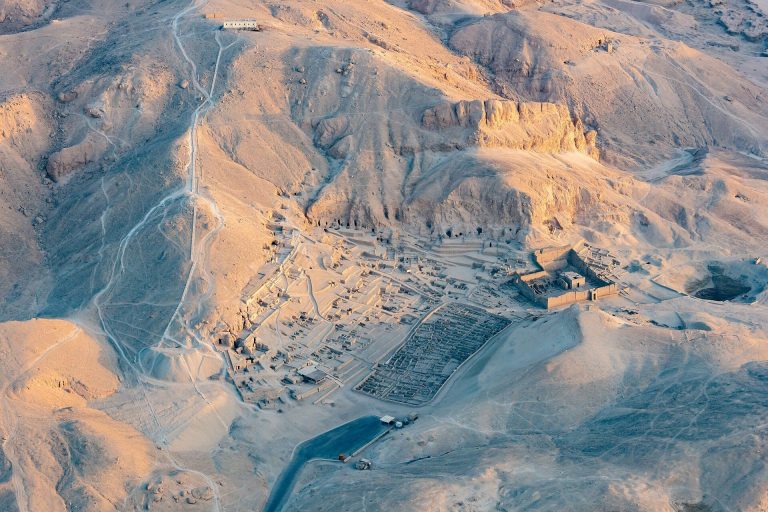
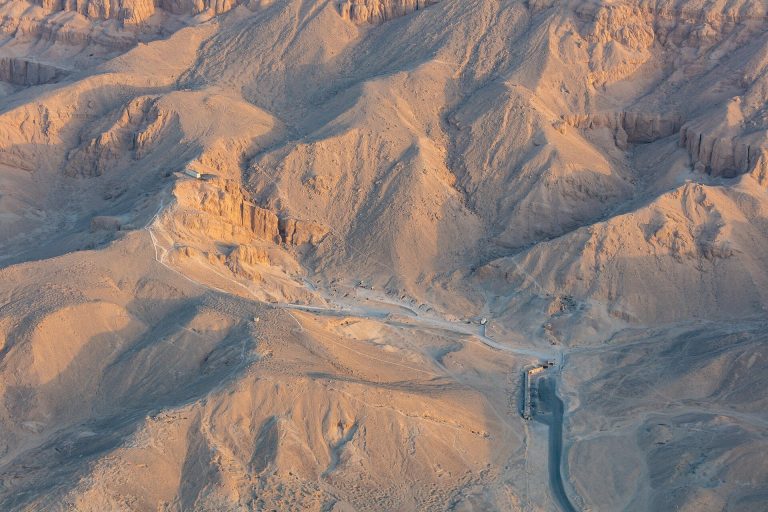
Three palaces have been identified within the settlement. A cemetery of undetermined extent includes groups of rock-cut tombs of different sizes, reached by stairways cut into the rock. Their construction shares features with tombs in the Valley of the Kings and the Valley of the Nobles. The wider urban area extends westward, and Deir el-Medina forms part of that broader settlement landscape.
Objects, inscriptions, and unusual burials
Excavated areas have yielded jewellery, rings, scarabs, painted pottery, amulets, everyday tools, and mudbricks bearing Amenhotep III’s royal seal. Together, these objects reflect domestic, administrative, artistic, and industrial activity. A seal impression carries the words “District of the Dazzling Aten,” the name of a temple built by Akhenaten at Karnak.
Several discoveries provide evidence for practices and events within the settlement. A vessel containing about two gallons of dried or boiled meat bears an inscription referring to “Year 37,” boiled meat for the third Sed festival, and meat from Kha’s butcher’s enclosure prepared by the butcher Iwy. A Sed festival was a royal renewal ceremony intended to reaffirm a pharaoh’s authority and vitality. Two unusual burials of a cow or bull were found inside a room, though their purpose remains uncertain. Another burial contained a human skeleton with the arms extended beside the body and a rope around the knees, an unusual position that remains under investigation.