Tel Ira: An Archaeological Fortress and Settlement in Israel
Site at a Glance
- Rating
- 4.5
- Popularity
- Very Low
- Country
- Israel
- Primary era
- Iron Age
- Eras represented
- Iron Age, Medieval
- Civilizations
- Byzantine, Israelite
- Site type
- City
On this page11 sections
History
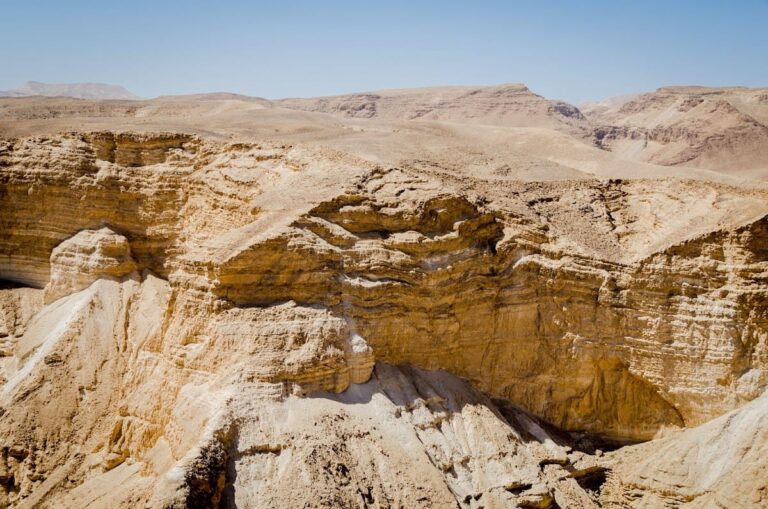
Tel Ira is an archaeological site on a strategic plateau in Israel’s northern Negev, overlooking the Beer Sheva valley and the route through it. First occupied during Early Bronze III, around the 27th century BC, it later became a fortified settlement of the Kingdom of Judah and remained inhabited through the Early Arab period.
Early settlement and the Judahite frontier
The site’s ancient or biblical name is unknown. It is often identified with the biblical Ramat Negev, a place associated in the Book of Joshua with the territory of the tribe of Simeon, although this identification remains uncertain. Occupation continued after the Early Bronze III settlement through the Iron Age.
A fortified settlement was established on part of the tell in the tenth or ninth century BC. During the seventh century BC, a larger Judahite fortress was built, and in the second half of that century the city expanded across the entire mound. In the biblical period, Tel Ira was the largest city among the Negev settlements and formed part of a network of fortifications intended to strengthen Judah’s southern frontier.
The proposed identification with Ramat Negev has also been connected with Ostracon 24 from Arad, a sixth-century BC administrative text ordering the commander of the Arad fortress to send reinforcements to Ramat Negev because of a feared Edomite advance. The association remains unresolved.
Destruction and later settlement
An earlier settlement was destroyed during one of the Babylonian campaigns, dated either to 587 or 586 BC or to 581 or 582 BC. A smaller fortified settlement continued during the Persian period, when the surrounding region was sparsely populated. Tel Ira was resettled in the Hellenistic period, using the earlier Iron Age wall, and habitation continued during the Early Roman period. The wall was restored during the Herodian period, when settlement at the site was renewed.
Byzantine and Early Arab periods
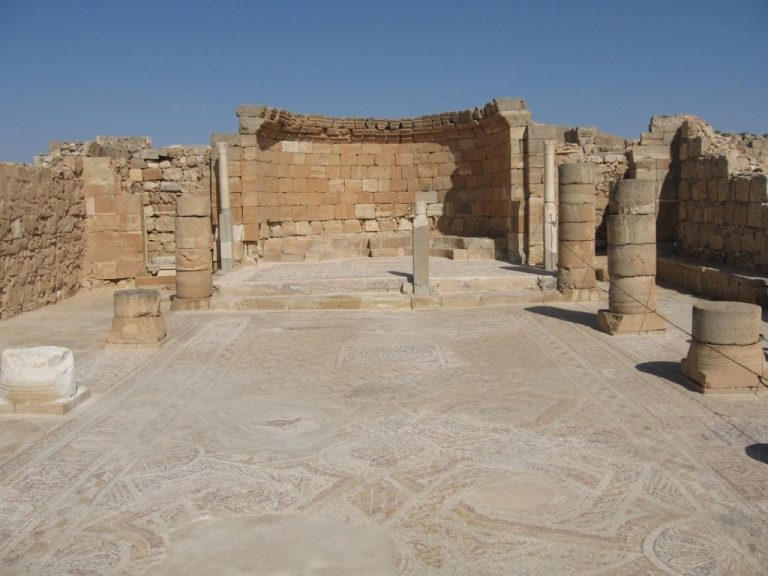
During the Byzantine period, a settlement and a large communal monastery were established. Founded in the late fifth or early sixth century, the monastery included a chapel dedicated to Saint Peter, one of the principal apostles of Christianity and a traditional early leader of the Christian church. The monastery ceased to exist during the Muslim conquest in the mid-seventh century, while settlement continued among the Byzantine ruins during the Early Arab period, in the seventh and eighth centuries.
Excavation and interpretation
David Alon surveyed Tel Ira in the 1950s. Excavations conducted from 1979 to 1984 by the Tel Aviv University Institute of Archaeology exposed at least eight archaeological layers representing the site’s successive periods. Agriculture and the raising of sheep and cattle supported the settlement, while nearby terraces show that cultivation helped sustain the community during ancient periods.
Remains
Setting and fortified enclosure
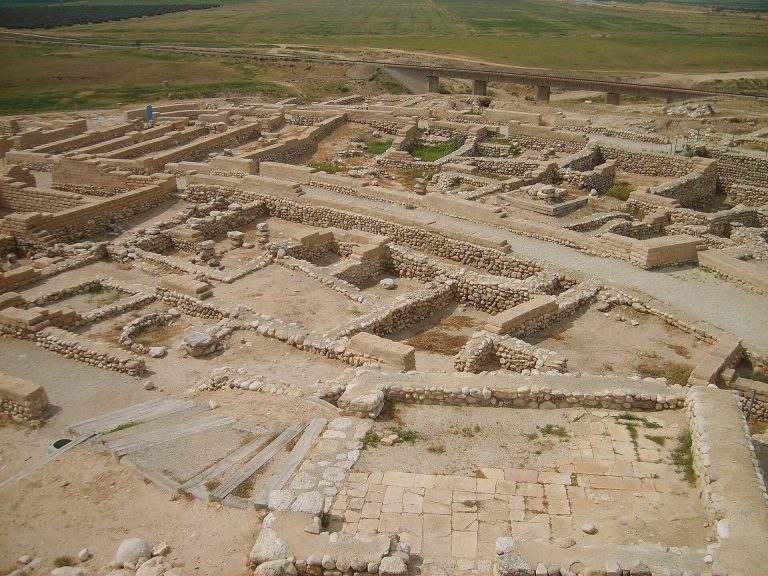
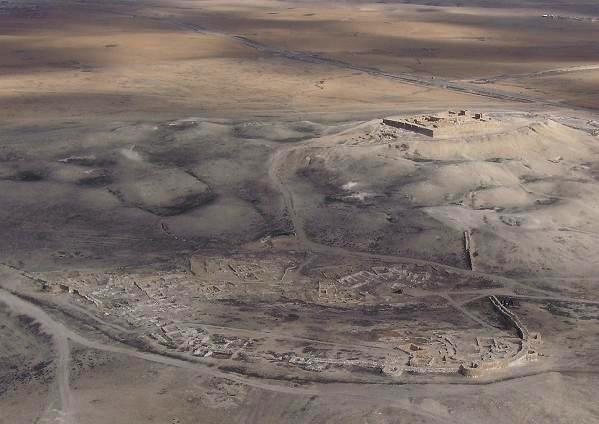
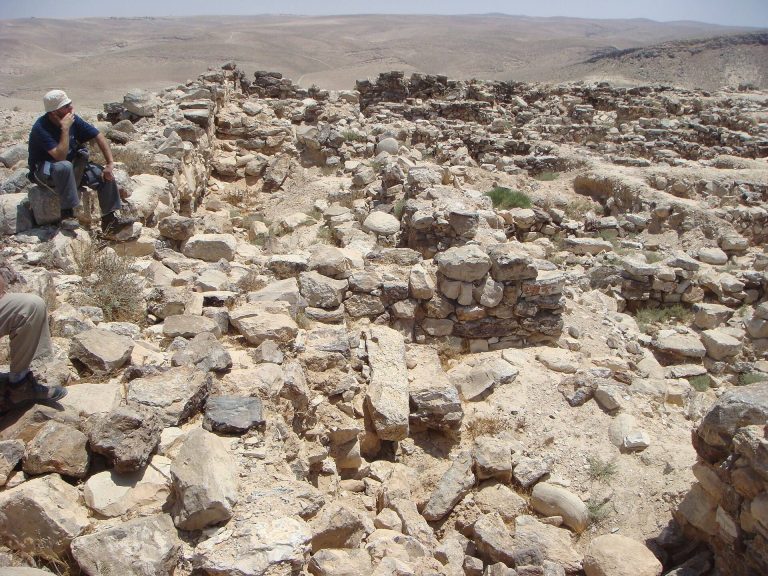
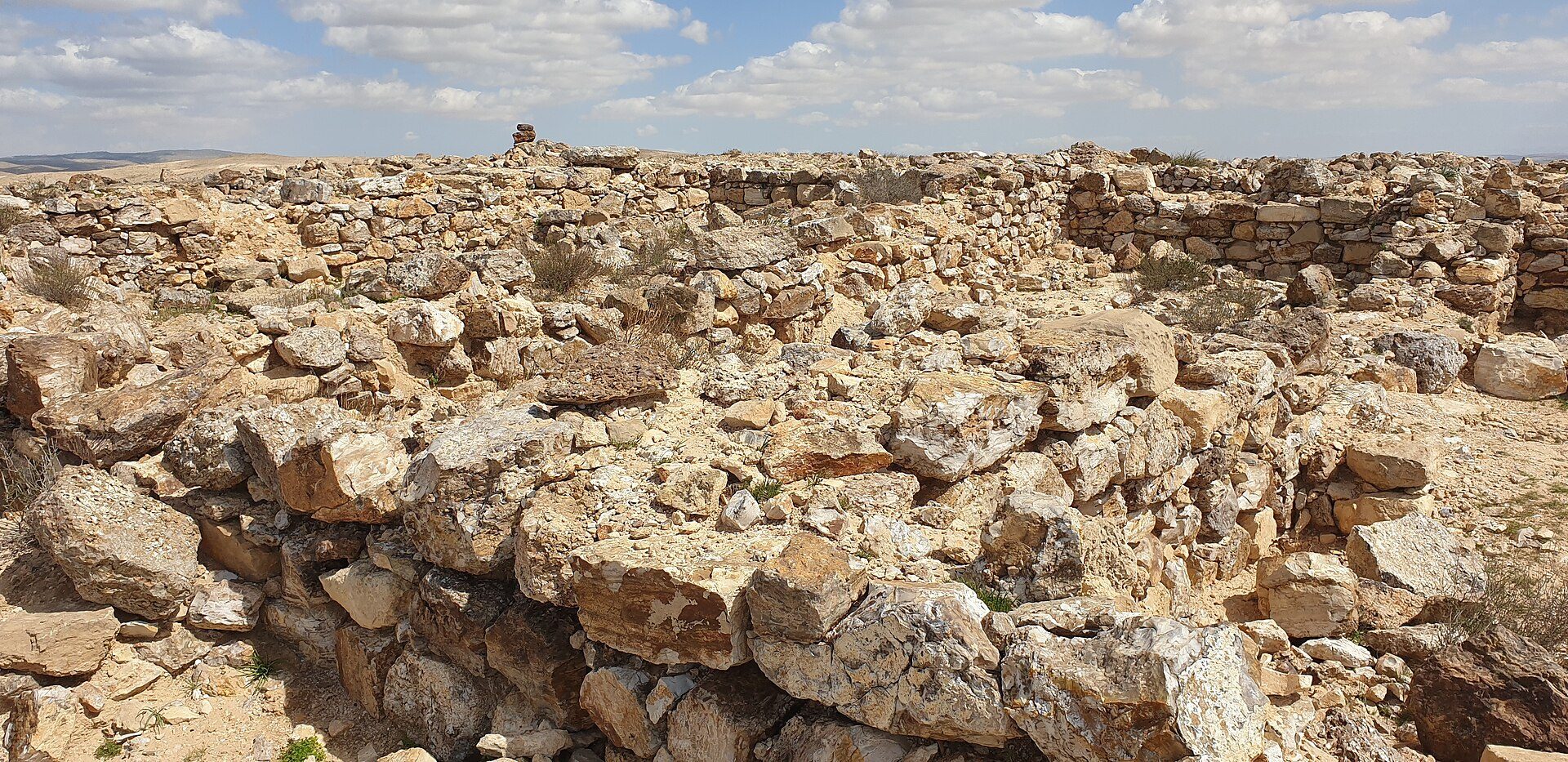
The tell, an artificial mound formed by accumulated settlement remains, rises to approximately 514 metres above sea level. It covers about 2.4 to 2.5 hectares, or roughly six acres, and overlooks the Beer Sheva valley. A substantial Iron Age wall enclosed the mound. Approximately 1.6 to 1.8 metres thick, it was especially developed when the Judahite city was established and continued to be reused through successive periods until the Early Arab period.
The Iron Age fortifications included a six-chambered gate and two towers. Their design has been compared with gates at Gezer, Megiddo, and Hazor. Five water cisterns were also found, including three dating to the Israelite period and two from the Byzantine period.
Byzantine monastery
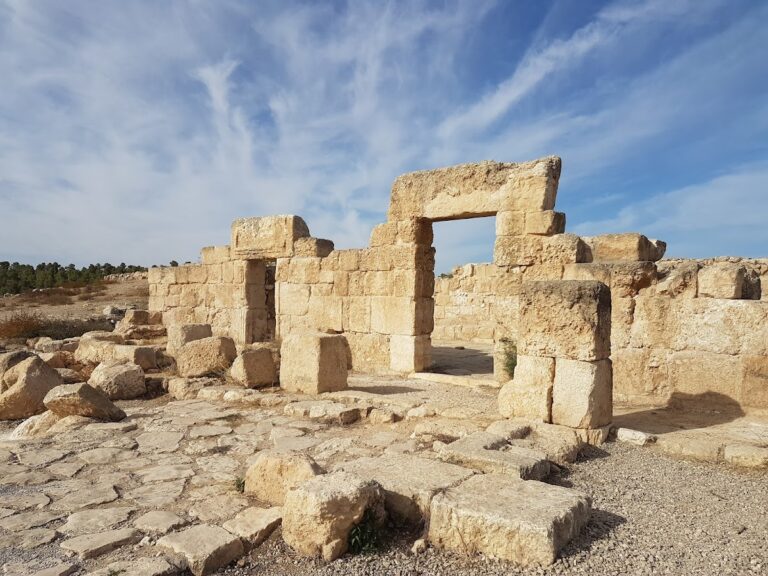
The Byzantine monastery covered approximately 800 square metres, with its surviving remains concentrated mainly on the eastern side of the tell. It included a chapel dedicated to Saint Peter. The monastery belonged to the communal form of monastic life in which monks lived together under a common rule rather than in separate hermitages.
Judahite cemetery
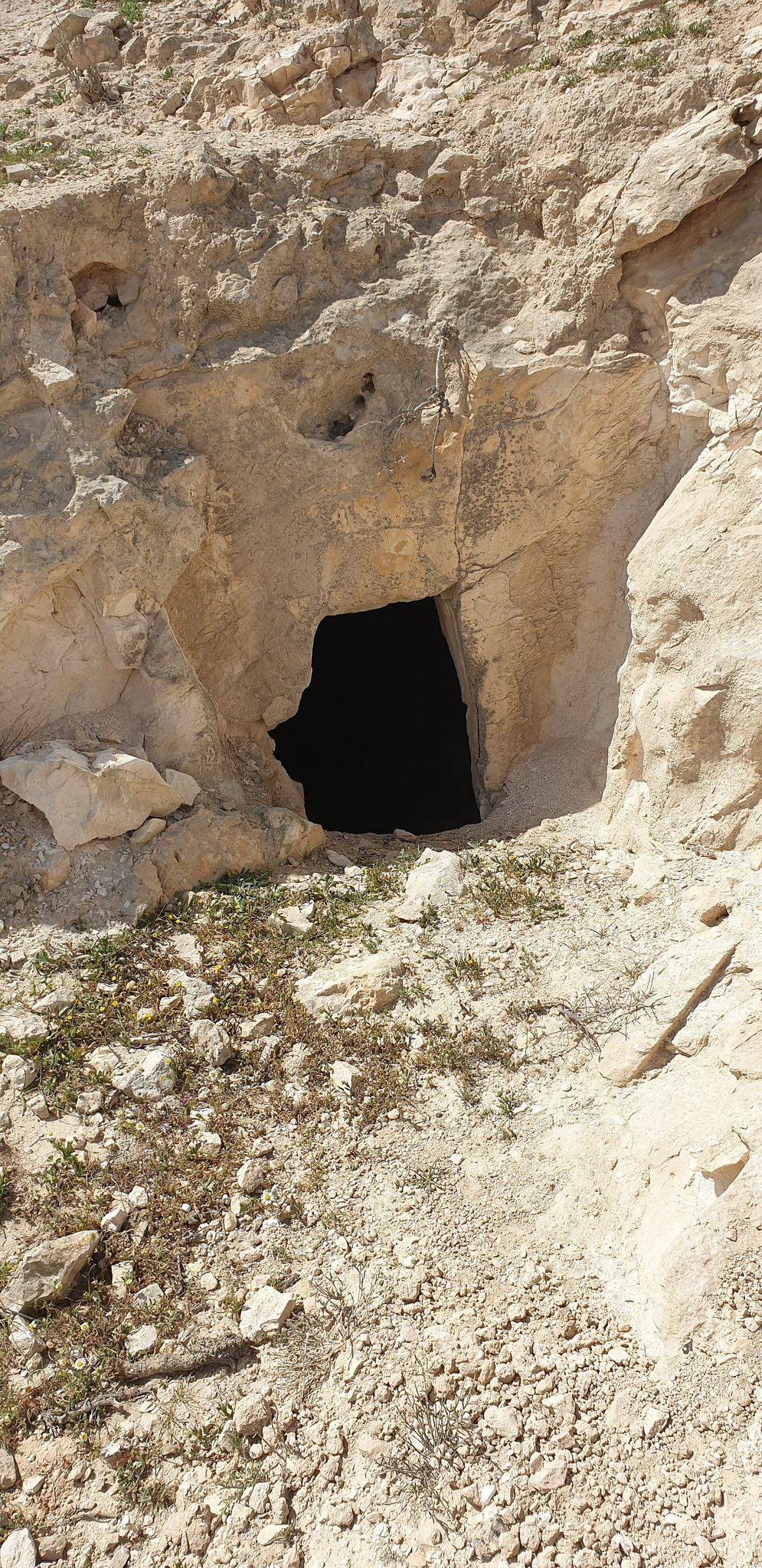
A cemetery belonging to the Judahite city occupied the eastern slope. Most of the graves had been looted in antiquity, while several retained their cover stones. The rock-cut burial caves contained bench tombs characteristic of the period, together with jars, bowls, juglets, small vessels, ornaments, and other finds.
Pottery and written evidence
Pottery came from all the archaeological layers and periods. The richest ceramic groups belong to the Iron Age and Byzantine period. At least four Iron Age layers were identified, including pottery from the tenth and ninth centuries BC, vessels associated with the seventh-century BC Kingdom of Judah, and vessels that survived a major fire before being repaired and reused.
The necropolis produced pottery, jewelry, and ornaments from the end of the Israelite period. Complete vessels were also found on the western side of the site. An ostracon, a piece of pottery used as a writing surface, bears an inscription referring to a census and listing several names. It provides evidence that a population census was conducted at Tel Ira.
Agricultural landscape
Agricultural terraces surrounded the city and provide physical evidence of cultivation associated with the settlement. Together with the cisterns and the remains of the fortified enclosure, they show elements of the infrastructure that supported habitation on the plateau across several historical periods.