Burg Neulengbach: A Historic Castle in Lower Austria
Visitor Information
Google Rating: 4.2
Popularity: Very Low
Official Website: www.neulengbach.gv.at
Country: Austria
Civilization: Early Modern
Site type: Military
Remains: Castle
History
Burg Neulengbach stands above the town of Neulengbach in Lower Austria. It was established around 1189 by the Hochfreien, or high nobles, of Lengenbach. At the same time, the local market town was founded. The castle served as the administrative center for the Lengenbacher lordship until the family line ended in 1236. After their extinction, control of the castle passed to the Babenberg dynasty.
In the late Middle Ages, Burg Neulengbach became the residence of provincial stewards, officials who managed the region on behalf of the ruling prince. During this time, the castle was often used as collateral in financial agreements, reflecting its value and strategic importance. In 1565, Rudolf Khuen von Belasy acquired the lordship of Neulengbach, marking a new phase in the castle’s history.
Under the Khuen family, the castle underwent significant expansion and transformation. Between the late 1500s and early 1600s, it was remodeled into a late Renaissance residence. This period gave the castle much of its current character, although it was described as a rather plain example of Renaissance architecture. Ownership changed hands several times after the Khuens, passing to the Counts Pálffy in 1646, Bartholotti von Partenfeld in 1696, Princes Lubomirski in 1740, Freiherr Karl Abraham Wetzlar von Plankenstern in 1778, Counts Fries in 1798, and finally the Princes Liechtenstein in 1828.
A devastating fire in January 1912 destroyed all the castle’s interior furnishings. In 1920, the City of Vienna purchased the property and converted it into a children’s home. Later, in 1952, the Neulengbach Castle Association took ownership, followed by Martin Wakonig in 1962. In early 2023, Bruno Wakonig and his wife Margherita gifted the castle to their descendants Katharina, Benedikt, and Theresa, continuing the family’s connection to the site.
Remains
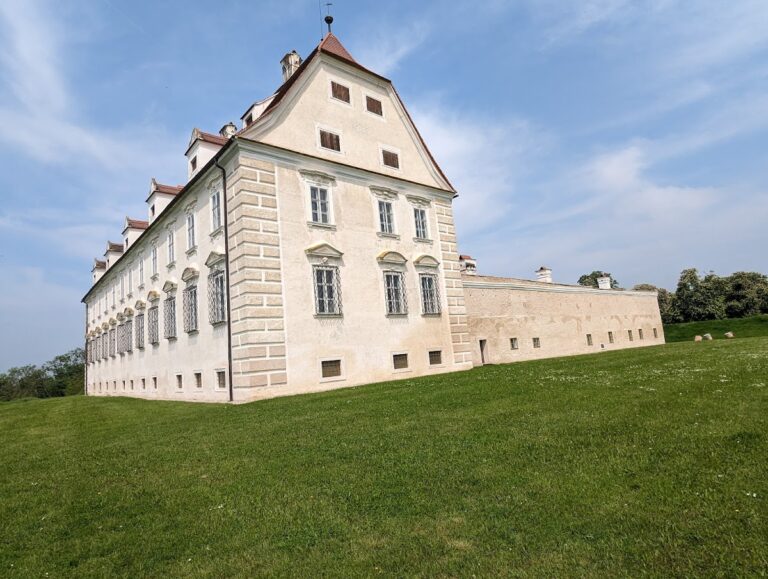
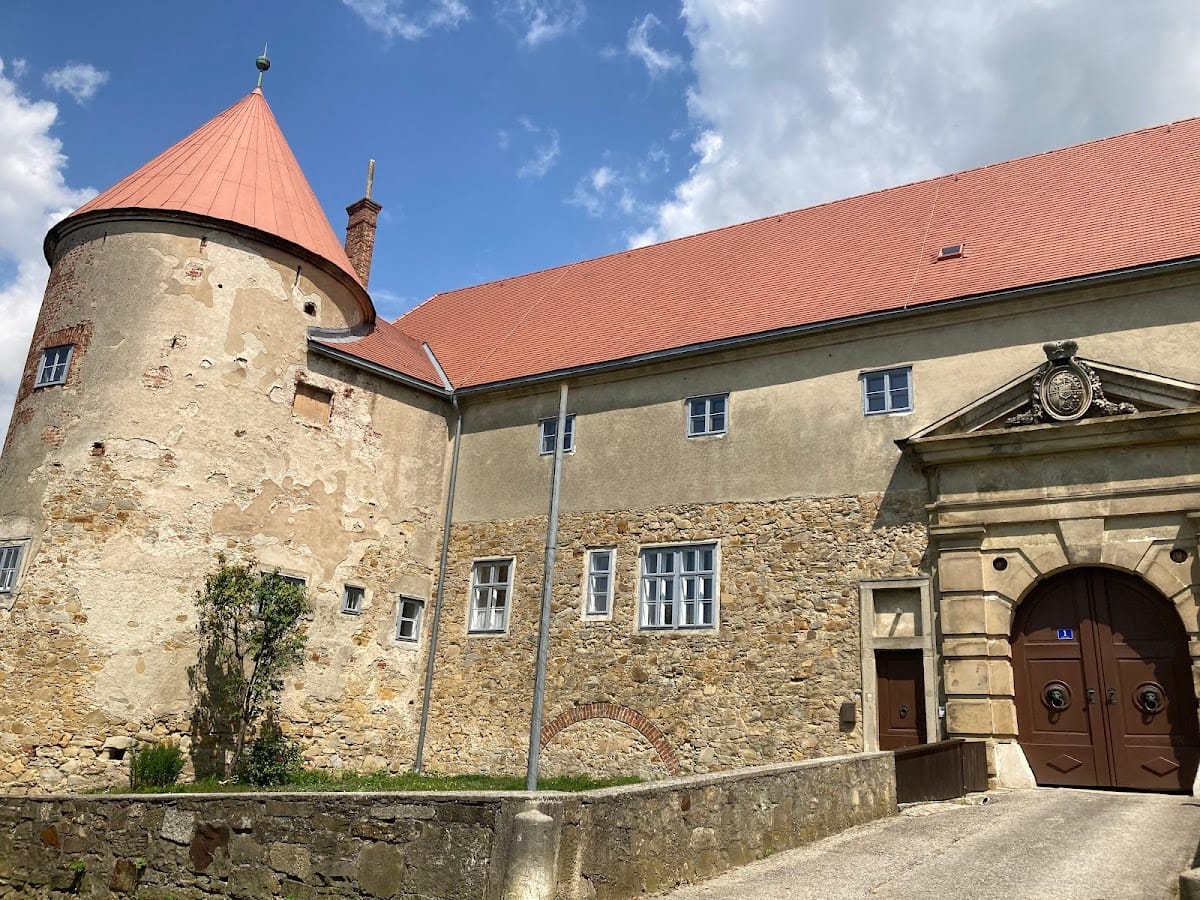
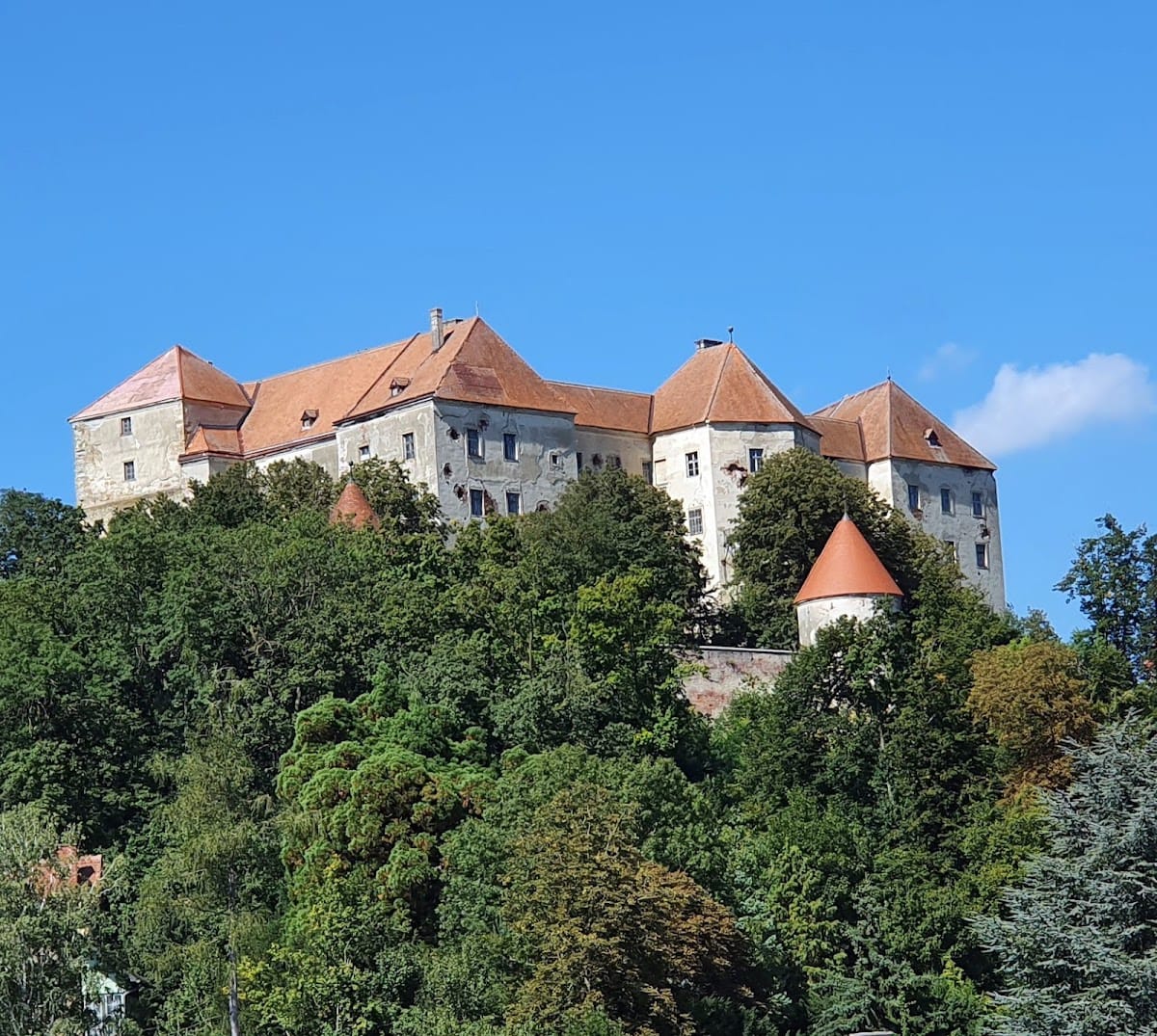
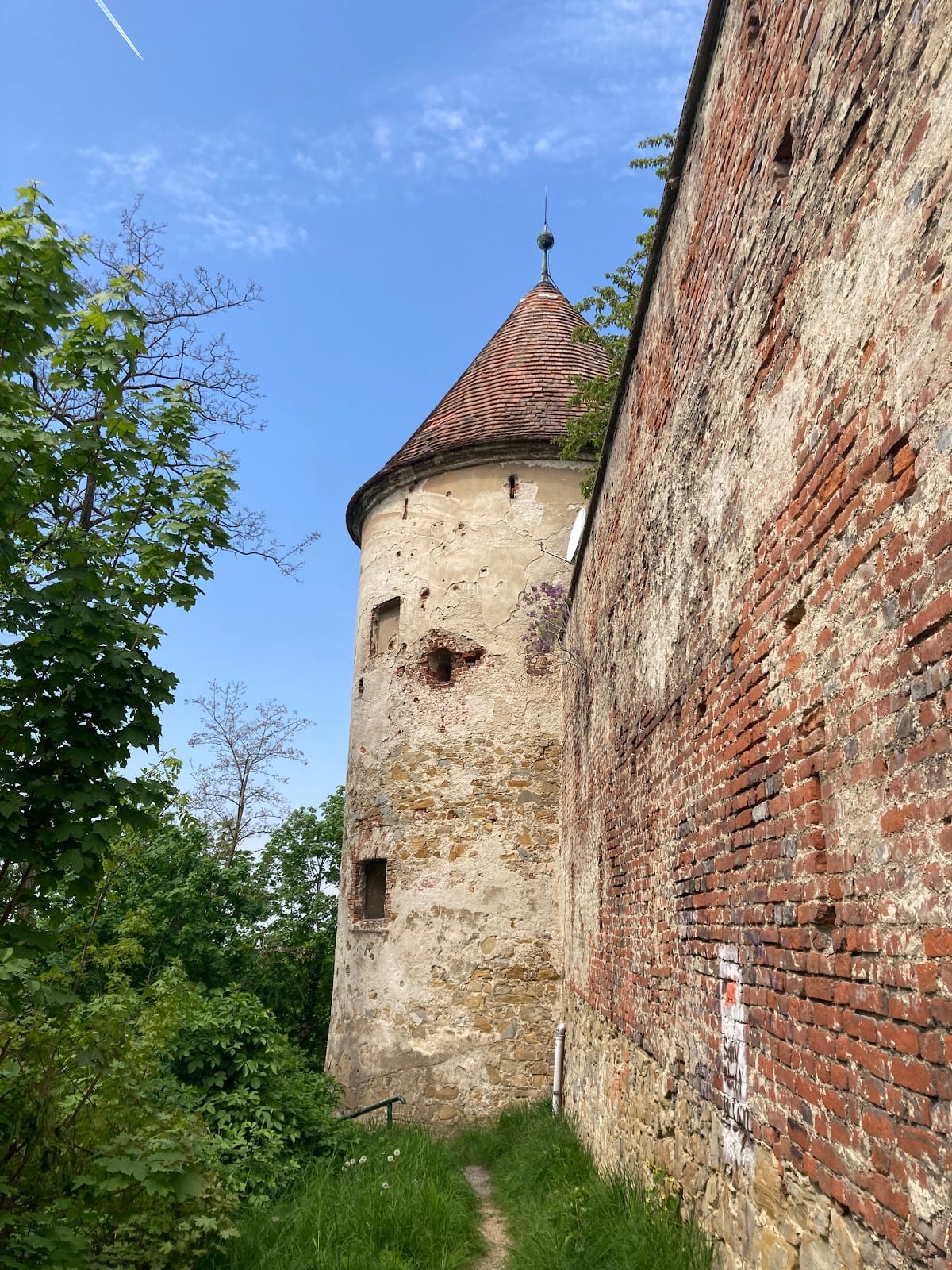
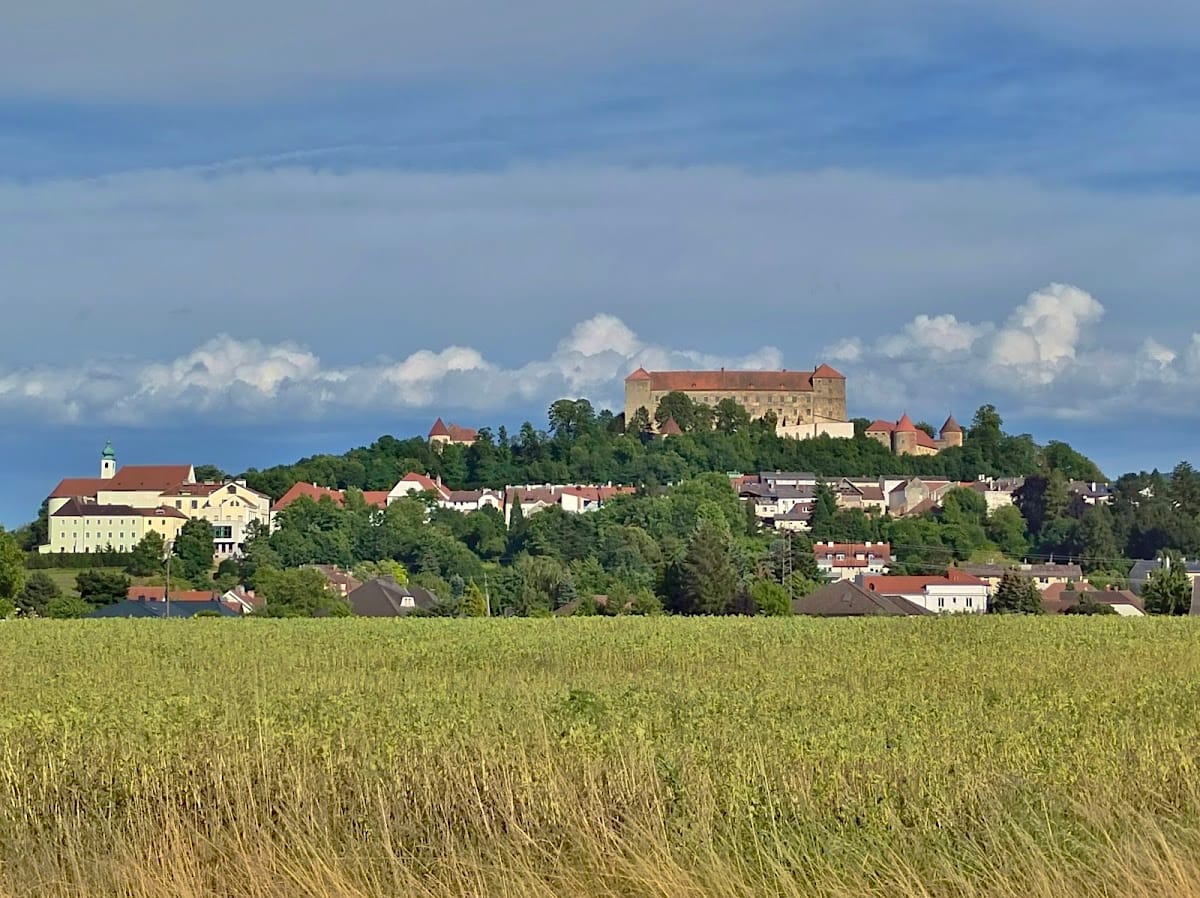
Burg Neulengbach is built on a free-standing conical hill about 80 meters high, overlooking the town below. The castle’s main structure is a three-story polygonal building surrounded by a double ring of defensive walls. Eight round towers punctuate the outer defenses, providing vantage points for surveillance and protection.
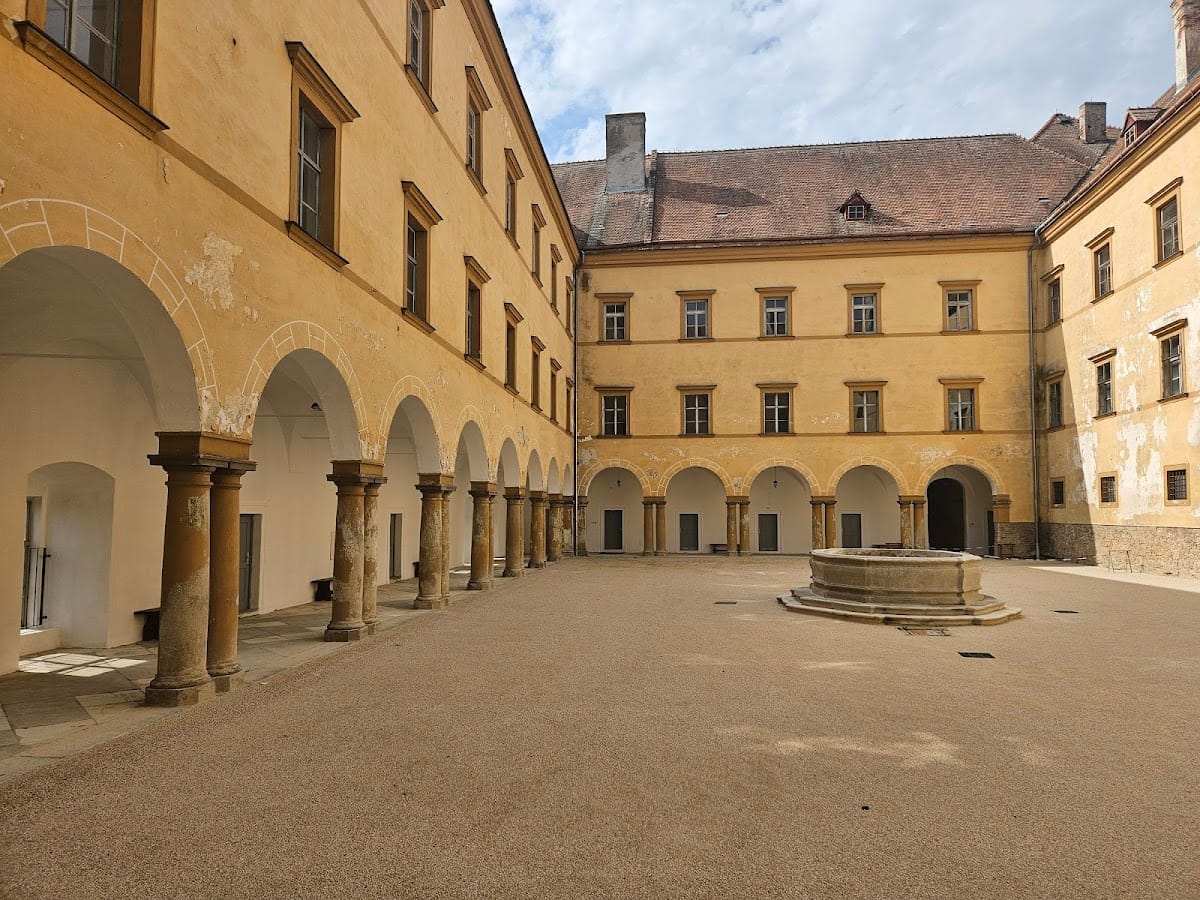
The entrance features an annex with a richly decorated Renaissance portal, marking the main access point. Inside, the courtyard is notable for its Tuscan double columns, a classical architectural style characterized by simple, sturdy columns. A stone basin linked to a well is also found in the courtyard, indicating the castle’s water supply system.
The castle’s exterior walls still show marks from artillery fire sustained during the Second World War. These scars remain visible on the southeastern facade, bearing witness to the building’s involvement in 20th-century conflicts. Although the interior was completely destroyed by the 1912 fire, the main polygonal structure, towers, and courtyard elements have been preserved.
The castle’s construction materials and decorative details reflect the late Renaissance style, consistent with the renovations carried out under the Khuen family. Despite its plain appearance compared to other Renaissance palaces, the castle’s defensive features and architectural elements remain intact, offering insight into its historical development and use.
Nearby sites