Huaca El Naranjal: An Ancient Ceramic-Production Complex in Peru
Site at a Glance
- Rating
- 4
- Popularity
- Very Low
- Country
- Peru
- Primary era
- Medieval
- Eras represented
- Medieval, Early Modern
- Civilizations
- Inca
- Site type
- Economic
- Remains
- Production Complex
On this page8 sections
History
Huaca El Naranjal is a monumental archaeological complex in Los Olivos District, Lima, Peru, associated with the Ychsma cultural tradition and the Inca period. A huaca is an Andean sacred or ritually important place, a term also used for archaeological mounds and ruins. Activity at El Naranjal dates to the First Regional Development period, approximately AD 900–1400, and the Late Horizon, the final major period of traditional Andean chronology associated with Inca expansion before the Spanish conquest.
Ychsma settlement and ceramic production
The site functioned as a pottery-production workshop. Evidence from 25 test pits indicates that ceramic manufacture during the first and second phases reached a scale extending beyond internal local consumption. Stratigraphic investigation identified six production-waste contexts in the first phase and two in the second. The second phase also contained roughly dressed stone architecture. Ceramic deposits belong to these first two phases, which are associated with the Ychsma settlement.
Monumental construction and investigation
The third phase consisted of rammed-earth architecture and a fill deposit associated with monumental construction. Rammed earth is made by compacting soil within forms or temporary boundaries until it hardens into walls. The first excavations and investigations took place in 2004 and 2006 under the direction of archaeologist Miguel Cornejo Guerrero, through the Archaeological Evaluation Project with Excavations at Huaca Naranjal. The project distributed 25 test pits across the settlement. Excavation methods limited the ability to establish the precise scale, intensity, and production techniques, but the quantity of production-waste contexts permitted an assessment of the scale of ceramic manufacture.
Protection and later condition
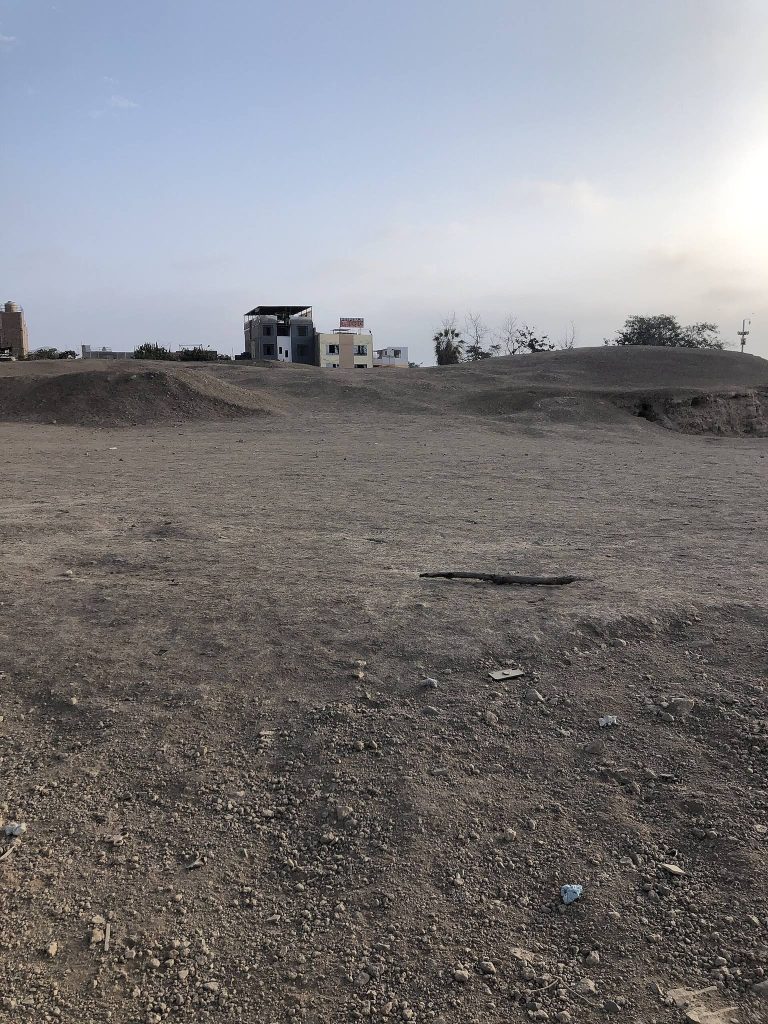
Huaca El Naranjal is state-owned and administered through the Archaeological Evaluation Project with Excavations at Huaca Naranjal. It is classified as an intangible archaeological zone, a legally protected area intended to preserve cultural remains and restrict alteration or development. Restoration and maintenance had taken place by 2022. The district subsequently abandoned the site, by which time an association, a sports zone, and many families occupied the area. The families together numbered approximately 250 people.
Remains
Complex and monumental architecture
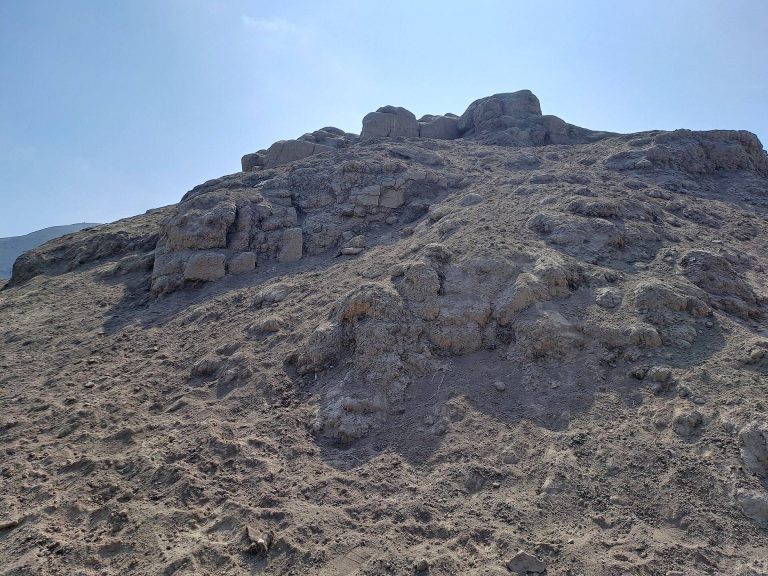
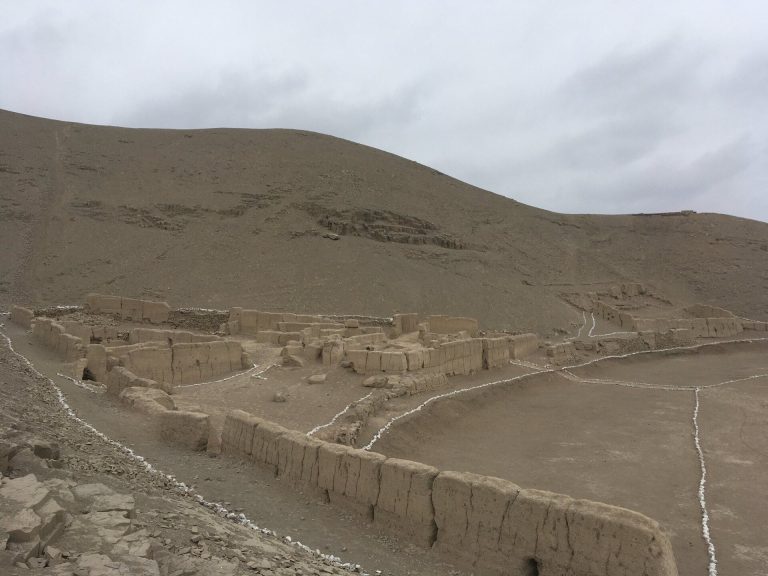
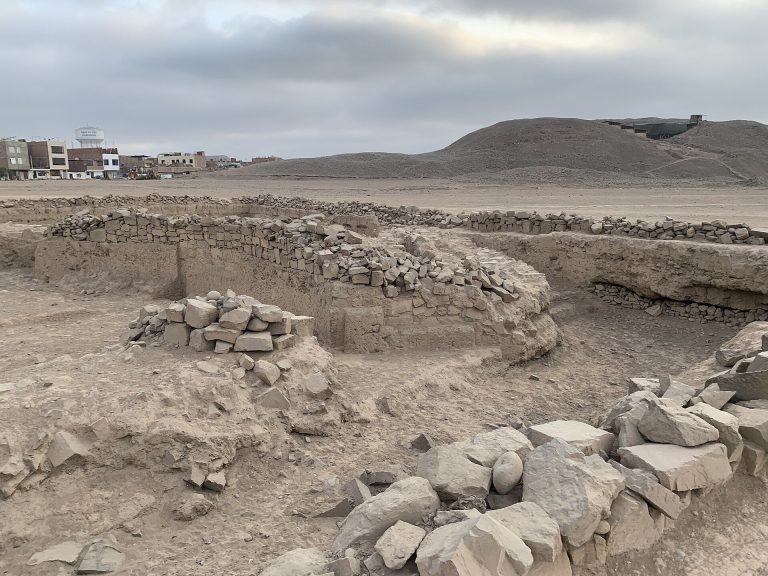
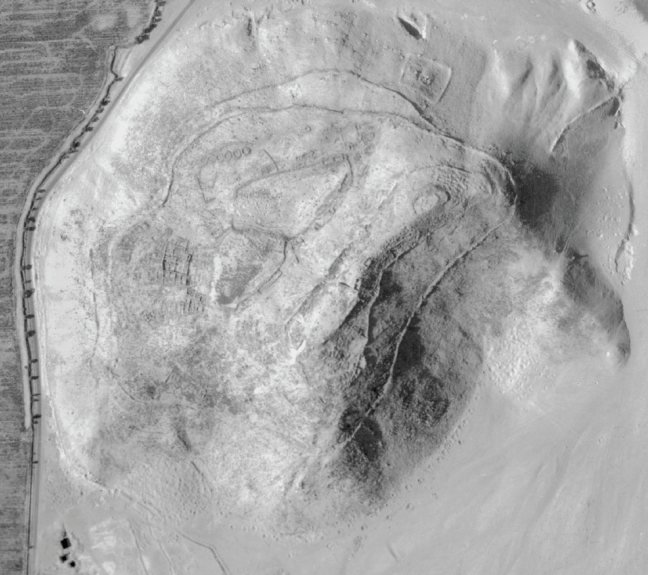
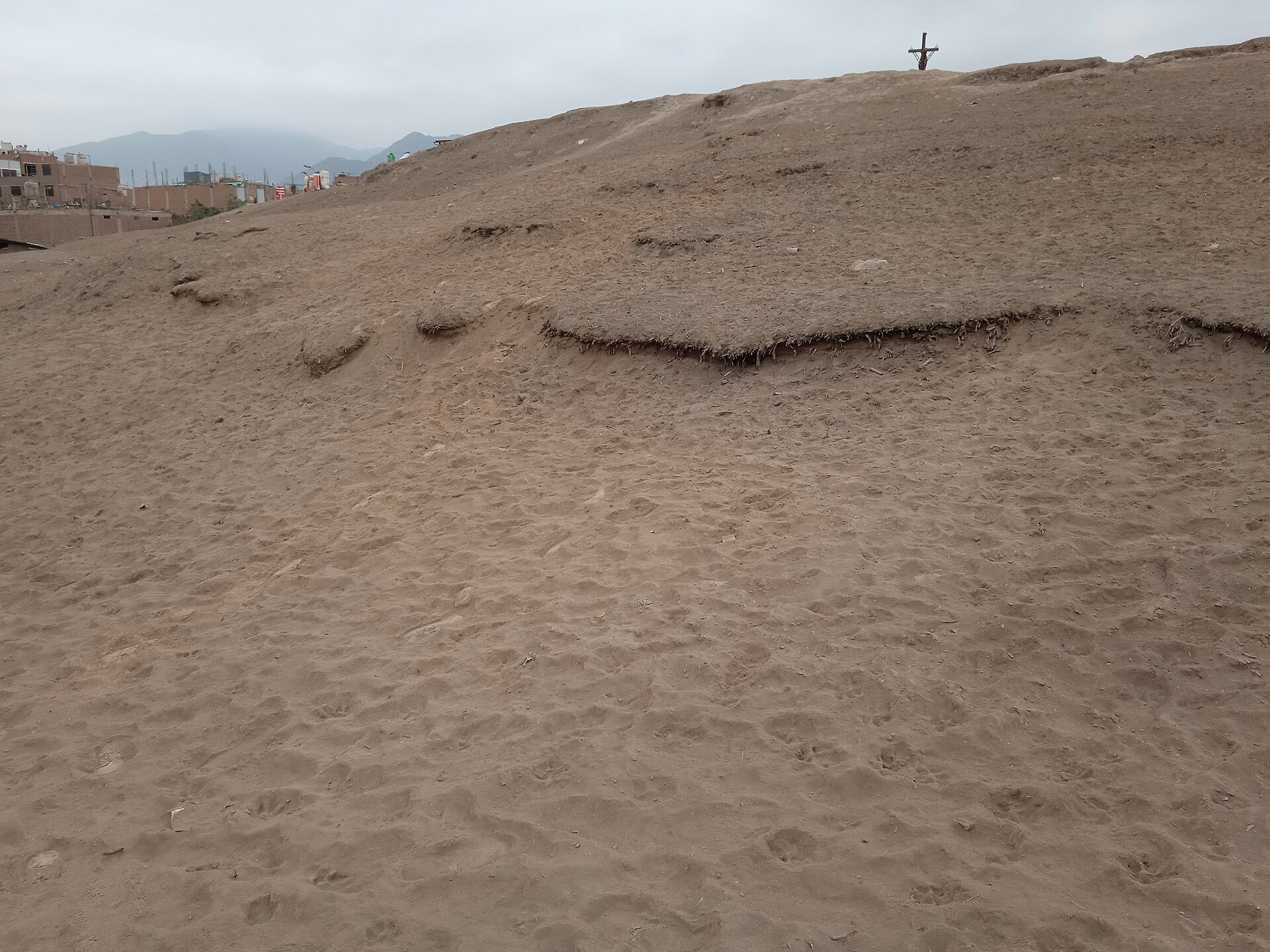
The complex extends for approximately 130 metres, and its principal mound rises about 10 metres. Its surviving architectural evidence includes roughly dressed stone from the second phase and a rammed-earth construction from the third phase. The latter is associated with a fill deposit and the site’s monumental architectural development.
Ceramic-production installations
The physical remains include installations linked to ceramic manufacture, including kilns, clay-mixing areas, an associated mixing extension, a fuel-storage zone, and a manufacturing sector. Materials used in production included clay, water, fuel, and pigments. Paddles, moulds, tables, and brushes formed part of the manufacturing equipment, while the production debris consisted largely of numerous ceramic fragments.
Walls and present condition
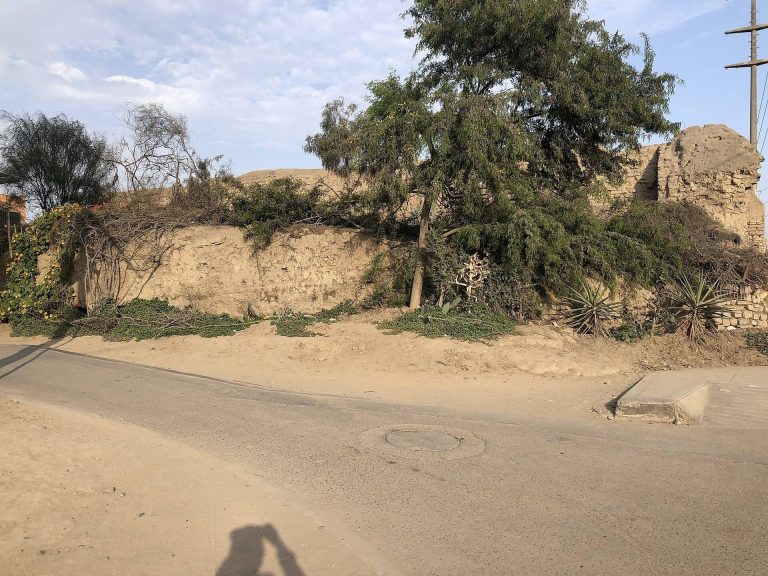
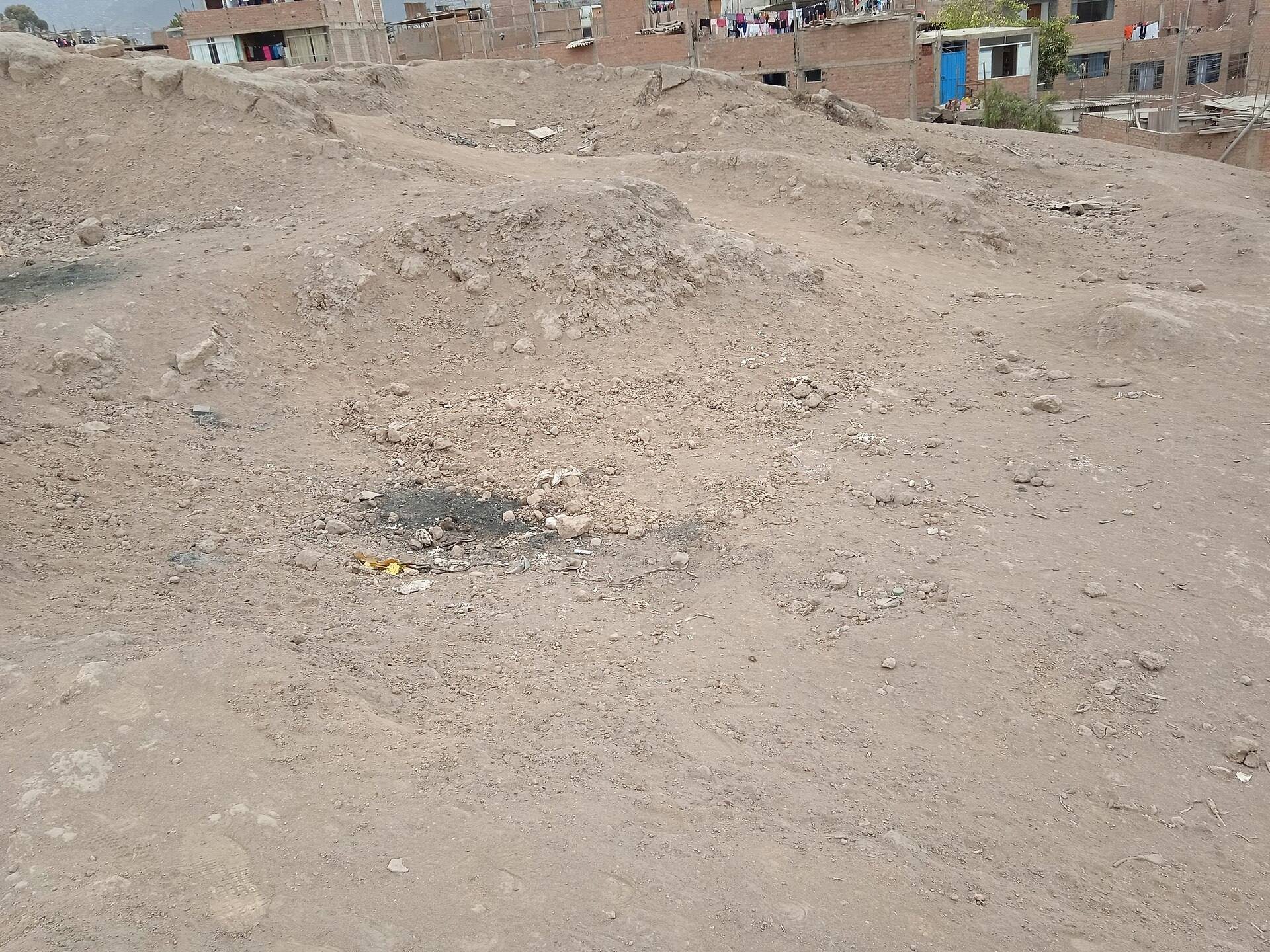
By 2022, walls and informational signs stood outside the huaca. Some walls were at risk of collapse or had already collapsed. Rubbish and cement bags were also present in the area, alongside the occupation and activities that had developed around the archaeological complex.