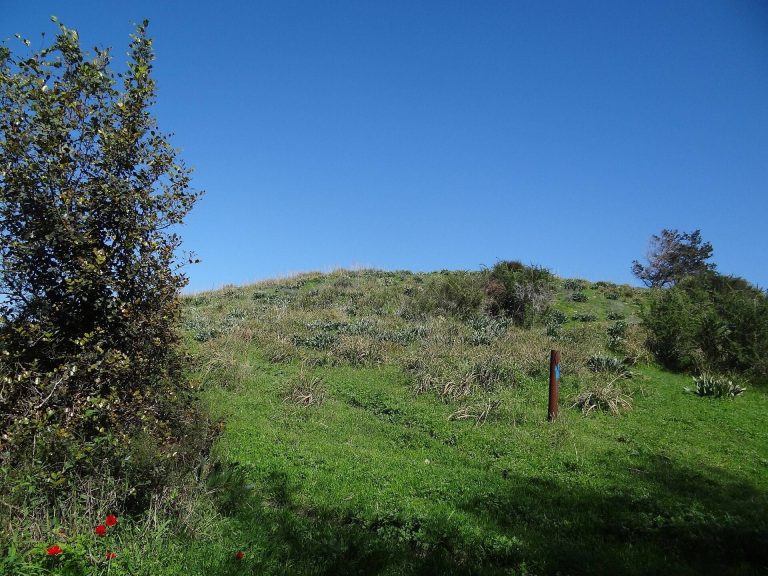
Raqefet Cave: A Prehistoric Cemetery and Ritual Site in Israel
Site at a Glance
- Rating
- 4.6
- Popularity
- Very Low
- Country
- Israel
- Primary era
- Stone Age
- Eras represented
- Stone Age
- Civilizations
- Unclassified
- Site type
- Burial
- Remains
- Necropolis
On this page10 sections
History
Raqefet Cave is a prehistoric archaeological site on Mount Carmel in northern Israel. Successive prehistoric populations occupied the cave intermittently for tens of thousands of years, from the Middle Paleolithic through the Neolithic and later historical periods. Its best-known phase belongs to the Natufian culture, a Late Epipalaeolithic society of hunter-gatherers in the southern Levant that repeatedly occupied sites before agriculture developed. During this period, Raqefet Cave functioned primarily as a cemetery rather than a residential settlement.
Early Paleolithic and Epipalaeolithic Occupation
The earliest occupation includes Mousterian remains, a Middle Paleolithic stone-tool tradition commonly associated with Neanderthal-era populations in the Levant and Europe. These remains were listed as Site 187 in Ya’aqov Olami’s 1956 survey, during which the cave was discovered. Later layers include a transition from the late Middle Paleolithic to the Middle and Upper Paleolithic, followed by early, Aurignacian, and late Upper Paleolithic phases. The Aurignacian, an Upper Paleolithic tradition associated with early modern humans and blade and bone-tool technologies, is represented by layers more than 30,000 years old, dating to approximately 35,000 years ago. This occupation took place under relatively dry climatic conditions.
Further phases include the Early and Geometric Kebaran traditions, both Epipalaeolithic hunter-gatherer cultures that preceded the Natufian. Scattered Neolithic and later historical remains show that activity continued at the site after the Natufian period, although the cave’s most distinctive archaeological evidence belongs to the earlier cemetery.
The Natufian Cemetery
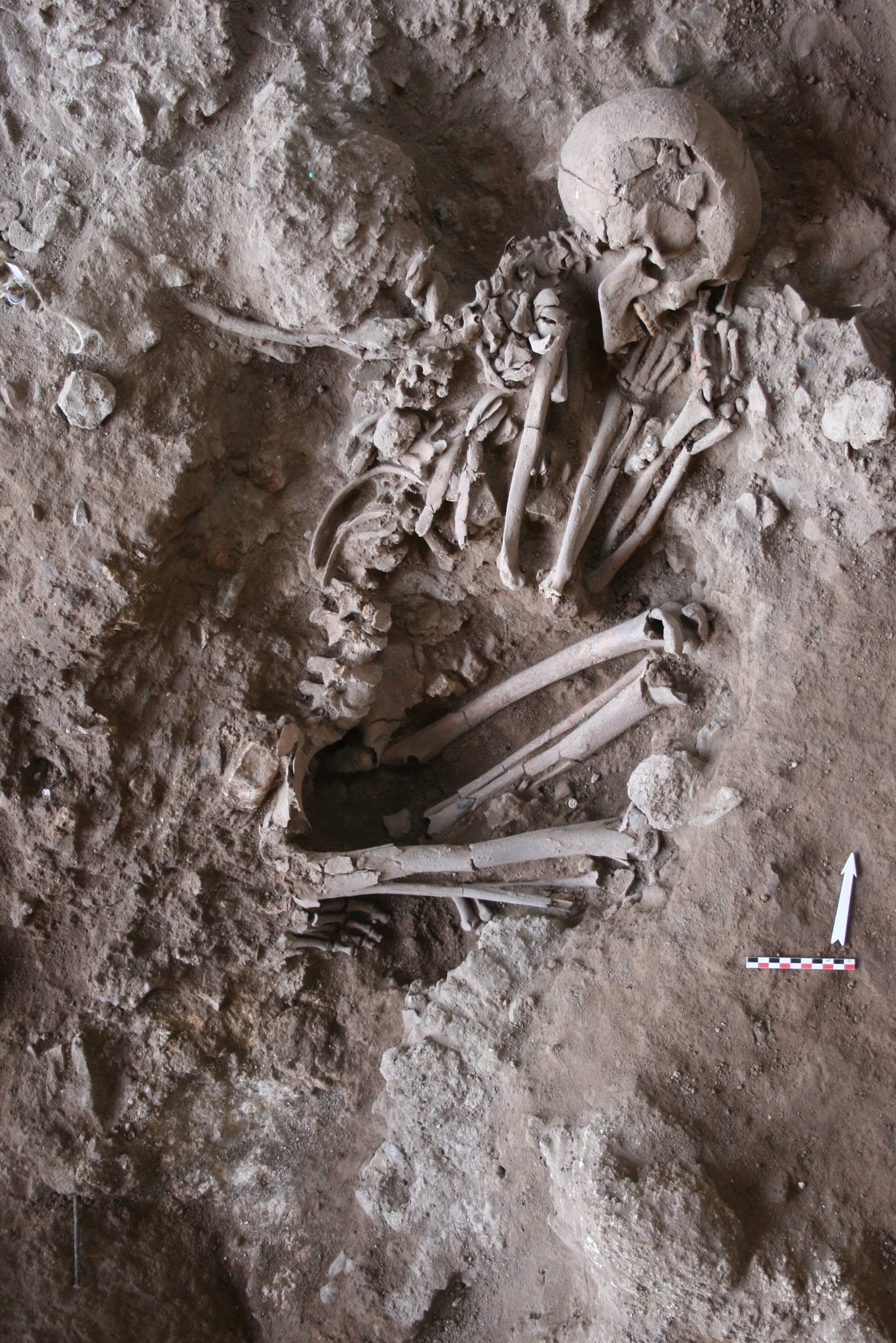
During the Natufian period, approximately 14,000 to 11,700 years ago, the cave was used repeatedly for burial. Radiocarbon dates place the cemetery broadly between about 13,700 and 11,700 years ago, while some individual burials date to approximately 14,000 to 13,000 years ago. Around 30 people were buried there, including men, women, children, and infants. The cemetery remained in use for roughly 2,000 years, and later graves sometimes disturbed earlier interments. Most burials were individual, but several double burials were also identified.
The graves reveal varied funerary practices. Stones and stone tools were placed beside or above some of the dead, sometimes standing on their narrow edges like markers. Four graves contained impressions of plants beneath and beside the skeletons, along with unusually dense concentrations of phytoliths, microscopic silica bodies formed within plant tissues. These traces indicate that flowering plants were deliberately placed in the graves. Some burial floors and walls may have been coated with wet mud before being covered with flowering branches of Judean sage and other plants. As the plants decayed, their scented forms remained as impressions in the hardened mud, preserving early evidence of burial on a bed of flowers.
Animal remains also point to ceremonial activity associated with the cemetery. Natufian occupants hunted and consumed gazelle, fallow deer, wild boar, wild goat, hare, fox, marten, wild cat, badger, mongoose, rock partridge, birds of prey, tortoises, snakes, and lizards. The relatively slight burning and fragmentation of the bones may indicate that food was deliberately placed in burial pits during funerary feasts rather than left as ordinary household refuse.
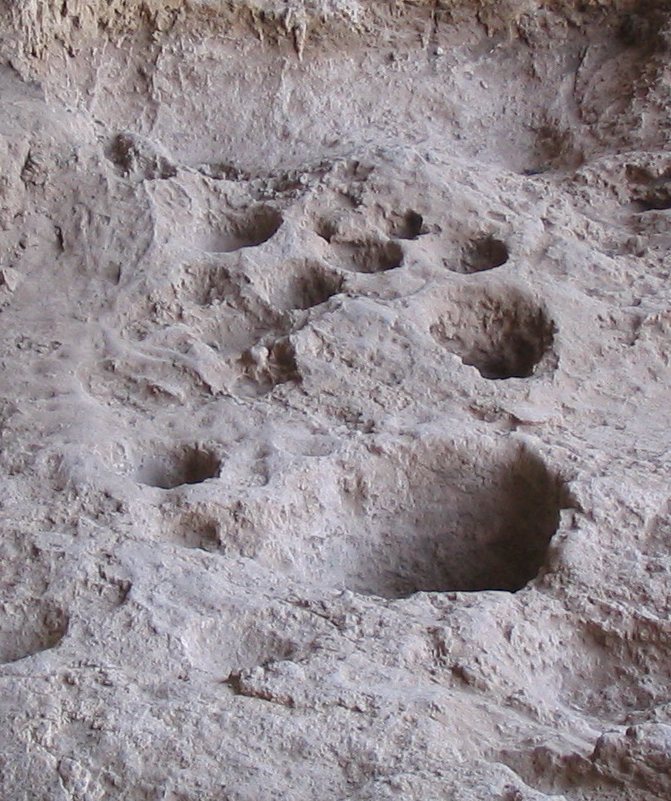
Three stone mortars provide evidence for plant processing during ritual gatherings approximately 13,000 years ago. Microscopic starch remains from wheat, barley, oats, and other plants show traces of crushing and fermentation. These findings have been interpreted as evidence for producing cereal-based beer, although another interpretation identifies the mortars as installations for removing barley husks and grinding grain into flour for bread. The beer interpretation has been supported by evidence of starch damage and wear caused by use, but the function of the installations remains disputed.
Archaeological Investigation
Tamar Noy of the Israel Museum and Eric Higgs of the University of Cambridge conducted systematic excavations during three seasons from 1970 to 1972. Their work exposed a long sequence in the two front chambers and identified and partly excavated the Natufian cemetery. Excavations resumed between 2004 and 2011 under Dani Nadel of the Zinman Institute of Archaeology at the University of Haifa. This later work concentrated on the cemetery and included a comprehensive survey of the rock terrace in front of the cave.
Raqefet Cave has contributed evidence for plant use as food before agriculture, funerary feasting, possible cereal-beer production, and burial on flowering-plant bedding. Ancient DNA recovered from the dense petrous bones surrounding the inner ear of six buried individuals showed that they were ancestors of the first farmers of the southern Levant. In 2016, these were the oldest human remains in the Middle East from which ancient DNA had been successfully recovered.
Remains
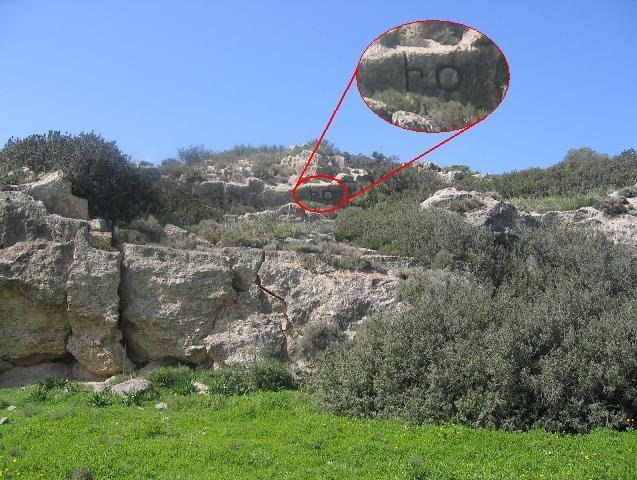
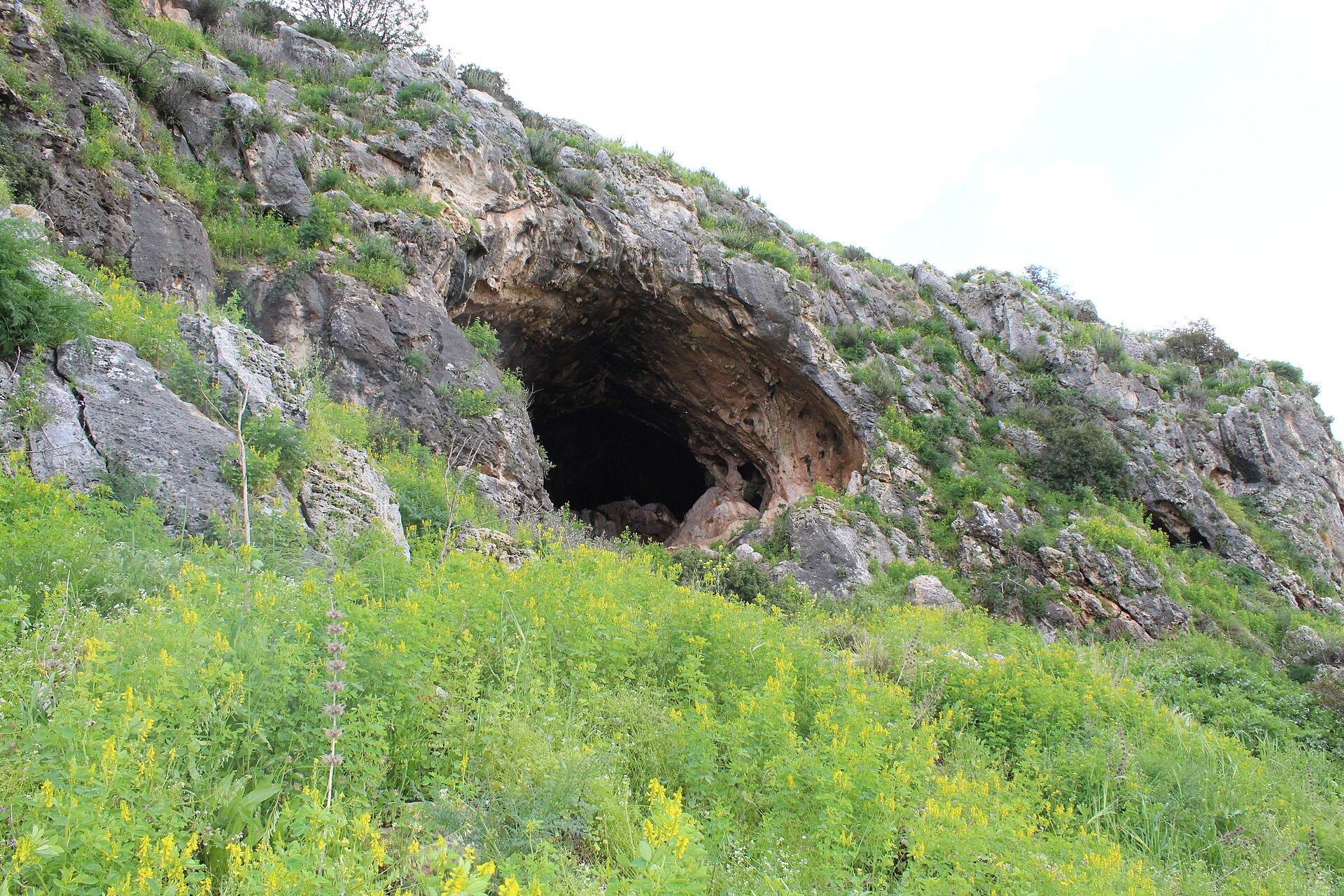
Raqefet Cave lies about 200 metres above sea level and approximately 50 metres above the floor of Wadi Raqefet, a valley or watercourse that may carry water seasonally and flows as a tributary of Wadi Yokneam. A steep, rocky slope descends from the entrance. The cave extends for about 50 metres and contains five natural chambers formed through karst, the dissolution of soluble rock by groundwater. The richest archaeological layers occur in the two chambers nearest the entrance.
Cave Chambers and Natufian Burials
The Natufian cemetery was concentrated near the floor of the first chamber, in its northern part. The graves lay in and around a narrow, deep depression occupying a small area. This concentration contained approximately 30 individuals and preserved the repeated use of the same burial ground over many generations.
Flower-lined Graves
Four graves preserved dozens of plant impressions beneath and beside the human skeletons, together with unusually high concentrations of phytoliths. The evidence suggests that plants were intentionally arranged in the graves. In some cases, the floors and walls may have been covered with wet mud before flowering branches, including Judean sage, were placed over them. The decomposed plants left strongly scented forms in the hardened mud, providing the earliest preserved evidence of burial on a bed of flowers.
Rock Terrace and Mortars
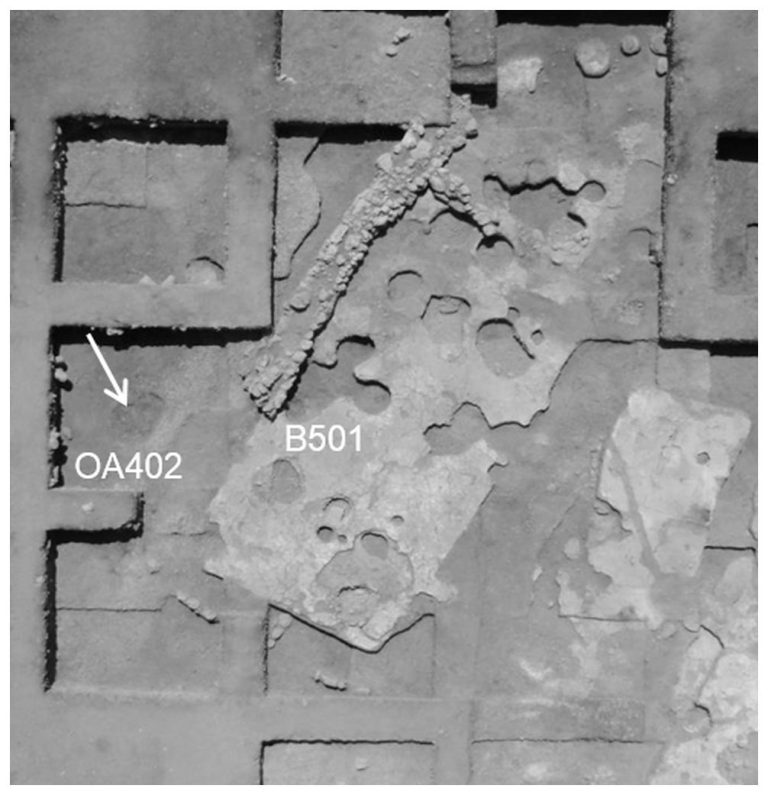
A narrow natural rock terrace lies directly in front of the cave. Dozens of hollows and mortars were carved into its bedrock, and the site’s mortars and cupmarks together number approximately 100. Their functions remain uncertain, but the group is among the largest known from sites of the period.
Natufian Processing Installations
Three mortars near the graves contained microscopic starch remains from wheat, barley, oats, and other plants. The starch shows traces of crushing and fermentation, while wear on the walls indicates pounding and contact with baskets. Two mortars carved into boulders have been interpreted as storage installations. A bedrock mortar has been associated with food preparation and possible beer brewing, although the alternative explanation of barley dehusking and flour production remains under discussion.
Tools, Art, and Later Evidence
The cave yielded flint tools, basalt and limestone implements, bone tools, beads, and animal remains. A carved stone slab found in 2020 within the Natufian cemetery context bears an incised human figure probably representing a dancing person. Scattered installations from the Neolithic and later historical periods extend the material history of the cave beyond its principal Natufian phase.
The surrounding environment is now Mediterranean woodland. Remains of rodents, insectivores, amphibians, and reptiles indicate broadly similar woodland conditions during the Natufian occupation. Carbon-isotope measurements from charred almond wood point to a relatively wetter period about 14,000 to 13,000 years ago.