Lalitgiri: An Early Buddhist Complex in Odisha, India
Site at a Glance
- Rating
- 4.5
- Popularity
- Medium
- Country
- India
- Primary era
- Classical
- Eras represented
- Classical, Medieval
- Civilizations
- Kushan
- Site type
- Religious
- Remains
- Sanctuary
On this page22 sections
History
Lalitgiri is a major Buddhist complex in Odisha, India, built and developed by Buddhist communities from the post-Mauryan period, around 322–185 BC, through the thirteenth century AD. Located in Mahanga Tahsil, an administrative subdivision of Cuttack district, it is regarded as one of the region’s earliest Buddhist sites and forms part of the Diamond Triangle with Udayagiri and Ratnagiri.
Early identification and archaeological history
Lalitgiri was once considered a possible location of Pushpagiri Vihara, a Buddhist centre mentioned in ancient records and by Xuanzang, the Chinese Buddhist monk and traveller of the seventh century. Excavations at Lalitgiri between 1985 and 1991 did not confirm that identification. Work at Langudi Hill from 1995 to 2006 instead indicated that Pushpagiri was located there.
The first archaeological antiquities from the Diamond Triangle were identified in 1905 by M. M. Chakravarty, then the sub-divisional officer of Jajpur. R. P. Chanda of the Indian Museum in Kolkata documented Lalitgiri in 1927–1928, and the central government declared the site a protected monument in 1937. Utkal University conducted limited excavation in 1977, followed by extensive work by the Bhubaneswar Circle of the Archaeological Survey of India between 1985 and 1991.
Long Buddhist occupation
The excavations revealed a cultural sequence extending from the post-Mauryan period to the thirteenth century AD. Lalitgiri is also understood to have maintained a continuous Buddhist presence from the third century BC to the tenth century AD. Inscribed potsherds dating from the post-Mauryan period to the eighth or ninth century AD show that both Hinayana and Mahayana Buddhists lived at the complex. Hinayana and Mahayana are historical classifications of Buddhist traditions.
The final phase of occupation is associated with Vajrayana, an esoteric or tantric form of Buddhism, during the rule of the Bhauma-Kara dynasty. This dynasty governed parts of Odisha between approximately the eighth and tenth centuries AD, a period when tantric Buddhist practices influenced Lalitgiri. The complex’s stupas, monasteries, images, and ritual evidence reflect these successive forms of Buddhist life.
Excavation, preservation, and interpretation
Lalitgiri’s discoveries include relics attributed to the Buddha, giving the complex an important place in the Buddhist history of Odisha. Excavated sculptures were first kept in a temporary enclosure before a permanent museum was established at the site. Relic caskets that had been held at an Archaeological Survey of India facility in Bhubaneswar and displayed publicly in 2013 were transferred to the museum on 24 December 2018.
Remains
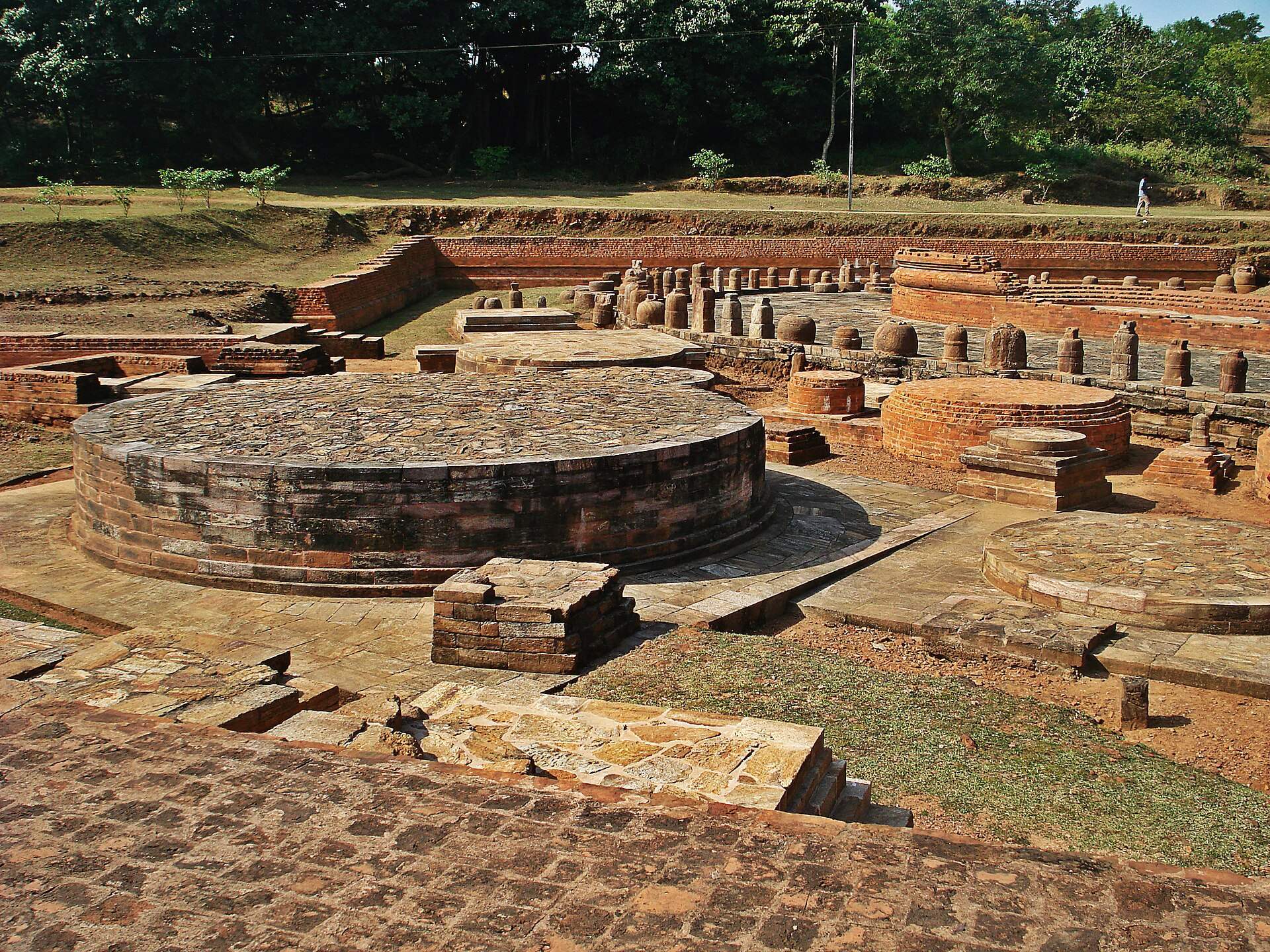
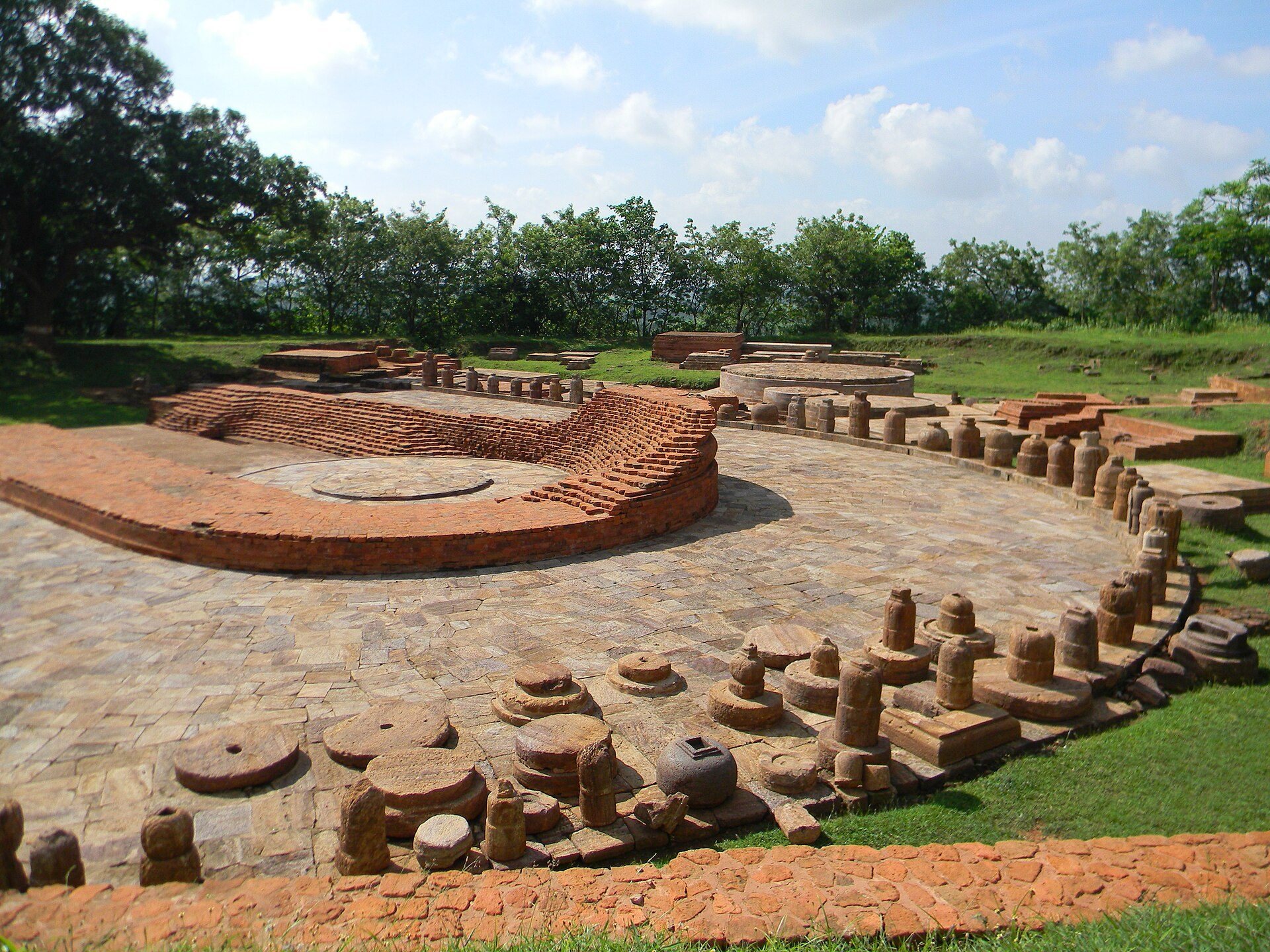
Lalitgiri occupies Landa sandstone hill in the Assian hill range, between the Parabhadi and Landa sandstone hills. The archaeological complex contains a hilltop mahastupa, or large stupa, an apsidal chaityagriha, or Buddhist worship hall with a rounded end, four monastic complexes, smaller stupas, sculptures, inscriptions, and other objects. Udayagiri lies about 8 kilometres away and Ratnagiri about 12 kilometres away.
Hilltop stupa and relics
Mahastupa
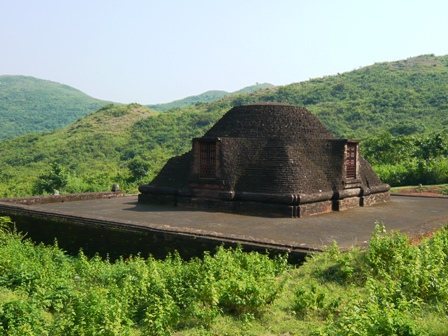
Excavation on the summit exposed the remains of a large stupa. Two rare Khondalite stone relic caskets were found within it. Each held nested containers made of steatite, silver, and gold. One gold container held a small bone fragment regarded as a Buddhist relic, while another contained a charred bone fragment. A third Khondalite container was empty and held no inner containers.
Relic caskets
The caskets are shaped like stupas, with a vessel-like base and a domed lid. They carry no inscriptions. Their age and precious materials have led some historians to associate the enclosed relics with the Buddha and one of his principal disciples. The caskets are now housed in Lalitgiri’s permanent museum.
Chaityagriha and surrounding stupas
Apsidal worship hall
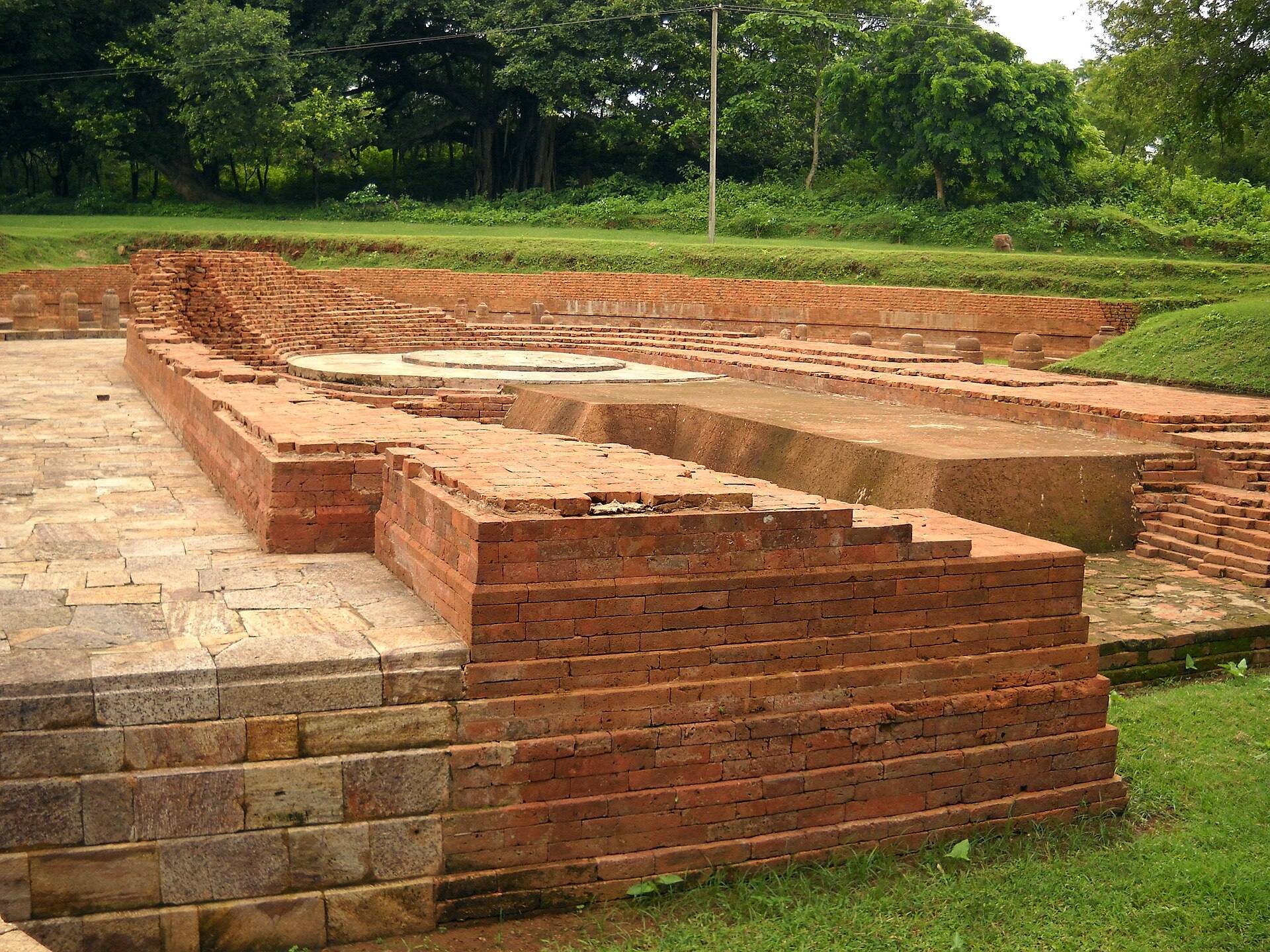
Below the hilltop stupa are the remains of an east-facing chaityagriha built from fired brick. The single hall measures approximately 33 by 11 metres, with walls about 3.3 metres thick. Its western end is apsidal, or rounded, and a stupa stood at the centre. Further stupa remains lay in front of the western end. This structure is described as the first Buddhist building of its type found in Odisha.
Inscriptions and railing fragment
Moonstone elements around the chaityagriha carried Brahmi inscriptions known as shell inscriptions, including examples associated with the Kushana period. A fragment of a pillar railing bears a lens-shaped half-lotus medallion. Together, these remains indicate that the hall was used from the early centuries AD through approximately the sixth or seventh century.
Votive stupas
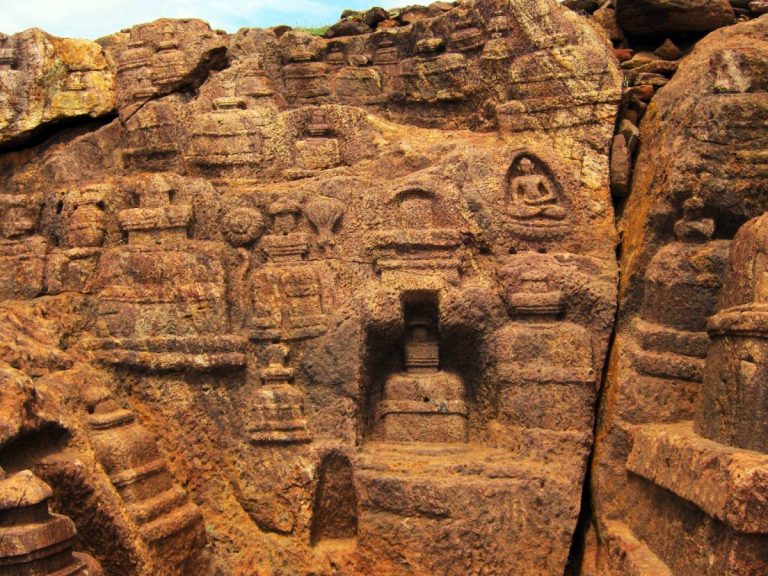
Numerous additional stupas stood around the chaityagriha. These included votive stupas, small monuments erected as devotional offerings after the fulfilment of a vow or wish.
Monastic complexes
First monastery
The first and largest monastery faces east and is a two-storeyed brick structure measuring approximately 36 by 36 metres. Its central open courtyard measures about 12.9 by 12.9 metres. The monastery dates to the tenth or eleventh century AD and has a brick-built rainwater cistern at the rear.
Second monastery
The second monastery lies at the northern end of the hill and has been only partly exposed. It is associated with a period when Buddhism was losing importance at Lalitgiri.
Third monastery
The third monastery stands north of the chaityagriha and faces southeast. It measures approximately 28 by 27 metres and has a central square courtyard about 8 by 8 metres. It represents the final phase of the apsidal chaitya complex and is also described as Lalitgiri’s oldest monastery.
Fourth monastery
The fourth monastery lies northeast of the chaityagriha and faces west. It measures approximately 30 by 30 metres and contains a courtyard. Its sanctuary is dominated by a seated Buddha figure preserved as a headless torso.
Images, seals, and ritual objects
Monastic seal
A terracotta monastic seal dated to the ninth or tenth century AD bears the inscription “Sri Chandraditya Vihara Samagra Arya Vikshu Sanghasa.” The seal provides a named association for one of the monastic communities at Lalitgiri.
Buddhist sculpture
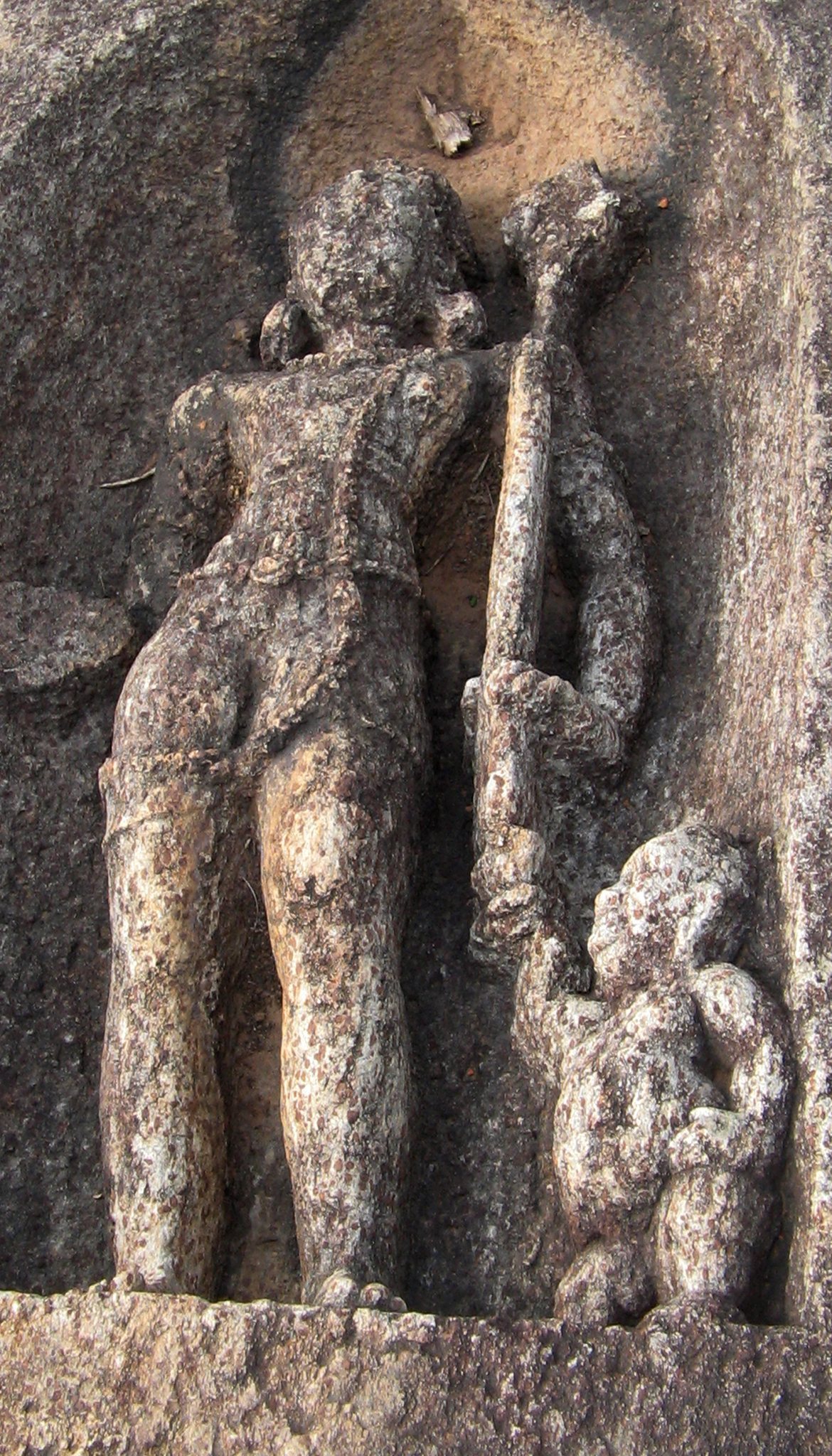
The excavated sculptures include numerous Mahayana images of the Buddha in different meditative forms, together with figures of bodhisattvas, Tara, Jambhala, and Avalokiteshvara. Tara is a Buddhist deity associated with protection and compassion, Jambhala with wealth, and Avalokiteshvara with compassion. Some large stone sculptures carry inscriptions.
An image of Tara in her Kurukulla form shows her seated in lalitasana, a posture in which one leg commonly hangs down while the other is bent. Images of Hariti show the protective Buddhist figure breastfeeding a child or holding one in her lap. Hariti is traditionally associated with the protection of children after the Buddha transformed her from a child-abducting figure.
Other objects
Other finds include a gold pendant, silver jewellery, stone tablets bearing impressions of Ganesha and Mahisasurmardini, and a seal-matrix pendant, which combines a seal-making device with a pendant. The presence of Ganesha, a Hindu deity associated with auspiciousness and the removal of obstacles, and Mahisasurmardini, a goddess shown defeating the buffalo demon Mahisha, adds to the range of religious imagery found at the complex.
Museum collection
The permanent museum houses the recovered sculptures, including standing Buddhas whose drapery extends from the shoulders to the knees. Their treatment reflects artistic influence from the Gandhara and Mathura schools. The collection also includes images of Buddha, bodhisattvas, Tara, Jambhala, and other deities, together with the relic caskets recovered from the hilltop stupa.