Pushpagiri: An Ancient Buddhist Monastic Complex in Odisha
Site at a Glance
- Rating
- 4.5
- Popularity
- Very Low
- Country
- India
- Primary era
- Classical
- Eras represented
- Classical, Medieval
- Civilizations
- Unclassified
- Site type
- Religious
- Remains
- Monastery
On this page8 sections
History
Pushpagiri is an ancient Buddhist mahavihara, or large monastic and educational complex, on Langudi Hill in Odisha, India. It flourished from approximately the 3rd to the 11th century CE and is regarded as a major centre of Buddhist learning alongside Nalanda, Vikramashila, Odantapuri, Takshashila, and Vallabhi.
Pushpagiri in Buddhist history
The Chinese Buddhist monk and pilgrim Xuanzang described a monastery called Pu-se-p’o-k’i-li in the south-western part of a country identified with Odra, an ancient name for the region corresponding to present-day Odisha. Scholars restored the name as Pushpagiri. Xuanzang’s account places the monastery on a mountain and presents it as an important Buddhist institution.
His description also included marvels associated with the monastery’s stone summit. He wrote of supernatural lights and reported that worshippers’ sunshades appeared to remain between the dome and its crowning element as if held by a magnet. These details belong to the historical account and are not statements about the condition of the surviving remains.
A 3rd-century inscription from Nagarjunakonda records an endowment by the Buddhist laywoman Bodhisiri for a stone hall at “Puphagiri,” the Pali form of Sanskrit Pushpagiri. Some scholars identify this place with the Odisha site and therefore place the establishment of Pushpagiri in Odisha by at least the 3rd century. Others associate Puphagiri with the Pushpagiri Temple Complex in present-day Kadapa district, Andhra Pradesh. The 9th-century Buddhist monk Prajna also spent time at an unnamed monastery in Wu-ch’a, identified with Odra, and some scholars have connected that institution with Pushpagiri.
Identifying the site
Until the 1990s, Pushpagiri was variously associated with the monastic sites of Lalitgiri, Ratnagiri, and Udayagiri. Ramaprasad Chanda proposed Udayagiri or Lalitgiri in 1930. In 1961, K. C. Panigrahi suggested that Udayagiri, Lalitgiri, and Ratnagiri together formed a single complex called Pushpagiri, while N. K. Sahu placed the site in the Phulbani and Ghumsur region.
The Archaeological Survey of India excavated Lalitgiri from 1985 in an effort to establish its connection with Pushpagiri, but the discoveries did not confirm that identification. Ratnagiri and Udayagiri are approximately 11 kilometres apart, and each lies about 7 kilometres from Lalitgiri.
In the 1990s, college lecturer Harish Chandra Prusty identified a Buddhist site on Langudi Hill, approximately 18 kilometres from Udayagiri. Prusty and Pradeep Mohanty published an account of the discovery in 1993. Exploration began at Langudi in 1996 through the Orissa Institute of Maritime and South East Asia Studies and the Odisha state archaeology department. Excavations by the institute continued until 2006.
A fragmentary Brahmi inscription names the site puṣpa sabhar giriya, interpreted as “flower-filled hill.” The excavators identified Langudi with Pushpagiri, and this interpretation became the prevailing scholarly view. In 2007, the Archaeological Survey of India assumed responsibility for the excavated site.
Ashoka and the stupa tradition
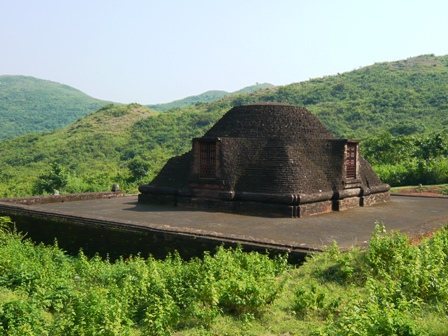
Pushpagiri’s large stupa has been linked with the tradition that Ashoka, the Mauryan emperor of the 3rd century BCE traditionally associated with the spread of Buddhism, erected ten celebrated stupas. This attribution remains uncertain. Archaeologist Debraj Pradhan regarded the stupa as an Ashokan construction, while B. N. Mukherjee interpreted the relevant inscription as possibly referring to a lay Buddhist worshipper named Ashoka rather than to the emperor.
Remains
Layout and excavated complex
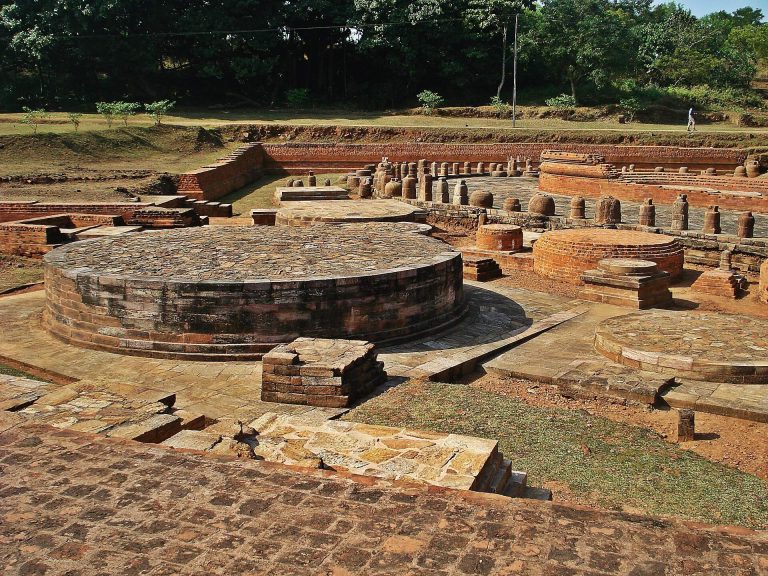
Pushpagiri occupies Langudi Hill and covers approximately 143 acres, or 0.58 square kilometres, within a larger Buddhist monastic complex. The archaeological evidence spans approximately the 1st to the 9th century CE. Excavations have brought to light stupas, rock-cut sculptures, structural elements, an inscription, terracotta seals, and pottery associated with the life of the establishment.
Stupas and sculptures
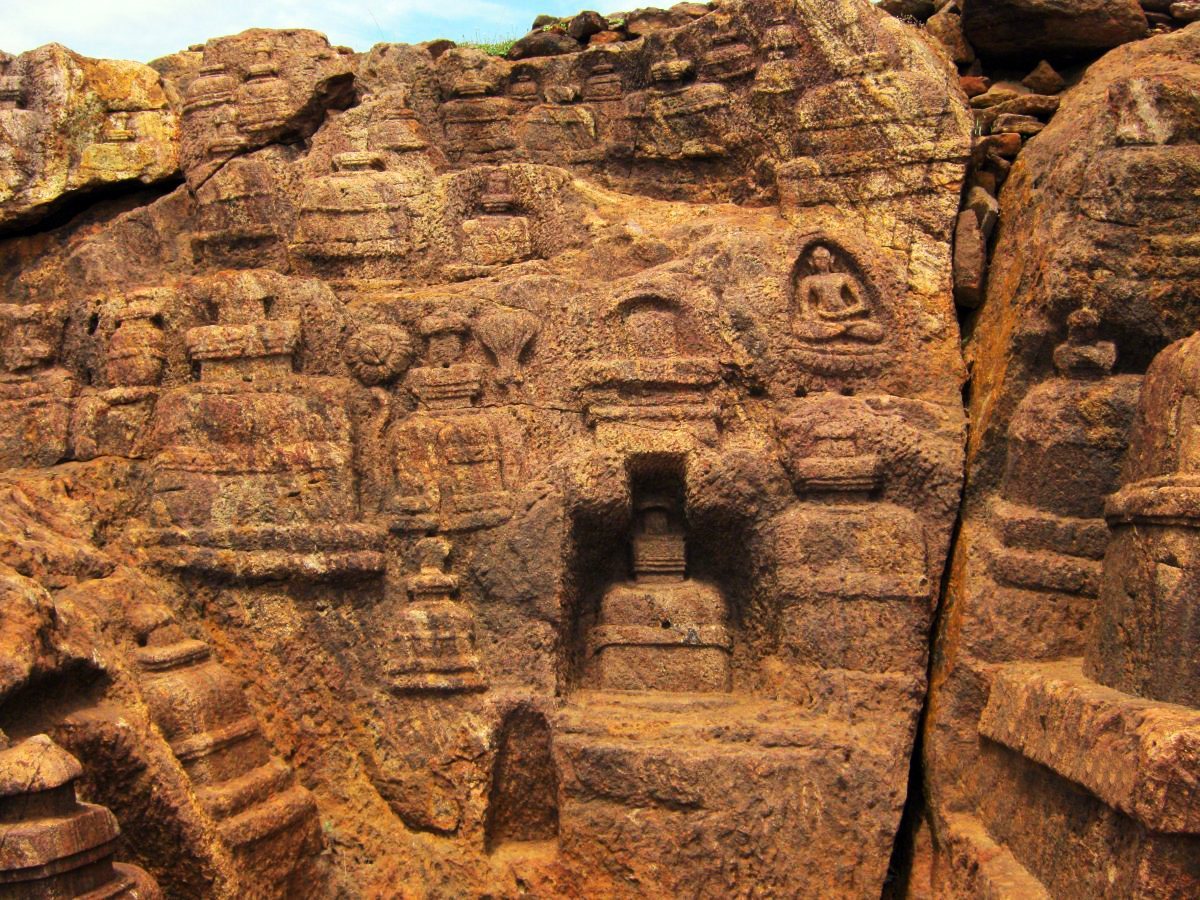
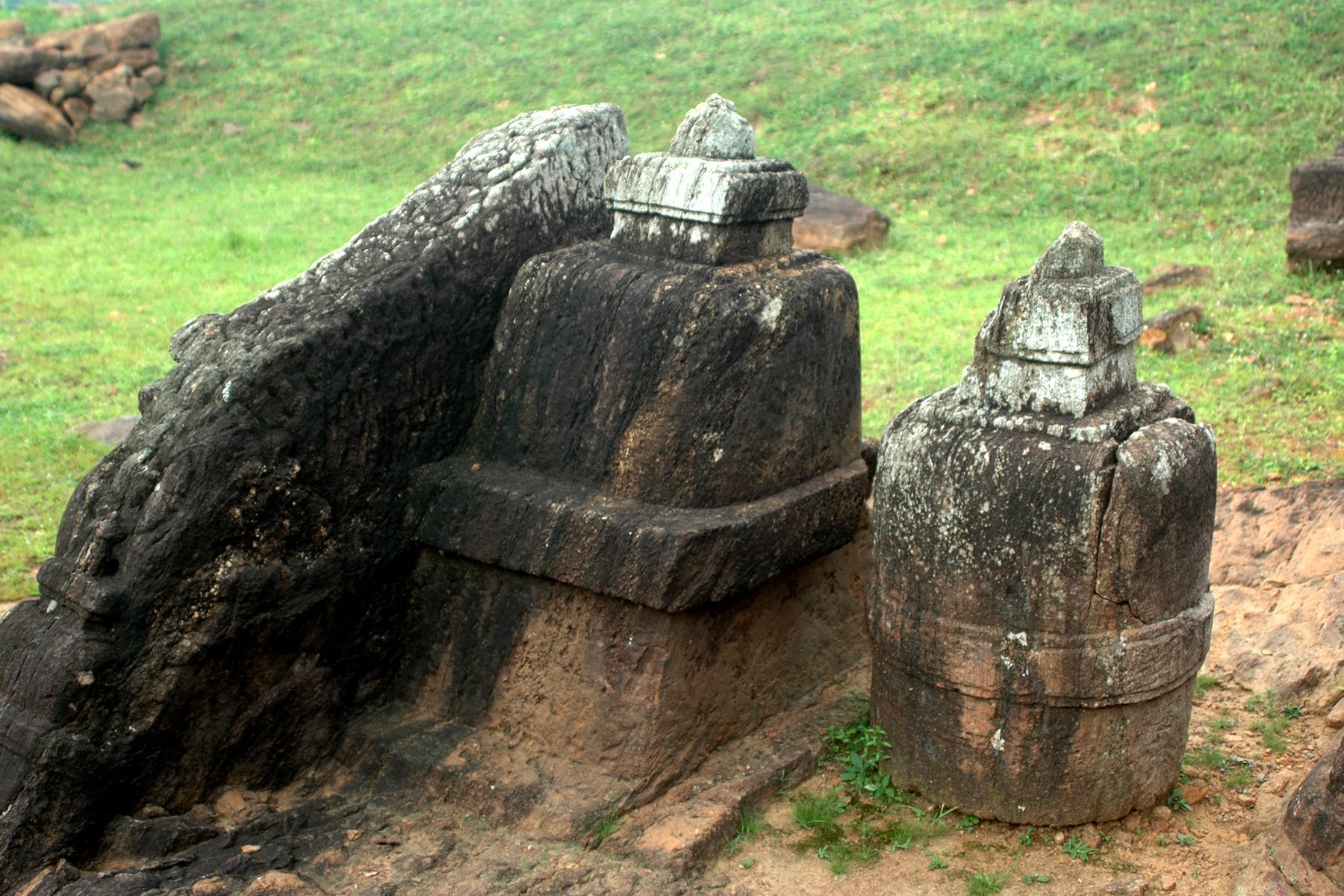
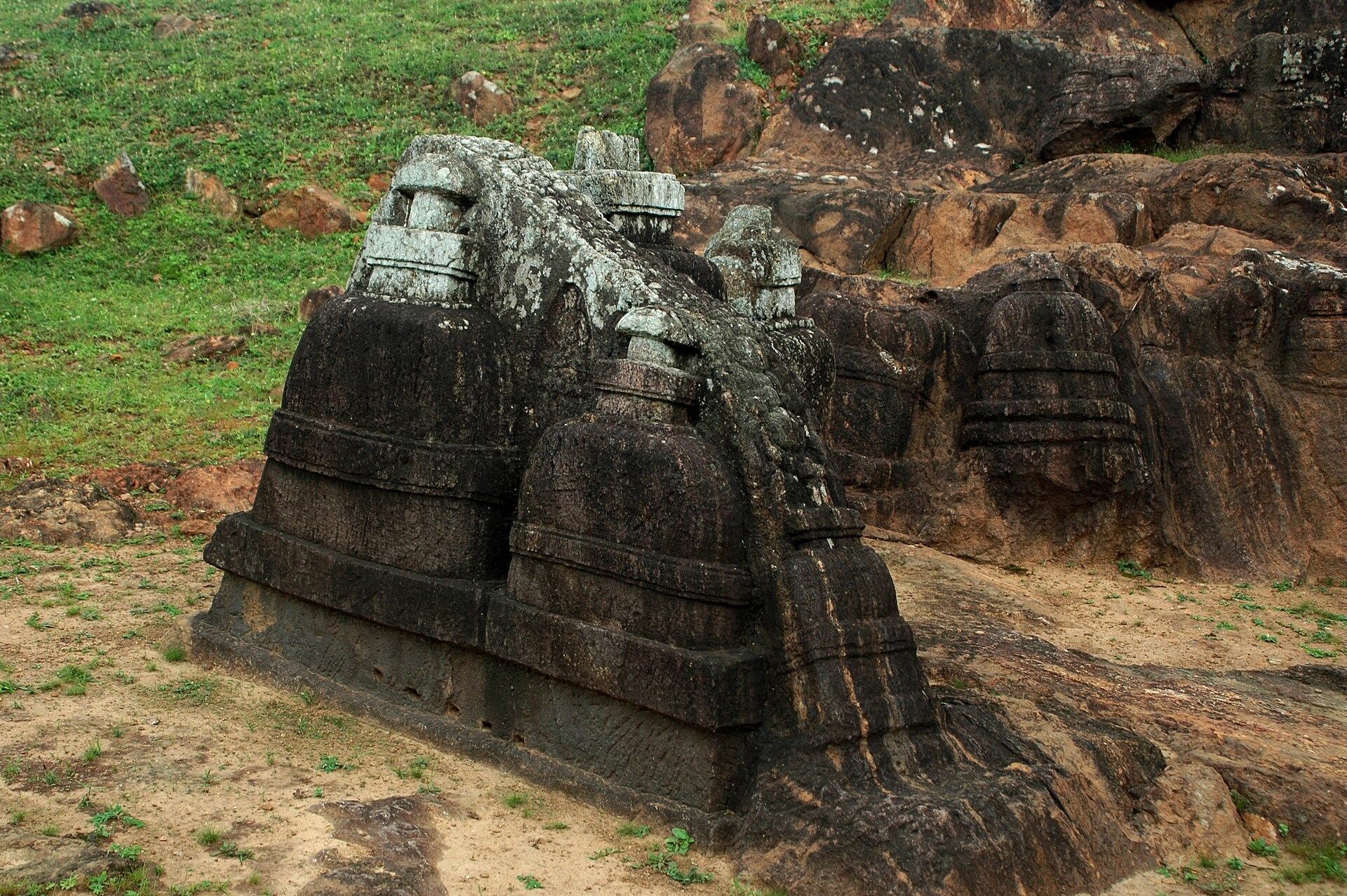
The large stupa discovered during the 2000 excavation survives as ruins with a square base. By 2007, archaeologists had identified 34 rock-cut stupas of different sizes on the northern part of the hill. A rock-cut stupa is carved directly from natural stone rather than assembled from separately laid masonry.
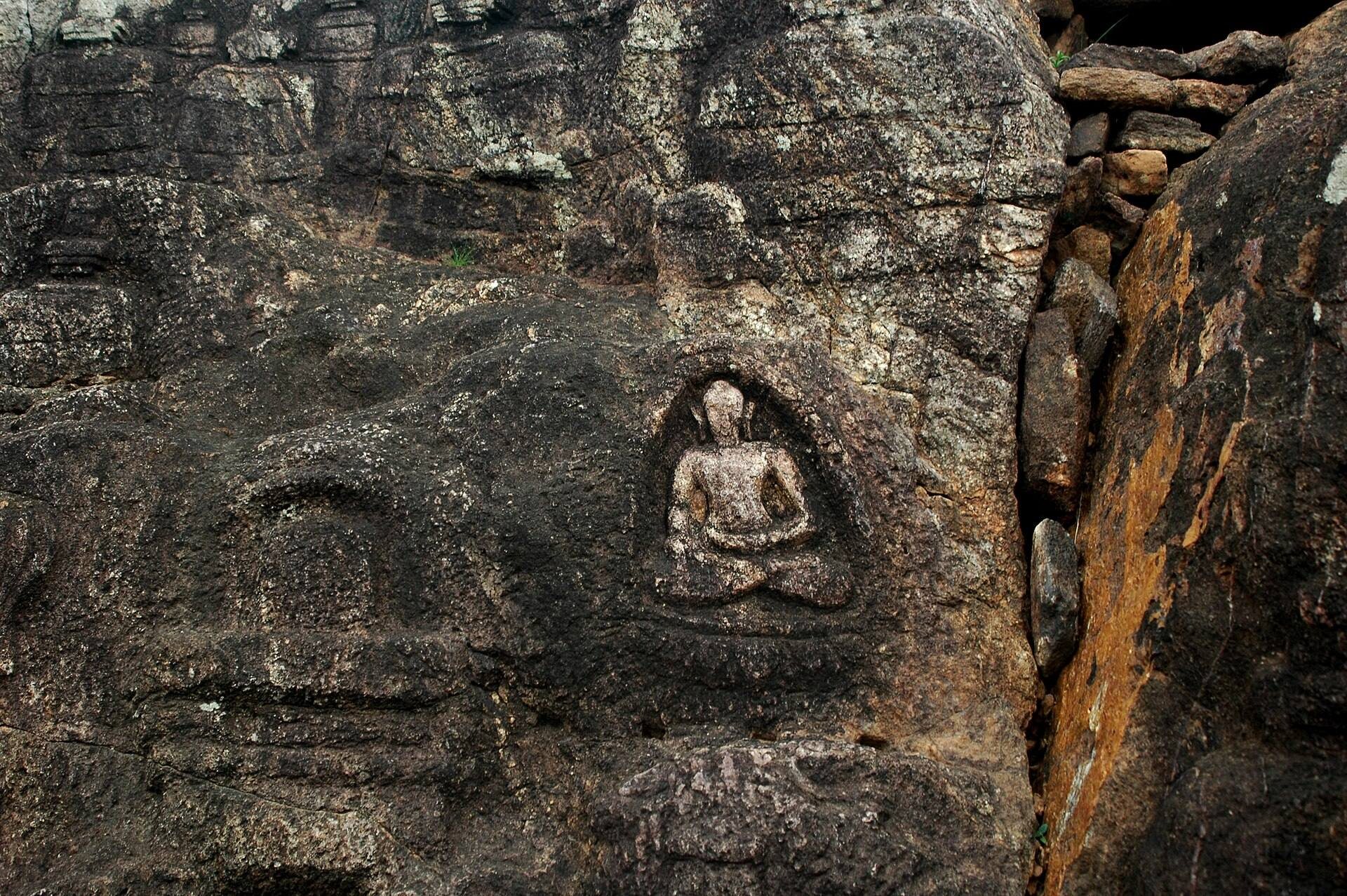
The southern spur contains numerous Buddhist rock-cut sculptures, including Dhyani Buddhas shown in different postures. Dhyani Buddhas are meditative or transcendent Buddha figures associated with Mahayana and Vajrayana Buddhist traditions. Together with the stupas, these sculptures demonstrate the range of religious features preserved across the hill.
Inscriptions and archaeological materials
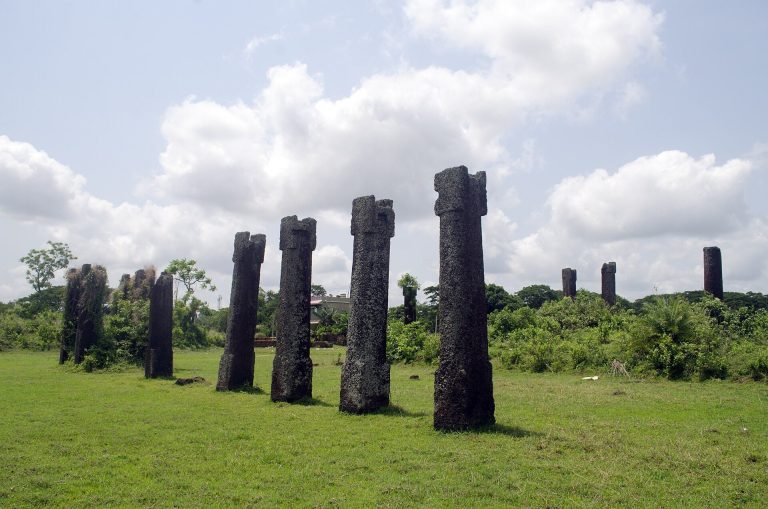
Excavated materials include pillars, terracotta seals, and Northern Black Polished Ware, a fine glossy pottery tradition associated mainly with the early historic period of northern and eastern India. The fragmentary Brahmi inscription containing the words puṣpa sabhar giriya is associated with the identification of Langudi as Pushpagiri. These finds connect the physical remains with the long history of the site as a Buddhist monastic establishment.