Umbul Temple: A Mataram-Period Hindu Bathing Complex
Site at a Glance
- Rating
- 4
- Popularity
- Medium
- Country
- Indonesia
- Primary era
- Classical
- Eras represented
- Classical
- Civilizations
- Unclassified
- Site type
- Religious
- Remains
- Temple
On this page8 sections
History
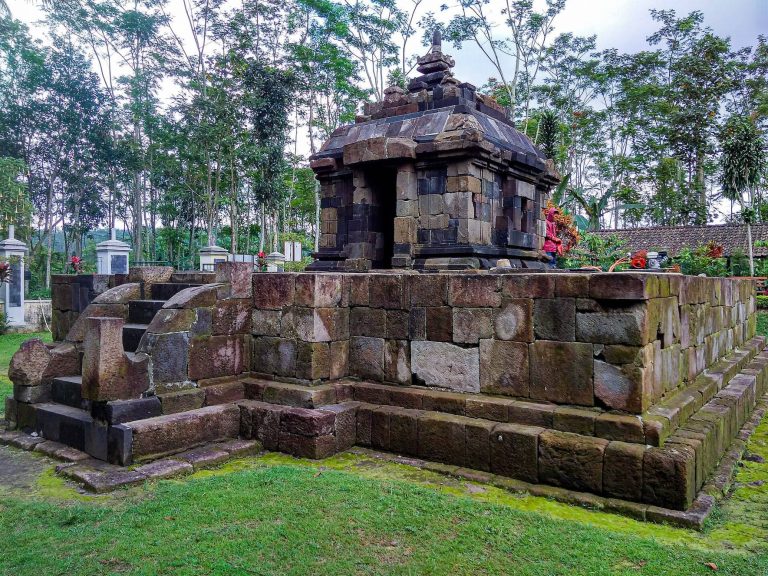
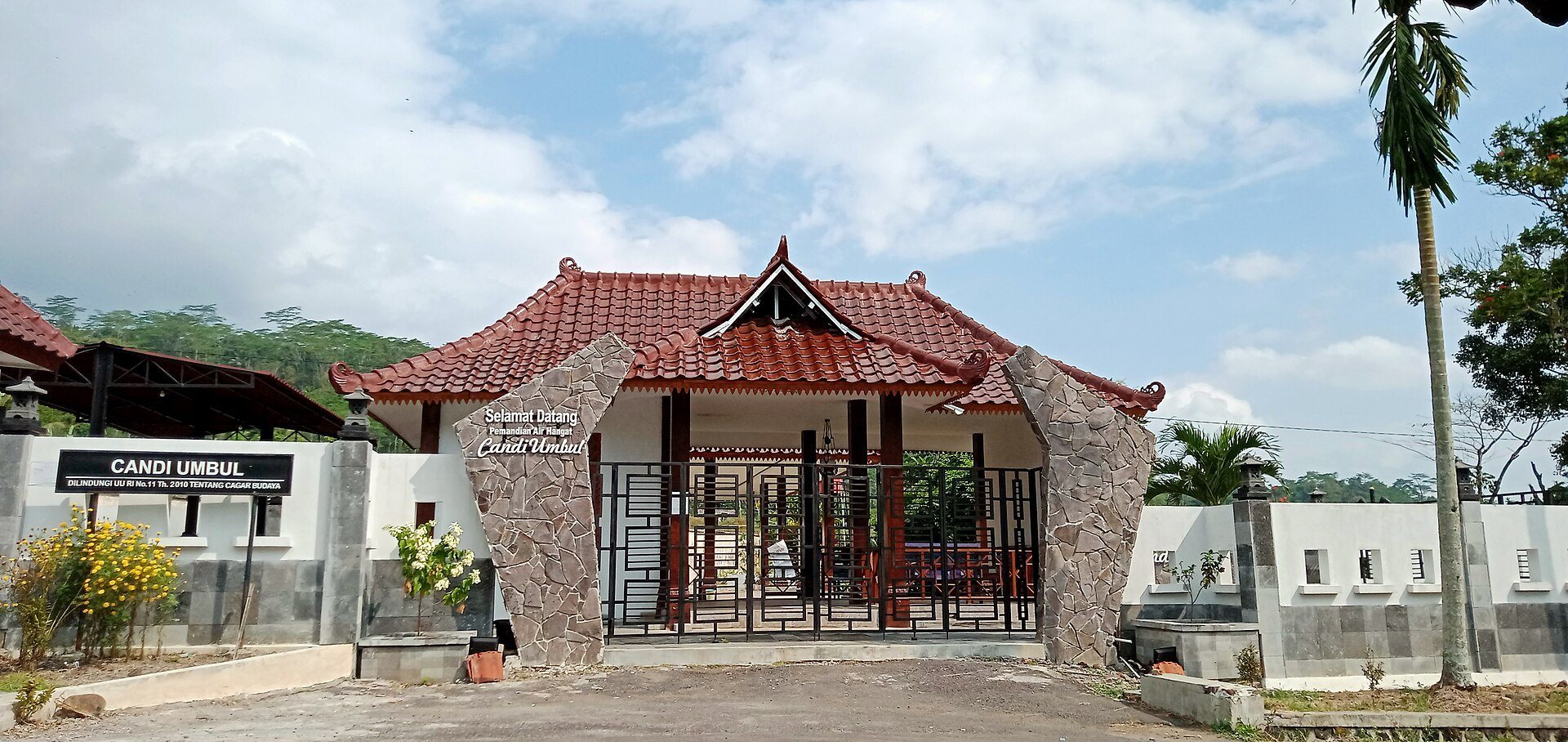
Umbul Temple is a Hindu temple complex of the Mataram period in Kartoharjo, Grabag, Magelang, Central Java, Indonesia. Generally dated to the ninth century, possibly around 800 to 890 and before Borobudur, it served the Hindu Mataram kings as a bathing and resting place as well as a site of worship.
Construction and royal use
The Mataram period was the era of the Hindu Mataram kingdom in Central Java, which produced major religious monuments between approximately the eighth and tenth centuries. Umbul formed part of a religious landscape around the Elo River, where eleven temples are known. Its combination of bathing facilities and sacred features suggests that water, rest, and worship were brought together for the use of the kingdom’s rulers.
Abandonment and rediscovery
Umbul was abandoned in the early eleventh century, probably after the eruption of Mount Merapi in AD 1006. The volcano’s ash is thought to have covered the area, and flooding followed not long afterward. Mount Merapi is an active volcano in Central Java, making this sequence of ash deposition and flooding an important part of the site’s later history.
The complex had been rediscovered by the nineteenth century, although the exact year is not known. Eighteenth-century Dutch coins found in the area indicate later activity around the site. In 1876, the Dutch scholar R.H.T. Friederich proposed that Umbul may originally have contained two temples. No foundations have been found to confirm this idea, but similarities among the carvings and reliefs have led to the interpretation that they may not all have belonged to a single temple.
Umbul is recognized as a Cultural Property of Indonesia. It remains associated with pilgrimage, and local belief holds that its waters can cure skin diseases. The complex is also known as Air Panas and Candi Panas. It is counted among the four confirmed bathing pools associated with the period, alongside Sidomukti near Semarang, Cabean Kunti in Boyolali, and Payak in the Special Region of Yogyakarta.
Remains
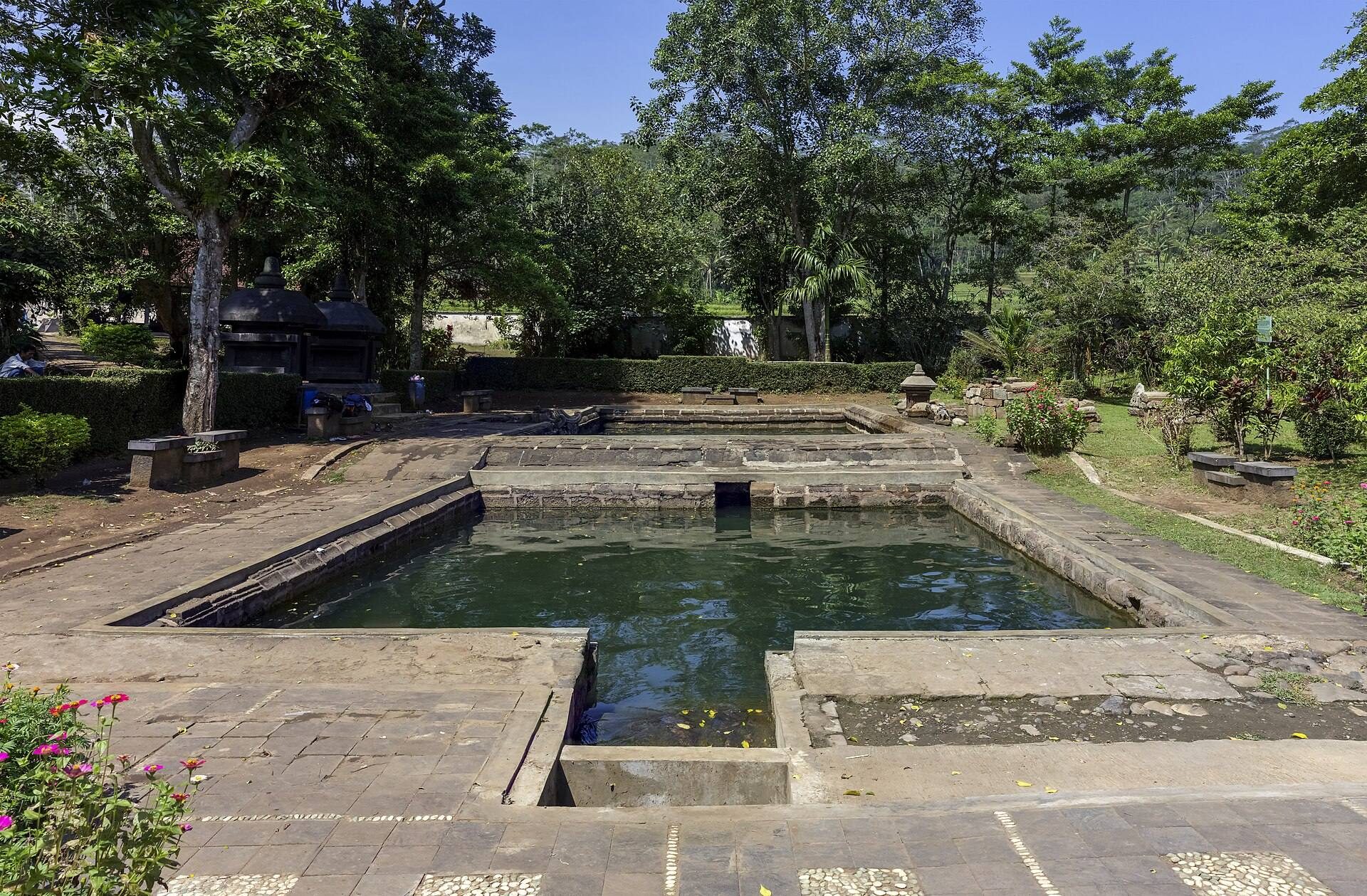
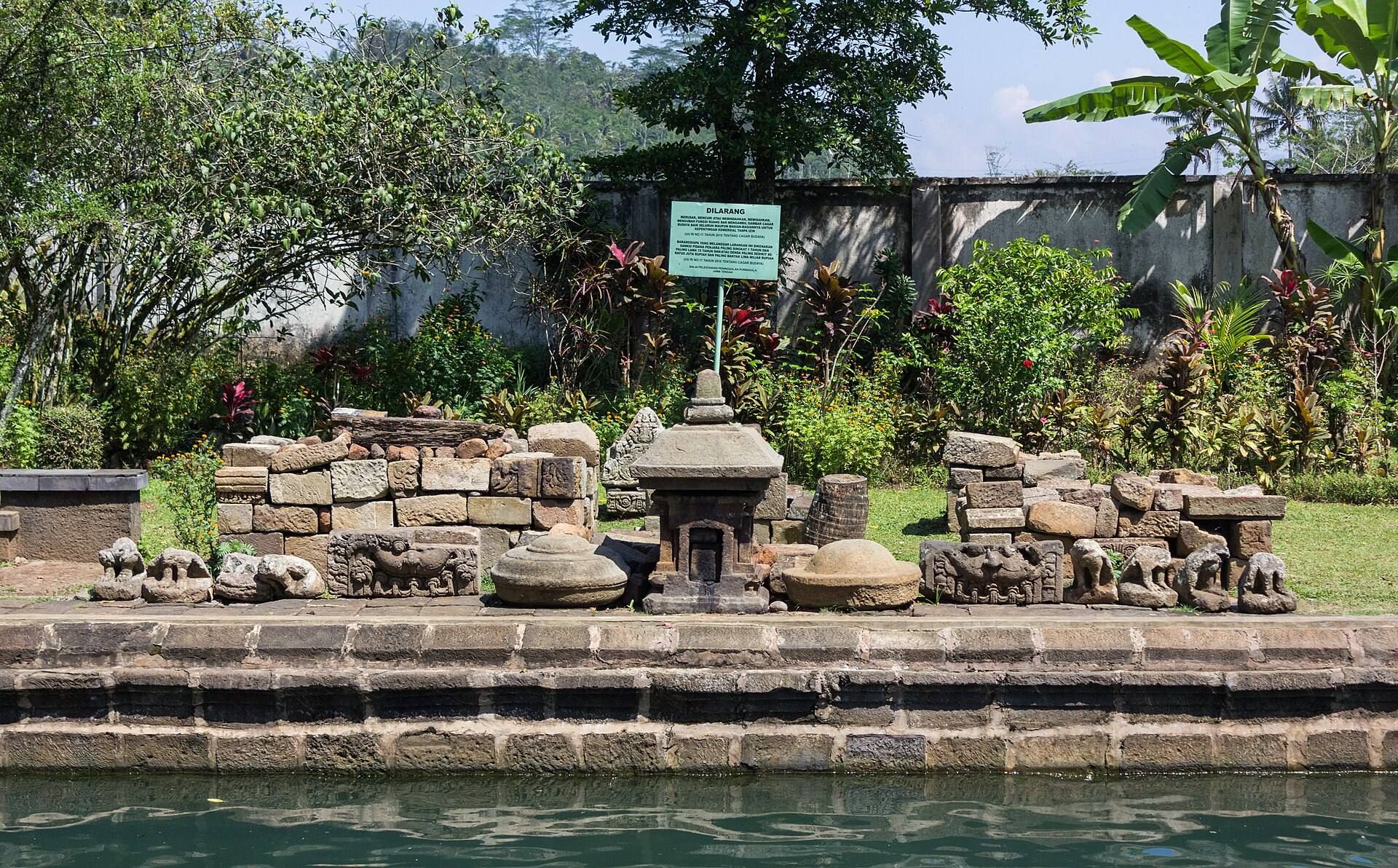
Umbul lies in the bottom of a valley surrounded by hills, at approximately 550 metres above sea level and about 50 metres south of the Umbul water channel. Its principal remains are two rectangular bathing pools supplied by a spring, together with a surrounding garden, carved stones, an original wall, and religious sculptures.
Bathing pools and water system
Upper pool
The larger, upper pool measures 7.15 by 12.5 metres. Warm, green-tinted spring water enters this pool and forms the main part of the bathing complex.
Lower pool and water duct
The smaller lower pool measures 7 by 8.5 metres. Water passes from the larger pool into it through a duct approximately 2 metres long, creating a connected two-stage bathing arrangement. The pools are set within a garden containing various stones, including forms shaped like a lingga and yoni. A lingga is a phallic symbol associated with the Hindu god Shiva, while a yoni is its complementary emblem associated with the goddess and the generative principle. Together, these forms indicate Shaivite religious significance.
Walls and religious sculptures
An original wall stands approximately 20 metres east of the bathing pool. Religious artefacts found at the complex include two statues of Ganesha, two of Durga, and one of Agastya. Ganesha is associated with beginnings, wisdom, and the removal of obstacles; Durga is a warrior goddess; and Agastya is a revered Hindu sage frequently represented in Shaivite temple art.
A 1923 inventory by N.J. Krom also recorded a Garuda sculpture with a human body. Garuda is a divine, eagle-like being in Hindu tradition and the mount of Vishnu, so this image represents a mythological religious figure rather than an ordinary bird.