El-Kurru: A Kushite Royal Cemetery in Sudan
Site at a Glance
- Rating
- 4.6
- Popularity
- Very Low
- Country
- Sudan
- Primary era
- Iron Age
- External website
- Open
- Eras represented
- Iron Age, Classical, Medieval
- Civilizations
- Unclassified
- Site type
- Burial
- Remains
- Necropolis
On this page17 sections
History
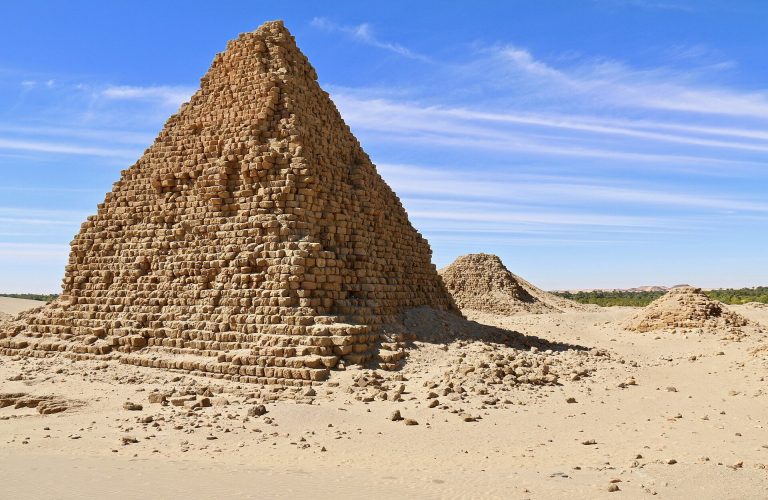
El-Kurru is a Kushite royal cemetery in Sudan, about 1.6 kilometres west of the Nile between the Third and Fourth Cataracts. It was used mainly from approximately 860 to 650 BC by the rulers of Napata, the Kushite dynasty that also became Egypt’s Twenty-fifth Dynasty. The cemetery contains the burials of several Kushite kings and queens and provides evidence for the development of royal funerary architecture in Nubia.
Origins and early burials
El-Kurru was the first of three royal cemeteries used by the rulers of Napata. Its earliest phase remains disputed. George Reisner dated the oldest tomb, Tum.1, to the reign of Pharaoh Sheshonq I, around 860 BC. Other chronologies place the beginning of the cemetery in the late Twentieth Dynasty, around 1070 BC, or around 850 to 830 BC. The earlier burials may therefore predate the Kingdom of Napata or extend into the period before it was established.
Sixteen tombs earlier than the pyramid of King Piye may belong to his royal predecessors, although several identifications remain uncertain. Piye, also known as Piankhy, was the first ruler at El-Kurru associated with a named tomb. His pyramid dates to approximately 750 BC. The early sequence includes tumuli, or burial mounds raised over rock-cut graves, as well as later square tombs whose original form remains debated.
The Twenty-fifth Dynasty cemetery
The royal cemetery expanded under Piye and his successors. It received the burials of Piye, Shabaka, Shebitku, and Tantamani, together with members of their families. These rulers controlled parts of Nubia and Egypt during the Twenty-fifth Dynasty. Tantamani, the last king of that dynasty, was buried at El-Kurru around 650 BC. Later Napatan kings generally selected the royal cemetery at Nuri instead.
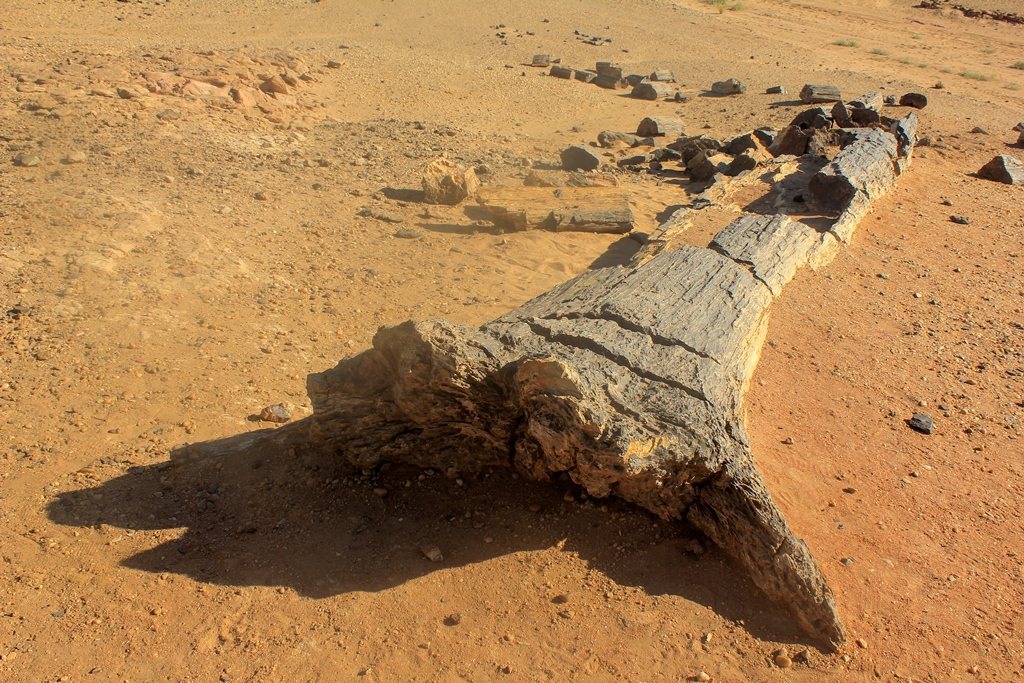
The cemetery also included burials for royal horses. Groups of graves associated with Piye, Shabaka, Shebitku, and Tantamani contained horses buried upright with their harnesses and other trappings. These interments formed part of the funerary landscape of the Kushite royal household.
Later use and medieval settlement
El-Kurru returned to royal use in the mid-fourth century BC, when an otherwise unidentified twentieth king commissioned a tomb for himself and another for his queen. The king’s tomb, Ku.1, appears to have been unfinished and unused, while Ku.2 probably belonged to his queen.
During the medieval period, the region formed part of Makuria, a Christian Nubian kingdom. El-Kurru became a walled settlement that remained in use until approximately 1200. Christian Nubians carved monograms, Christian symbols, and numerous boat images into the pyramid of Ku.1. The boats may commemorate a river procession, although that interpretation remains tentative.
Excavation and conservation
George Reisner excavated El-Kurru in 1918 and 1919. After his death, his assistant Dows Dunham continued the work and published the excavation report in 1950. Most tombs had been looted inside and outside, leaving them in poor condition, but surviving artefacts indicate that the rulers buried there possessed considerable wealth and power. Archaeological excavation, surveying, documentation, and conservation resumed in 2013 through cooperation involving Sudan’s National Council for Antiquities and Museums, the Qatar Sudan Archaeological Project, the Kelsey Museum of Archaeology at the University of Michigan, and the University of Copenhagen.
Remains
El-Kurru is divided into three sections by two wadis, or usually dry valleys or watercourses. The central section appears to be the oldest and contains pre-Napatan tumulus burials. The highest section contains Tum.1, Tum.2, Tum.4, and Tum.5, while Tum.6 lies north of the northern wadi. At least eight pyramids formed an eastern row beside the tumuli, and another row in front of them contained the pyramids of Piye, Shabaka, and Tantamani. South of the pyramid attributed to Pebatjma, across the southern wadi, stood the pyramids of four queens.
Early tumuli and square tombs
Tumulus burials
Tum.1, Tum.2, Tum.3, Tum.4, Tum.5, Tum.6, and Ku.19 are Nubian-style tumuli. Each consisted of a burial pit cut into the rock and covered by a circular mound of gravel, pebbles, and rubble. This form is also known from C-Group and Kerma burials. Tum.1, Tum.4, and Tum.5 date to approximately 860 to 840 BC and have no identified occupants. Tum.2, dated to approximately 800 to 780 BC, contained a female skull. Tum.6 dates to approximately 840 to 820 BC, while Ku.19 belongs to the same broad period and lies east of the tumulus group.
Square tombs
Tum.6 and Ku.19 had more substantial circular enclosure walls and included offering chapels, spaces where food, drink, and other funerary offerings could be presented to the dead. Later tombs, including Ku.14, Ku.13, Ku.11, Ku.10, Ku.9, Ku.23, Ku.21, Ku.8, Ku.20, and Ku.7, had square plans. Most had offering chapels. Reisner interpreted these structures as mastabas, low rectangular tombs with flat roofs. Other interpretations propose that they originally supported small pyramids, which were removed when the tombs were looted.
Ku.13 and Ku.14 date to approximately 820 to 800 BC, and Ku.13 partly destroyed Ku.19. Ku.9 and Ku.10 date to approximately 800 to 780 BC. Ku.9 may belong to King Alara, an earlier Kushite ruler, although no inscription identifies its occupant. Ku.11, from the same period, contained a female skull without an identified occupant. Ku.21 and Ku.23 date to approximately 780 to 760 BC.
Royal pyramids and queens’ tombs
Kashta and Pebatjma
Ku.8, dated to approximately 760 to 751 BC, may be the pyramid of King Kashta, the father of Piye. Ku.7, dated to approximately 751 to 715 BC, may belong to Queen Pebatjma and lies beside Ku.8. Ku.20 and Ku.22, both dated to approximately 751 to 716 BC, are additional unnamed tombs in this group.
Piye and his family
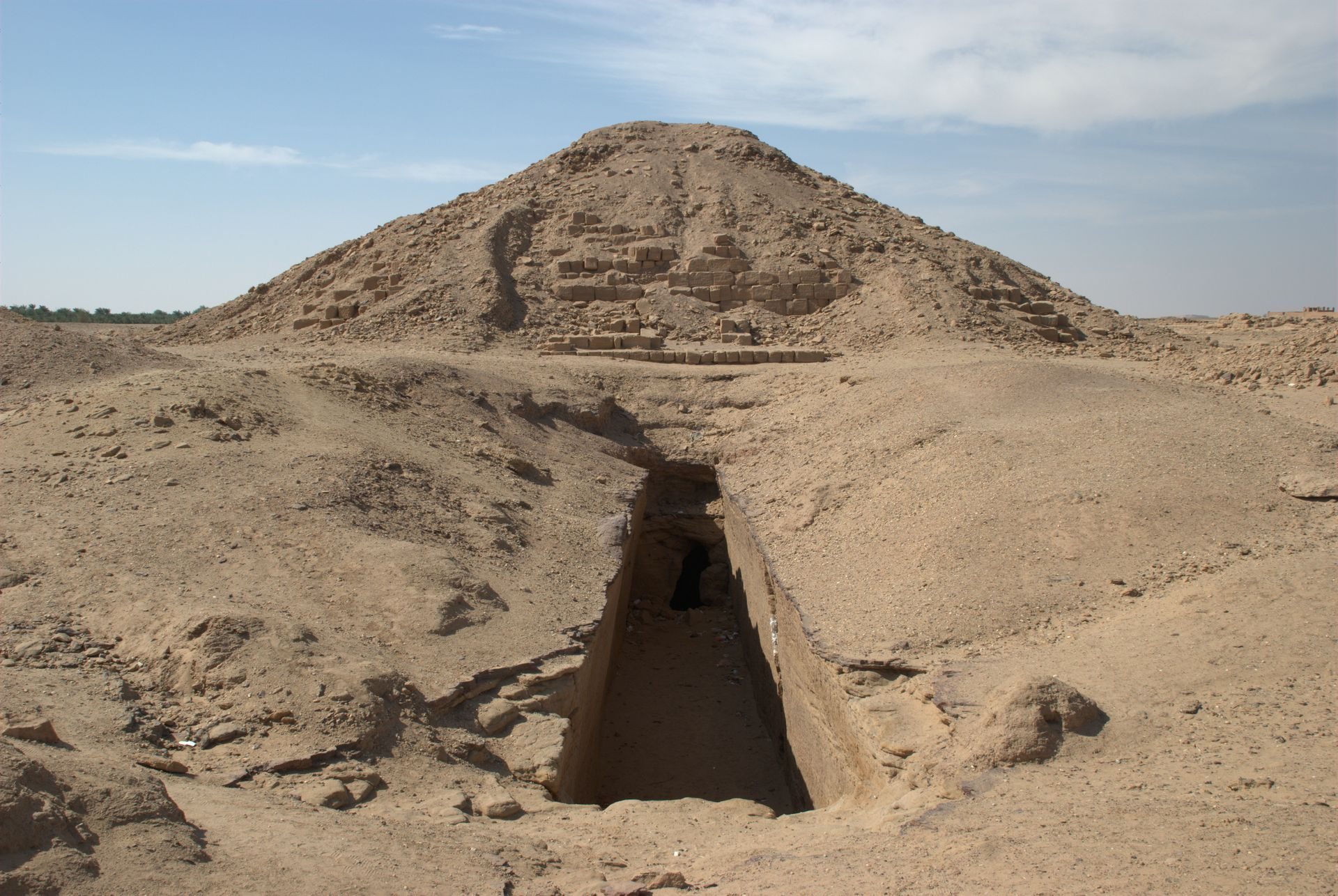
Ku.17 is the pyramid of King Piye and dates to approximately 751 to 716 BC. Its design introduced a vaulted burial chamber cut into the rock and supplemented with stone masonry. Later royal pyramids were also monumental. Nearby tombs include Ku.53, belonging to Queen Tabiry, Ku.54, which may belong to Peksater, and Ku.55, which probably belonged to a queen.
Four groups of horse graves lay approximately 120 metres northwest of Ku.51 to Ku.55. The groups contained four, eight, eight, and four graves. Although the graves were robbed, the surviving evidence shows that the horses had been buried upright with their harnesses and other equipment. These graves are associated with Piye’s reign. Other tombs from this phase include Ku.51, Ku.52, the pyramid of Queen Nefrukekashta, Ku.62, and Ku.71, all linked to members of the royal family.
Shabaka and Shebitku
Ku.15, dated to approximately 716 to 701 BC, is the pyramid of King Shabaka. Ku.52 is the pyramid of Queen Nefrukekashta, while Ku.51, Ku.62, and Ku.71 probably belonged to queens. Horse graves numbered Ku.201 to Ku.208 contained the horses associated with Shabaka.
Ku.18 is the pyramid of King Shebitku and dates to approximately 701 to 690 BC. It lies west of the pyramid attributed to Kashta and south of the tumulus burials. A human skull remained inside and may have belonged to Shebitku. Ku.72 probably belonged to a queen, and horse graves Ku.209 to Ku.216 were associated with Shebitku.
Naparaye, Khensa, Tantamani, and Qalhata
South of the southern wadi, Ku.3 is the pyramid of Queen Naparaye and Ku.4 is the pyramid of Queen Khensa. Both date to approximately 690 to 664 BC. Ku.16, the tomb of King Tantamani, and Ku.5, the tomb of Queen Qalhata, date to approximately 664 to 653 BC. Ku.6 may belong to Queen Arty, and Ku.61 may belong to one of Tantamani’s queens. Horse graves Ku.217 to Ku.220 contained Tantamani’s horses.
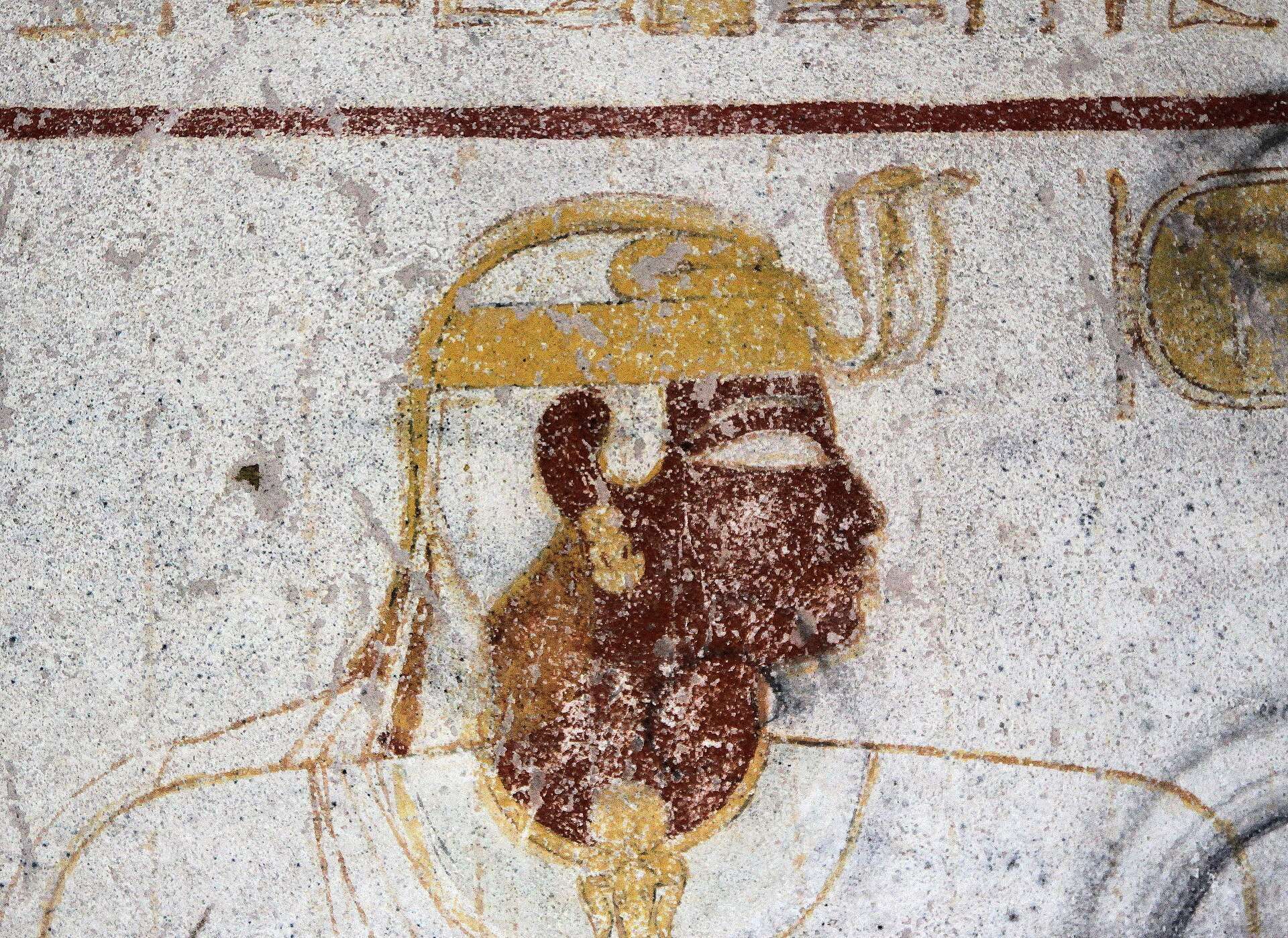
Ku.16 contains two well-preserved underground chambers. Paintings cover both their walls and ceilings, depicting scenes from the Egyptian underworld. Qalhata’s tomb, Ku.5, also contains painted scenes of the underworld. These decorated chambers preserve a later phase of Kushite royal funerary art at El-Kurru.
Later royal tombs and graffiti
Ku.1 and Ku.2
Ku.1 is the largest pyramid at El-Kurru. It dates to approximately 362 to 342 BC and was built by an unidentified king. The structure lies immediately south of and beside Piye’s Ku.17, but appears to have remained unfinished and unused. Ku.2 dates to the same period and probably belonged to the king’s queen.
Medieval inscriptions
The stonework of Ku.1 preserves medieval graffiti from the period of Makurian occupation. The carvings include monograms, Christian symbols, and numerous boat images. Their association with a river procession is possible but not certain, giving the pyramid evidence of a later Christian use of the cemetery.