Pawon: A Mahayana Buddhist Temple in Central Java
Site at a Glance
- Rating
- 4.5
- Popularity
- Medium
- Country
- Indonesia
- Primary era
- Medieval
- Eras represented
- Medieval
- Civilizations
- Sailendra
- Site type
- Religious
- Remains
- Temple
On this page9 sections
History
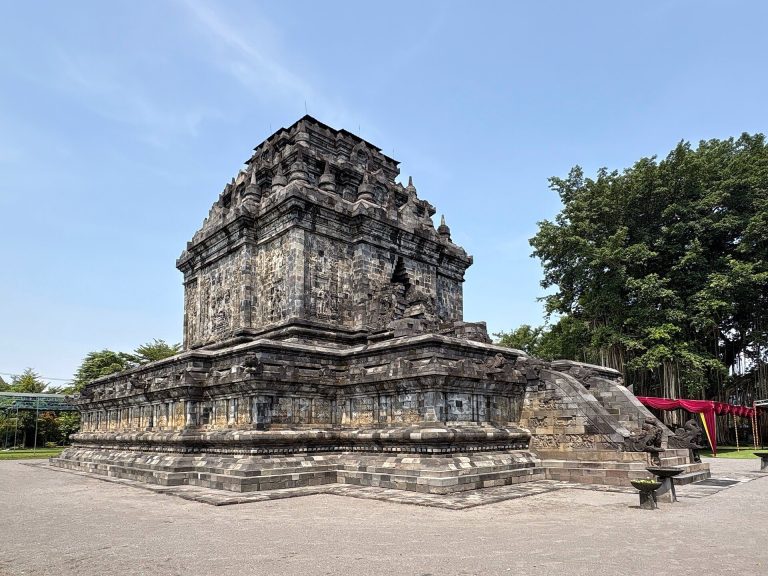
Pawon is a Mahayana Buddhist temple ruin in Mungkid, Magelang Regency, Central Java, Indonesia, built under the Sailendra dynasty in the late eighth century or around AD 800. Its carving style suggests that it is slightly older than Borobudur. Together with Borobudur and Mendut, Pawon forms part of the Borobudur Temple Compounds, and the three temples stand along a straight east-west axis that indicates a symbolic relationship.
The Sailendra Period
Pawon lies between Borobudur, about 1.75 kilometres to the west, and Mendut, about 1.15 kilometres to the east. It stands roughly 150 metres west of the Progo River. A processional road may once have followed the axis linking the three temples, although no archaeological remains of such a road have been found.
The temple’s original name is unknown. The name Pawon is a Javanese word meaning “kitchen,” derived from awu, meaning “ash” or “dust.” This association has led to the interpretation that Pawon was a royal tomb or mortuary temple containing the cremated ashes of a king. The identity of the person supposedly buried there remains unknown. Local residents also call it Bajranalan, a name associated with the village and explained through the Sanskrit terms Vajra, a thunderbolt or Buddhist ritual implement, and Anala, meaning fire or flame.
J. G. de Casparis proposed that the funerary occupant may have been Indra, also known as Dharanindra, the father of the Sailendra king Samaratungga. This identification remains unconfirmed. Pawon may instead have served as an ancillary temple of Borobudur, perhaps as a place where pilgrims purified their minds before ascending to the larger monument. Another interpretation holds that pilgrims worshipped there for worldly benefits before continuing their journey, but the temple’s precise religious function remains uncertain.
Restoration and Continuing Religious Use
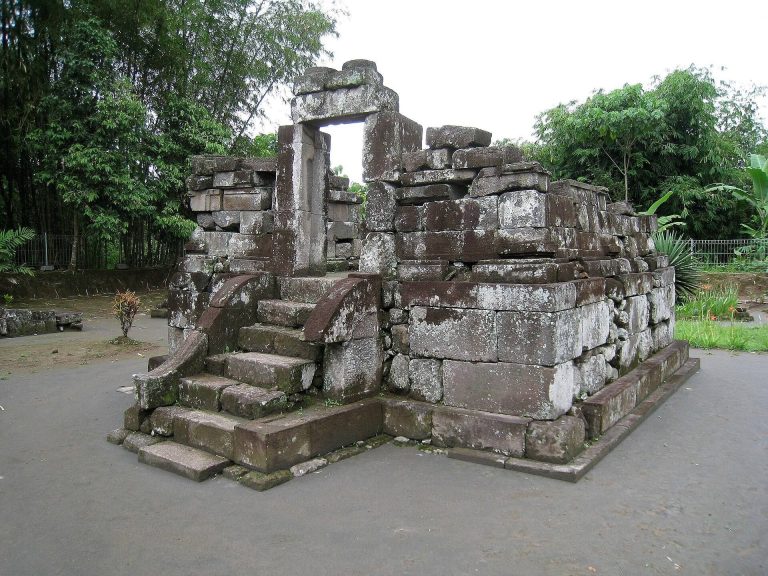
Pawon was restored in 1835 under Sir Thomas Stamford Raffles, a British colonial administrator and scholar who served as lieutenant-governor of Java. Krom and others restored it again in 1903 in connection with work at Mendut. Some elements of the later restoration, including parts of the summit, may not reproduce the original design accurately. In 1991, Pawon was inscribed with Borobudur and Mendut as part of the UNESCO World Heritage cultural site known as the Borobudur Temple Compounds.
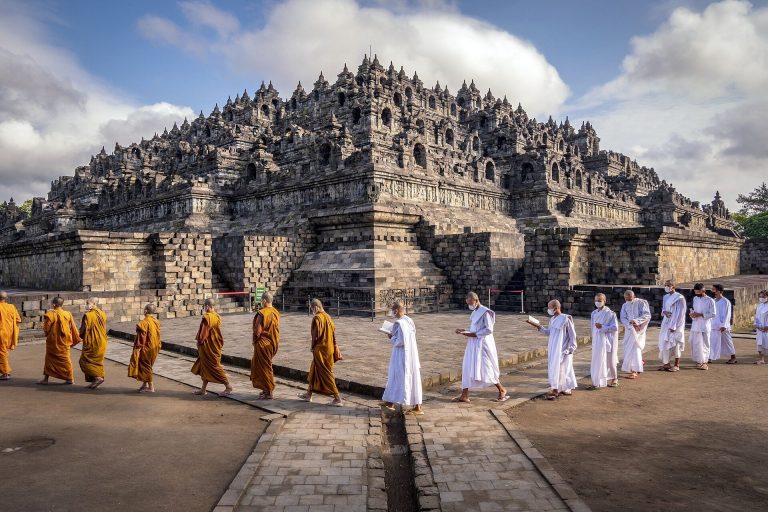
During the full moon in May or June, Indonesian Buddhists make the annual Waisak pilgrimage from Mendut through Pawon to Borobudur, a procession of approximately four kilometres. This route continues the religious connection expressed by the alignment of the three temples.
Remains
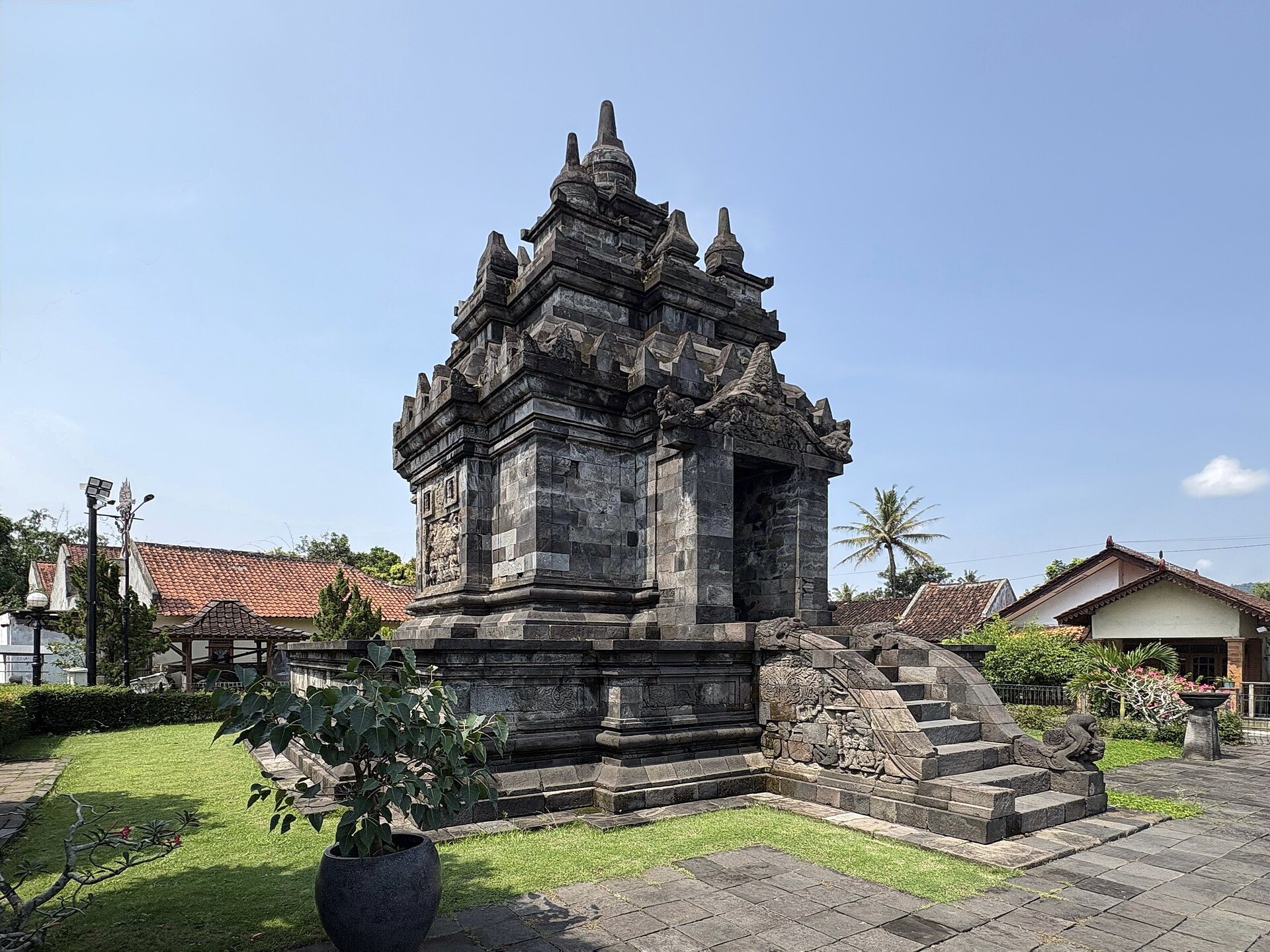
Pawon is a compact stone temple facing west, with a slight northwestern or west-northwestern orientation. It stands on a square platform measuring approximately 9.3 metres from east to west and 9.4 metres from north to south. The platform is about 1.5 metres high, while the temple wall body forms a projecting and recessed square approximately 5.5 metres on each side.
Chamber and Exterior Form
The square inner chamber, or cella, measures about 2.6 metres on each side. It is now empty, although a square basin or square structure occupies its centre and the chamber probably once held a bodhisattva, a Buddhist figure who postpones final liberation to aid other beings. A pair of small windows high in the walls was probably intended to provide ventilation.
Reliefs and Entrance Decoration
Entrance and Protective Figures
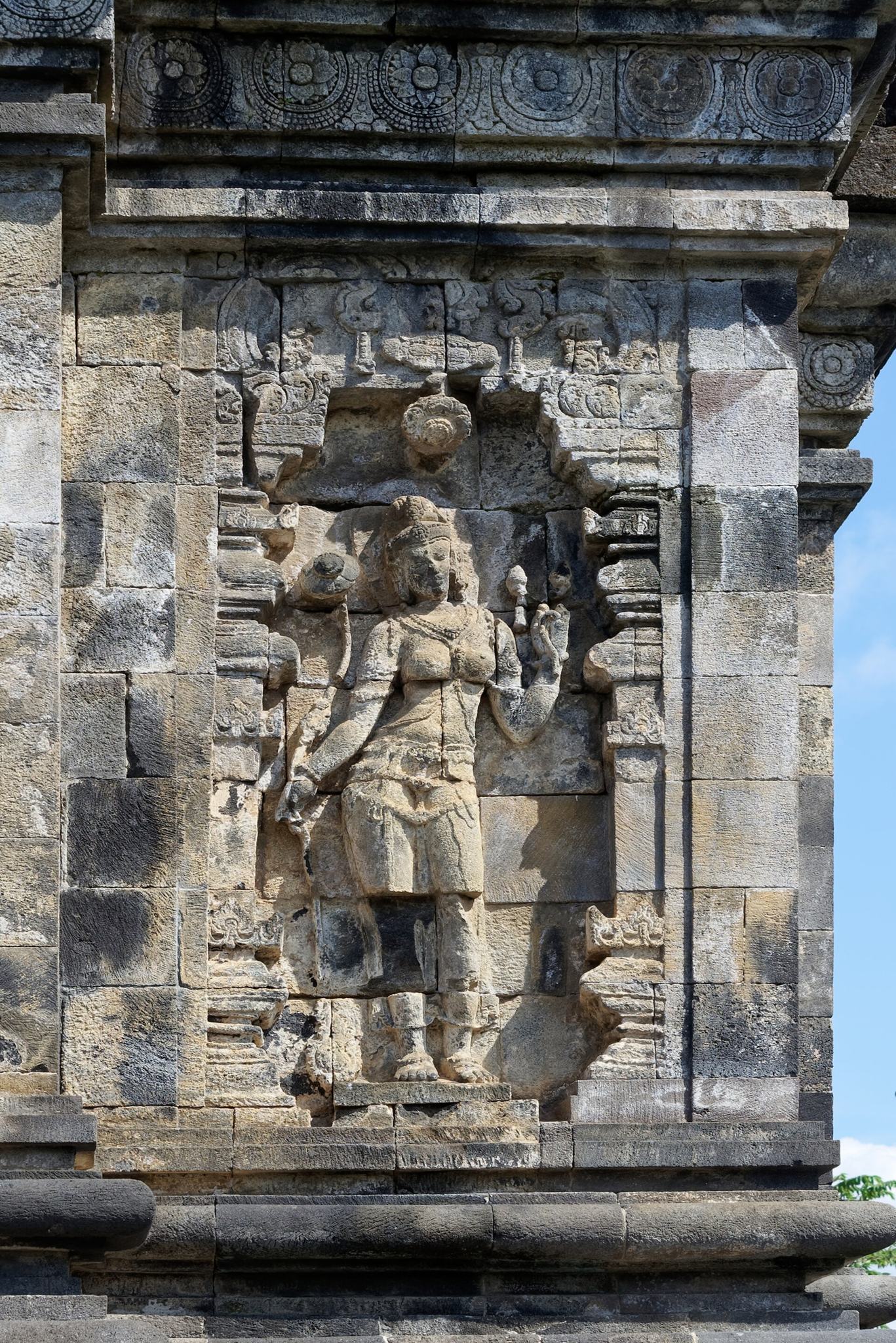
The western entrance and the sides of the staircase carry Kala-Makara decoration, a Javanese architectural combination of the mythical Kala face and Makara motifs. The outer walls contain reliefs of Kubera, a deity associated with wealth and treasure, along with Hariti, a protective deity associated with motherhood and children, bodhisattvas, and Tara, a female Buddhist savior figure. One of the two Kubera images beside the entrance has been lost.
Wish-Fulfilling Tree
Other wall reliefs show a kalpataru, or wish-fulfilling tree, beneath which stand three treasure vessels. Gandharvas and apsarases fly above the tree, while kinnara and kinnari figures appear below it. The arrangement combines images of wealth, protection, and Buddhist spiritual beings within the temple’s exterior sculptural program.
Roof and Architectural Style
The roof is crowned by five small stupas, Buddhist monuments or architectural reliquaries, together with four smaller ratna ornaments, which are jewel-like finials or tower decorations. Its symmetrical and balanced decoration has led to the descriptive nickname “the jewel of Javanese temple architecture.” Pawon’s compact proportions contrast with the tall, slender style associated with later East Javanese temples of the Singhasari and Majapahit periods. The temple is traditionally attributed to Gunadharma, the architect associated with Pawon and other major Buddhist monuments in Central Java.