Geonwolleung: The First Royal Tomb of the Joseon Dynasty
Site at a Glance
- Rating
- 4.6
- Popularity
- Low
- Country
- South Korea
- Primary era
- Medieval
- External website
- Open
- Eras represented
- Medieval
- Civilizations
- Joseon
- Site type
- Burial
- Remains
- Tomb
On this page6 sections
History
Geonwolleung is the tomb of Taejo, founder and first monarch of the Joseon dynasty, in Inchang-dong, Guri, South Korea. Created on September 9, 1408, during the eighth year of the reign of Taejo’s successor, King Taejong, it is regarded as the first royal tomb of the Joseon dynasty, which ruled Korea from 1392 to 1897.
Foundation under King Taejong
Taejo, whose personal name was Yi Seong-gye, died on May 24, 1408, at the age of 74. His burial was treated as a state undertaking because he had founded the new dynasty. Taejong therefore ordered geomancers and ministers familiar with pungsu, a traditional method of choosing and arranging places according to terrain and environmental forces, to search for a suitable site within 100 ri of Hanyang.
Ha Ryun recommended a location at Geomam in Yangju, now on the foothills of Geomamsan in present-day Guri. He had received information about the site from Kim In-gwi, a supernumerary assistant state councillor. Taejong then commissioned Park Ja-cheong to build the royal tomb, and approximately 6,000 people were mobilized for the work.
The Office of Astronomy proposed that the burial chamber should be made of stone. Taejo’s coffin was placed there on September 9, 1408, after which the tomb received the name Geonwolleung. The decision established a practice that shaped royal burial construction for generations, since stone burial chambers remained standard for Joseon royal tombs until the reign of King Yejong in the late fifteenth century.
Memorial traditions and the royal-tomb complex
A historical tradition connects Geonwolleung with Taejo’s wishes concerning his burial place. A popular tale says that he wanted to be buried beside Queen Sindeok at Jeongneung, but Taejong’s hostility toward his second queen consort made that arrangement unlikely. The same tale relates that Taejo instructed that he should instead be buried in Hamhung, where his ancestors lay. Taejong is said to have reached a compromise by bringing soil and silver grass from Hamhung for the burial mound. This allowed ancestral rites to remain near Hanyang while preserving an association with Taejo’s stated wishes.
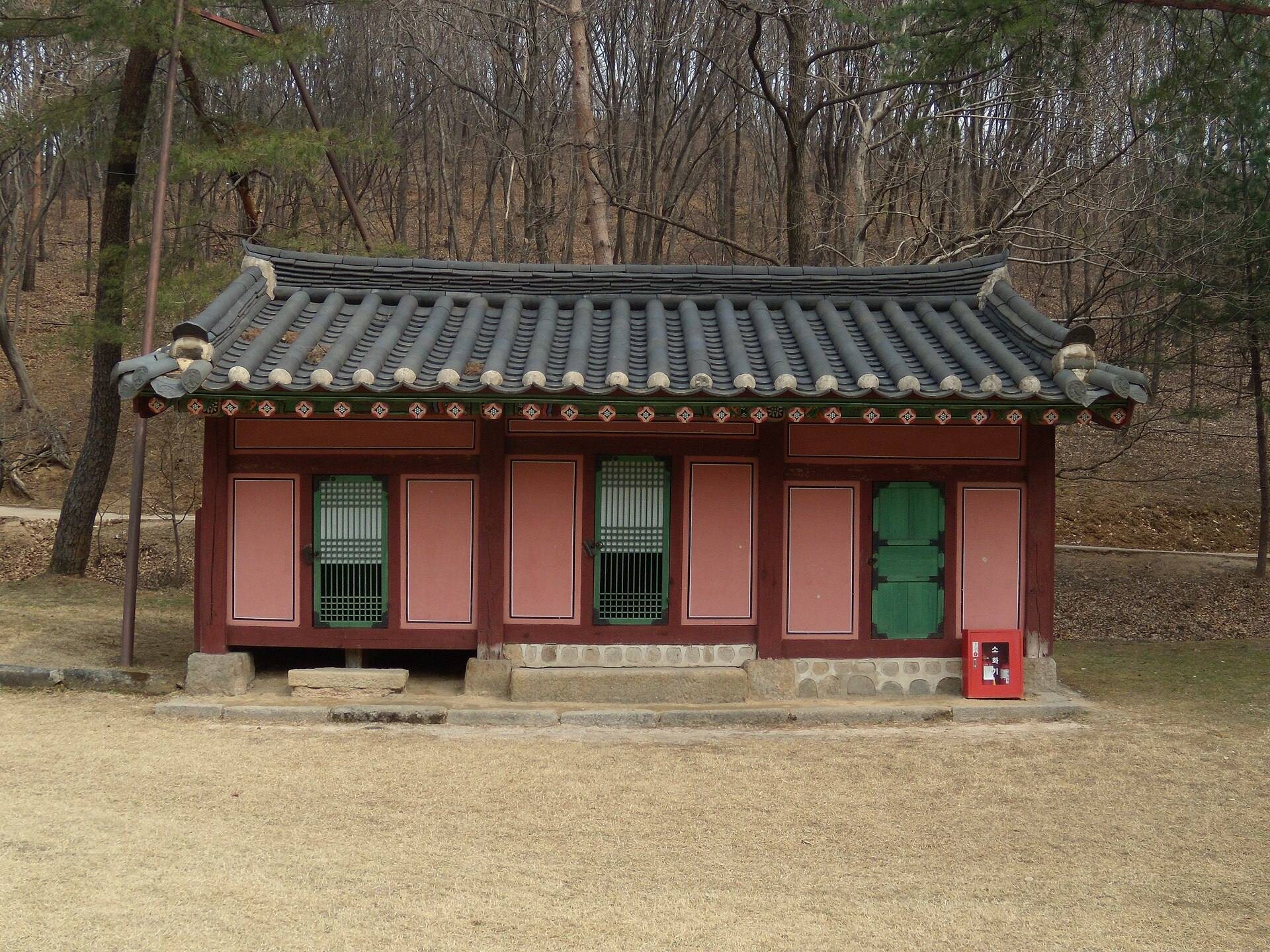
Geonwolleung later became the centre of a larger royal burial area. Eight additional royal tombs were established nearby, forming the Donggureung royal-tomb complex. Gaegyeongsa served as Geonwolleung’s memorial temple, an associated Buddhist institution responsible for rites and memorial observances, and was placed under the Jogye Order. Little trace of the temple remains today.
Geonwolleung was designated Korean Historic Site No. 193 on May 26, 1970.
Remains
Geonwolleung occupies a designated area of approximately 1,969,675 square metres at the foot of Geomamsan. Its early Joseon royal-tomb design drew substantially on the organized layout of Goryeo royal tombs, especially the Hyeonjeongneung complex associated with King Gongmin, the fourteenth-century ruler of Goryeo, the dynasty that preceded Joseon. Geonwolleung adapted that earlier model through new arrangements and forms of stonework, including a curved wall around the burial mound, a feature newly adopted during the Joseon period.
The burial mound and protective enclosure
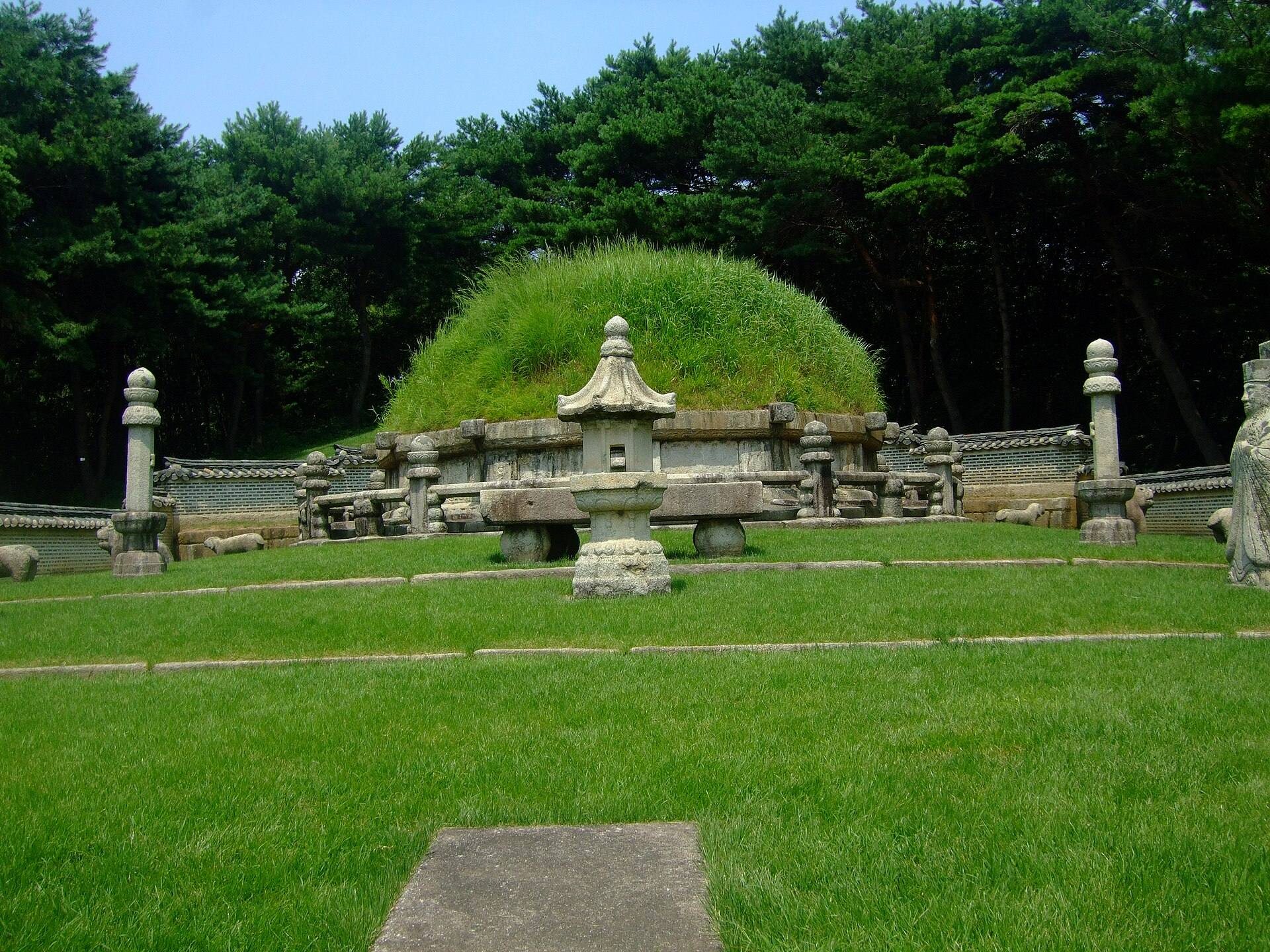
Unlike royal tombs covered with green grass, Geonwolleung’s mound is covered with silver grass. This unusual surface forms part of the tradition linking the tomb with Taejo’s supposed wish to be buried in Hamhung. Screen stones, meaning stone slabs that protectively enclose a burial mound, surround the mound. Their face stones carry carvings of the twelve zodiac guardians, protective figures associated with the traditional zodiac signs, together with cloud patterns.
Stone sculptures and ritual features
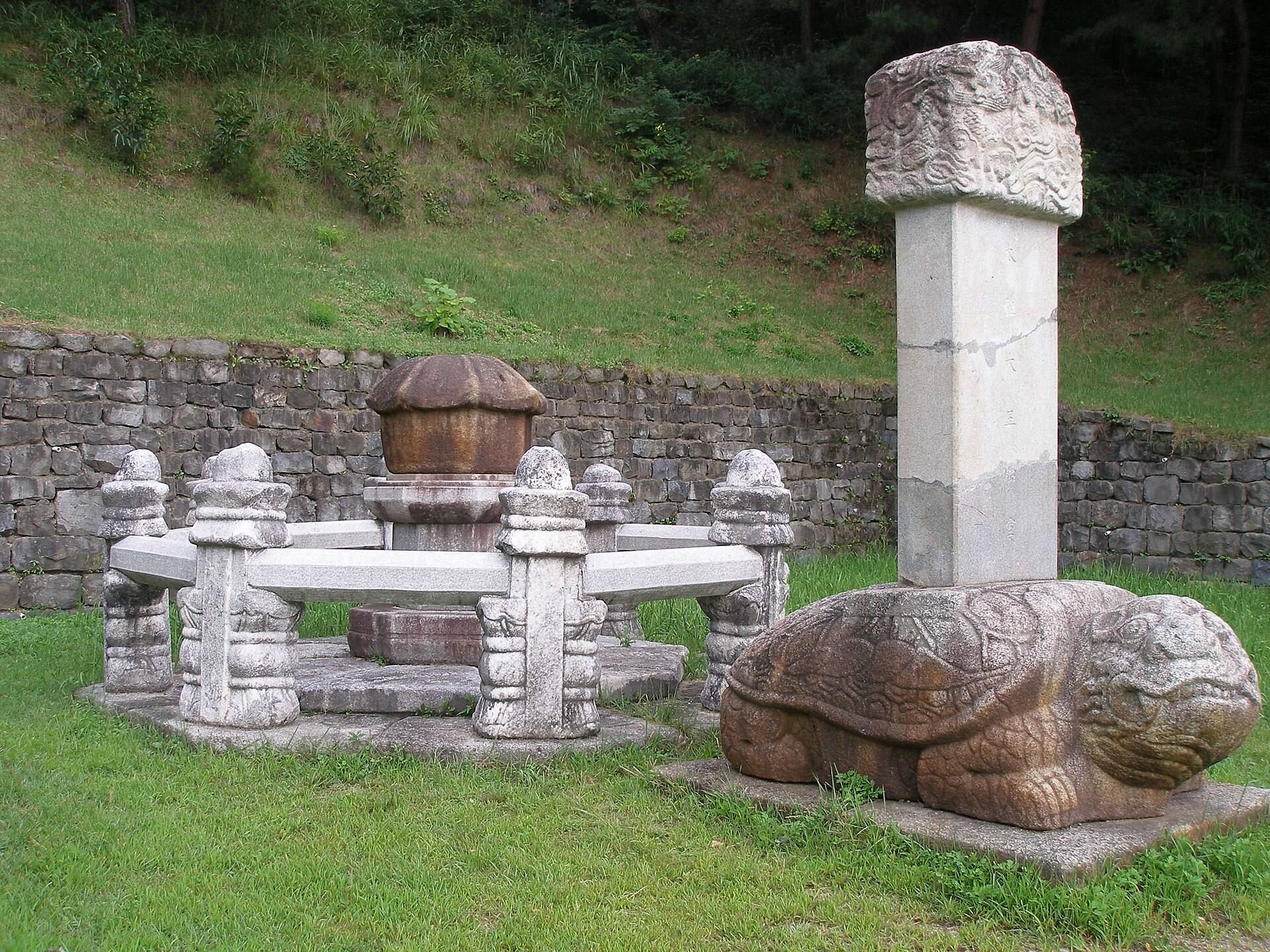
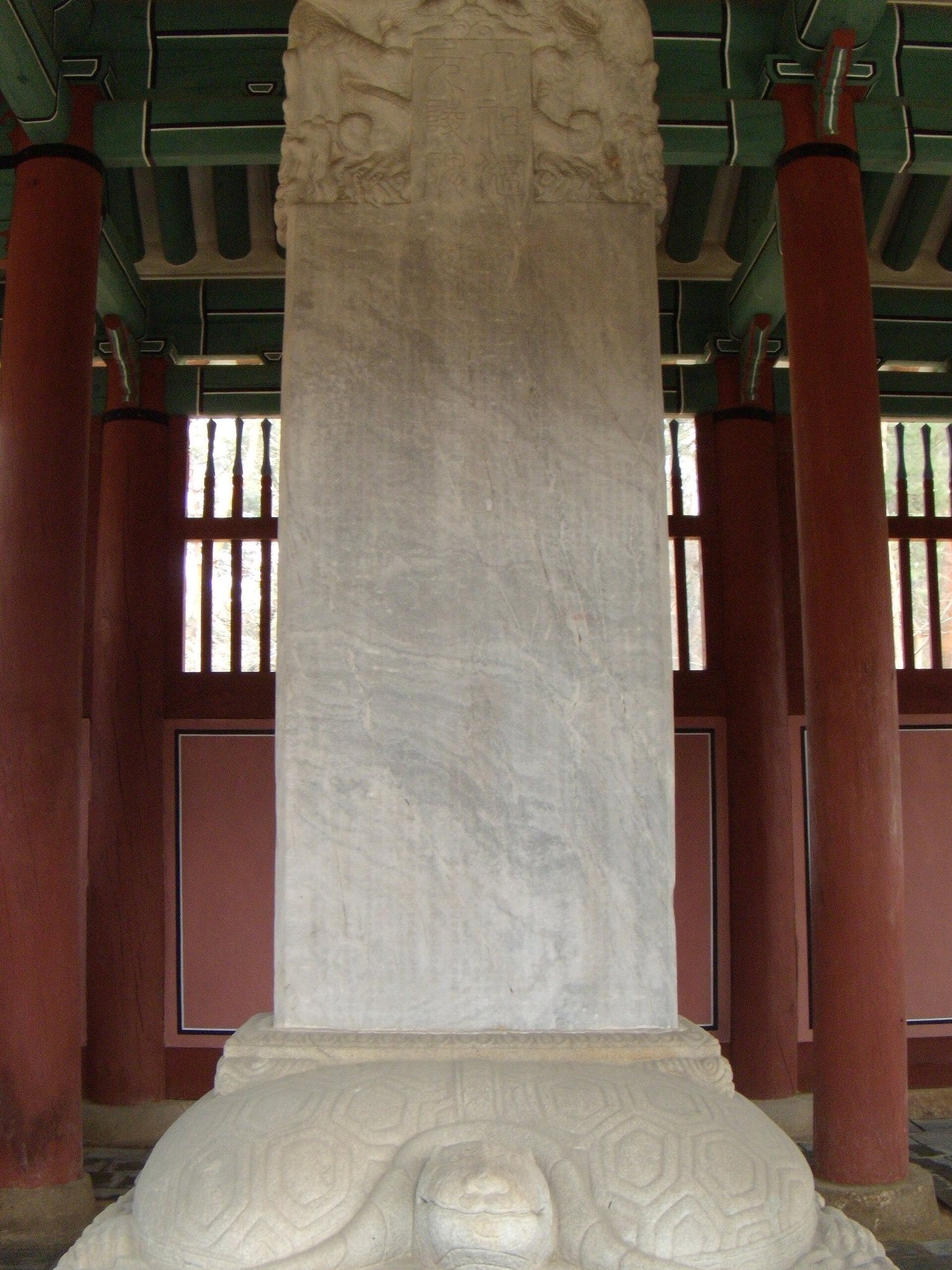
The stone sculptures around the tomb use forms associated with the late Southern Song period, the Chinese dynasty that ruled from 1127 to 1279. At the same time, the arrangement of the stone tiger and stone sheep, the stone lantern, and the railing posts developed distinctive Joseon-period forms. A stone lantern provided ritual and commemorative light, while the railing posts formed part of the stone boundary around the tomb. These arrangements continued until royal-tomb forms were systematized through the Five Rites of the State.
The corner stones adjoining the screen stones are carved with the yeongjeo and yeongtak, Buddhist protective implements represented as motifs. Their design continues a pattern used at King Gongmin’s tomb. After the compilation of the Five Rites of the State, cloud patterns replaced these Buddhist motifs on corner stones. Comparable symbols had also been carved at Jeongneung and can still be seen on guardian stones reused at Gwangtonggyo, a historic bridge in Seoul.