Cheonjeon-ri Petroglyphs: A Multiperiod Rock-Art Site in South Korea
Site at a Glance
- Rating
- 4.6
- Popularity
- Low
- Country
- South Korea
- Primary era
- Medieval
- External website
- Open
- Eras represented
- Stone Age, Bronze Age, Classical, Medieval
- Civilizations
- Silla
- Site type
- Civic
- Remains
- Rock Art
On this page12 sections
History
The Cheonjeon-ri petroglyphs are an archaeological rock-art site beside the Daegokcheon in Ulsan, South Korea. Created over many generations from approximately 5000 BC through the Silla period and possibly into the ninth century, the carvings preserve changing artistic practices and evidence for life, institutions, and royal connections in Silla.
From the Neolithic to the Bronze Age
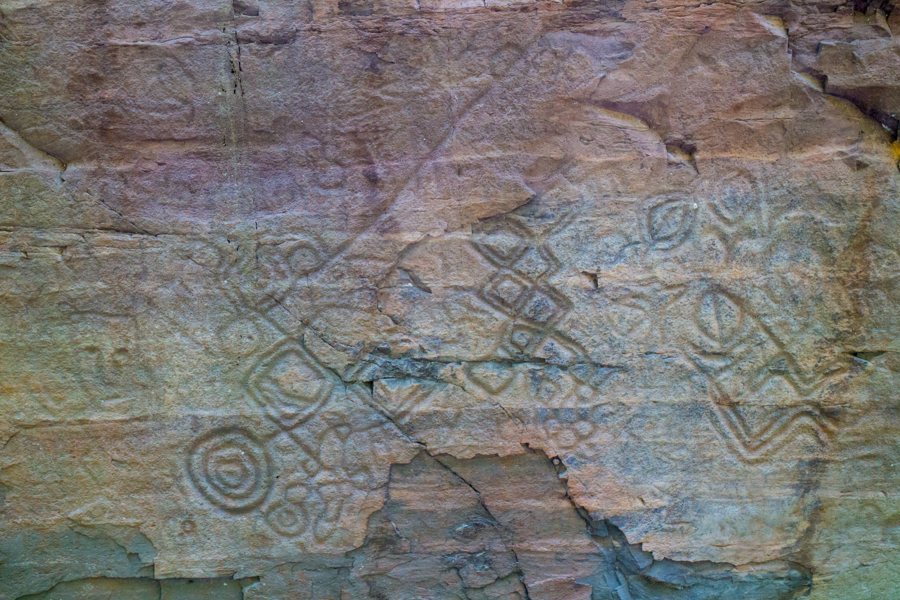
The oldest imagery belongs mainly to the Neolithic period. It includes people, animals, hunting scenes, and fish, while later Bronze Age artists added abstract geometric motifs. These successive phases show that the rock surface remained meaningful over a very long period, with carvings from different eras sometimes placed over one another.
Silla-period additions
During the Silla period, artists used metal tools to create detailed human figures, processions, boats, dragons, and animals. Silla was a Korean kingdom that later unified much of the Korean Peninsula and lasted until 935. The site’s inscriptions and figurative scenes provide evidence for aspects of its society, official institutions, royal setting, and activities.
The inscriptions include references to Hwarang, elite Silla youth organizations associated with aristocratic society, training, and service to the kingdom. The earliest inscription that gives a date was made in 453, while the latest dated inscription was made in 838. One text, known as the original inscription, calls the location the “Valley of Inscribed Rocks” and indicates that Silla artists recognized earlier remains and added their work in unused areas of the stone.
Discovery and conservation
A survey team from the Dongguk University Museum discovered the site in December 1970. The nearby Bangudae petroglyphs were found the following year, and both sites were later added to South Korea’s national heritage system. Cheonjeon-ri became National Treasure No. 147 in 1973, entered South Korea’s UNESCO Tentative List in 2010, and was inscribed in 2025 as part of the same UNESCO World Heritage cultural property as the Bangudae petroglyphs.
Construction of the Sayeon Dam between 1962 and 1965 raised water levels approximately 5 km downstream and flooded the Bangudae site, particularly during rainy summers. A second dam, built in 2005 about 1.7 km north of Cheonjeon-ri, reduced the flooding and restored the area’s earlier topography. Graffiti recorded on the rock surface in 2003 and again in 2011 led to conservation work, including the removal of marks attributed to a high-school student.
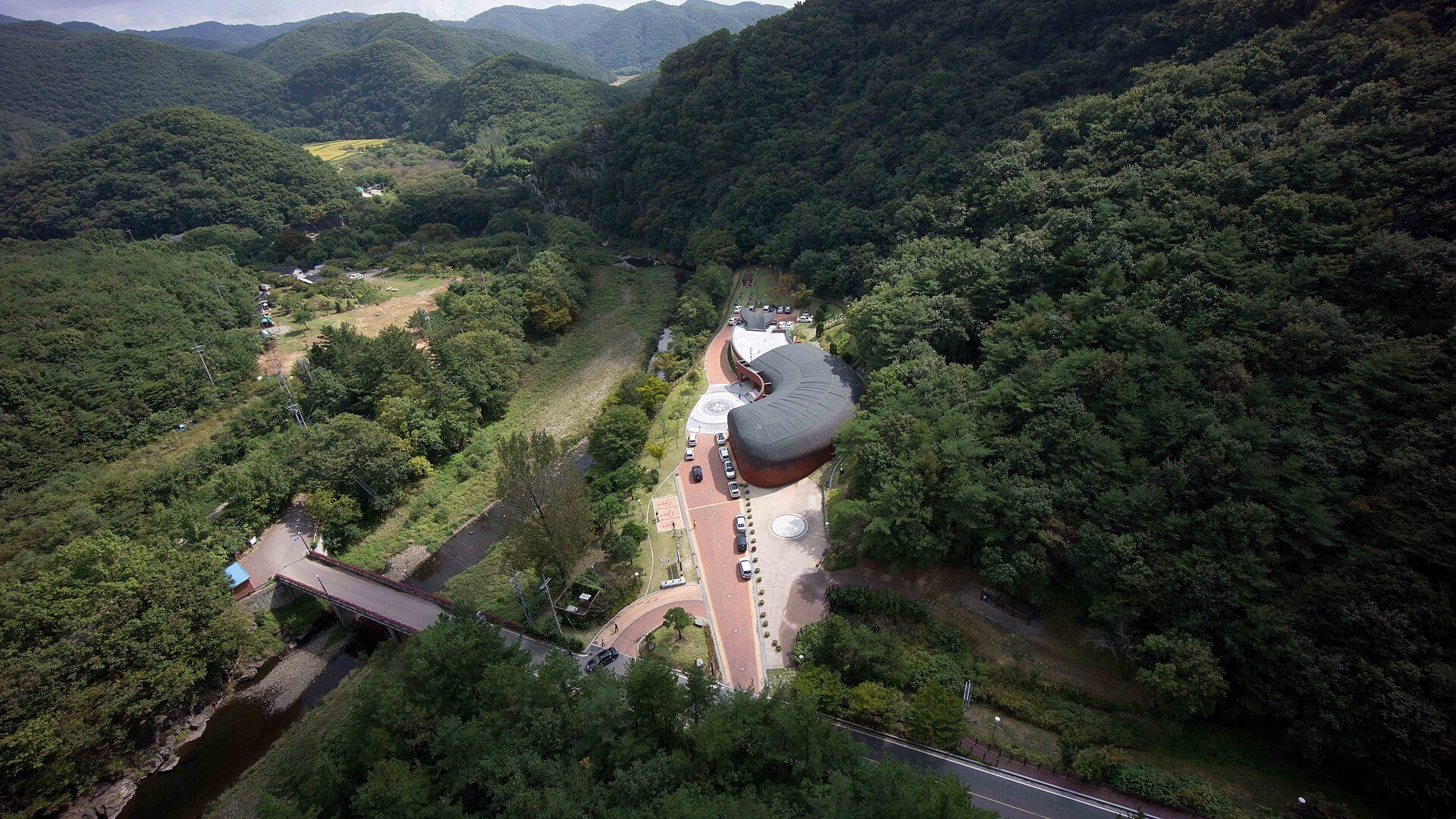
The Ulsan Petroglyph Museum opened near the site in 2008. Its whale-shaped building was designed in connection with the petroglyph heritage of the region.
Remains
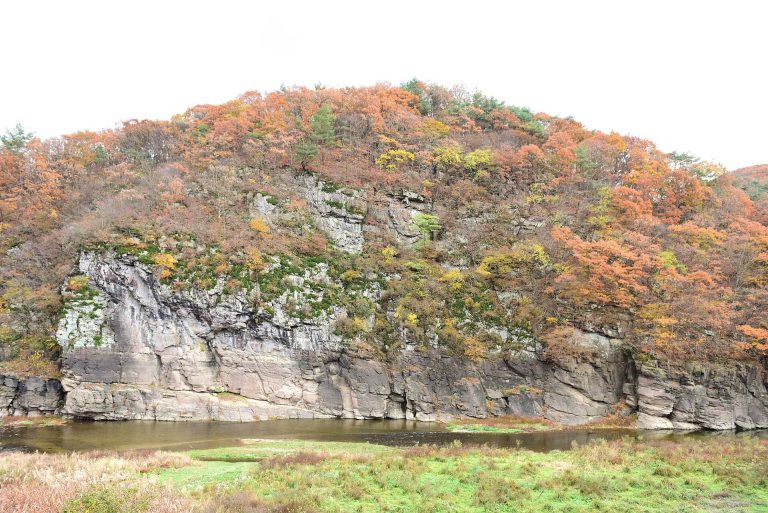
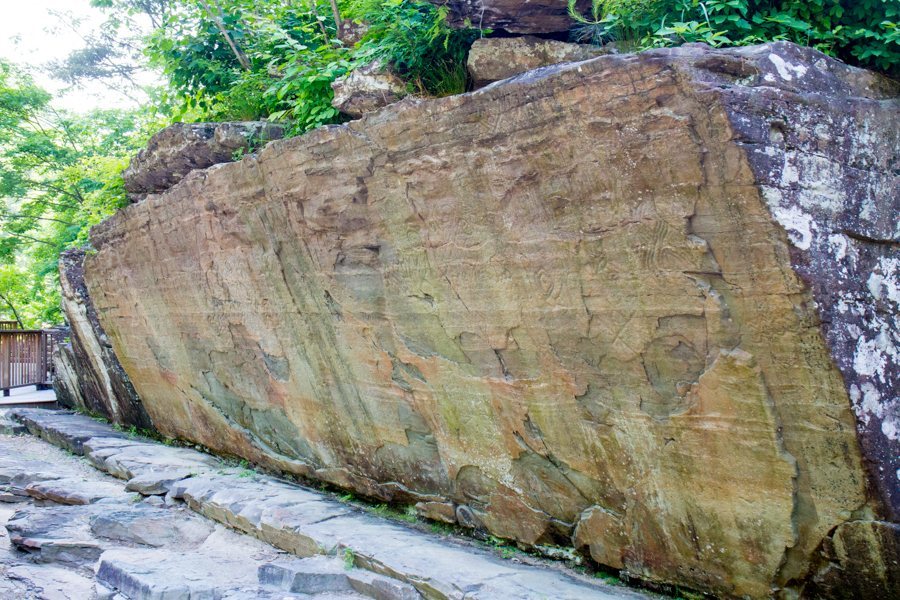
The carvings occupy a rock surface beside the water on the right bank of the Daegokcheon, within wooded hills approximately 200 to 300 m above sea level and about 25 km from the eastern coast. The principal panel faces southeast, measures about 9.5 m across and 2.7 m high, and slopes downward at roughly 15 degrees. Four smaller rocks to its right also carry carvings. The site contains 625 identified signs, including images and inscriptions from the Neolithic, Bronze Age, and Silla periods.
Rock panel and early imagery
Neolithic carvings
Neolithic imagery is concentrated mainly in the upper-left portion of the main panel. People, deer with exceptionally large antlers, snakes, birds, fish, and other animals appear alongside hunting scenes involving bows and arrows. Some fish have sharply pointed fins resembling sharks. These early figures were made with stone tools using broad pecking, which removes the interior of a shape, and outline pecking, which follows its contour.
Bronze Age motifs
Bronze Age designs occupy the upper, right, and central areas of the rock. Diamonds, circles, concentric circles, spirals, wavy lines, and related geometric patterns form a distinct group of abstract imagery. Some can be compared with designs found on Korean Bronze Age dolmens, prehistoric stone burial monuments, and objects such as mirrors. Stone tools were used for these carvings as well.
Silla-period carvings
Figures and scenes
The lower part of the main panel contains Silla-period images made with metal tools. Detailed human figures and processions are joined by boats, dragons, and animals identified or tentatively identified as horses and deer. The long sequence of additions places these later scenes within a rock surface already marked by earlier communities.
Inscriptions
The Silla-period inscriptions include 127 Chinese logograms, written signs that represent words or meaningful units rather than individual sounds. Some are enclosed by rectangular incisions, making them resemble columns in a book. The wider inscription group may originally have contained more than 800 characters, while approximately 300 remain legible after weathering and later damage. The surviving texts include names, dates, references to Hwarang groups, official titles, the king, and the royal family.
Geology and adjacent features
The panel belongs to the Daegu Formation, a Mesozoic rock unit within the Gyeongsang Supergroup of southeastern Korea. It consists of massive, poorly bedded shale changed by heat into hornfels, a hard altered rock. Its smectite clay content causes substantial expansion when wet, making the surface susceptible to weathering. The panel’s sheltered position, restricted sunlight, and downward slope helped protect the carvings from natural deterioration.
The Cheonjeon-ri dinosaur footprints lie directly beside the petroglyph site. Exposed Daegu Formation rock in the bed of the Daegokcheon, across from the carvings, also contains footprints.