Huacas del Sol y de la Luna: Moche Political and Religious Sanctuary
Site at a Glance
- Rating
- 4.8
- Popularity
- Very Low
- Country
- Peru
- Primary era
- Classical
- Eras represented
- Classical, Medieval
- Civilizations
- Moche
- Site type
- Religious
- Remains
- Sanctuary
On this page8 sections
History
Huacas del Sol y de la Luna is a Moche sanctuary and former cultural capital in the Moche Valley of northern Peru, about 5 km south of Trujillo. Built by the Moche, a pre-Columbian society known for monumental adobe architecture and complex ritual practices, the complex flourished from the 1st century BC to the 9th century AD.
A political and religious center
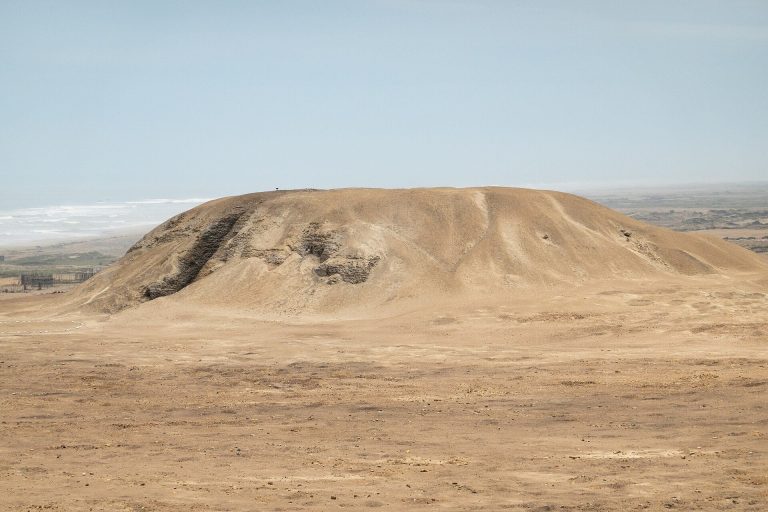
The complex probably combined political, administrative, and religious functions. Huaca del Sol is generally interpreted as the political and administrative center, while Huaca de la Luna is understood as the religious center. The urban settlement between them contained avenues, dwellings, lanes, plazas, and corridors associated with the middle and upper classes. Huaca del Sol also served as a residence for Moche high society, although the precise functions of the two principal monuments remain interpretive rather than certain.
Ritual practice and later damage
Moche sacrificial ceremonies involved defeated warriors being taken to the temple. The blood obtained through sacrifice symbolized fertility and the renewal of power. The surrounding urban population could observe the preparation of the warriors from a large courtyard, while the sacrifice itself was restricted to high-ranking authorities and was also described as a private ritual among priests.
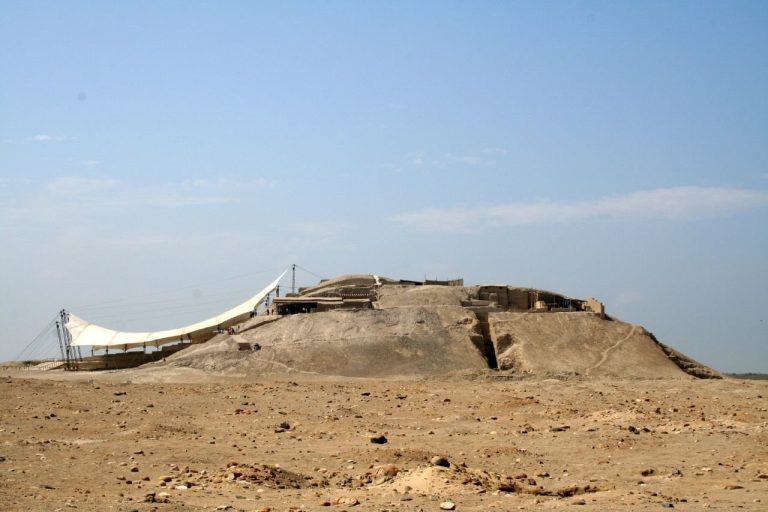
The complex was abandoned in the 9th century AD. Huaca del Sol was later partially destroyed when the Spanish diverted the course of the Moche River, damaging a substantial part of the monument. Archaeological work at Huaca del Sol has remained more limited than at Huaca de la Luna because of insufficient funding.
Remains
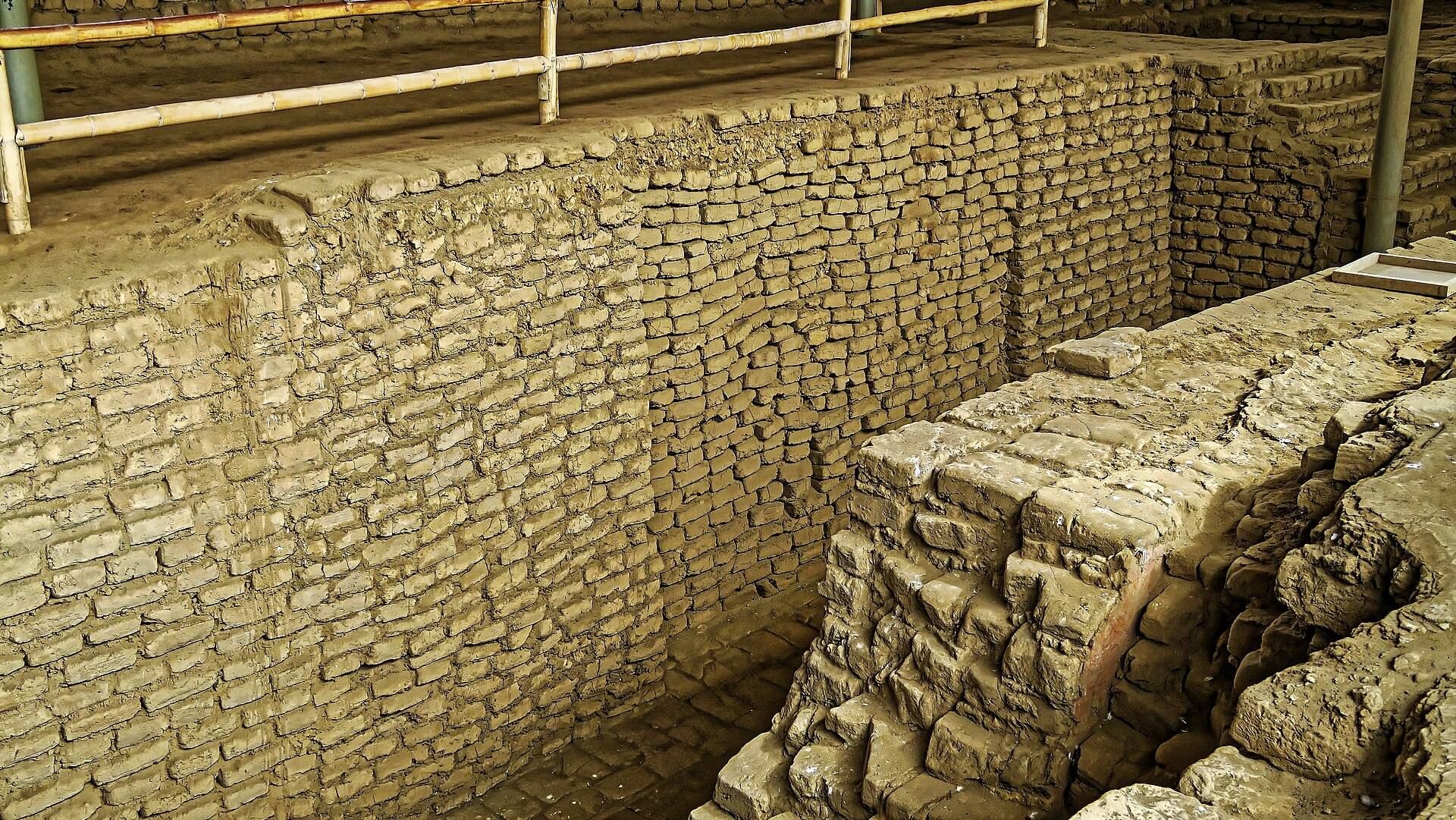
Huacas del Sol y de la Luna consists of adobe monuments and pyramids set around an urban core. The two principal huacas, or sacred monumental places in the Andean tradition, stand about 0.5 km apart, with the settlement and ceremonial spaces between them. Their adobe construction used earth or mud formed into bricks and dried before building.
Monumental sanctuaries
Huaca del Sol
Huaca del Sol is a stepped pyramid about 43 m high, with five large terraces. Its largest terrace measures about 80 m in length, and the monument stands on foundations approximately 228 m long and 136 m wide. An approximately 18 m-high platform supports a pyramid about 23 m high, with a square base measuring roughly 103 m on each side. Around 140 million adobe bricks were used in its construction. The monument was partly damaged by the later diversion of the Moche River.
Huaca de la Luna
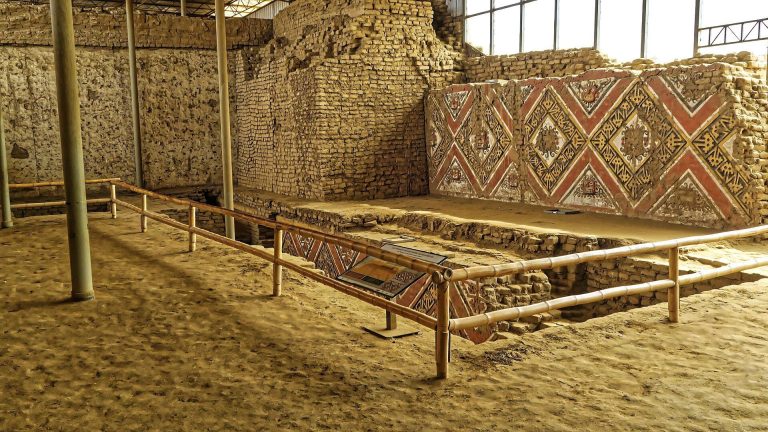
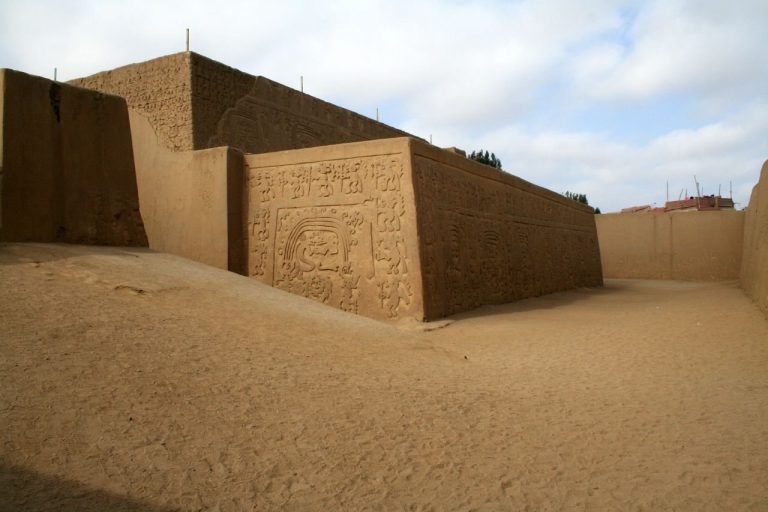
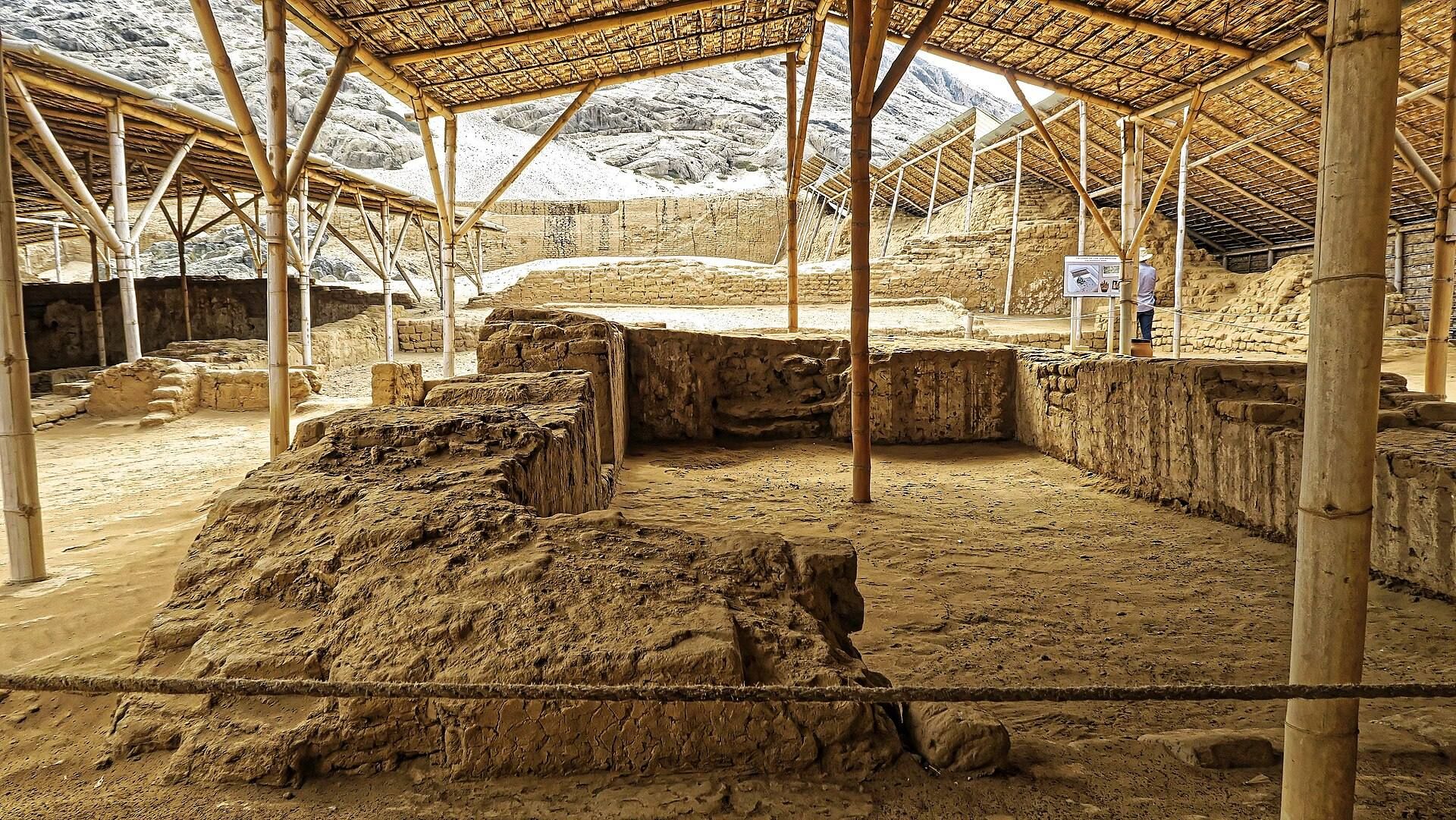
Huaca de la Luna has a square base measuring about 87 m on each side and rises approximately 21 m. It consists of superimposed temples built during different periods, preserving successive stages of construction. Rooms decorated with human figures stood on the upper platform. The monument retains mural paintings in white, black, red, blue, and yellow, with pigments obtained from minerals. Its reliefs depict the Moche deity Ai Apaec, also called the Decapitator God.
The facade includes figures associated with mountain divinity, belts ending in condor heads, foxes carrying trophy heads, fishermen, a serpent, enormous crabs with ceremonial knives, human figures holding hands, and ritual priests. These images relate to the cult of water and agricultural fertility. On a ceremonial altar in the last temple constructed, the remains of 40 sacrificed warriors were found. Moche portrait vessels, gold and silver figures, and representations of ritual and battle scenes further connect the complex with ceremonies in which defeated warriors were led to the temple.
Courtyards and urban settlement
The complex includes ceremonial courtyards and plazas more than 1,500 years old. One courtyard measures approximately 10,000 square meters. Between the two huacas, the urban core comprised large avenues, dwellings, lanes, plazas, and corridors, forming the settlement associated with the community’s middle and upper classes.