Necropolis of Kerkouane: A Punic Cemetery in Tunisia
Site at a Glance
- Rating
- 4.5
- Popularity
- Very Low
- Country
- Tunisia
- Primary era
- Classical
- Eras represented
- Classical
- Civilizations
- Carthaginian
- Site type
- Burial
- Remains
- Necropolis
On this page7 sections
History
The Necropolis of Kerkouane is an ancient Punic cemetery at Kerkouane in Tunisia, associated with the nearby city whose remains and burial ground were included on the UNESCO World Heritage List in 1985. Together, they are recognized as the only surviving example of a Phoenicio-Punic city, a cultural tradition that developed from Phoenician settlements and later Punic societies in the western Mediterranean.
Discovery and excavation
A local Islamic schoolteacher discovered the cemetery in 1929 after finding substantial possessions buried in its tombs. He sold valuable objects, including jewellery, ceramics, and scarab gems, to treasure hunters and collectors. Other funerary objects and large pottery vessels were left behind or destroyed because they were too heavy to remove. The discovery came to wider official attention only after an investigating law officer questioned the teacher, who then revealed the source of his wealth.
Historians and archaeologists later excavated the site. Much of the recovered material consisted of objects left after the first looting and later grave robbing, although the excavations also produced several important finds. Shortly after the discovery, the necropolis’s most valuable find, a carved sarcophagus, was taken to Zurich in Switzerland for treatment. It is now held in the Kerkouane site museum.
Remains
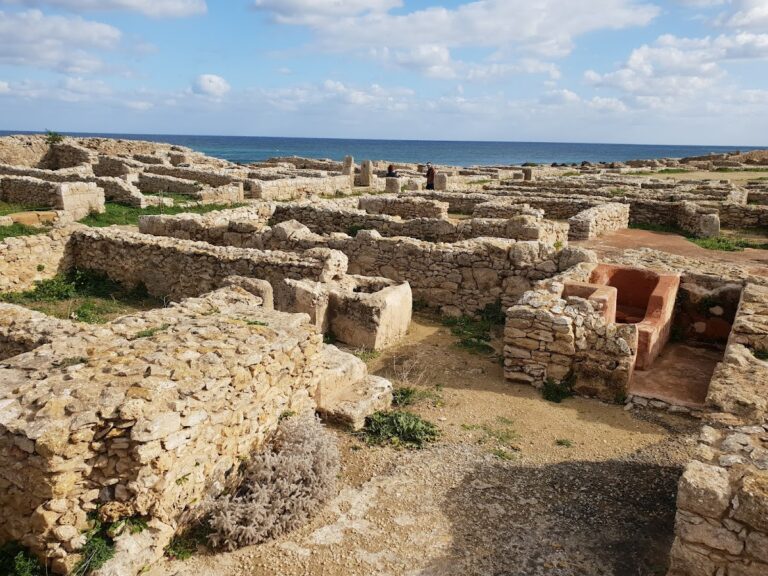
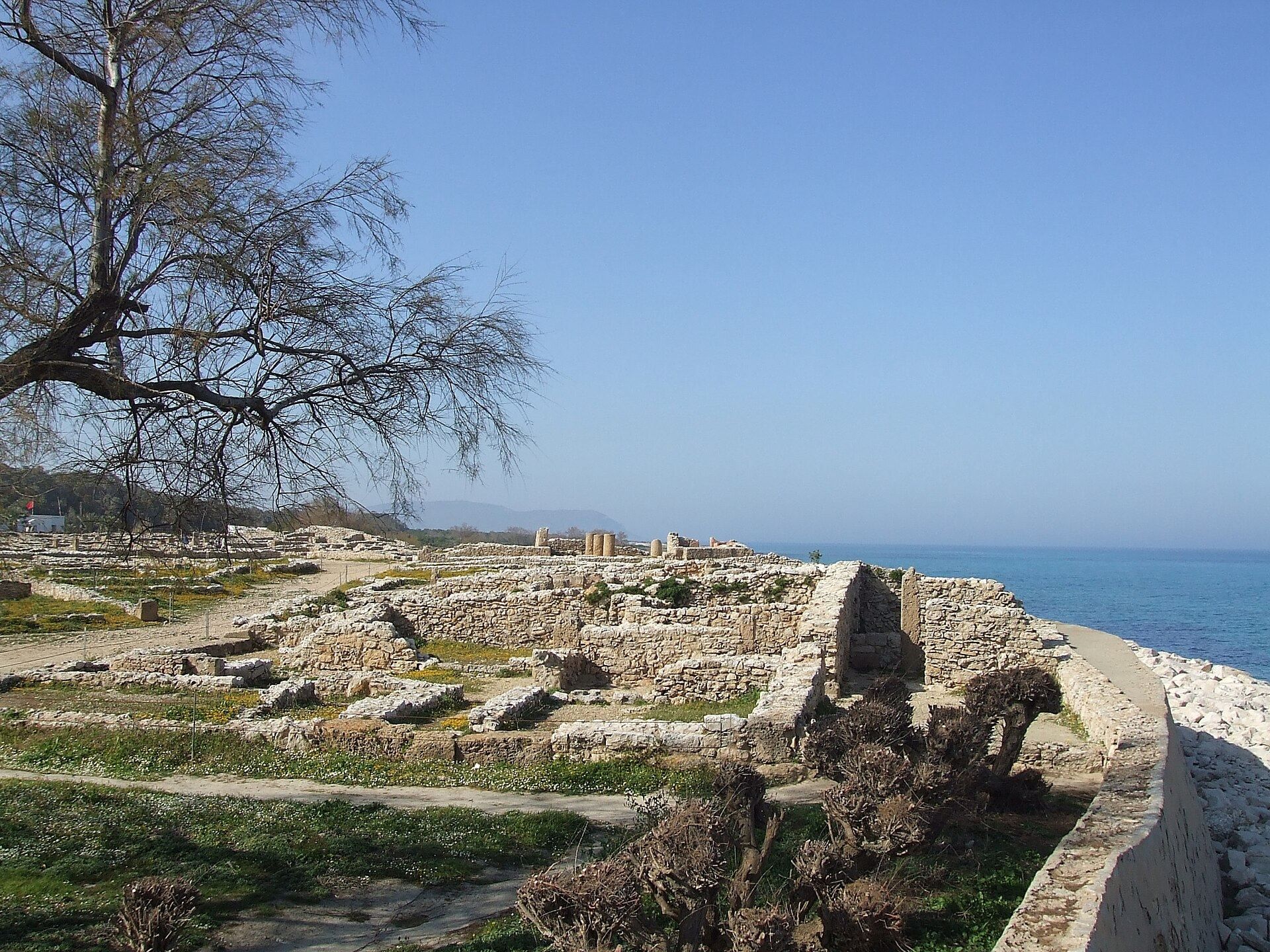
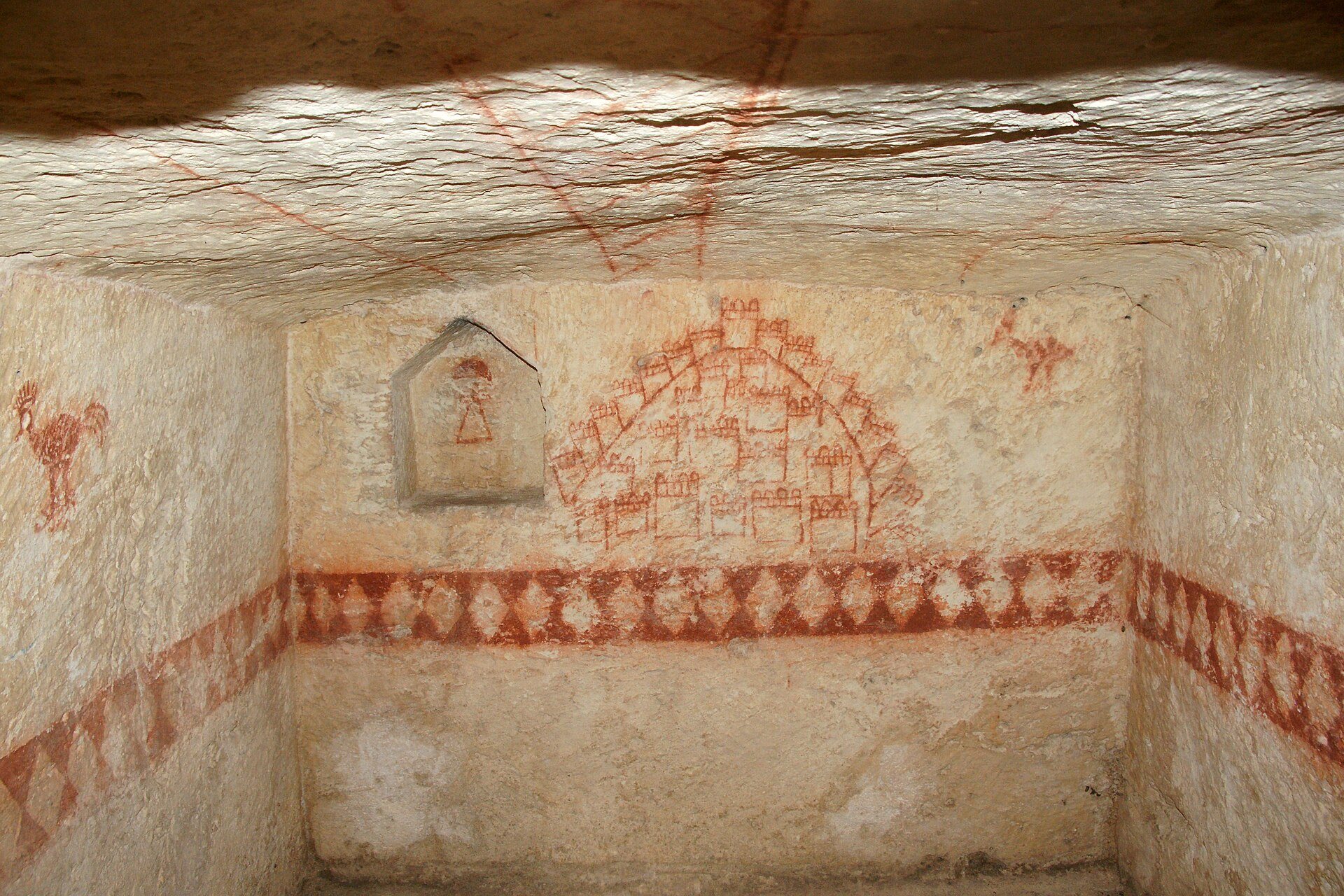
The necropolis lies about 1.5 kilometres northwest of the Punic city and occupies a coastal hill. Its remains comprise a series of vaulted tombs, four principal chamber tombs, and a surrounding burial area. Excavated objects provide evidence of funerary practice and include bones, eggs, altars, amulets, bronze coins, razors, toiletry articles, fragments of obsidian and basalt, and earrings.
Tombs and funerary finds
Principal chamber tombs
The four principal chamber tombs form the main architectural group within the cemetery. They belong to the wider arrangement of vaults set into the coastal hill and are accompanied by the surrounding burial area. Their contents included objects placed with the dead, among them an ancient Greek signet ring and a jasper scarab showing an Egyptian deity in animal form.
Other burial objects
The cemetery also yielded a group of rare perfume flasks later claimed by the Fragonard Museum in Grasse, France. Other surviving finds include bronze coins, personal grooming implements, amulets, jewellery, altar objects, pottery, and fragments of obsidian and basalt. These materials reflect the range of goods placed in or associated with the tombs.
Carved sarcophagus
The exceptional sarcophagus is painted red and has a lid carved in the form of a woman wearing a robe and a polos, a tall sacred headdress associated in ancient images with certain female deities and revered figures. The carved figure is covered with red, blue, and yellow plaster and remains intact apart from the feet. She is identified either as Astarte, a major ancient Near Eastern goddess associated with protection, fertility, sexuality, and care for the dead, or as one of her worshippers. The carving is regarded as one of the very few surviving examples of Punic wood carving. When news of the discovery became public, the Tunisian press called the figure the “Princess of Kerkouane.”