Huaca Prieta: A Preceramic Settlement and Ceremonial Mound in Peru
Site at a Glance
- Rating
- 3.8
- Popularity
- Very Low
- Country
- Peru
- Primary era
- Stone Age
- Eras represented
- Stone Age, Bronze Age
- Civilizations
- Unclassified
- Site type
- Religious
- Remains
- Sanctuary
On this page14 sections
History
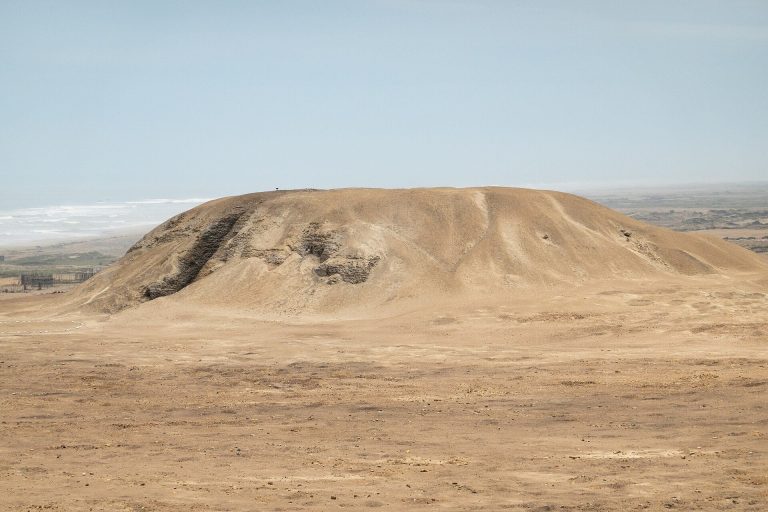
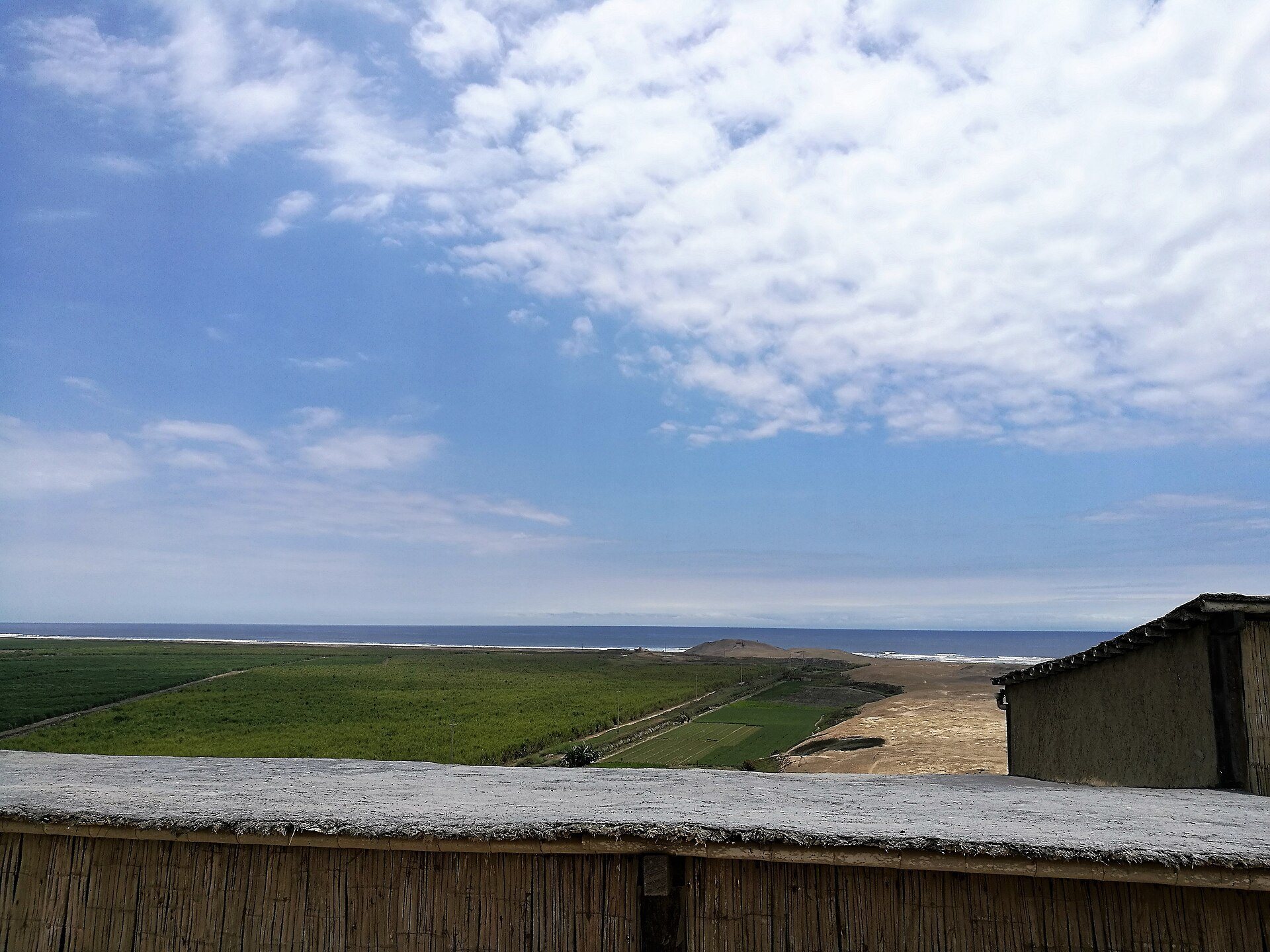
Huaca Prieta is an Andean preceramic settlement and ceremonial mound on the Pacific coast of the Chicama Valley in northern Peru, about 5 kilometers north of the Chicama River mouth and north of Trujillo. The Preceramic period was the stage of Andean prehistory before pottery became widespread, but it included substantial architecture, agriculture, textiles, and ceremonial activity. Huaca Prieta forms part of the El Brujo Archaeological Complex and preserves a long sequence of coastal occupation.
Early occupation and the ceremonial mound
Human presence at Huaca Prieta began intermittently during the Late Pleistocene, about 15,000 years ago. The earliest levels, dating approximately from 15,000 to 8,000 years ago, reflect occasional visits rather than sustained settlement. People probably relied mainly on shoreline gathering and on trapping or clubbing local animals. More continuous occupation developed during the Middle and Late Preceramic periods, approximately 9,000 to 4,500 calibrated years ago.
Construction of the principal mound began about 7,500 calibrated years ago. Huaca Prieta then served both habitation and ceremonial purposes. Its inhabitants fished, gathered shellfish and other shoreline resources, and began cultivating or using plants including cotton, fruits, gourds, squash, peppers, beans, tubers, pallar, achira, and yuca. Their diet also included mollusks, crustaceans, sea lions, and occasionally whales that had stranded on the coast.
Corn cobs from Huaca Prieta and nearby Paredones may date to about 4700 BCE. They include early forms associated with popcorn, chicha, flour, and animal feed. This range of uses has been interpreted as evidence that the Chicama coast participated in a long-distance exchange network extending toward Mexico. Avocado remains from Huaca Prieta may date to perhaps 15,000 years ago, substantially earlier than the previously proposed origin of avocado in Mexico’s Puebla region.
Later use and changing importance
Huaca Prieta’s occupation declined gradually, probably as the local economy became more strongly oriented toward agriculture and the mound lost ceremonial importance. Nearby places, including Paredones and El Brujo, subsequently became more important. Occupation appears to have ended around 4,000 years ago, although upper strata have also produced dates of about 2500 BCE.
A large tsunami damaged Huaca Prieta and the nearby mound now called Monticulo Cupisnique around 850 BCE. The event left a thick deposit of cobbles north of the preceramic mound and occurred between two phases associated with the Cupisnique tradition, a pre-Columbian cultural tradition of Peru’s Pacific coast generally dated to the second millennium BCE.
Archaeological investigation
Junius B. Bird excavated Huaca Prieta in 1946 and 1947, opening three large test pits in or beside the mound. The site was the first in Peru to be investigated with the then-new radiocarbon method. Its early dates established the great antiquity of the Andean Archaic and changed archaeological interpretations of Peru’s early coastal societies.
Further excavations directed by Tom Dillehay and other researchers between 2007 and 2013 examined the lower strata and clarified the earliest occupations and subsistence practices. Huaca Prieta is recognized as part of Peru’s national cultural heritage.
Remains
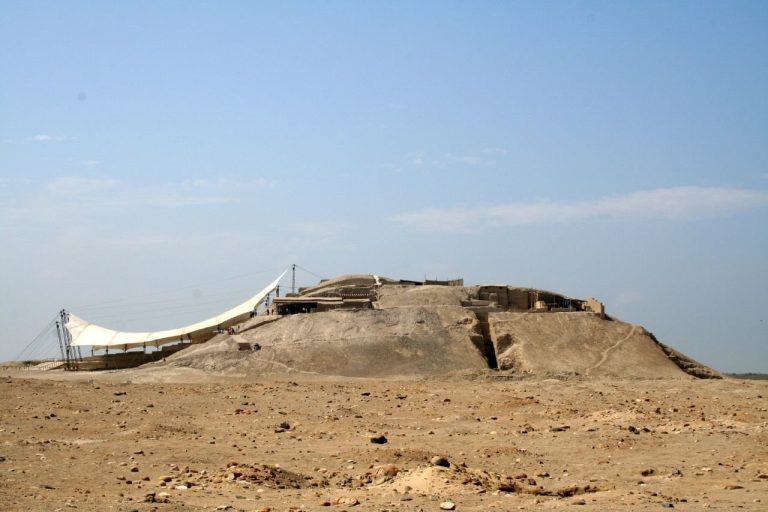
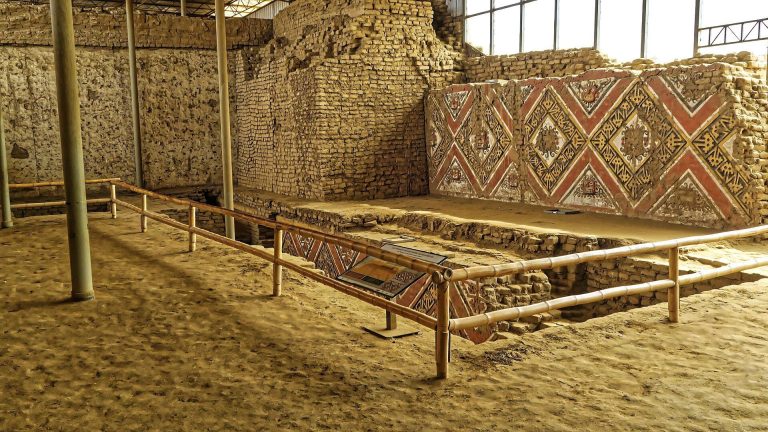
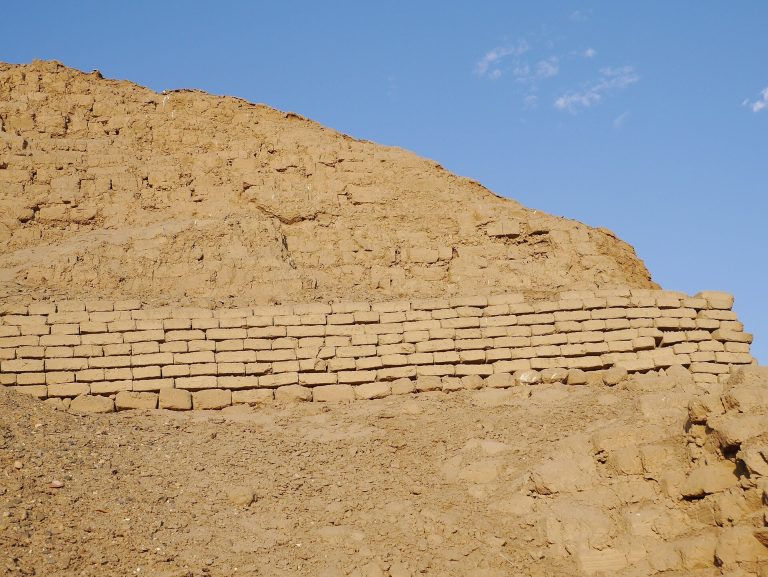
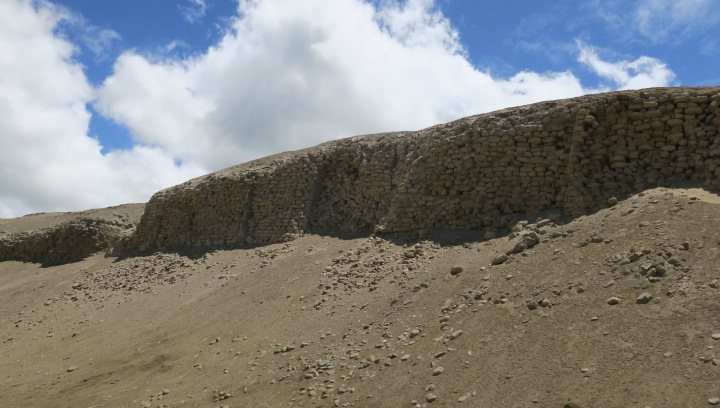
Huaca Prieta’s principal monument is a large constructed mound measuring approximately 138 meters by 62 meters and rising up to 32 meters. Its mass consists of accumulated ash, stones, domestic refuse, textiles, plant remains, shells, and deliberately built architectural horizons. Within it are semi-subterranean and underground spaces, while a separate low mound lies 70 to 170 meters to the north.
Principal mound and internal structures
The main mound
The principal mound combines accumulated occupation debris with formal construction. Ash, stones, shells, food remains, textiles, and plants became incorporated into successive layers, while architectural horizons were deliberately built within the mound. This combination preserves evidence for both everyday settlement and ceremonial activity over a long period.
Subterranean spaces and burials
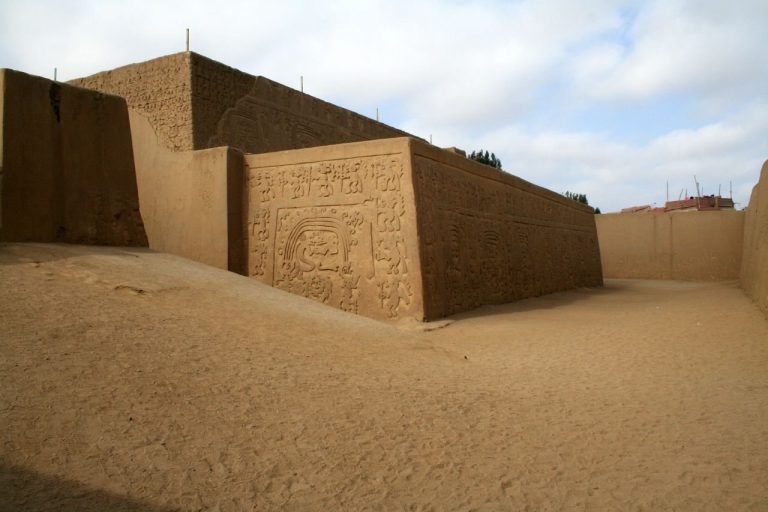
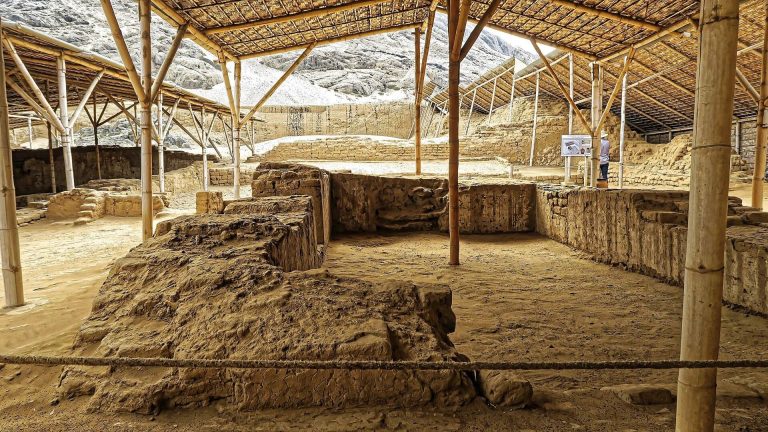
Semi-subterranean and underground structures include square or oval rooms with narrow entrances and stepped access. Builders used river cobbles from the Chicama area, joining them with mixtures that included ash and water, mud, and organic refuse. The purposes of these spaces remain uncertain. Some contained burials, including 33 flexed burials dated to about 2200 BCE and covered with mats made from plant material.
Monticulo Cupisnique
The low mound north of Huaca Prieta, now called Monticulo Cupisnique, contains ruins, refuse, and ceramics associated with the Guañape, Early Cupisnique, and Cupisnique cultures. Its deposits also include the cobbles left by the tsunami that affected the area around 850 BCE.
Tools, fishing equipment, and food remains
Stone and fishing equipment
Excavated stone materials include fish-net weights, flakes, simple pebble tools, scrapers, and production debris. The earliest levels contain minimally worked unifacial tools, meaning tools deliberately shaped on one face. Other fishing equipment includes bone hooks, cotton nets weighted with stones, and floats made from gourds.
A pyroengraved gourd vessel bears a feline-like face. Edward Lanning compared this design with motifs associated with the Valdivia culture of Ecuador and proposed that it may point to early contact between the two regions.
Plant and animal remains
Plant remains and food debris show the use of beans, pallar, gourds, squash, peppers, tubers, achira, and yuca, alongside fish, mollusks, crustaceans, sea lions, and stranded whales. Corn stalks and cobs are also preserved. They represent several early varieties and rank among the earliest known corn remains in South America. Avocado use at the site may extend back to perhaps 15,000 years ago.
Textiles and symbolic designs
Cotton textiles
Huaca Prieta preserves cotton textiles dating to approximately 7,800 years ago. The fabrics use twining, a technique in which paired elements are interlaced around stationary elements, and other methods made before the development of the loom. Their designs include human-like figures interpreted as possible mythological or ancestral beings, condors, snakes including double-headed snakes, crabs, geometric forms, and other motifs.
A separate dyed cotton textile dating to about 6,000 years ago represents the earliest recorded use of cotton and the earliest recorded use of indigo dye. Analysis identified indigotin, the blue pigment characteristic of indigo. The cotton may belong to Gossypium barbadense, a species that may have been domesticated in the region. Textiles from the excavations are now held at the American Museum of Natural History in New York City.