Amada: An Ancient Egyptian Temple in Nubia
Site at a Glance
- Rating
- 4.7
- Popularity
- Very Low
- Country
- Egypt
- Primary era
- Bronze Age
- External website
- Open
- Eras represented
- Bronze Age, Iron Age
- Civilizations
- Egyptian
- Site type
- Religious
- Remains
- Temple
On this page7 sections
History
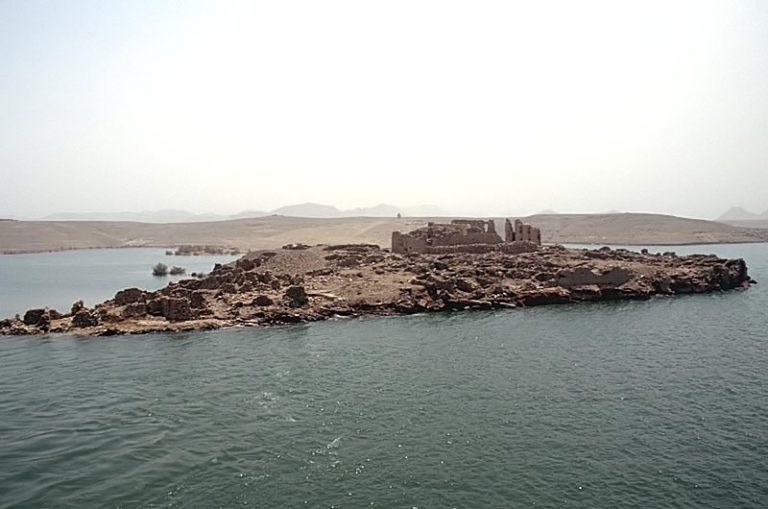
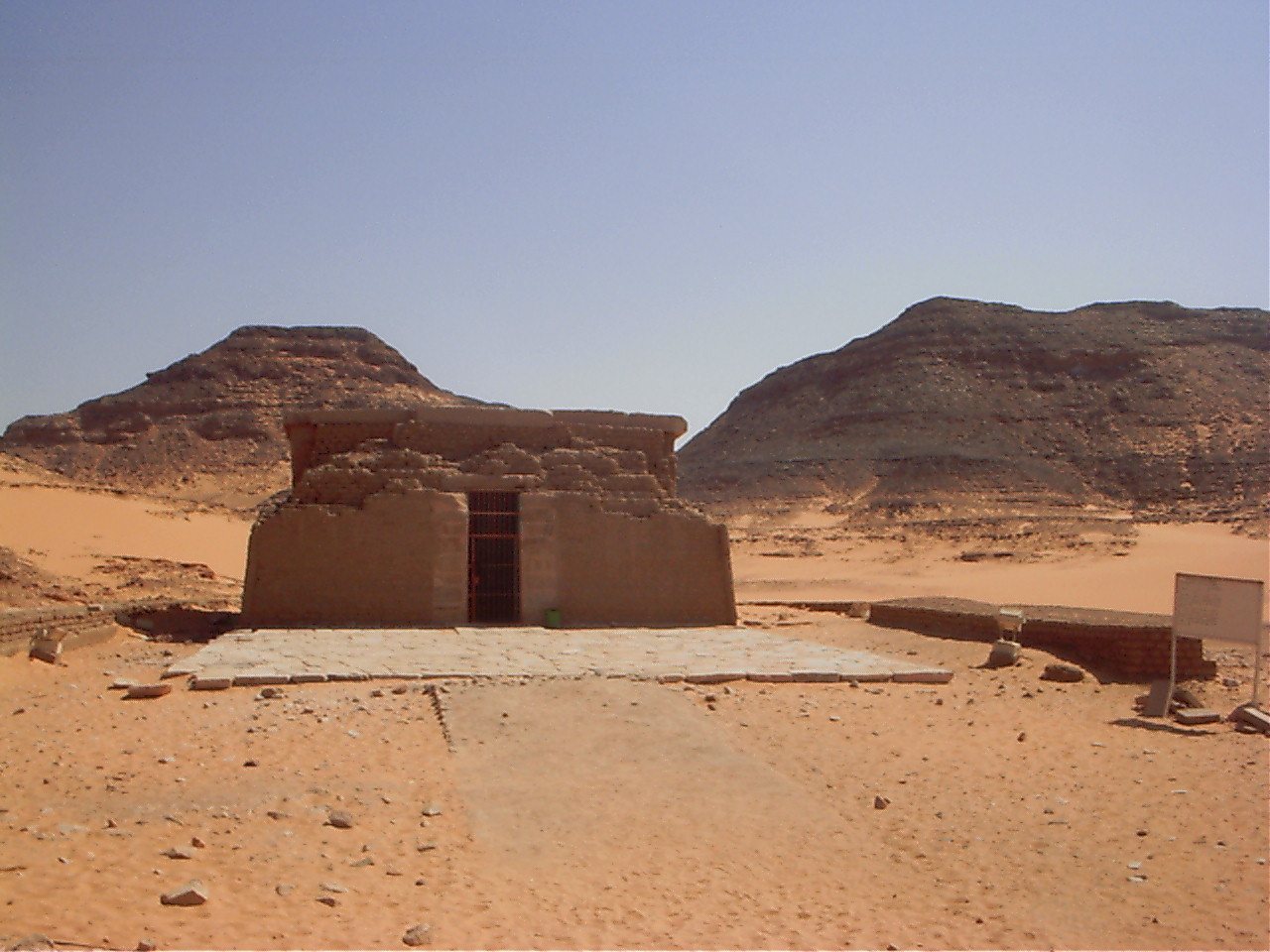
Amada is an ancient Egyptian temple site on the western bank of the Nile in Nubia, located in Aswan Governorate, Egypt. Its temple was built during the New Kingdom, a period of Egyptian history spanning roughly the sixteenth to eleventh centuries BC, and is the oldest known Egyptian temple in Nubia. The settlement was later inundated by Lake Nasser after construction of the Aswan Dam, while the temple and associated monuments were moved to higher ground.
Foundation and New Kingdom development
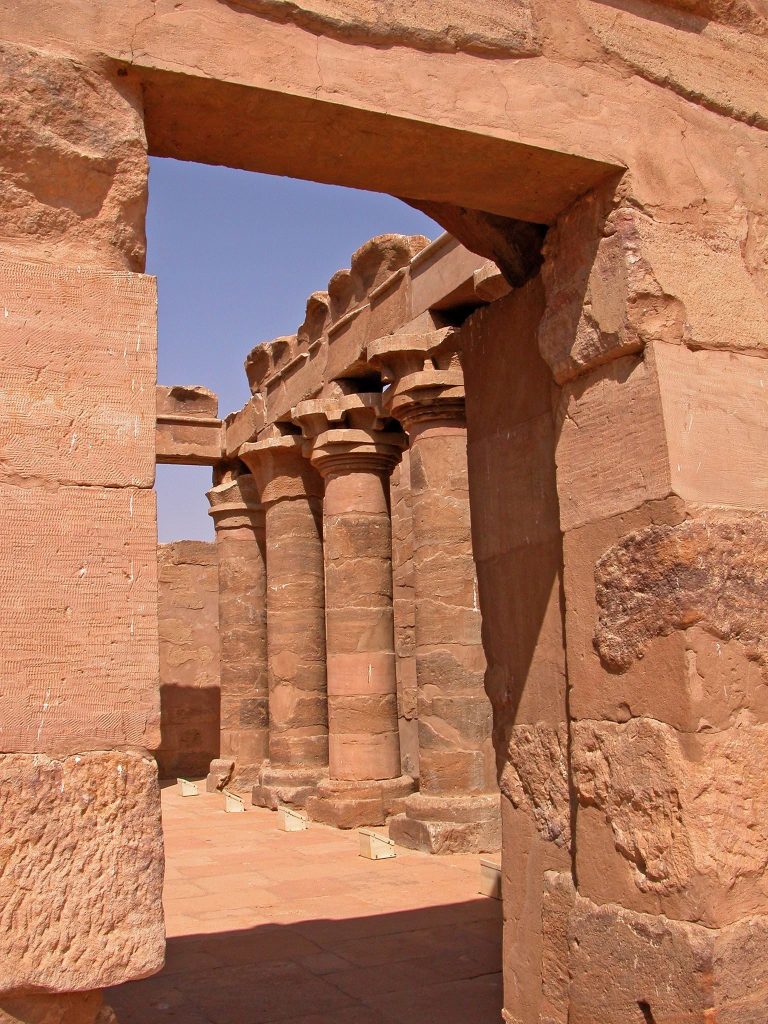
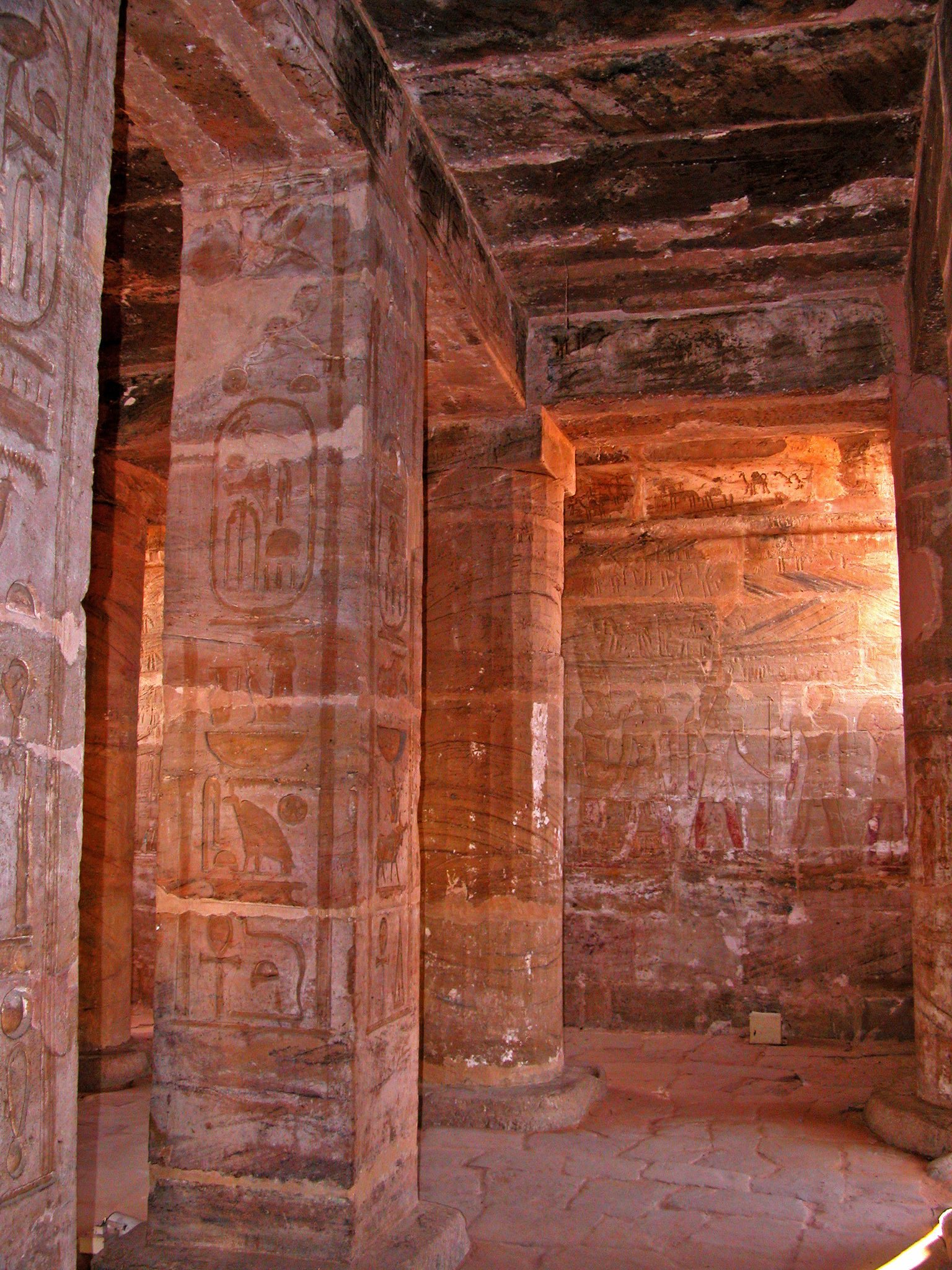
Construction began under Thutmose III of the Eighteenth Dynasty, and the temple was dedicated to Amun, a principal Egyptian state god, and Re-Horakhty, a deity combining the sun god Re with Horus of the horizon. Thutmose III’s son and successor, Amenhotep II, continued the decorative work. Under Amenhotep II’s successor, Thutmose IV, the entrance area was roofed and transformed into a hypostyle hall, a large room whose roof rests on columns.
During the Amarna Period, Akhenaten ordered the name of Amun to be removed throughout the temple. Seti I later restored the name, while Seti I, Ramesses II, and other rulers of the Nineteenth Dynasty added decoration and carried out minor repairs. Inscriptions also associate building activity at Amada with the Viceroys of Kush, senior Egyptian officials who administered the region south of Egypt. Setau and Heqanakht served under Ramesses II, Messuy under Merenptah, and Bay under Siptah.
Inscriptions and later religious use
Two inscriptions preserve accounts of Egyptian military events. An inscription made in the third year of Amenhotep II describes his campaign in Asia and the execution of seven defeated chiefs. Six were displayed on the walls of Thebes, while one was placed at Napata as a warning to Nubians against rebellion. Another inscription records the defeat of a Libyan invasion in the fourth year of Merenptah.
In the sixth century, the temple was converted into a church. Christian paintings covered some of the ancient inscriptions. The surviving paintings were described in 1738 and drawn by Franz Christian Gau in 1822. Proposals to remove them in 1830 were followed by their destruction soon afterward.
Rediscovery and relocation
Ancient travelers described the temple, but its description was first published by Henri Gauthier in 1913. Between 1964 and 1975, the temple was moved about 2.5 kilometers north of its original position and approximately 65 meters higher to protect it from the rising waters of Lake Nasser. The operation formed part of an international campaign to preserve Nubian monuments. Amada has belonged to the UNESCO World Heritage property known as “Nubian Monuments from Abu Simbel to Philae” since 1979.
Remains
Temple layout and decoration
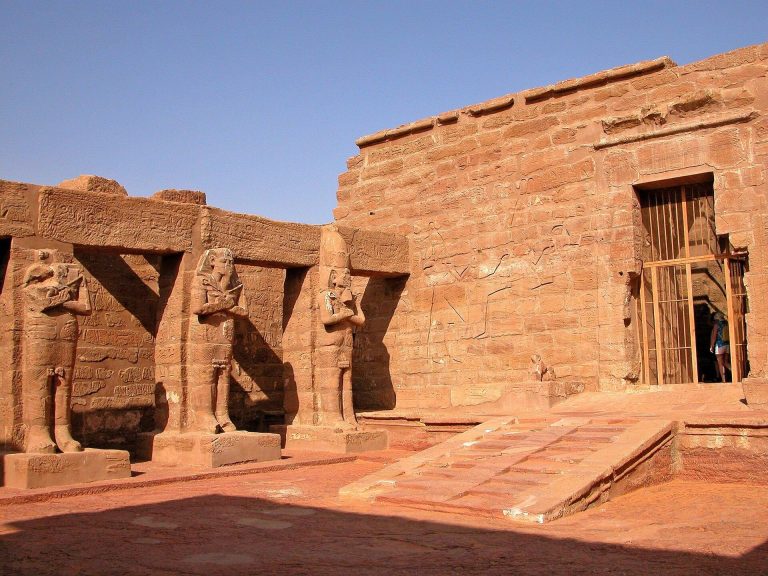
The original temple plan comprised a pylon, an entrance, a portico, and a sanctuary. A pylon is a monumental gateway formed by two projecting towers. When Thutmose IV roofed the entrance, it became a columned hypostyle hall. The columns and walls carry offering scenes, with Thutmose IV shown on the left and Thutmose III and Amenhotep II on the right.
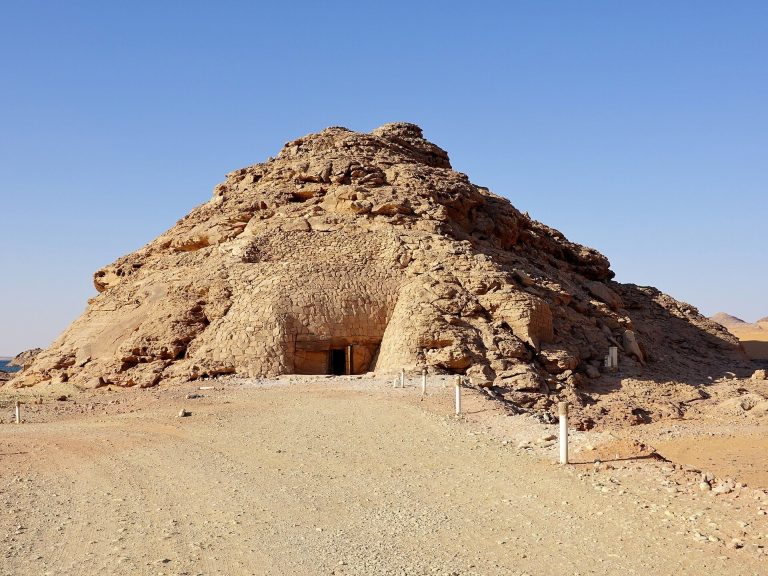
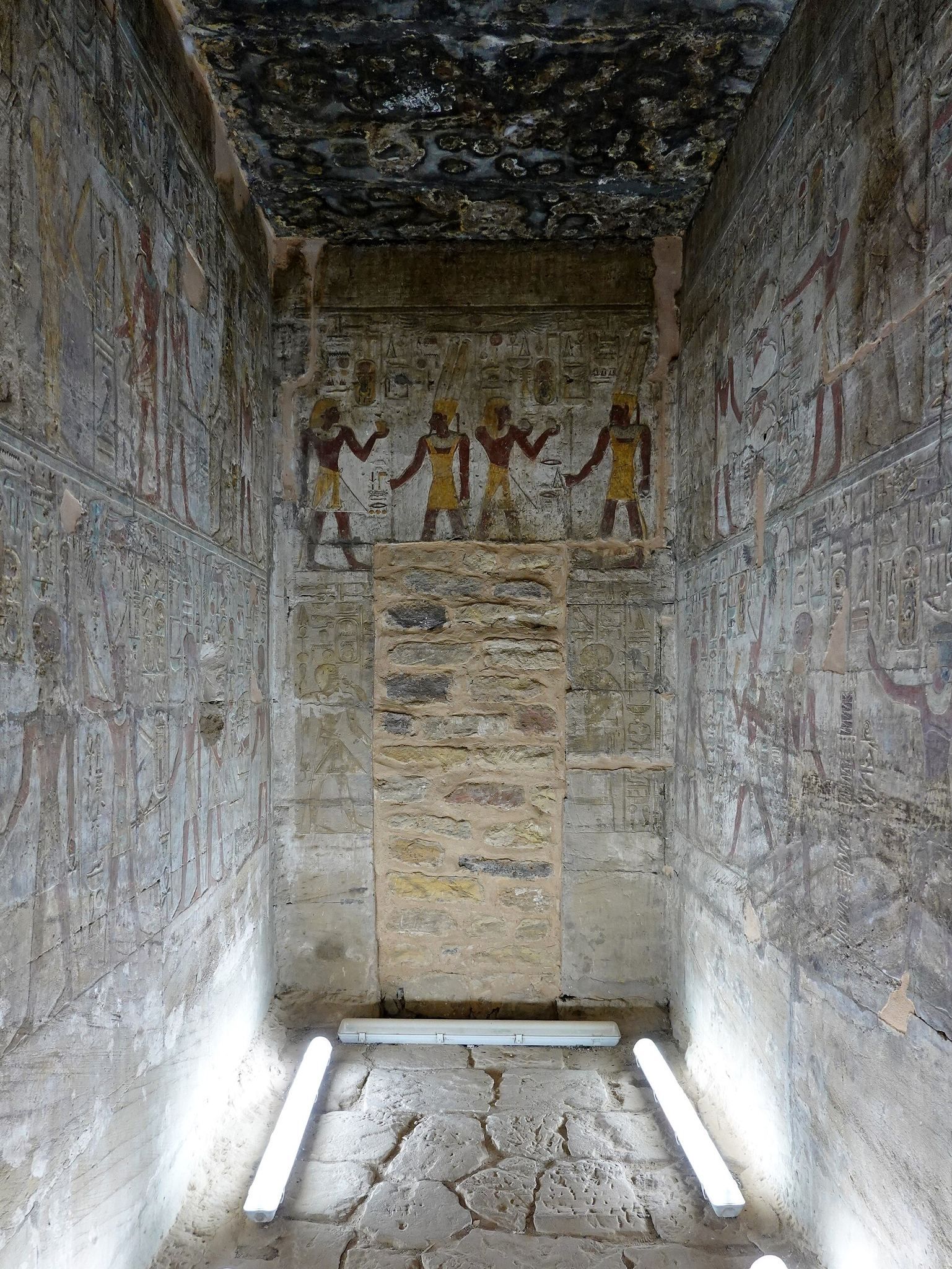
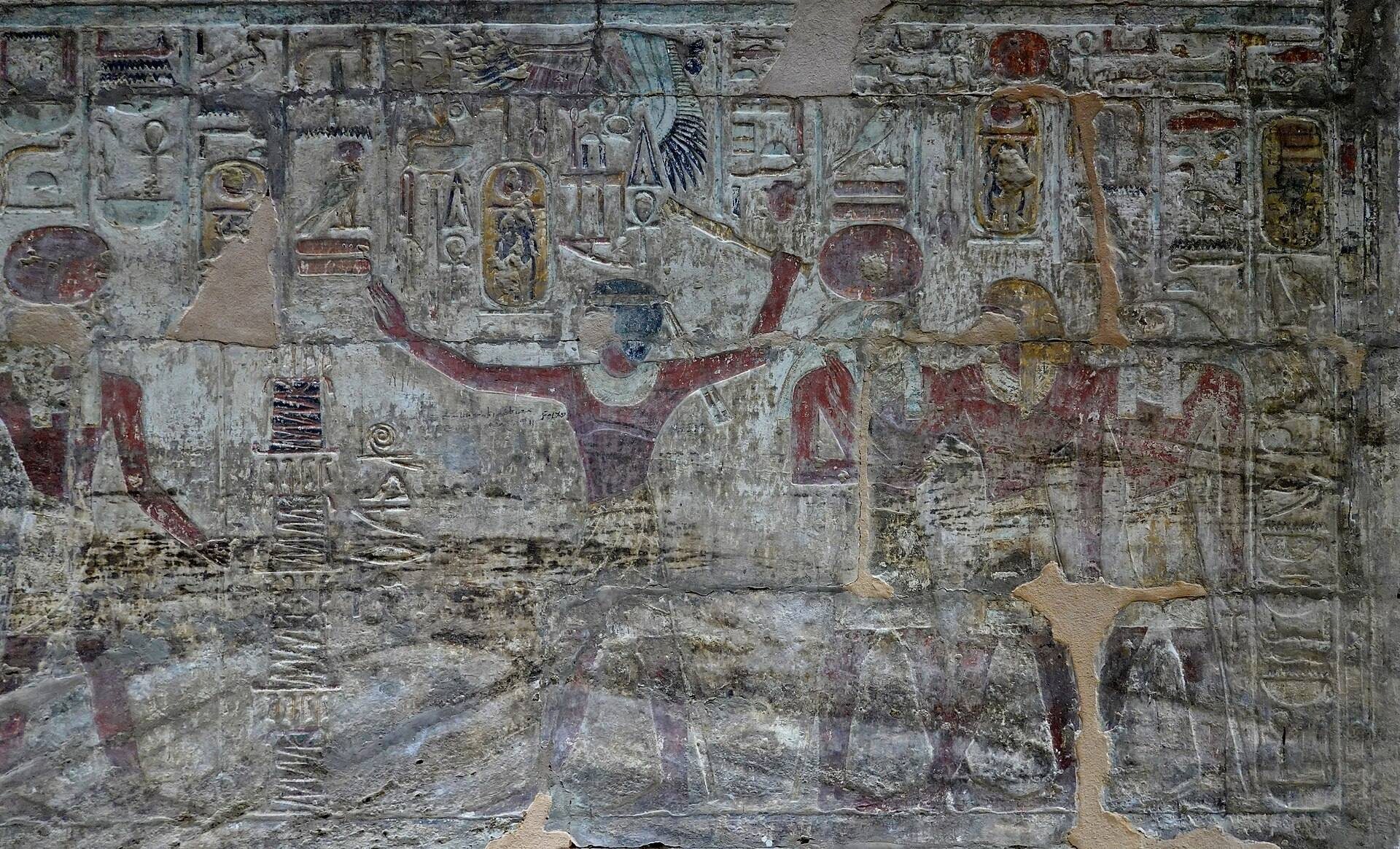
The exterior is plain and deteriorated, but the interior preserves finely carved and brightly colored reliefs. In the innermost section, Thutmose III and Amenhotep II appear embracing or presenting gifts to several Egyptian deities. On the left side of the vestibule, Amenhotep II is shown receiving the crown from Horus and Thoth. He is also depicted running with an oar and a hap, a navigational implement.
A chapel beside the sanctuary contains scenes connected with the temple’s foundation and consecration. They show the “stretching of the cord” ritual, the production and placement of building blocks, and the presentation of the completed temple to its gods. The earliest inscription is carved on a round-topped stela, an upright inscribed stone slab, on the eastern rear wall of the sanctuary. The later inscription is on a stela set into the northern left jamb of the entrance doorway.
Relocated monuments
Because cutting the temple into blocks could have endangered its reliefs, transport by rail and hydraulic movement was proposed as the method for moving it. The temple was ultimately established approximately 65 meters above its former location and 2.5 kilometers from it. The rock-cut Temple of Derr was moved to the same site, as was the tomb of Penut, who served as governor of Wawat during the reign of Ramesses VI of the Twentieth Dynasty.