Rani no Hajiro: An Indo-Islamic Funerary Complex in Ahmedabad
Site at a Glance
- Rating
- 4.2
- Popularity
- Medium
- Country
- India
- Primary era
- Medieval
- External website
- Open
- Eras represented
- Medieval
- Civilizations
- Unclassified
- Site type
- Religious
- Remains
- Tomb
On this page7 sections
History
Rani no Hajiro is an Indo-Islamic funerary complex in Ahmedabad, Gujarat, India, associated with the queens of Ahmed Shah I and other rulers of the Gujarat Sultanate. The complex was completed around 1440, during the medieval period, and its square open enclosure was probably built in 1445. It stands east of Ahmed Shah’s Tomb near Manek Chowk.
The Gujarat Sultanate
Ahmed Shah I founded the Gujarat Sultanate and was its first sultan. The principal tomb at Rani no Hajiro belongs to Mughalai Bibi, the wife of Muhammad Shah II and mother of Mahmud Begada, who later ruled the sultanate. An adjacent tomb is associated with Mirki, or Murki, Bibi, described as the wife of Shah-i-Alam, the queen’s sister, and the daughter of the Jam of Sindh. Shah-i-Alam was a prominent Islamic religious figure in medieval Gujarat.
Continuing care and protection
Some Muslim families live within the complex and care for the tombs. Rani no Hajiro is designated a Monument of National Importance by the Archaeological Survey of India under monument number N-GJ-8.
Remains
Enclosure and tombs
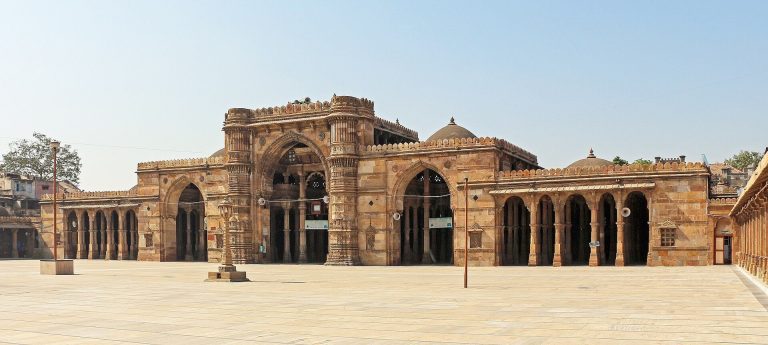
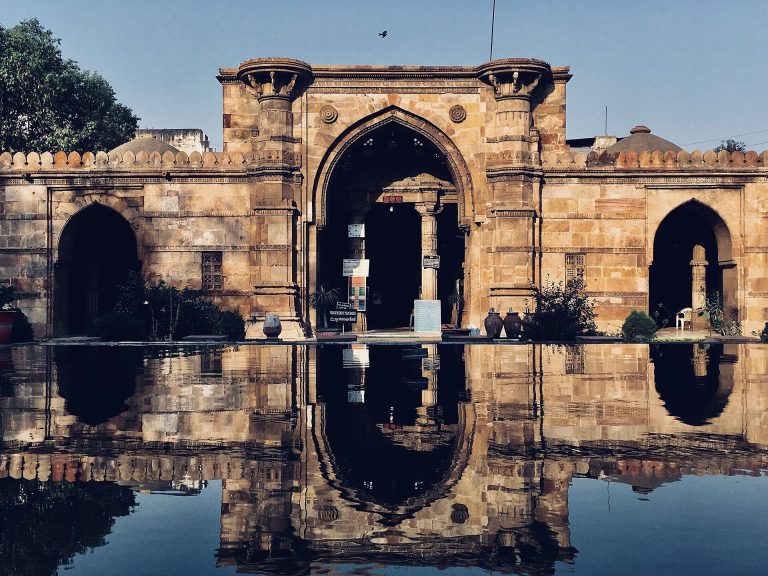
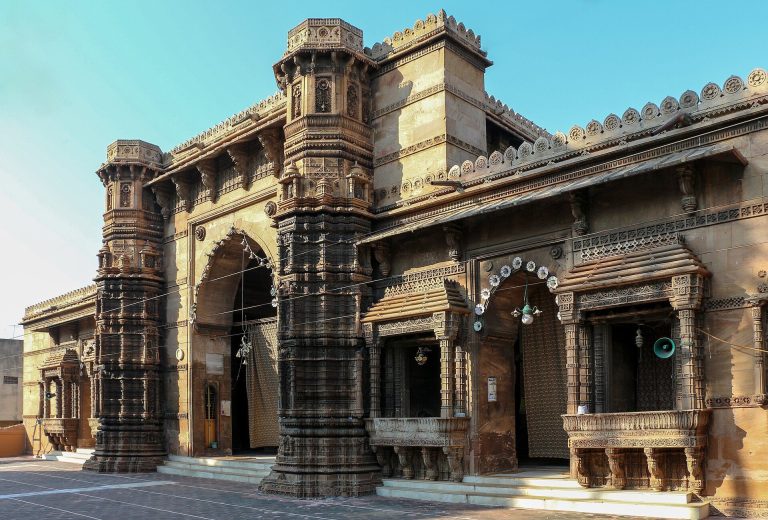
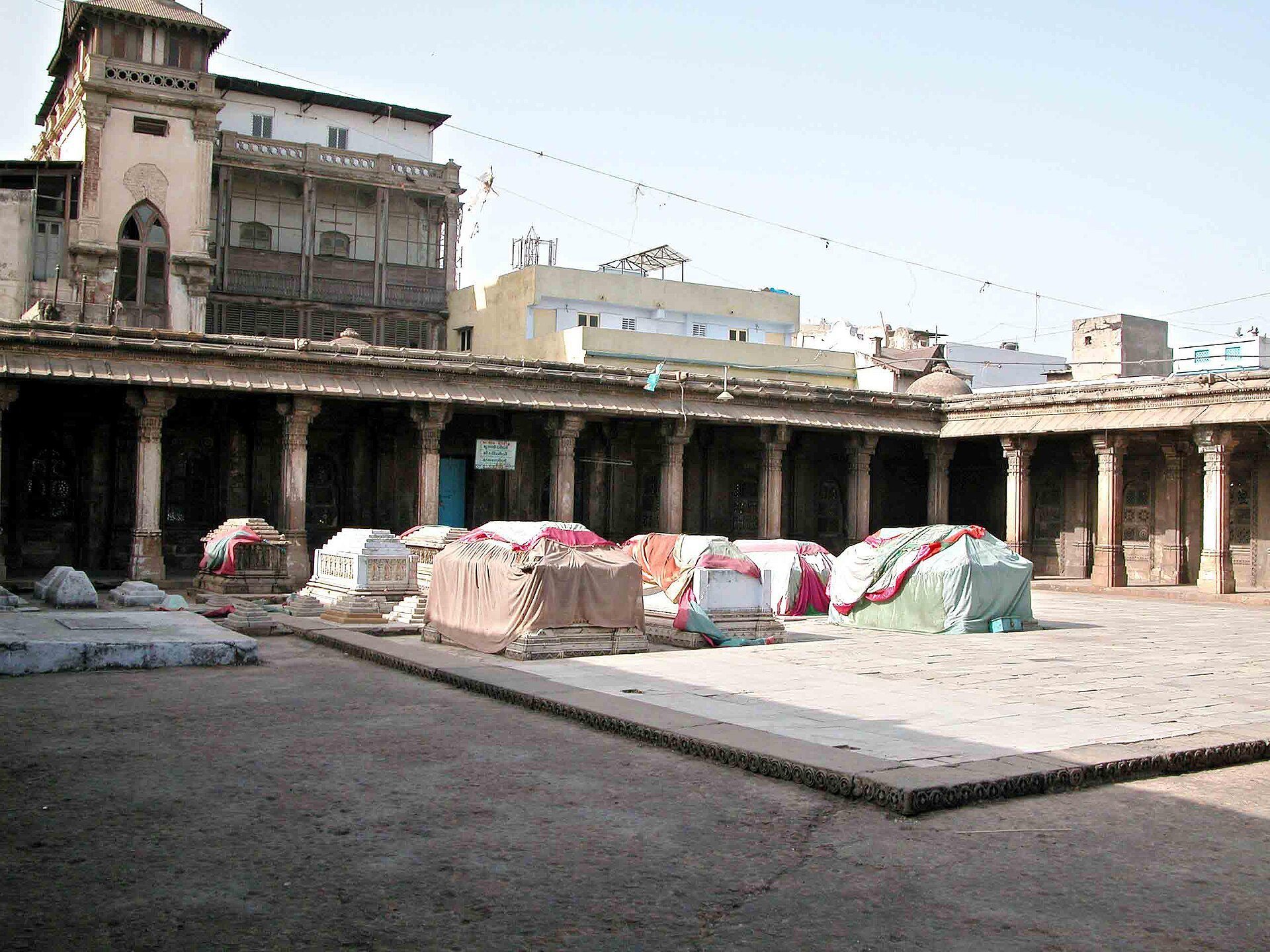
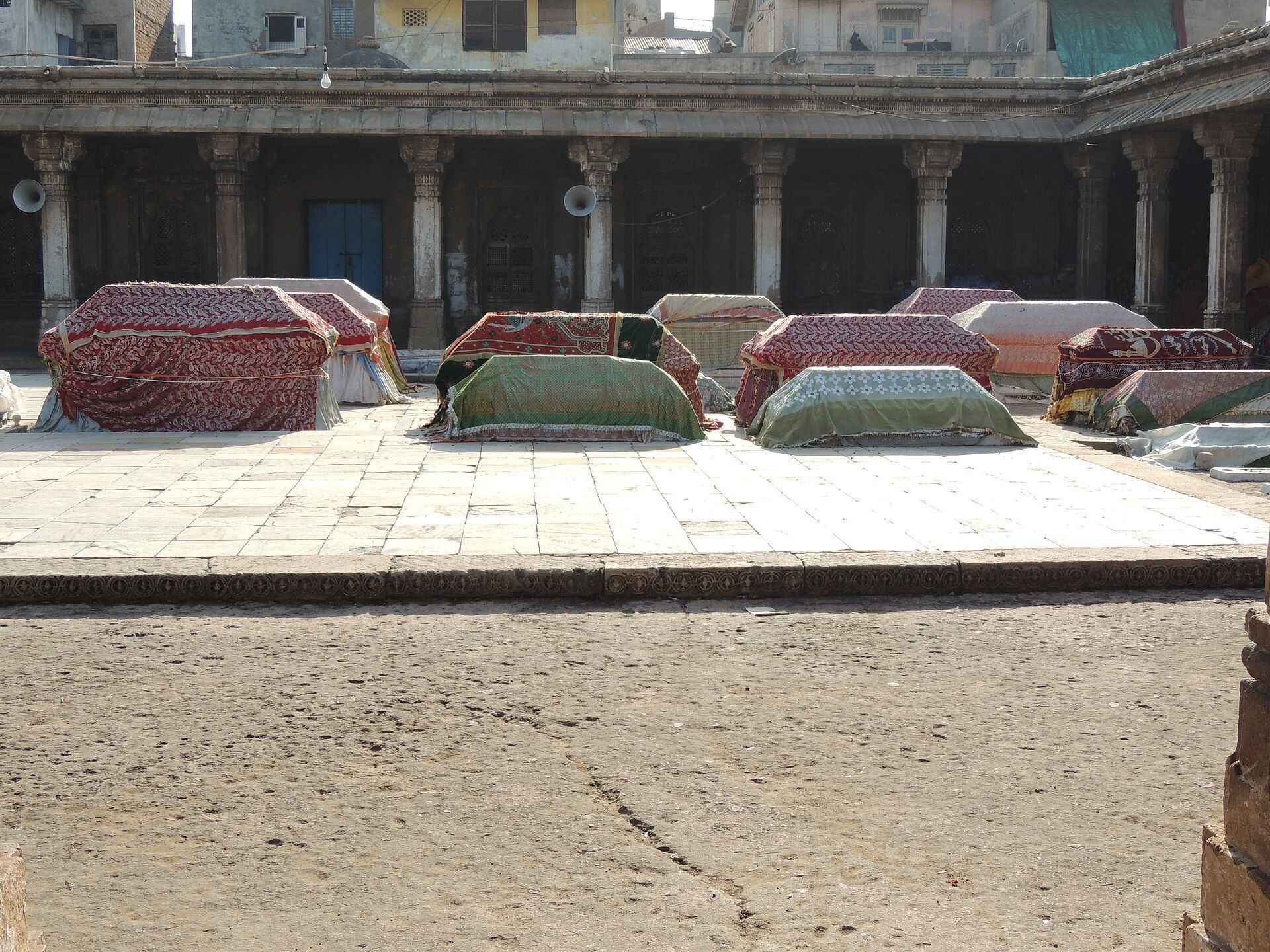
The complex is an elevated funerary enclosure, classified as a mosque and tomb, and entered through a lofty gateway. Its square open courtyard measures 36.58 metres on each side. A covered gallery, or cloister, surrounds the courtyard, while carved stone screens in its walls provide latticed enclosure, ventilation, and filtered light. Eight marble tombs occupy the courtyard, belonging to queens of Ahmed Shah I and other Gujarat Sultanate rulers. Their elaborate carving is combined with mother-of-pearl and metal inlay.
Mughalai Bibi’s tomb
Mughalai Bibi’s principal tomb is richly carved from white marble. A Persian inscription in minute relief encircles the tomb, adding a finely detailed textual border to the monument.
Mirki Bibi’s tomb
The adjacent tomb associated with Mirki, or Murki, Bibi, is made of black marble and was formerly decorated with mother-of-pearl inlay.
The tombs are covered with rich brocade textiles, a style that developed during Ahmed Shah I’s reign. Their stone tracery and carving bring together Hindu, Jain, and Islamic architectural influences.