Choquequilla: An Inca Sacred Cave and Astronomical Site in Peru
Site at a Glance
- Rating
- 4.7
- Popularity
- Low
- Country
- Peru
- Primary era
- Medieval
- Eras represented
- Medieval
- Civilizations
- Inca
- Site type
- Religious
- Remains
- Sanctuary
On this page11 sections
History
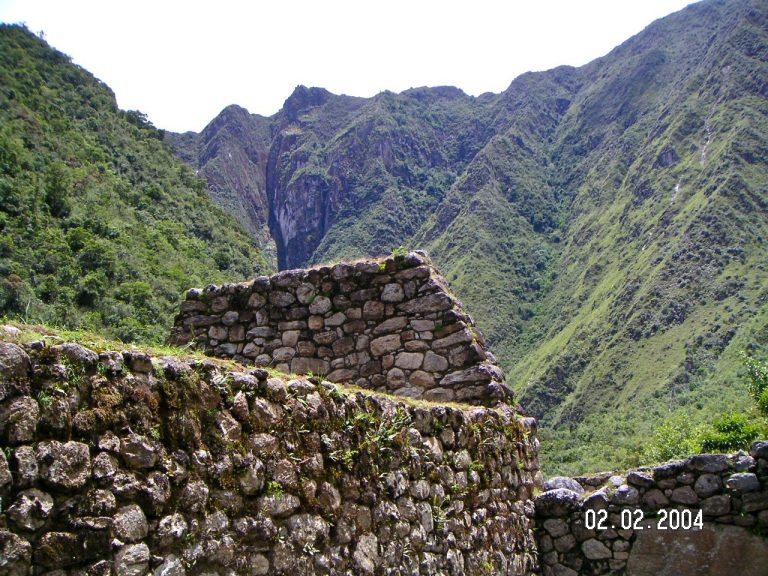
Choquequilla is an archaeological site near Pachar in Peru, a few kilometres from Ollantaytambo. Set at about 3,627 metres above sea level, it occupies a granite mountainside above the Río Huarocondo and appears to have served religious and astronomical purposes during several periods of Andean history.
Earlier occupation and sacred traditions
Fragmentary ceramics from the surroundings point to possible use during the Middle Horizon, a period when Wari influence spread widely across the Andes. Other materials belong to the Killke tradition associated with the Cusco region and to the Imperial Inca period. These remains indicate that the site was used across successive phases, although they do not establish a single continuous function.
Local communities of the Sacred Valley, possibly including the Ayarmaca, may have regarded the natural rock formations as paqarinas, origin places from which a community or ancestral group was believed to have emerged. The formations may also have been treated as natural shrines. This interpretation remains tentative.
Inca ritual use
During the Late Horizon, when the Inca Empire controlled the Cusco region, Choquequilla was transformed into a high-ranking huaca, a sacred place, object, or natural feature. It was associated with ritual and astronomical activity and has also been described as an astronomical observatory.
Human remains found in cavities within the rock suggest that the site may have functioned as a mausoleum and as a centre for ancestor worship. These practices may have involved mallquis, ancestral mummies connected with mortuary and lineage traditions.
Interpretations and archaeological work
The names Naupa Iglesia, Naupa Huaca, Naupa Waka, the Cave of Choquequilla, the Golden Moon, and the Temple of the Moon reflect different understandings of the site and its possible lunar associations. Scott C. Smith identifies the black-granite sculpture as an altar, while Steven Gullberg and J. McKim Malville interpret it as a shrine.
Adam Herring has proposed that the cave may represent the Andean concept of a t’oqo, an ancestral cave or opening associated with origins and emergence. In this interpretation, it served as a portal through which mythical ancestors entered the human world. Carolyn Dean has interpreted the stepped symbols as signs of movement into different cosmic spheres and communication with ancestral beings.
Steven Gullberg has suggested that the sunrise at the solstice could illuminate the cave dramatically, with the rising full moon producing a comparable effect. Archaeological work has included preventive recording and investigation by the Decentralized Directorate of Culture of Cusco. These efforts identified ceramics linked to the Middle and Late Horizons and delimited cult areas and supporting structures on the adjacent slopes. Choquequilla is protected by the Peruvian state and administered by the Ministry of Culture.
Remains
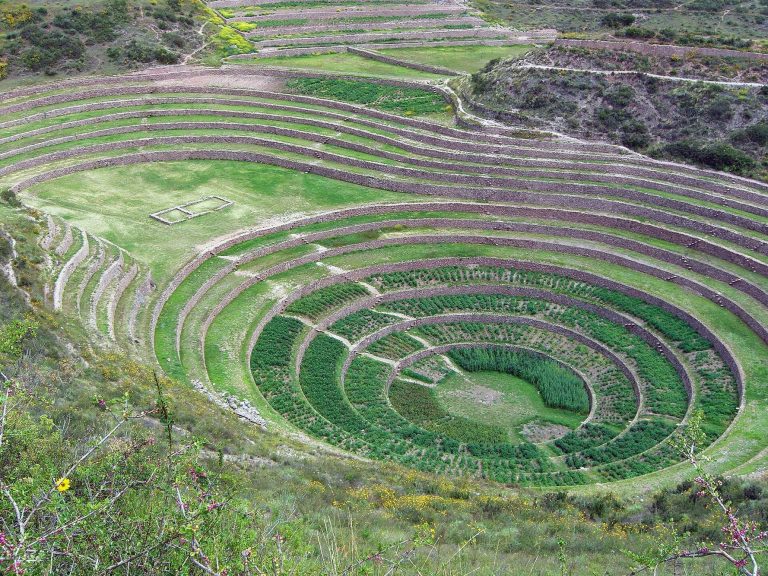
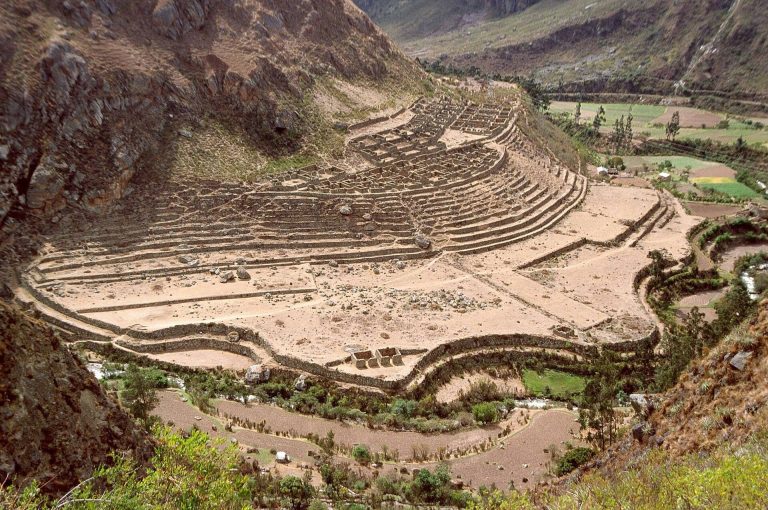
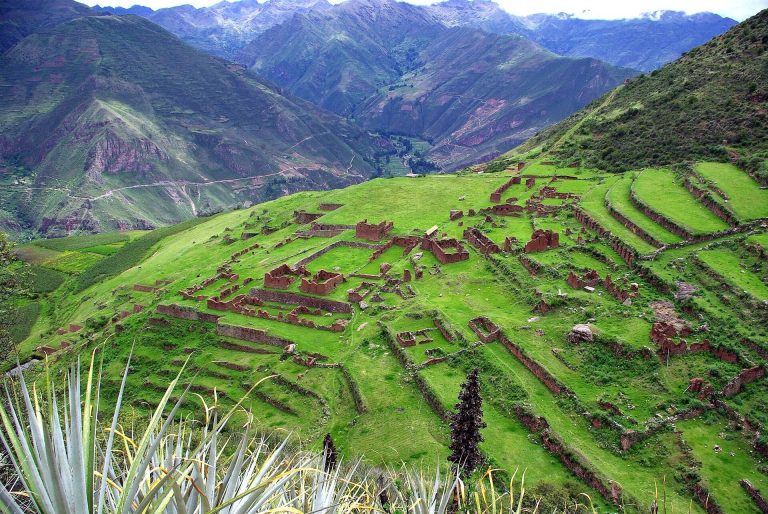
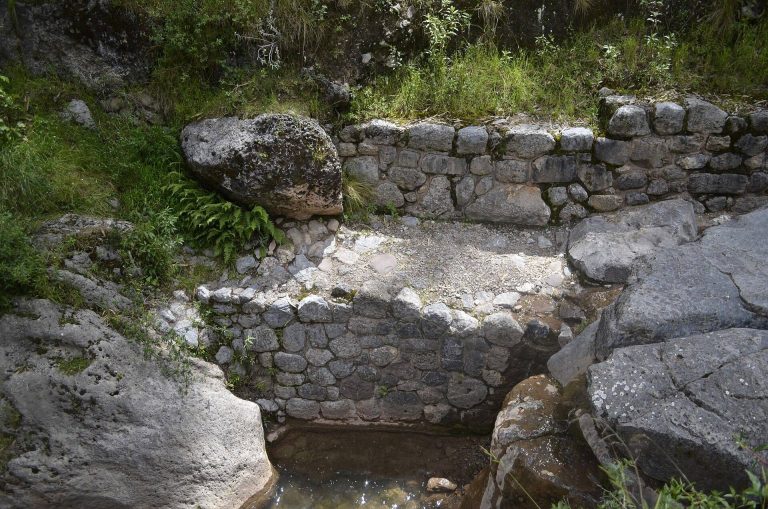
Choquequilla consists of a natural cave or rock shelter in a granite mountainside, with agricultural terraces below and additional structures on the nearby slopes. A central staircase rises through the terraces toward the ruins. The surrounding slopes are covered mainly by shrub and drought-tolerant vegetation, including chachacomo, lambras, queñual, several kinds of cactus, ichu grass, and cantuta.
Cave and carved entrance
Rock shelter and false doorway
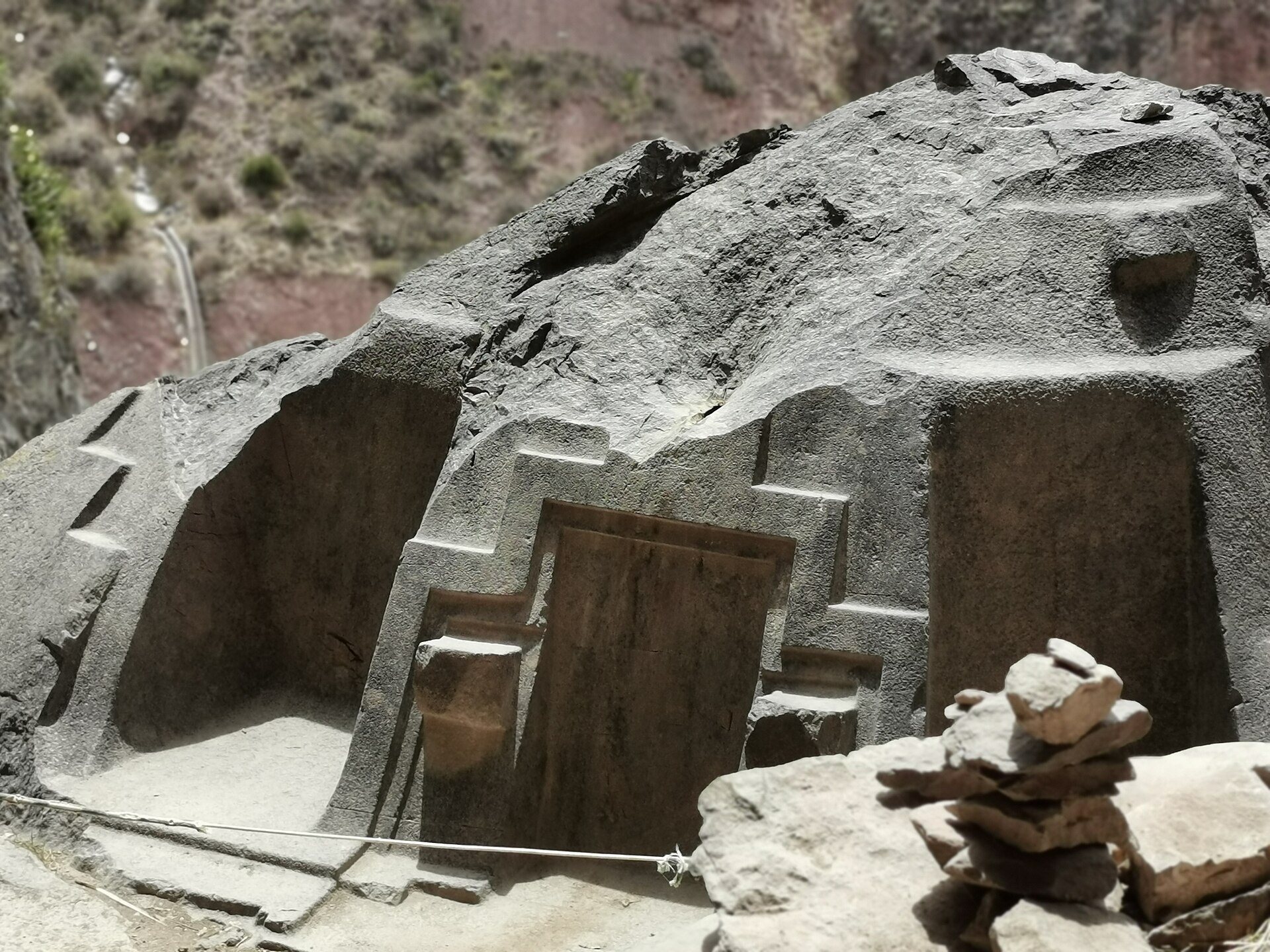
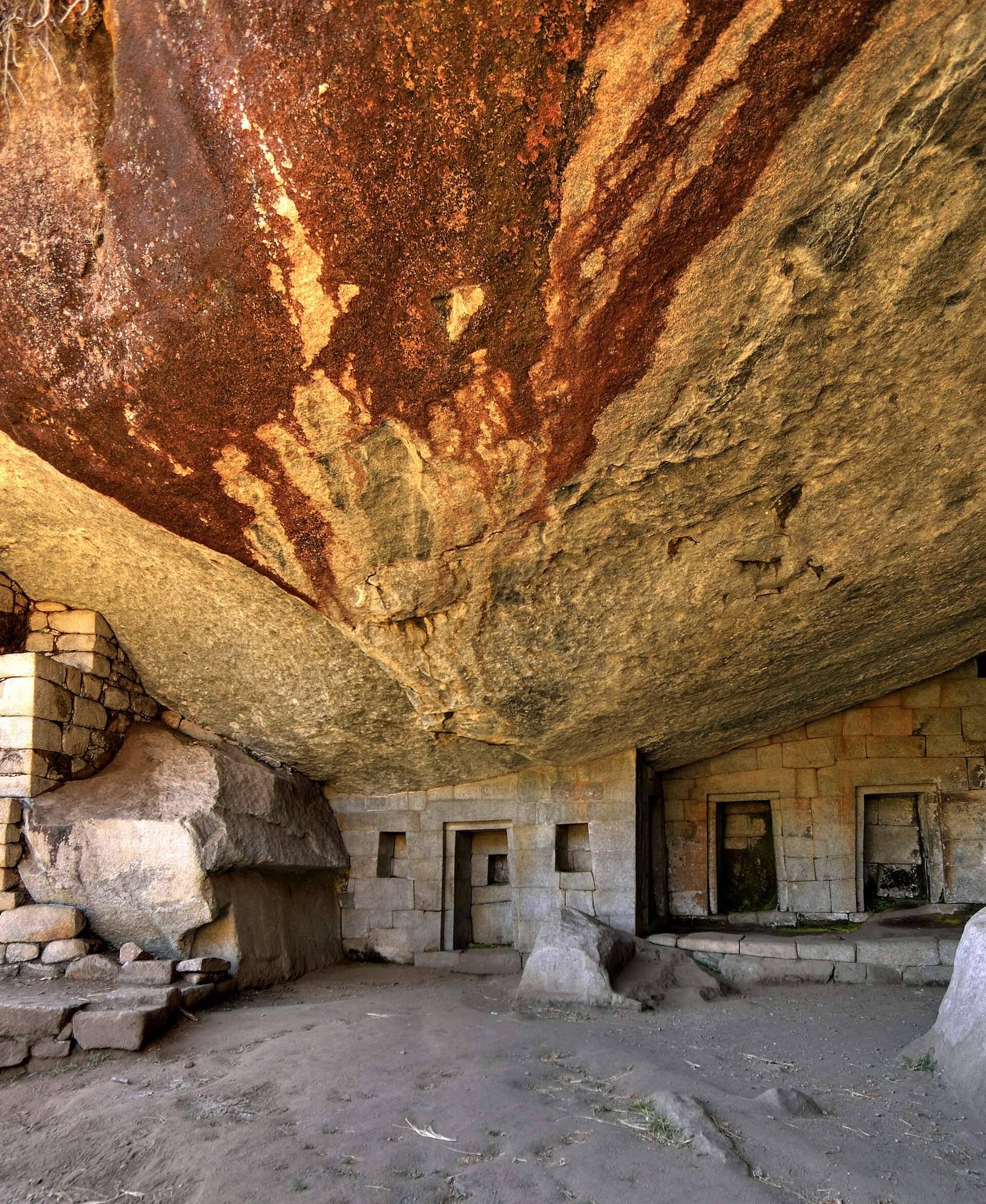
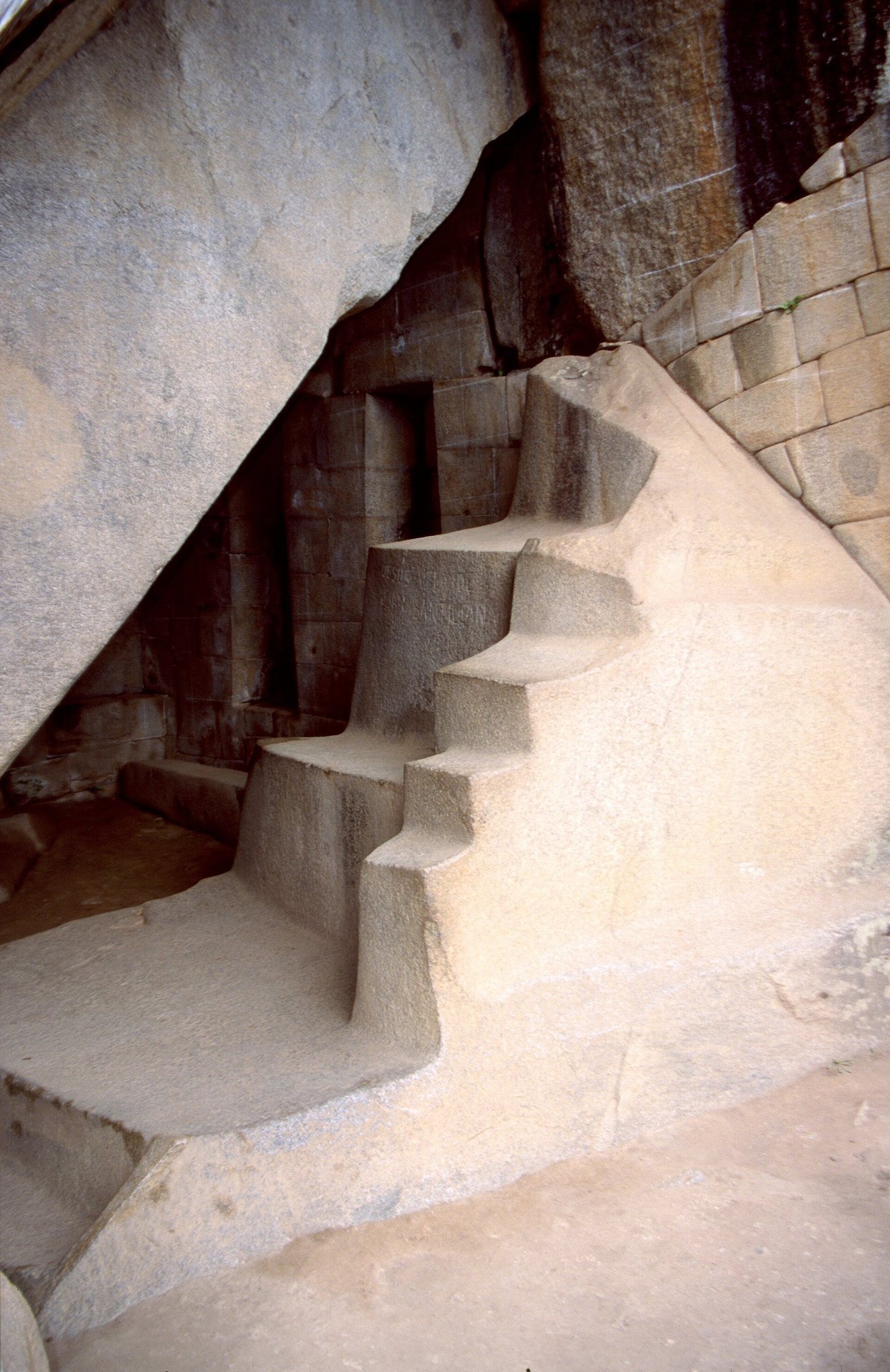
The cave has flat stone surfaces that meet in an inverted V. One rock wall contains a precisely cut false doorway, whose carefully shaped opening does not lead into an actual passage. Human remains have been found in cavities within the wider rock formation, contributing to interpretations of the site as a place connected with burial and ancestor worship.
Black-granite sculpture
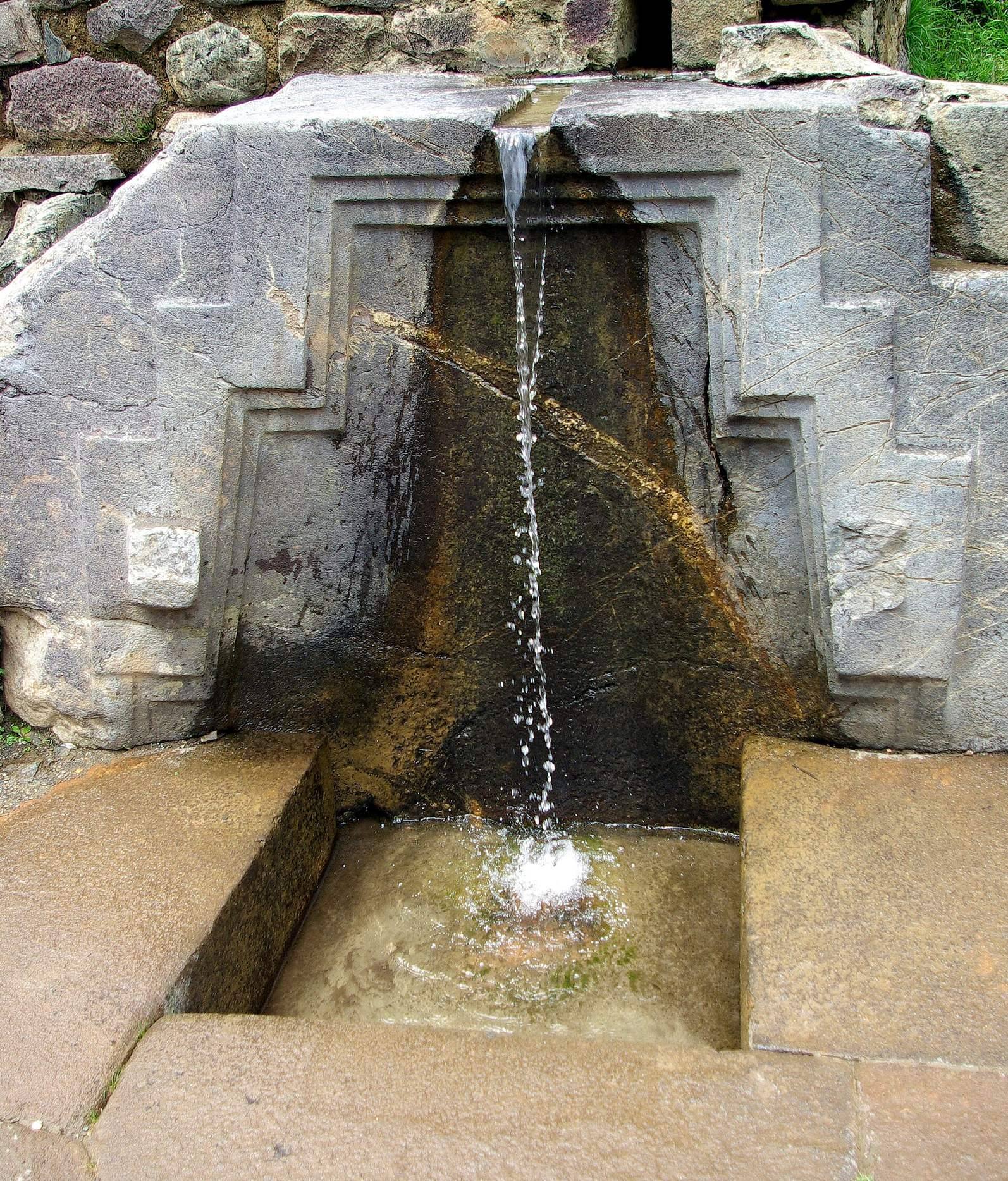
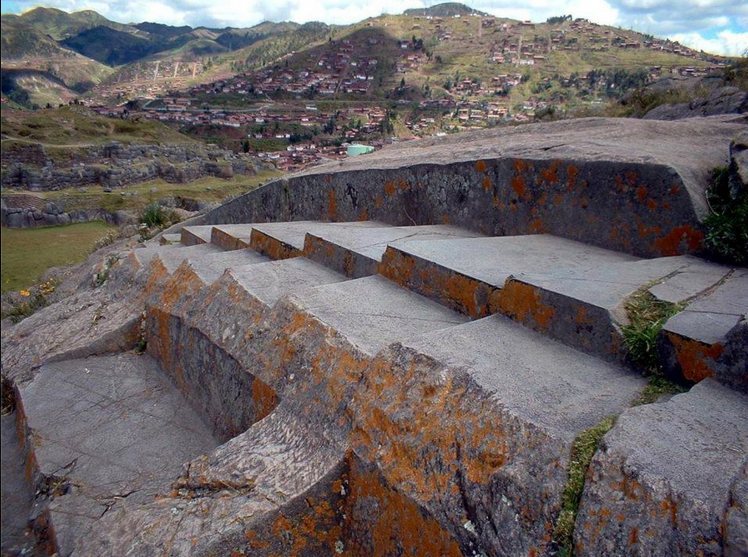
In front of the cave stands an abstract, symmetrical sculpture of black granite with stepped forms. Its upper portion was blasted away by looters, and the point where the explosive charge was placed remains visible. Scott C. Smith regards the sculpture as an altar, while Steven Gullberg and J. McKim Malville describe it as a shrine. Its stepped design has been compared with forms at Tiwanaku, Ollantaytambo, Machu Picchu, Qenko, and Sacsayhuamán. César Paternosto cautioned that stepped motifs were widespread in ancient America and were not exclusive to Tiwanaku. He emphasized the monument’s massive trapezoidal form and the distinctive constructive symbolism associated with Inca architecture.
Adjacent masonry structures
Niche wall
A wall beside the sculpture contains two rows of four niches. They are described as Tiwanaku-style, and the double-framed examples are considered rare in the Cusco region. Two forms are identified: regular simple double-framed niches and double-framed niches with externally stepped jambs.
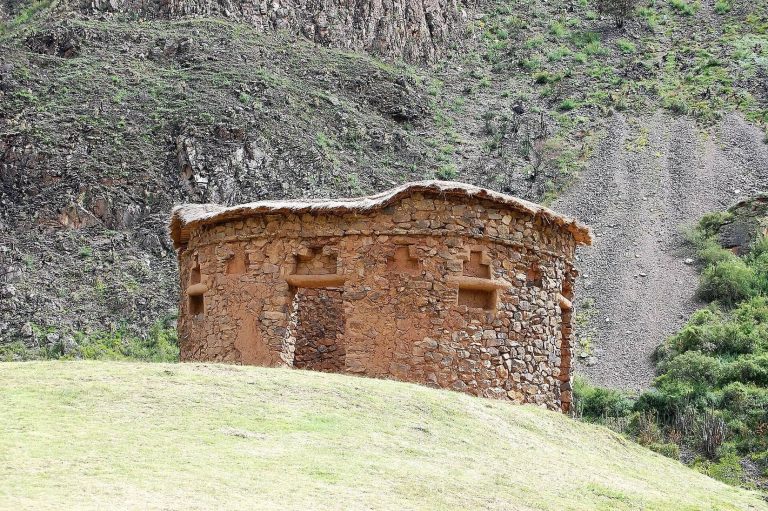
Northern masonry building
Immediately north of the cave is a small masonry structure containing niches, doors, and windows. Together with the central staircase, the terraces, and the cult areas on the adjacent slopes, it forms part of the built setting around the natural rock shelter.