Qasr al-Farid: A Nabataean Rock-Cut Tomb at Hegra
Site at a Glance
- Rating
- 4.7
- Popularity
- Low
- Country
- Saudi Arabia
- Primary era
- Classical
- External website
- Open
- Eras represented
- Classical
- Civilizations
- Nabataean
- Site type
- Burial
- Remains
- Tomb
On this page6 sections
History
Nabataean Hegra
Qasr al-Farid is a Nabataean rock-cut tomb at Hegra in Madain Salih, Saudi Arabia, dating to approximately the first century AD. The Nabataeans were an Arab kingdom whose commercial network connected routes across the Arabian Peninsula and the wider Near East. In this period, Hegra was the southernmost and second-largest city of the Nabataean Kingdom after Petra.
The tomb is traditionally attributed to Lihyan ibn Kuza, although that identification remains uncertain. Its unfinished condition suggests that it may never have been used for a burial. Qasr al-Farid forms part of Hegra, which was inscribed as a UNESCO World Heritage Site in 2008.
Remains
Isolated sandstone monument
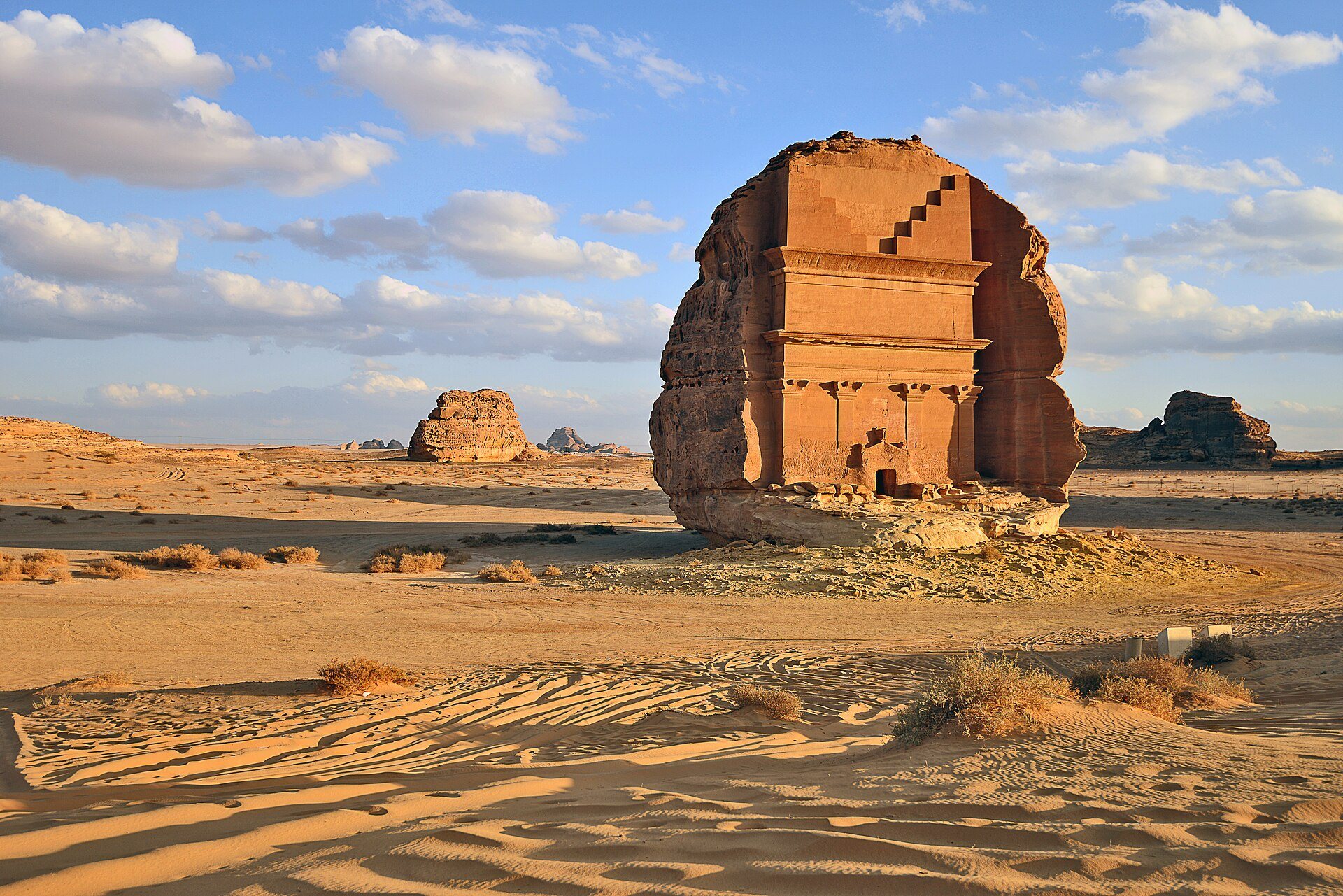
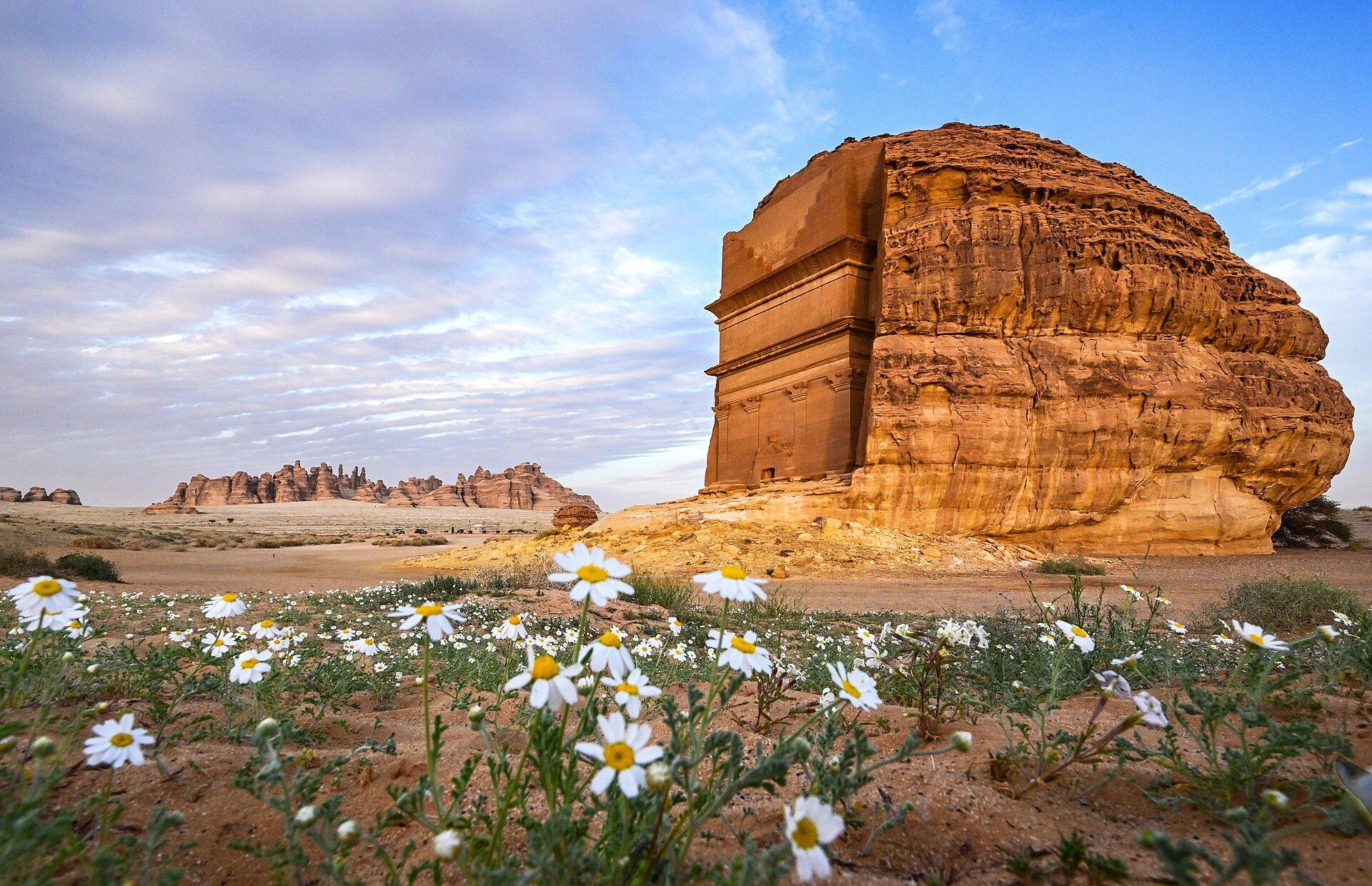
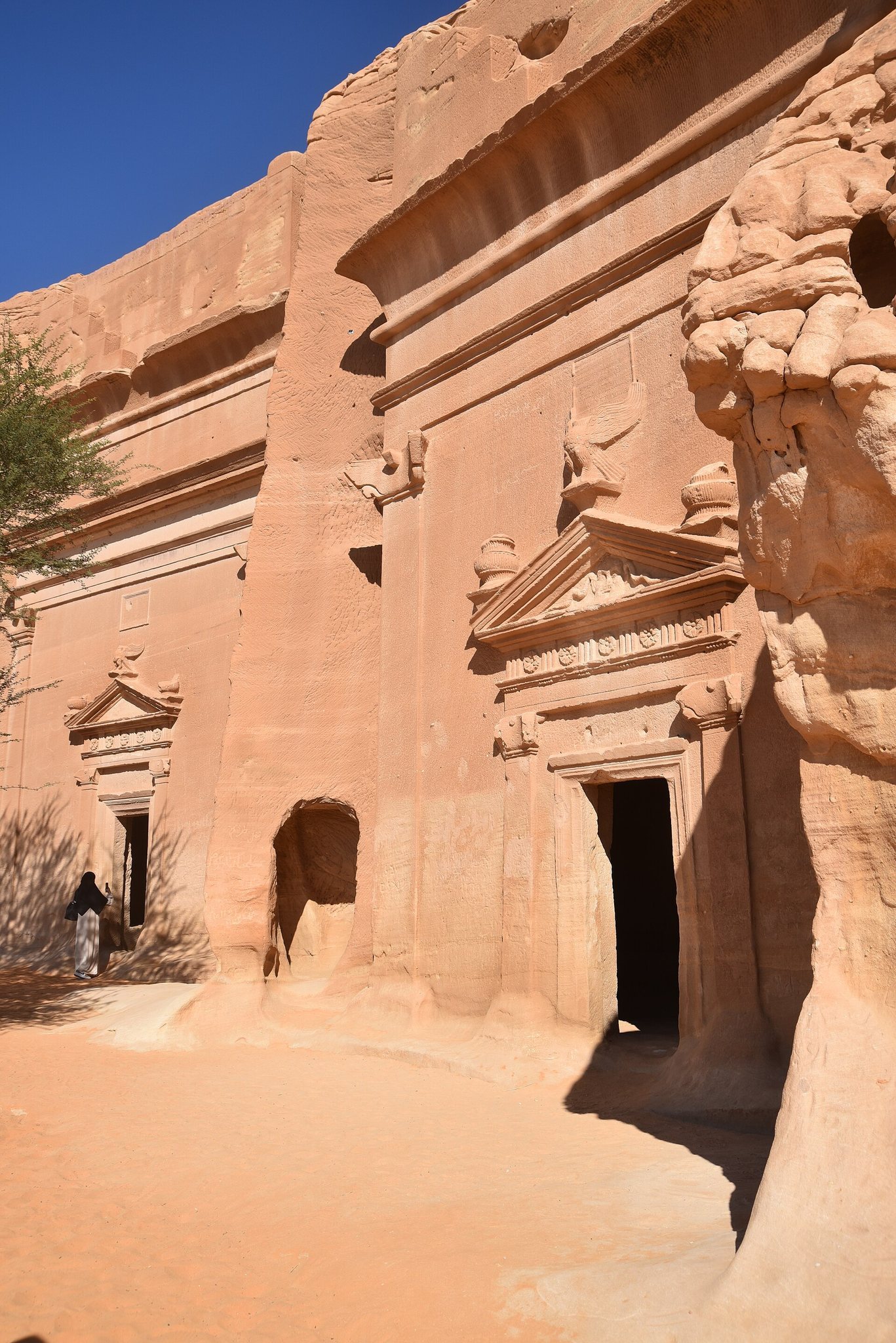
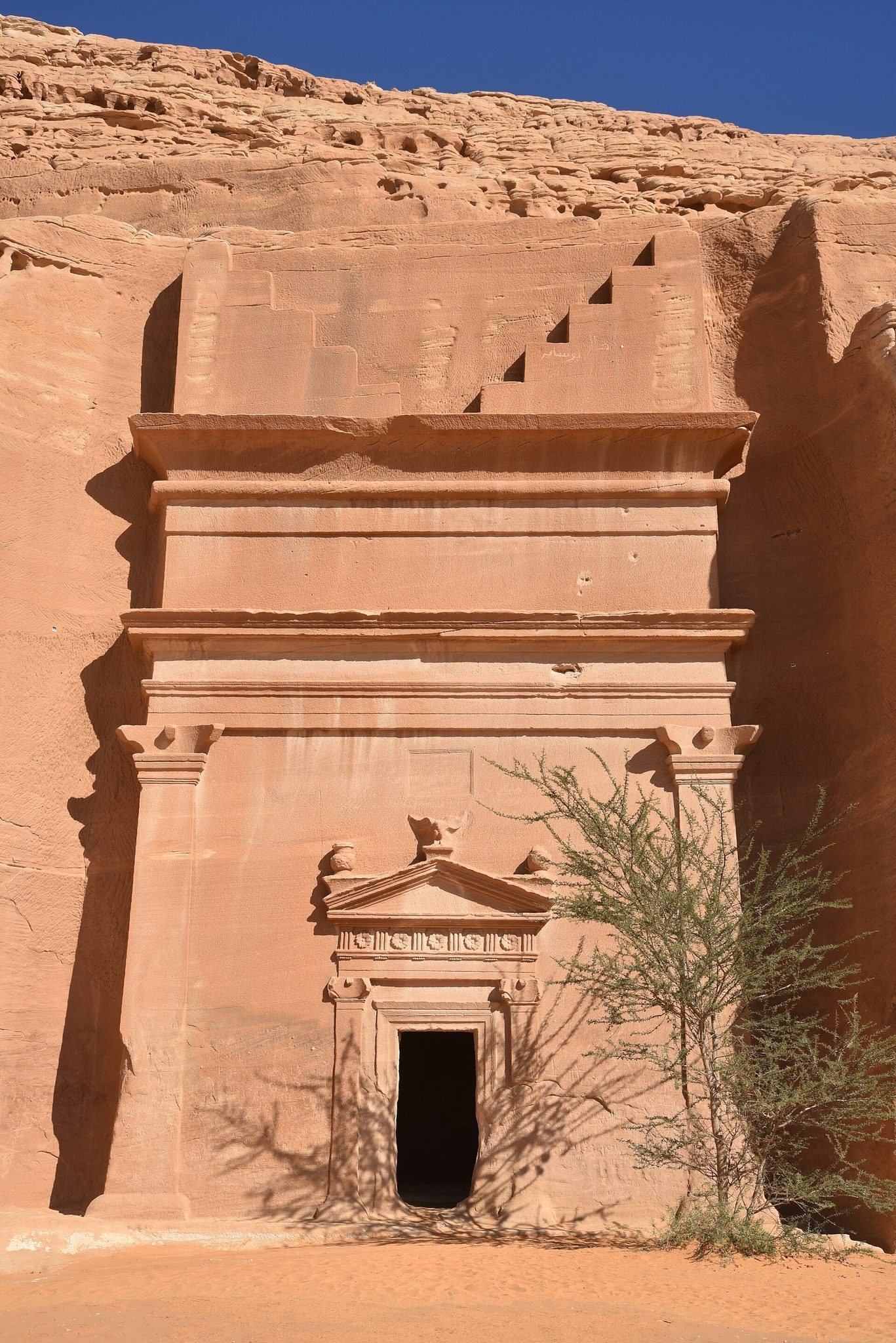
The tomb stands alone, carved from a single sandstone monolith and separated from the other groups of tombs at Hegra. Its name means “the solitary castle,” referring to its separate rock mass and distinctive façade. It is the largest of Hegra’s tombs and has the site’s tallest tomb façade, rising approximately 13.85 metres.
Façade and unfinished carving
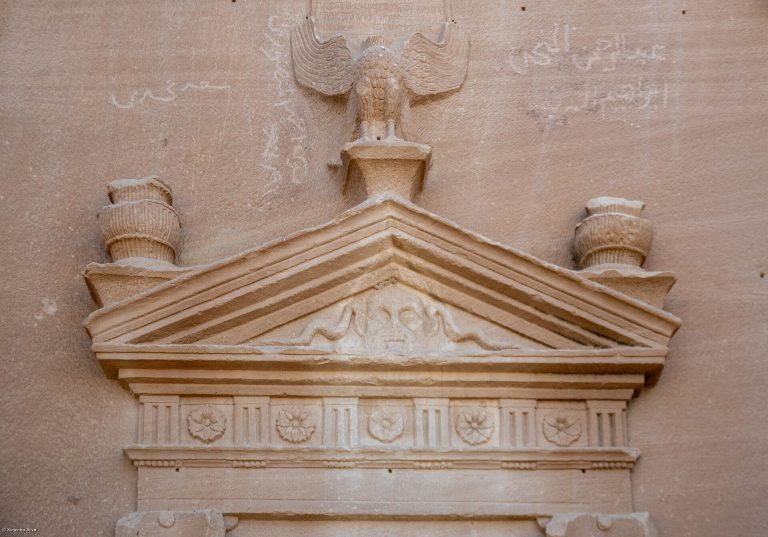
The façade has four pilasters, shallow rectangular supports attached to the wall, rather than the two commonly used on other Hegra tombs. The two central supports carry Nabataean capitals, and a pediment crowns the entrance. Decorative elements draw on Egyptian, Assyrian, and Hellenistic traditions. Carvers worked from the top downward, but the lower part, approximately the final third of the façade, was left incomplete.
Interior and preservation
Inscriptions are present inside the tomb. Strong winds have eroded the façade over the centuries, while the region’s dry climate has helped the monument remain comparatively well preserved.