Fort Amsterdam: A Historic Trading and Slave-Trade Fort in Ghana
Site at a Glance
- Rating
- 4.1
- Popularity
- Low
- Country
- Ghana
- Primary era
- Early Modern
- Eras represented
- Early Modern
- Civilizations
- English
- Site type
- Military
- Remains
- Fort
On this page9 sections
History
Fort Amsterdam is a former English and Dutch fortified trading post in Ghana, built on the Gold Coast during the seventeenth century. The English established the post in 1631, and the fort was constructed between 1638 and 1645. It became an important center of the Atlantic slave trade, while its surviving remains illustrate European economic and colonial influence in West Africa.
English foundation and transformation
Arent Groote arranged the 1631 lease of the site from Ambro Braffo, a Fante king, on behalf of the English Guinea Company, an English trading company founded in 1618 for commerce along the West African coast. The post was initially intended to supply gold, and the company’s imports from the Gold Coast, the historical European name for the coastal region of present-day Ghana, brought substantial profits in London.
A fire damaged the fort in 1640. During its rebuilding, the structure was adapted for the detention of enslaved people, with improved ventilation for confined captives. It became an early fort specifically designed to accommodate enslaved people and developed into a major point in the European Atlantic slave trade.
In 1646, the Biemba Company took control of the fort from the Guinea Company, with Captain John Lad employed in connection with the seizure. The English East India Company regained it in 1657. English control was restored again between 1660 and 1665, after Swedish settlers had briefly occupied the deserted site.
From Kormantin to Fort Amsterdam
Following the English conquest of Jamaica in 1655, Kormantin became a major port for supplying enslaved people. In Jamaica and other Caribbean colonies, people from the Gold Coast were consequently called “Kormantee” or “Coromantee”. The name also became associated among slaveholders with a reputation for strength, warfare, and rebellion.
In 1665, Dutch admiral Michiel de Ruyter captured the fort during the Anglo-Dutch conflict, a struggle between England and the Dutch Republic for commercial and colonial power. He renamed it Fort Amsterdam. The fort then became part of the Dutch Gold Coast, the Dutch coastal colonial trading zone, and continued to support the gold and slave trades. African rulers negotiated payments from the Dutch for ships calling at the fort, while Cormantin people sometimes obstructed Dutch trade routes until large sums were paid.
During the Fourth Anglo-Dutch War, a conflict between Britain and the Dutch Republic from 1780 to 1784, Captain Thomas Shirley captured Fort Amsterdam in early 1782. He used the 50-gun ship Leander and the sloop Alligator in the operation, which also involved the capture of several Dutch forts on the Gold Coast. The fort was later transferred to Britain in 1868.
Attack, restoration, and heritage status
In 1811, people from Anomabo, then allies of the British, attacked Fort Amsterdam and left it in ruins. The site remained unoccupied until the Ghana Museums and Monuments Board restored it in 1951. Its inclusion in the Forts and Castles of the Ghanaian coast World Heritage property, inscribed on the UNESCO World Heritage List in 1979 under criterion (vi), reflects its connection with European colonial influence and the Atlantic slave trade.
Remains
Structural remains
Fort plan and defensive walls
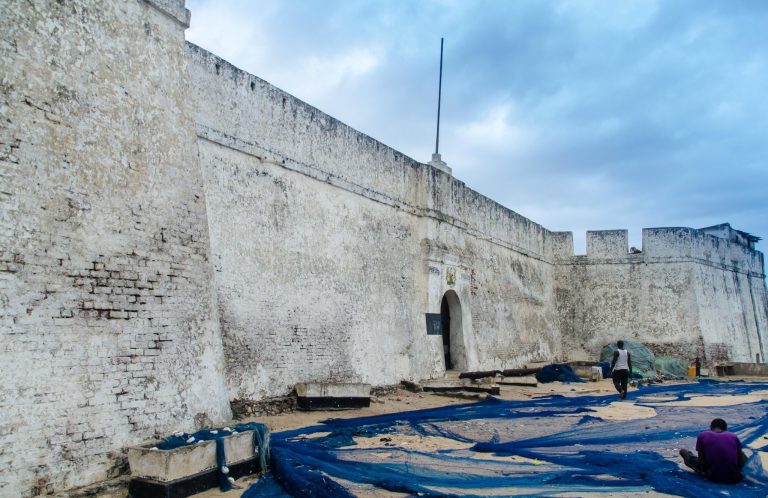
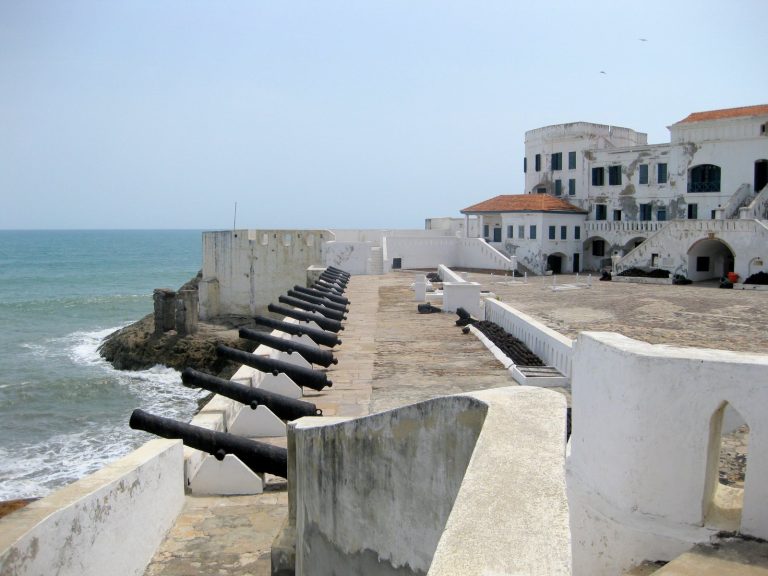
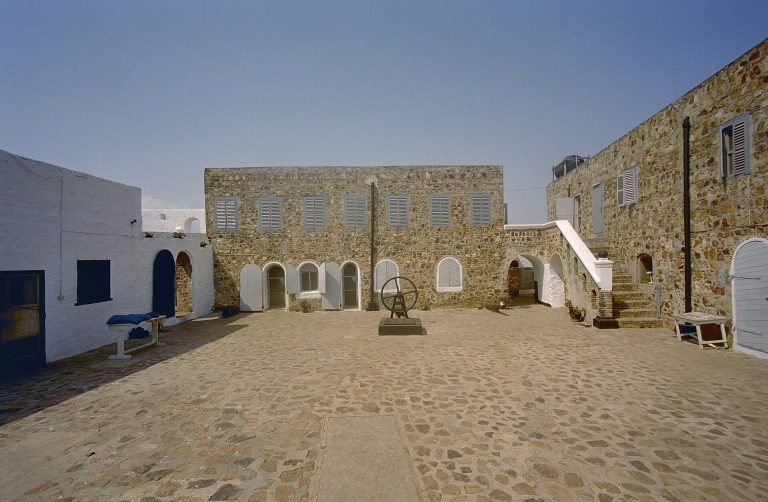
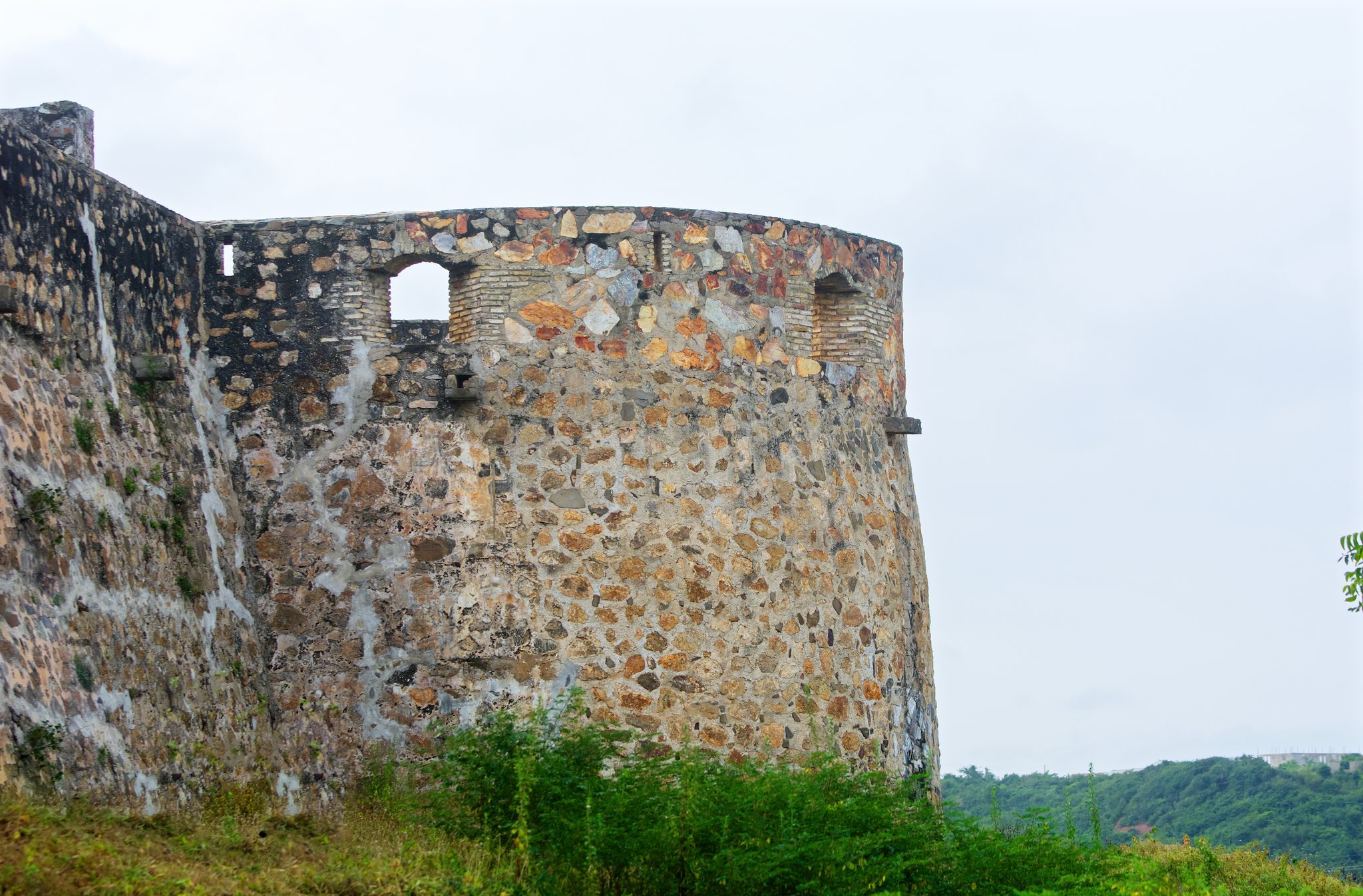
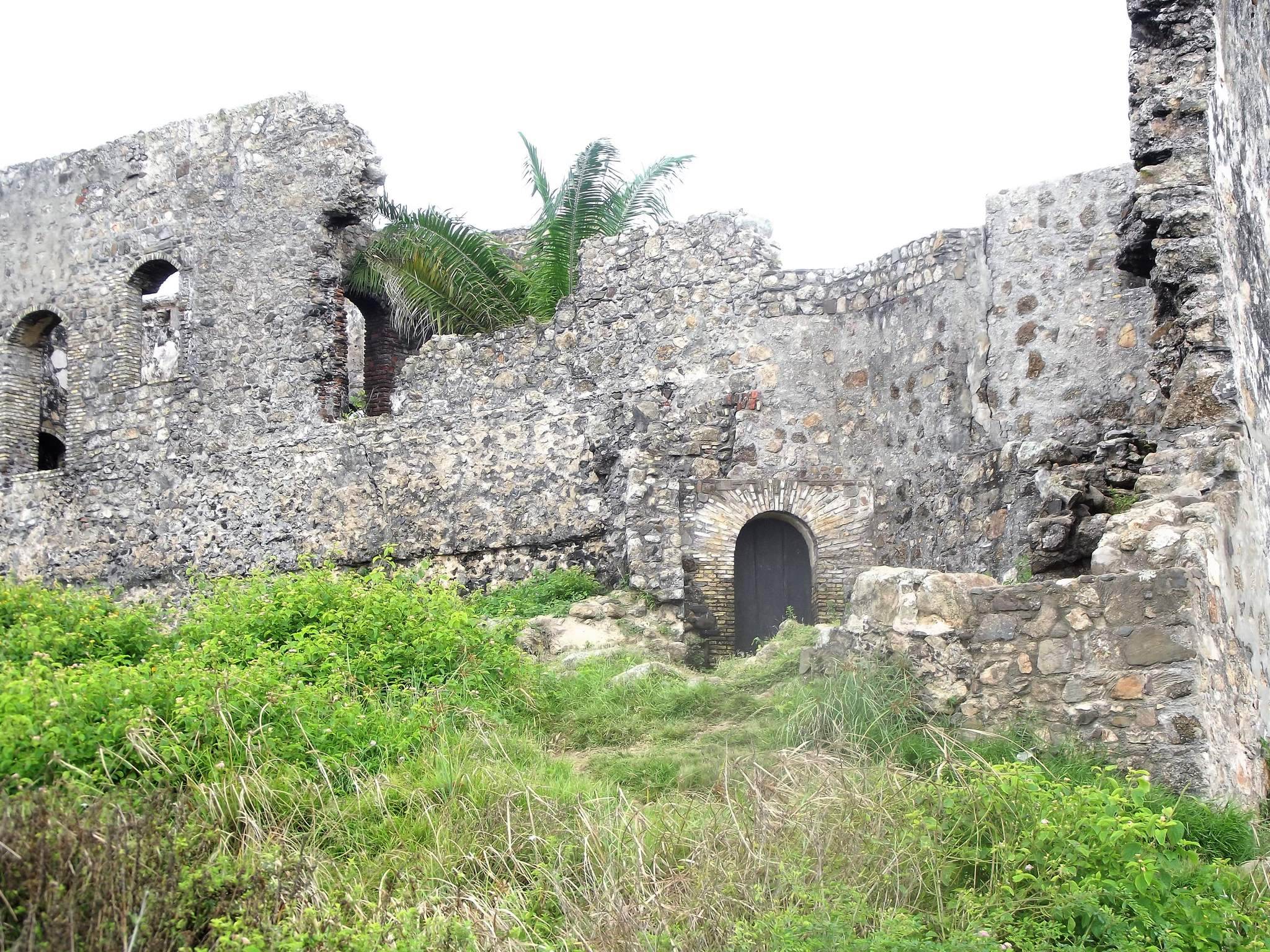
The fort stands at Abandze, northeast of Cape Coast, in Ghana’s Central Region, with the town growing around it. Its original plan was rectangular, with two square corner bastions and two rounded ones linked by curtain walls. A bastion is a projecting fortified structure designed to provide defensive fire, while a curtain wall is the connecting wall between such defenses.
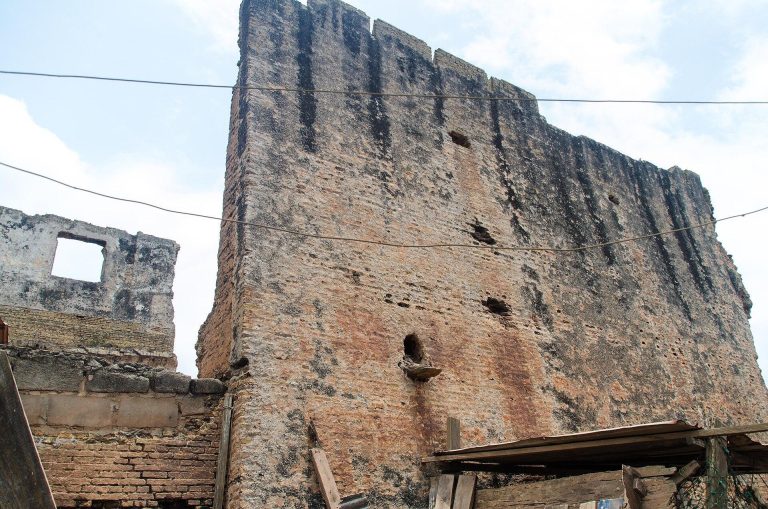
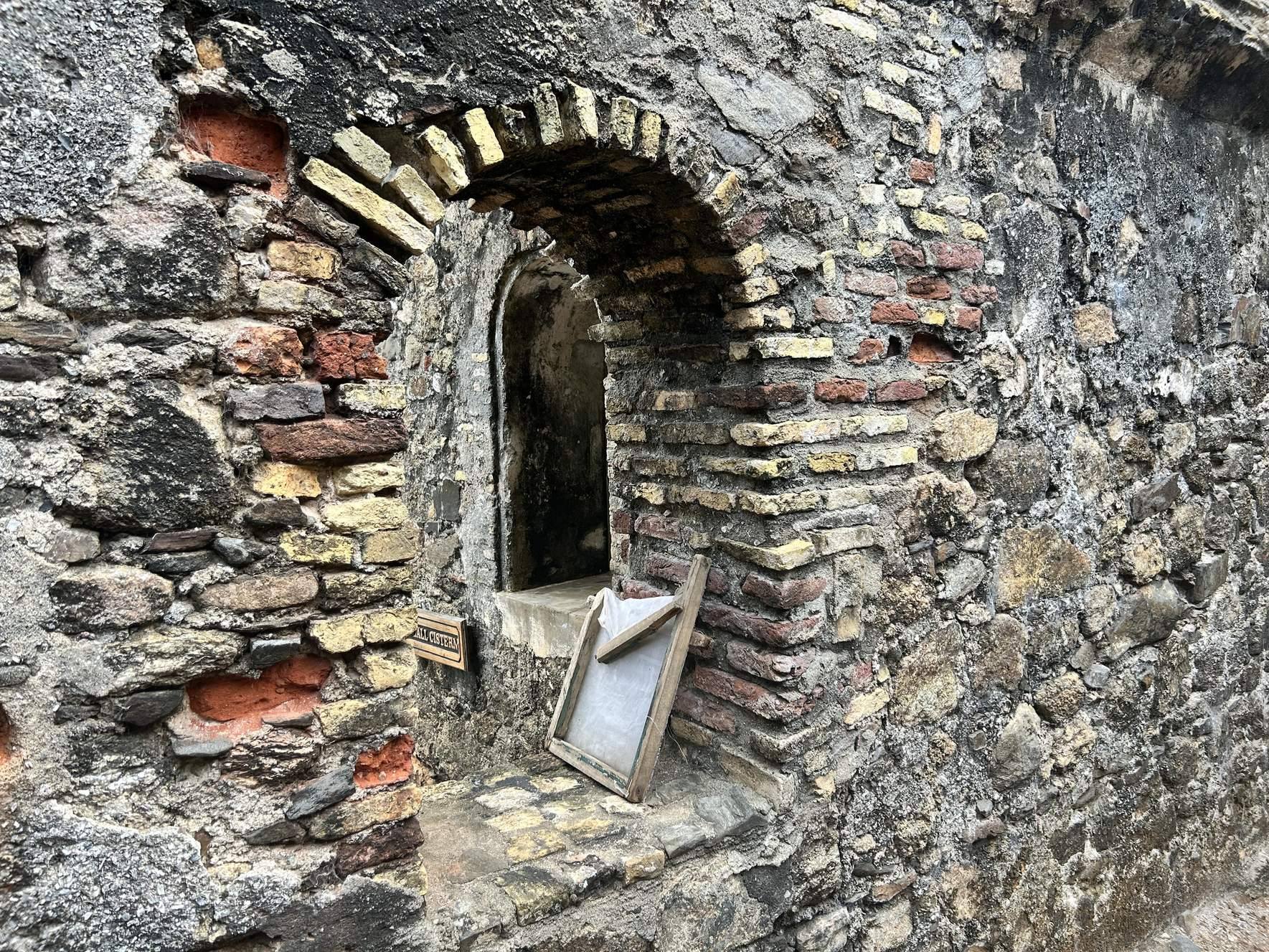
The northern curtain wall and bastion were built as solid structures. Elsewhere, earth was packed between two stone walls laid in mortar. Cracks and disintegration in the building fabric contributed to the fort’s abandonment before its twentieth-century restoration, while the 1811 attack left the complex in ruins until the 1951 work.
Courtyard buildings
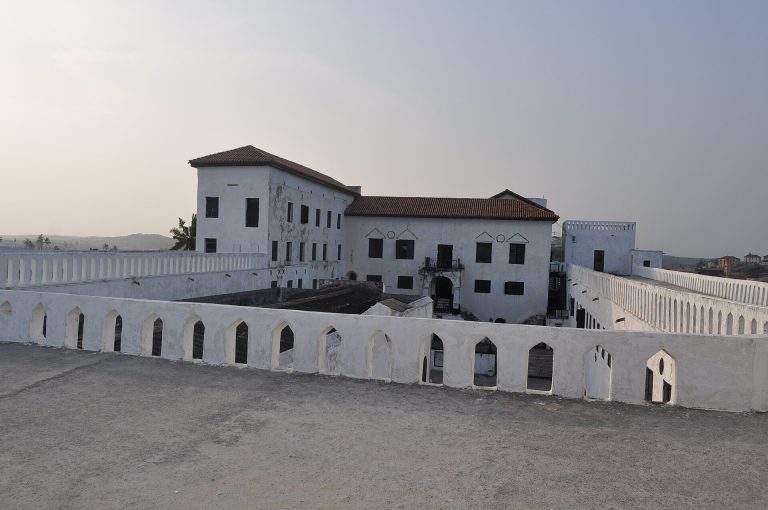
A central courtyard was enclosed by buildings of differing heights. A one-storey building stood on the west side, a two-storey building occupied the north, and a row of two- or three-storey buildings extended along the south. These structures formed the main built enclosure around the fort’s interior.
Southeast prison bastion
The southeast bastion was designed as a hollow structure rather than a solid filled defense. Its roof contained a grated opening for ventilation, and the space was used as a prison for enslaved people. It is regarded as the first structure of this type on the Gold Coast. The 1640 rebuilding added or improved ventilation connected with the confinement of enslaved captives.