Bolton Castle: A Fourteenth-Century Quadrangular Castle in Yorkshire
Site at a Glance
- Rating
- 4.6
- Popularity
- Medium
- Country
- United Kingdom
- Primary era
- Medieval
- External website
- Open
- Eras represented
- Medieval
- Civilizations
- English
- Site type
- Military
- Remains
- Castle
On this page9 sections
History
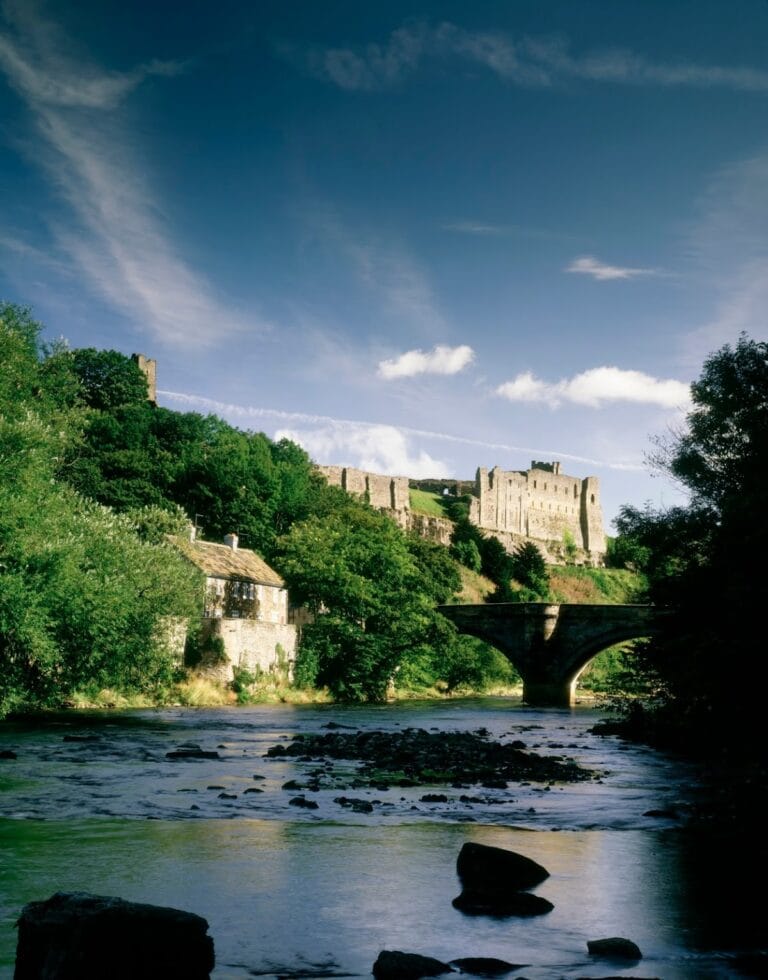
Bolton Castle is a fourteenth-century medieval castle in England, United Kingdom, built for Richard, 1st Baron Scrope of Bolton, between 1378 and 1399. It was constructed as a fortified residence in Wensleydale and became the seat of the Scrope family. A building contract with the mason John Lewyn was made in September 1378, followed by a licence to build in July 1379. Construction was reputed to have cost 18,000 marks.
The Scrope Castle and the Pilgrimage of Grace
In 1536, John Scrope, 8th Baron Scrope, supported the Pilgrimage of Grace, a major northern English rebellion against Henry VIII’s religious policies, including the dissolution of religious houses. Scrope gave sanctuary at Bolton Castle to Adam Sedbar, the abbot, or head, of Jervaulx Abbey. When the king’s men pursued him, Scrope fled to Skipton Castle. Sedbar was captured and executed, while Henry VIII ordered Bolton Castle to be burned in retaliation. The fire caused extensive damage, although part of the castle was repaired within several years. After receiving a royal pardon, Scrope regained his seat in Parliament.
Mary, Queen of Scots, at Bolton
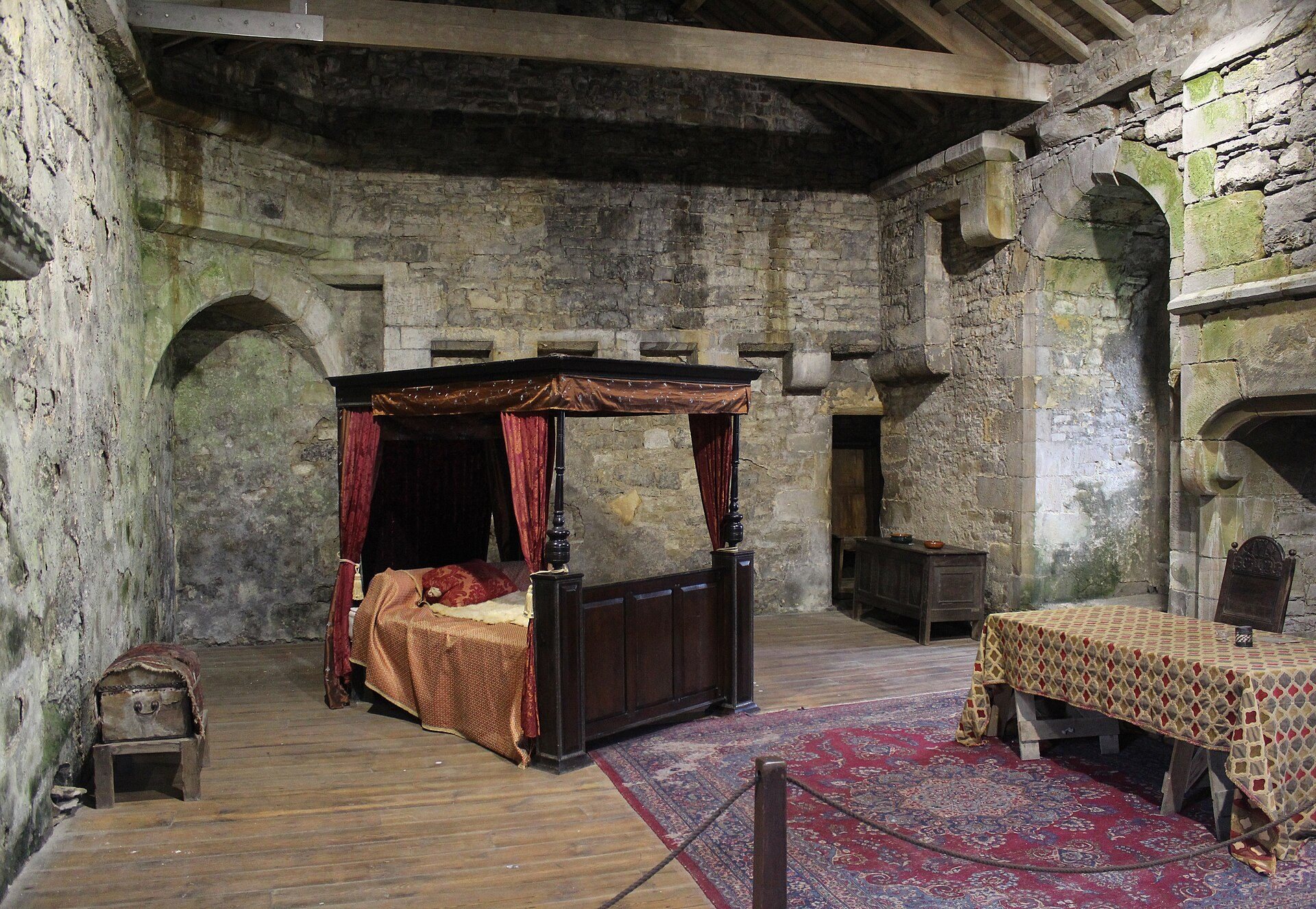
Mary, Queen of Scots, was held at Bolton Castle for six months after her defeat at the Battle of Langside in 1568 and her flight to England. She arrived from Carlisle Castle in July 1568 because Carlisle was considered unsuitable, and lived under the supervision of Sir Francis Knollys. Mary occupied Henry Scrope’s apartments in the south-west tower. Thirty men and six women from her retinue were housed in the castle, while the remainder of her household lodged nearby. Her attendants included cooks, grooms, a hairdresser, an embroiderer, an apothecary who supplied medicines, a physician, and a surgeon.
The castle was initially considered unsuitable for a queen, so local houses and nearby Barnard Castle supplied tapestries, rugs, and furniture. Elizabeth I lent Mary pewter vessels and a copper kettle. Mary also brought an old Scottish cloth of estate, a ceremonial textile displayed behind a ruler’s seat, and hung it above her chair in the great chamber to create a throne-room setting.
Mary’s keepers allowed her to walk in the surrounding area and sometimes hunt. Knollys, whom Mary nicknamed “Schoolmaster,” taught her English because she spoke French, Latin, and Scots. She also met local Catholics, an action that led to severe reprimands for Knollys and Henry Scrope. In January 1569, Mary was moved to Tutbury Castle, where she spent much of the remainder of the eighteen years before her execution in 1587. A local tradition says that she escaped from Bolton and lost her shawl while travelling towards Leyburn, linking the nearby cliff edge called The Shawl with the story.
Later ownership and damage
After Emanuel Scrope, 1st Earl of Sunderland, died in 1630 without legitimate children, Bolton Castle passed to his eldest illegitimate daughter, Mary. She married Charles Powlett, 6th Marquess of Winchester and 1st Duke of Bolton, and the castle subsequently descended through their family. It has never been sold and remains with descendants of the Scrope family.
Bolton Castle was damaged during the English Civil War and later slighted, meaning that it was deliberately damaged or partly dismantled so it could no longer serve effectively as a stronghold. Much of the building survived, although part remains ruined and another section has been restored. The castle is a Grade I listed building, a status reserved for structures of exceptional architectural or historic interest, and a Scheduled Ancient Monument protected by national law. Thomas Peter Algar Orde-Powlett, 9th Baron Bolton, became its owner after his father’s death in June 2023.
Remains
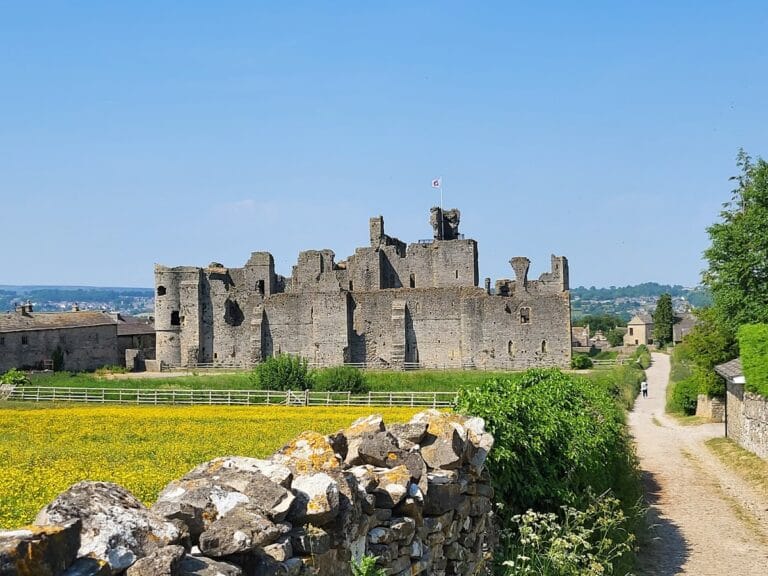
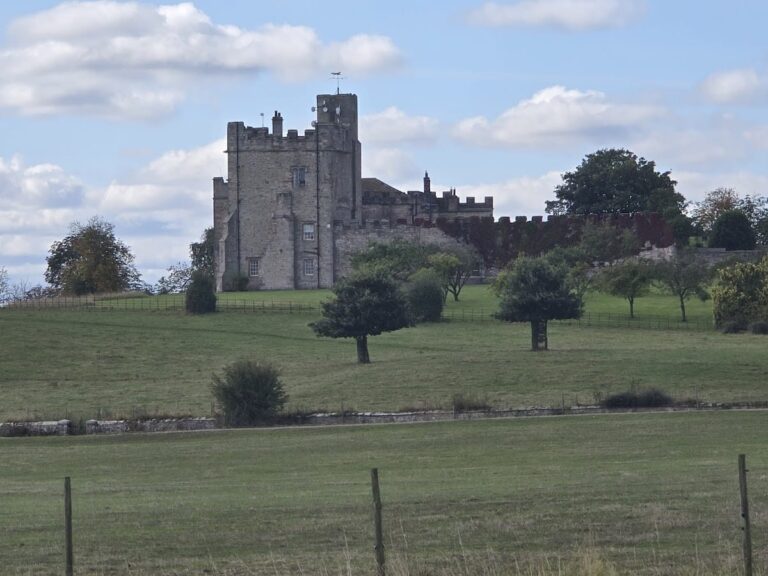
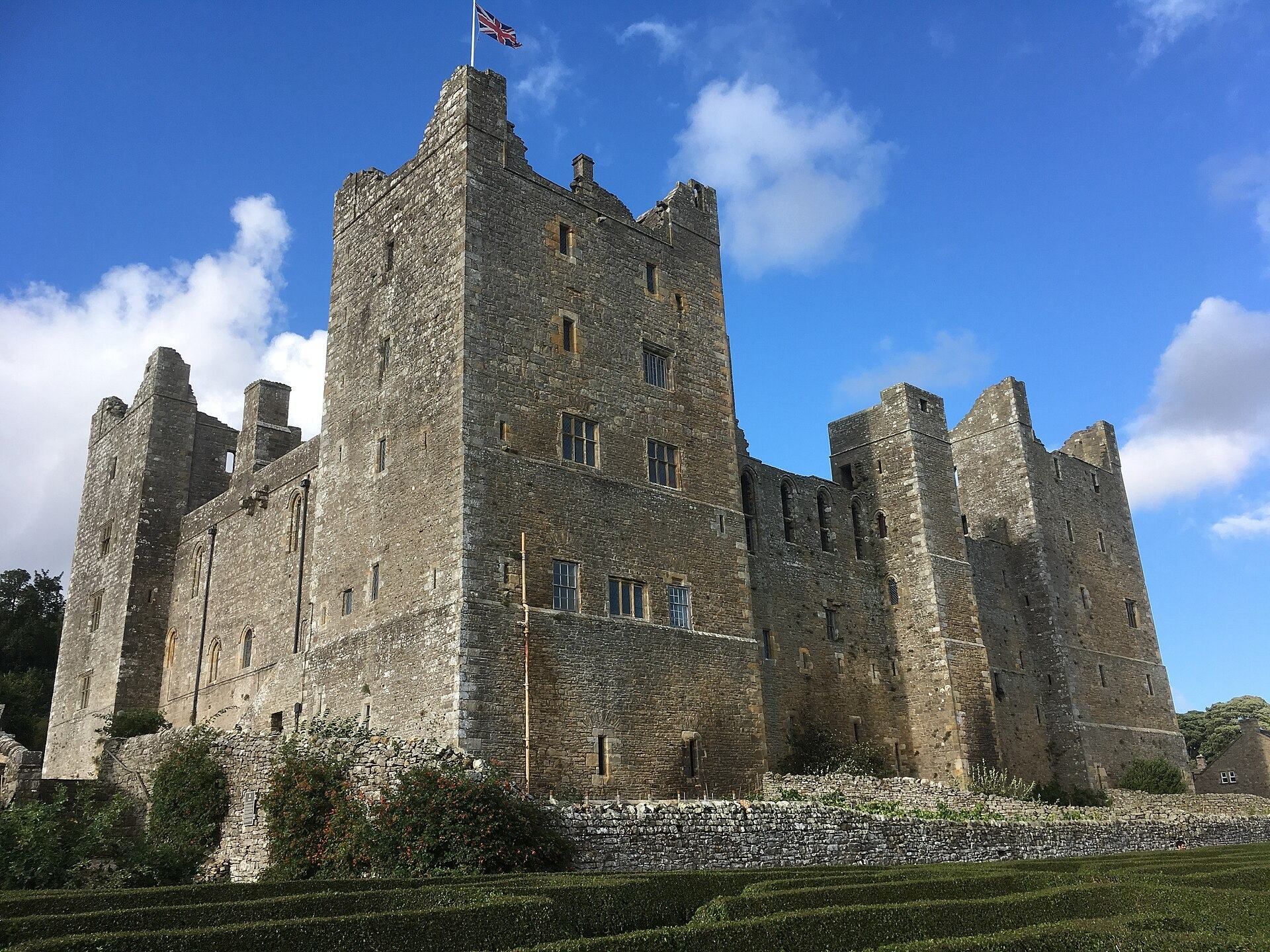
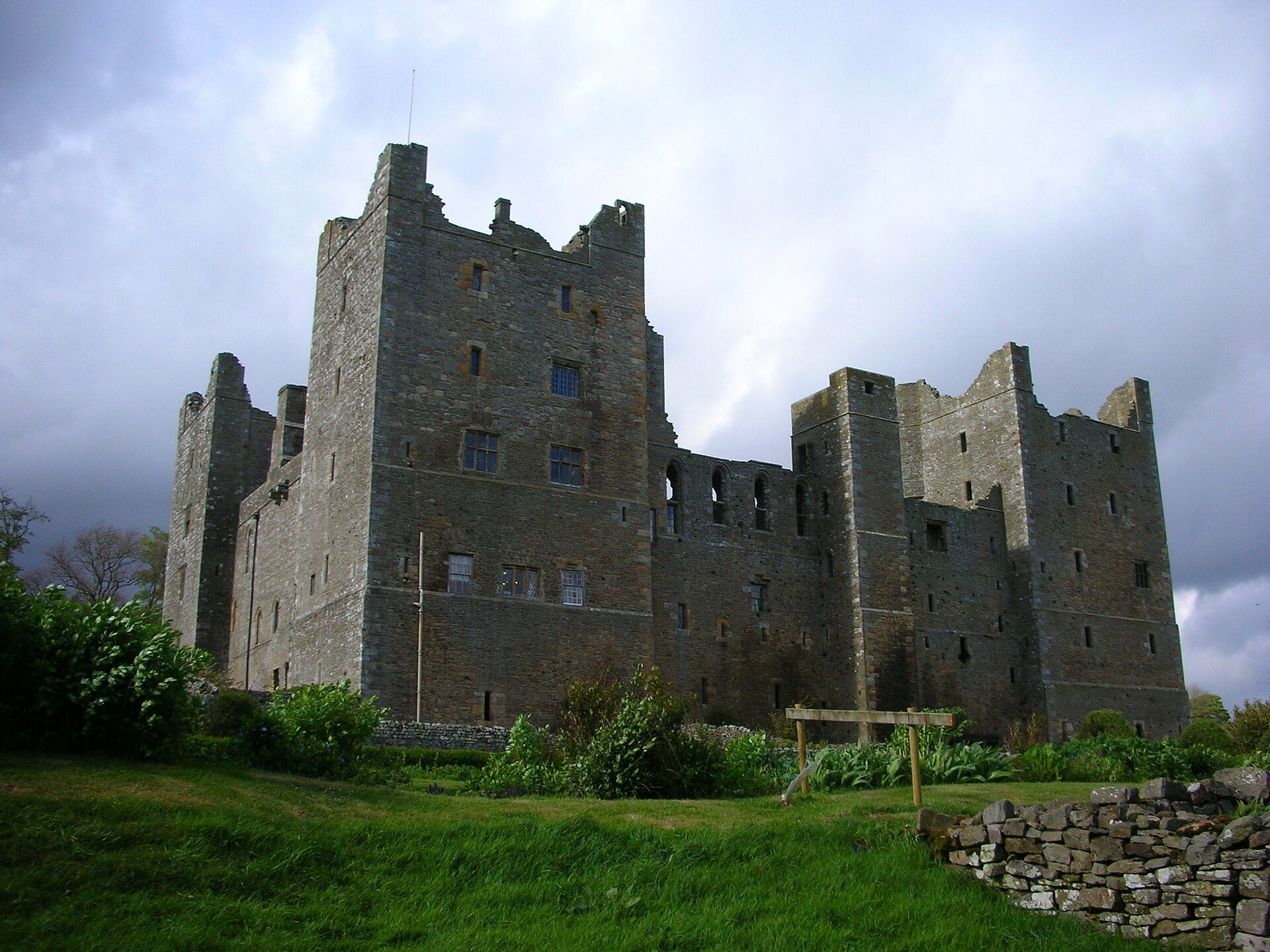
Bolton Castle is a quadrangular castle, a fortified residence arranged around an enclosed courtyard, with substantial walls and towers. Sir Francis Knollys described its walls as very high and noted that it had only one entrance. The surviving structure is partly ruined and partly restored, preserving the form of the large enclosed courtyard and the imposing character associated with the quadrangular castle type.
Principal rooms and towers
South-west tower
The south-west tower contained the apartments assigned to Henry Scrope and later used by Mary, Queen of Scots. Its rooms formed part of the residential accommodation within the fortified structure and preserve the physical setting associated with Mary’s confinement at Bolton.
Great chamber
The great chamber was the room in which Mary placed her Scottish cloth of estate above her chair. The textile temporarily gave the chamber the appearance of a throne room during her stay. A sixteenth-century description also mentions an astronomical clock in the courtyard and tunnels that carried smoke away from the hall hearth.
Surrounding grounds
The grounds include a maze, herb garden, wildflower meadow, rose garden, and vineyard. The nearby village of Castle Bolton takes its name from the castle, linking the surviving stronghold with the settlement that developed beside it.