Georgian Theatre Royal: An Eighteenth-Century Theatre in Richmond
Site at a Glance
- Popularity
- Medium
- Country
- United Kingdom
- Primary era
- Early Modern
- Eras represented
- Early Modern, Modern
- Civilizations
- British
- Site type
- Entertainment
- Remains
- Theatre
On this page11 sections
History
The Butlers and the theatre circuit
The Georgian Theatre Royal is an eighteenth-century theatre in Richmond, North Yorkshire, United Kingdom. Actor-manager Samuel Butler and his first wife, Tryphosa Butler (née Brockhill), built it in 1788. An actor-manager both performed and ran a theatre. The building belongs to the Georgian period, the years from 1714 to 1830 associated with Britain’s first four kings named George, and is among the oldest surviving theatres in Britain.
The theatre formed part of Butler’s circuit, a group of venues linked by a touring company’s performances or management. The circuit also included theatres in Beverley, Harrogate, Kendal, Northallerton, Ripon, Ulverston and Whitby. None of those other venues remains open.
Changing management and use
After Tryphosa died in 1797, Samuel married Francis Maria Jefferson. When Samuel died, Francis continued to manage the theatre, and their son, Samuel William Butler, later took it over. Regular performances continued until 1830, then became less frequent. In 1848 the building was let for use as an auction house.
Reopening and restoration
A non-profit trust reopened the theatre in 1963. The building was expanded in 1996, followed by a major restoration in 2002 that included a museum; the theatre reopened in 2003. A fundraising campaign in May 2013 supported a further full restoration. In 2016, a bequest from Paul Iles enabled the renovation of an existing building for the Paul Iles Learning Centre.
The Georgian Theatre Royal Experience, a museum about the theatre’s history and collection, opened in August 2016. Performers who have appeared at the theatre include the celebrated actor Edmund Kean, actress Dame Sybil Thorndike, actress and comedian Joyce Grenfell, and playwright and actor Alan Bennett.
The theatre is Grade I listed, the highest listed-building category in England, used for buildings of exceptional architectural or historic interest. It is also part of the European Route of Historic Theatres, a heritage network, on its Canal Route.
Remains
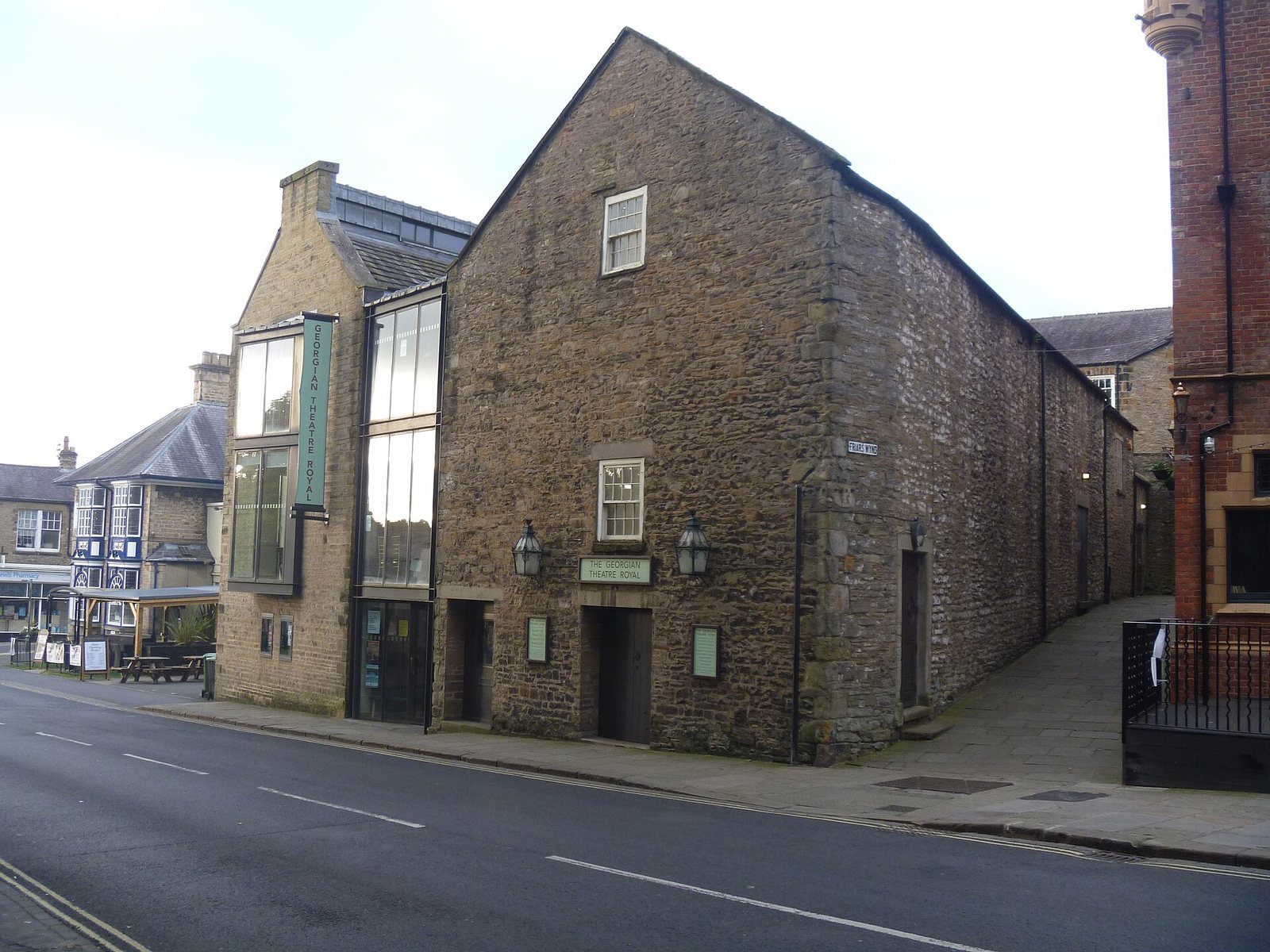
The theatre’s plain exterior and historic interior present contrasting aspects of the building. Its main structure is made of roughly dressed sandstone beneath a stone-slate roof; inside, restored original features sit alongside details reconstructed through historical research.
Theatre and associated spaces
Exterior
The sandstone exterior has few features that identify the building as a theatre, allowing it to blend with the surrounding architecture. The stone-slate roof completes its restrained outward appearance.
Auditorium
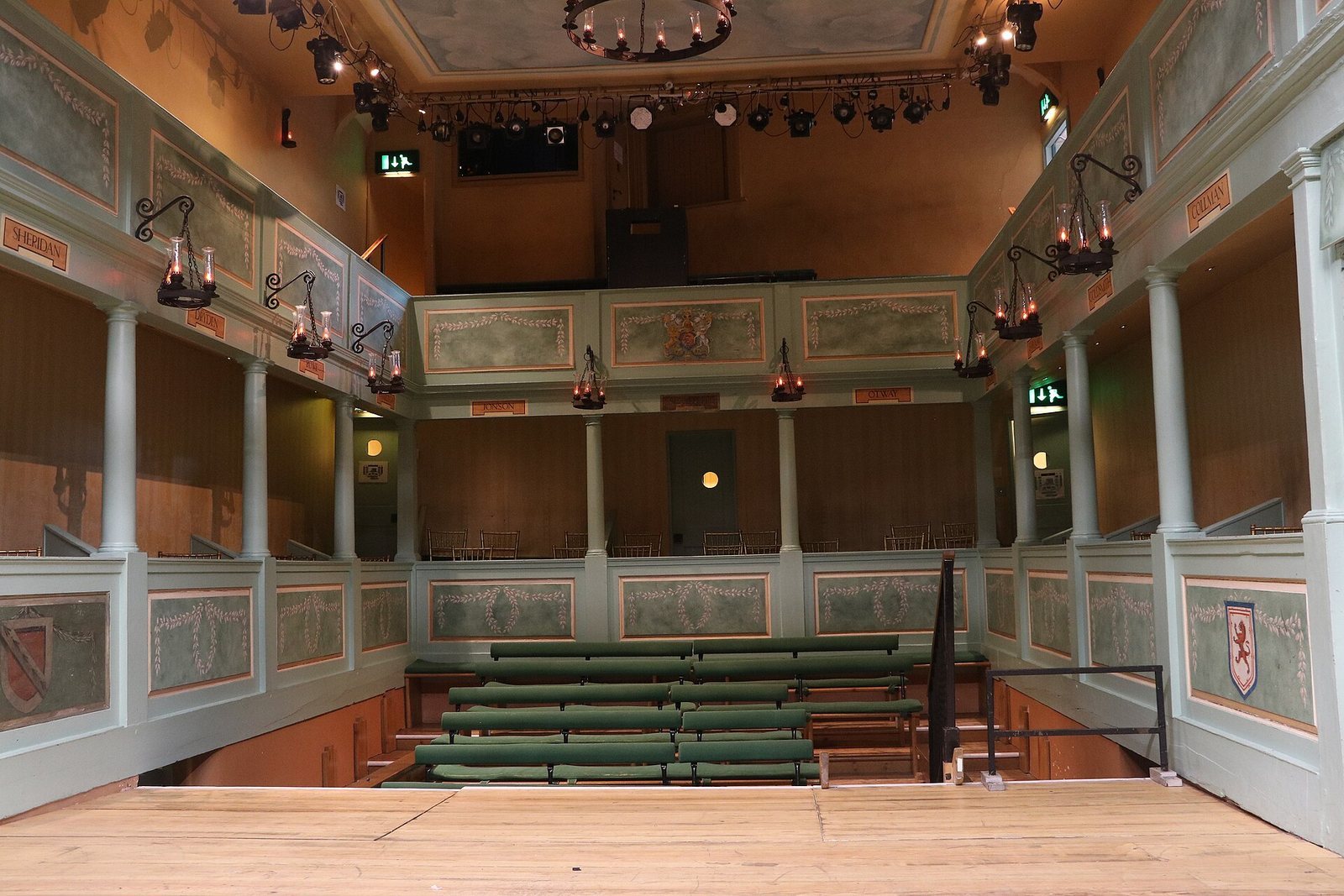
Archival material guided the auditorium’s return to its original appearance. Its ceiling depicts a cloudy sky, while the walls use stone and beige tones and the woodwork is blue-green. Restored elements include decorative panels, coats of arms, hand-painted details, wooden theatre boxes, and wall panels in historically researched colours. Theatre boxes are enclosed or partly enclosed seating areas arranged around an auditorium.
Stage and backstage spaces
The restored stage has reconstructed openings in its floor and traditional machinery for creating theatrical effects, including those associated with eighteenth-century performances. Lamps fitted with protective glass cylinders provide lighting designed to evoke candlelight. Modern additions include a new front section and backstage spaces with a box office, dressing room, bar and foyer.
The Woodland Scene
The theatre museum displays The Woodland Scene, a painted piece of stage scenery dating to around 1820. It was painted in a workshop in Royston, Hertfordshire, and is believed to be the oldest surviving theatrical scenery in the world.
Paul Iles Learning Centre
The Learning Centre occupies a renovated existing building. It serves as a principal rehearsal space for the youth theatre and is used for other activities.