Mito Castle: A Linked-Enclosure Hill Castle in Japan
Site at a Glance
- Rating
- 3.8
- Popularity
- Low
- Country
- Japan
- Primary era
- Early Modern
- External website
- Open
- Eras represented
- Early Modern, Modern
- Civilizations
- Japanese, Tokugawa
- Site type
- Military
- Remains
- Castle
On this page14 sections
History
Mito Castle is a linked-enclosure hill castle in Mito, Japan, established in the late twelfth or early thirteenth century and traditionally attributed to Baba Sukemoto. Originally called Baba Castle, it became the residence of the Baba clan, also associated with the Daijo clan, before developing into the administrative center of the Mito domain under the Tokugawa family.
From Baba Castle to the Edo clan
In 1416, during the Uesugi Zenshu Rebellion, Edo Michifusa defeated Baba Mitsumoto and took control of the castle. The Edo clan held it for about 170 years, enlarging the fortifications and developing the settlement. The castle was later renamed Mito Castle by Satake Yoshinobu.
The struggle for control of the region intensified during Toyotomi Hideyoshi’s 1590 campaign against Odawara, a major operation in the unification of Japan. Edo Shigemichi supported the Hojo side, while Satake Yoshishige and his son Satake Yoshinobu joined Hideyoshi’s forces. After the Satake family received Hitachi Province, it attacked Baba Castle and defeated Shigemichi in 1594.
The Satake and early Tokugawa periods
Satake Yoshinobu transferred his base from Ota Castle to Mito, made major improvements, and established Mito Castle as his principal residence. The basic sequence of the main enclosure, second enclosure, third enclosure, and lower enclosure is attributed to this period.
Yoshinobu maintained a neutral position during the Battle of Sekigahara, the 1600 conflict that confirmed Tokugawa Ieyasu’s supremacy in Japan. Ieyasu removed Yoshinobu from Mito in 1602 and transferred him to the Kubota domain in Akita. Mito Castle then passed successively to Takeda Nobuyoshi, Tokugawa Yorinobu, and, from 1609, Tokugawa Yorifusa.
The Mito Tokugawa domain
From 1609 until the Meiji period, Mito Castle was the residence of the Mito Tokugawa family, one of the three principal collateral branches of the Tokugawa house. The family administered the Mito domain from the castle, while Yorifusa expanded both the fortifications and the surrounding town and established his residence in the second enclosure.
The Mito Tokugawa lords were permanently based in Edo and did not follow the usual alternate-attendance system, under which feudal lords divided their time between their domains and the shogun’s capital. They therefore seldom used Mito Castle as a residential seat. Its buildings remained relatively modest, with fewer towers and long barracks than many other castles.
In 1841, the ninth Mito lord, Tokugawa Nariaki, opened Kodokan, a domain school for education in scholarship, administration, and martial disciplines. Late in the Edo period, conflict between the reformist Tengu Party and the conservative Shosei Party produced the Tengu Party Rebellion in 1864. Fighting reached Mito in 1868, when Tengu forces attacked the Shosei Party, which had occupied Kodokan. Many castle buildings burned during the fighting.
Abolition, destruction, and preservation
Mito Castle was abolished in 1871 after the domains were abolished. The following year, two infantry platoons of the Tokyo Garrison were stationed there, and the former castle became the garrison’s Fourth Branch. A fire in 1872 destroyed a corner tower in the main enclosure; the arsonist was never identified.
The castle’s three-story tower burned during the Mito air raid of 2 August 1945. It has not been rebuilt, and Mito Castle’s lost keep-equivalent tower is described as the only such wartime loss in Japan not to have been reconstructed.
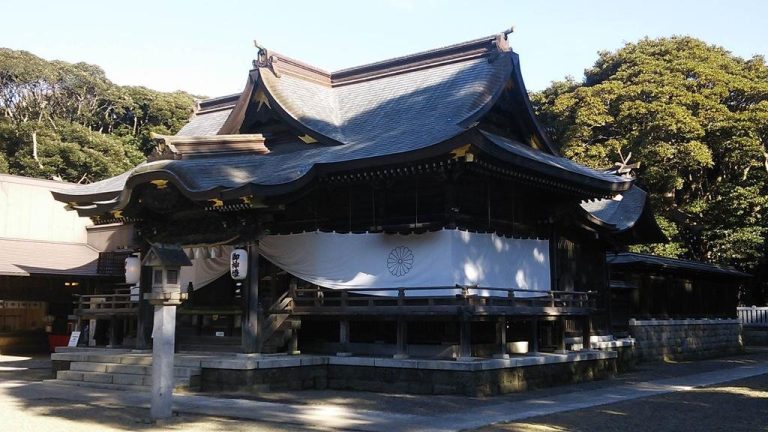
Kodokan was designated a Special Historic Site of Japan in 1952. Its Seicho, Shizendo, main gate, and walls became Important Cultural Properties in 1964, while surviving earthen ramparts and dry moats received designation as Ibaraki Prefectural Historic Sites in 1967. The Yakuimon gate became an Ibaraki Prefectural cultural property in 1983, and Mito Castle was selected as one of Japan’s 100 Fine Castles in 2006.
Since the Heisei period, Mito City has carried out archaeological and reconstruction work using historical photographs and Edo-period plans. The Sugiyama Gate was reconstructed in 2015, followed by the Sakumachi Saka-shita Gate in 2020. The Otemon gate was rebuilt in timber and formally completed in 2020, while the Ninomaru Corner Tower and adjoining earthen wall opened to the public in 2021. A timber reconstruction of the three-story tower is not planned because school buildings occupy the relevant area.
Remains
Ridge-top layout and defensive landscape
Mito Castle occupied a ridge beside present-day Mito Station, with the Naka River to the north and Lake Senba to the south providing natural defensive waters. The castle extended westward from the lower enclosure at the eastern end of the plateau through the main enclosure and second enclosure to the third enclosure. Dry moats divided the principal compounds, while earthen ramparts and ditches formed the chief defensive works.
This arrangement reflects the defensive traditions of eastern Japan during the Warring States period. In the Edo period, the second enclosure held the principal residence, across an area now occupied by Mito Third High School, the affiliated elementary school of Ibaraki University, and its affiliated kindergarten. The main enclosure served primarily for storage, while the third enclosure contained Kodokan and related facilities.
Towers and gates
Gosankai Yagura
Mito Castle had no conventional keep. Instead, the second enclosure contained the Gosankai Yagura, a large three-story tower with five internal floors that served as a visual and functional substitute. Its design avoided the conventional gables and elaborate forms associated with castle keeps.
The first tower, formerly called the Three-Story Watchtower, burned in 1764. It had originally been thatched and very plain, although copper sheeting covered its roof when it was destroyed. A replacement was built in 1766 directly on foundation stones, without a raised tower platform. The rebuilt structure had a tiered form, with a hipped-and-gabled roof only at the top and no other gables. Sea-cucumber-pattern walling covered the first and second floors, while the third through fifth floors had white plaster walls, giving the building a three-story exterior despite its five floors.
Yakuimon gate
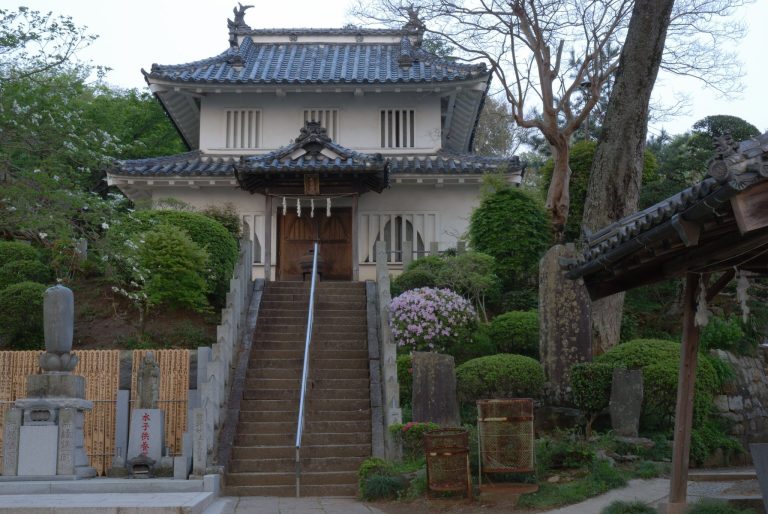
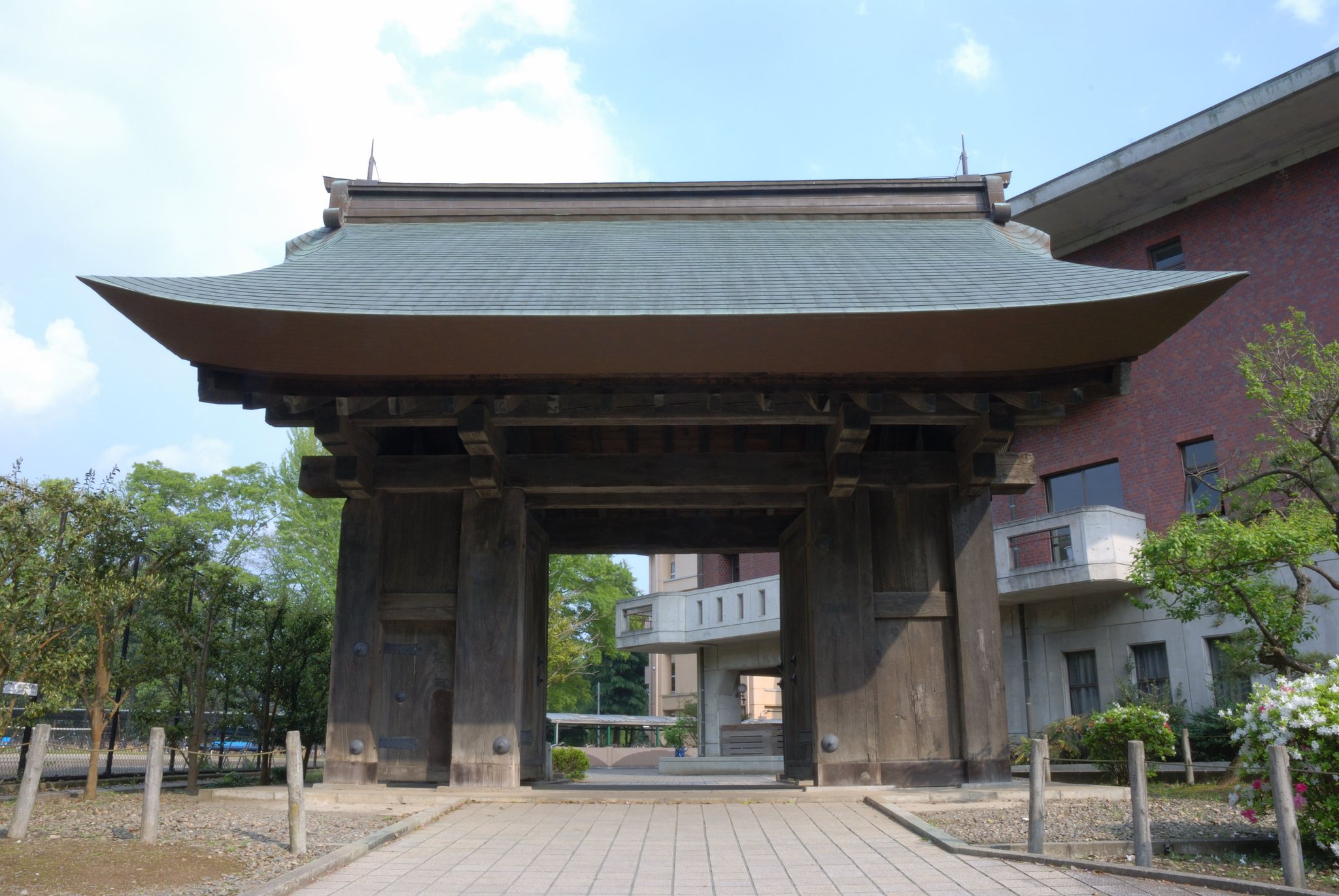
The Yakuimon is the oldest surviving building associated with Mito Castle and is traditionally attributed to the Satake period. Its roof was later changed to copper sheeting. The gate was relocated to the former main-enclosure grounds, which are now occupied by Mito First High School and its affiliated junior high school.
Reconstructed gates and tower remains
The reconstructed Otemon incorporates an earthen wall made by alternating layers of roof tiles and clay, a detail identified during archaeological investigation before reconstruction. The Sugiyama Gate, Sakumachi Saka-shita Gate, Ninomaru Corner Tower, and adjoining Ninomaru earthen wall reproduce former castle components in timber and other traditional materials.
Kodokan and surviving earthworks
Kodokan
Kodokan survives in the third-enclosure area as the former Mito domain school. Its Seicho, Shizendo, main gate, and walls preserve the principal historic components associated with the school and retain the physical remains of an institution established by the Mito Tokugawa domain.
Ramparts and dry moats
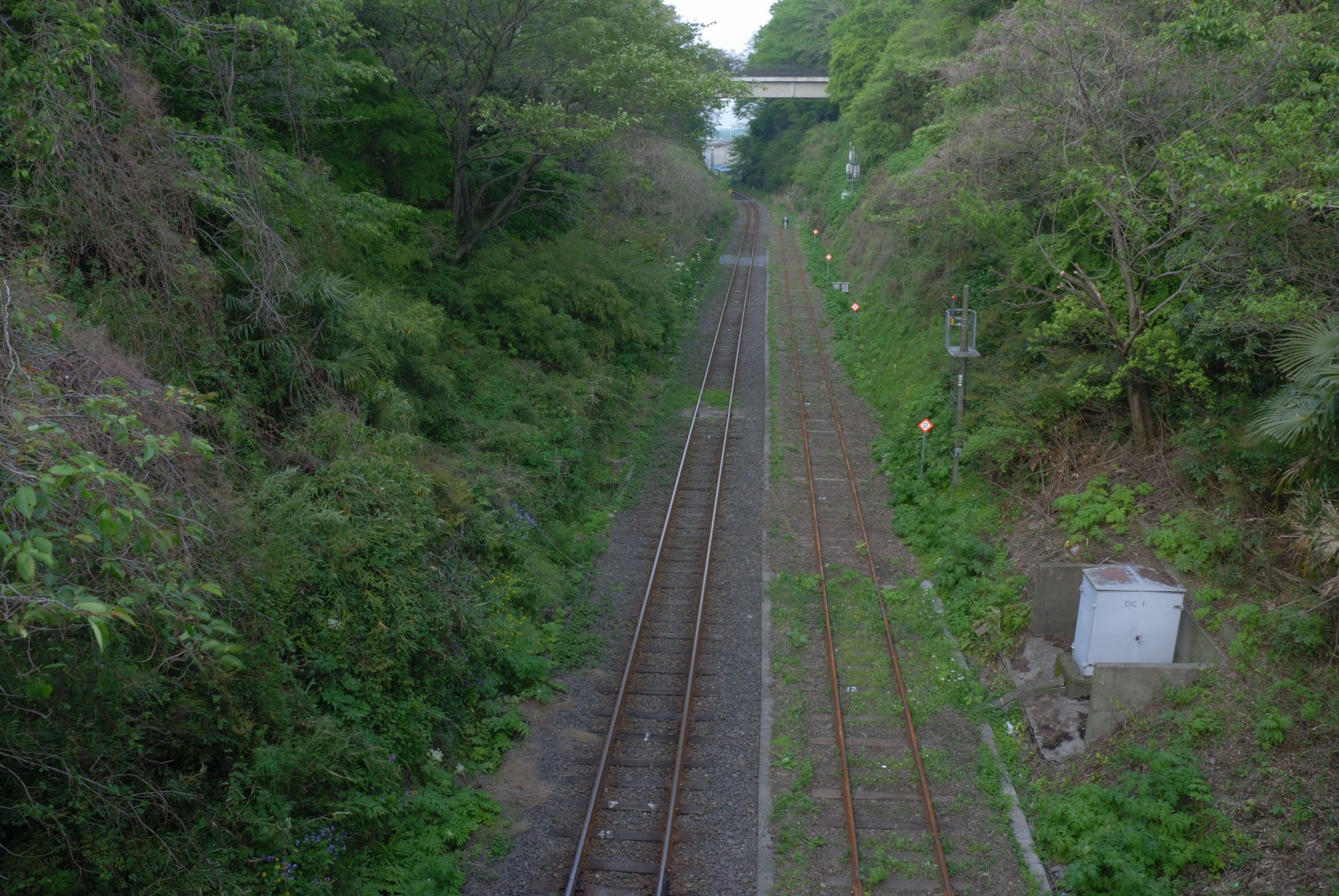
Earthen ramparts and dry moats survive especially around the developed third-enclosure area. The moat between the second and third enclosures was converted into the route of Prefectural Road 232 during the Meiji period, while the moat between the main and second enclosures became land for the JR Suigun Line.
The former castle grounds now contain several schools, including Mito First High School, Mito Third High School, Mito Second Junior High School, Mito Sannomaru Elementary School, and the affiliated elementary school and kindergarten of Ibaraki University. Some modern school gates and fences, particularly at Mito Sannomaru Elementary School, were designed in a traditional castle style.