Fulda Monastery: A Benedictine and Imperial Abbey in Germany
Site at a Glance
- Rating
- 4.7
- Popularity
- Low
- Country
- Germany
- Primary era
- Early Modern
- External website
- Open
- Eras represented
- Medieval, Early Modern
- Civilizations
- Carolingian, Holy Roman Empire
- Site type
- Religious
- Remains
- Monastery
On this page15 sections
History
Fulda monastery in Fulda, Germany, was founded on 12 March 744 by Sturmius, a disciple of the Anglo-Saxon missionary Boniface, at Boniface’s direction. Dedicated to the Holy Redeemer and following the Rule of Benedict of Nursia, the sixth-century code governing communal prayer, work, discipline, and property, it began as an eighth-century Benedictine foundation in the Fulda river valley. Sturmius became its first abbot, and the monastery later developed into an imperial abbey, a foundation directly subject to the Holy Roman Empire rather than to a territorial prince.
Foundation and the cult of Boniface
Boniface sent Sturmius to seek a suitable location in 742. The chosen site was probably near a ford and a disused Merovingian estate, in an area that had not previously been settled as a monastery. In 743, the Frankish mayor of the palace Karlmann granted Boniface land extending four miles around the planned foundation. Sturmius then travelled to Monte Cassino to study what he understood as the original Benedictine way of life. The early community was intended to follow an ascetic and secluded form of monasticism that was in some respects stricter than the Benedictine Rule.
On 4 November 751, Pope Zacharias issued a privilege that restricted the independent exercise of episcopal jurisdiction and consecration authority at Fulda and protected the monastery’s property from unilateral episcopal interference. Whether this already amounted to complete exemption from diocesan jurisdiction remained disputed, but the privilege provided the basis for Fulda’s later exempt status and its development as an imperial abbey.
Boniface was murdered at Dokkum on 5 June 754. His body was first taken to Mainz, but Sturmius secured its transfer to Fulda, where it was buried before the cross altar of the Salvator Basilica. The tomb made the monastery an important pilgrimage destination and brought it substantial donations. Fulda’s original dedication to the Saviour was joined by a cult of Boniface, and before 761 the foundation was also being called the monastery of Saint Boniface. His tomb and veneration became central to Fulda’s religious identity.
Royal protection and missionary expansion
After Boniface’s death, Archbishop Lullus of Mainz tried to bring Fulda under his authority. He helped discredit Sturmius before King Pippin, who exiled the abbot to Jumièges in 763 and temporarily withdrew Fulda’s papal exemption. Lullus installed Markus as abbot, but opposition within the community led to the election of Prezzold, who supported Sturmius. Pippin restored Sturmius in 765, returned the Zacharias privilege, and placed Fulda under royal protection. Fulda thereby acquired a legally clearer position as an imperial abbey.
Pippin granted the royal estate of Umstadt in 766. Charlemagne added possessions around Hammelburg in 777 and granted ecclesiastical immunity in 774. During the Saxon wars, Fulda was threatened in 778, and the monks evacuated with Boniface’s remains. Between 775 and 777, the abbey served as a base for Christianization in Saxon territories, with its mission reaching the upper Weser and Leine regions. Fulda also maintained daughter houses at Hameln and Brunshausen until the tenth century.
Hessi, an early Saxon leader who submitted to Charlemagne in 775, later became a monk at Fulda and donated two estates. Erkanbert, a Fulda monk and the brother of Abbot Baugulf, became the first bishop of Minden in 803. These links between the monastery and newly Christianized territories helped extend Fulda’s religious and institutional influence beyond the valley in which it had been founded.
Construction, reform, and the Carolingian school
Sturmius became seriously ill during Charlemagne’s Saxon campaign in 779 and returned to Fulda, where he died around 17 December of that year. He was buried in the choir of the church he had built. Under Abbot Baugulf, Charlemagne visited Fulda in July 782, and the monastery increasingly emphasized education. Baugulf’s Epistola de litteris colendis urged the monks to pursue learning. By 798, Hrabanus Maurus and Hatto had been sent to study under Alcuin at Tours.
Baugulf began major construction in 791, including the new monastery church later known as the Ratgar Basilica. The community numbered 364 monks in 781, most of whom served churches and estates dependent on the abbey. Rapid growth, royal demands, and the scale of the building program created tensions, and Baugulf resigned in June 802.
The Ratgar Basilica was built between 791 and 819 under Abbot Ratgar. Its size, Ratgar’s authoritarian leadership, and his alterations to established monastic customs produced a severe internal crisis. Some monks fled, and Emperor Louis the Pious deposed Ratgar in 817. Afterward, Louis ordered the implementation of the reform associated with Benedict of Aniane, which sought to regulate monastic life through a renewed observance of the Benedictine tradition. Eigil, a relative of Sturmius and one of Ratgar’s principal opponents, became abbot in 818 and helped restore unity.
Eigil promoted the cult of Sturmius and reorganized the annual commemoration of his death. He probably also encouraged Hrabanus Maurus to create an illuminated sacramentary combining Gelasian and Gregorian traditions. Eigil died before the planned rebuilding of the conventual buildings was complete.
Hrabanus Maurus became abbot in 822 after serving as a teacher and head of the monastic school. Under his leadership, Fulda became a major intellectual center of the Carolingian Empire, the educational and artistic revival promoted by Charlemagne and Louis the Pious. The monastery developed separate interests in science, theology, and the arts. Its community grew to more than 600 monks and attracted students and scholars from across the empire.
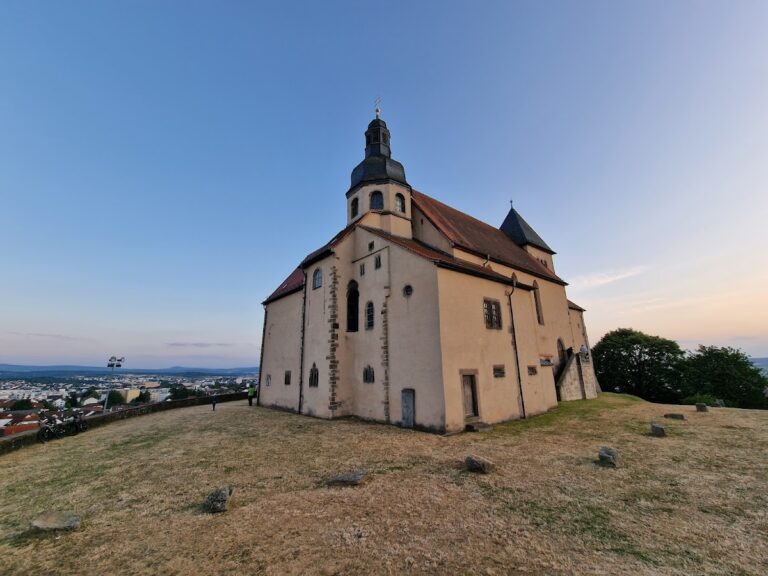
Hrabanus Maurus and Rudolf of Fulda substantially developed the school and library. The library contained about 2,000 manuscripts, including copies of rare ancient works by Tacitus, Frontinus, and Ammianus Marcellinus. The Annals of Fulda, an important ninth-century record of the Carolingian Empire, were also produced at the monastery. From the ninth century onward, Fulda established numerous dependent monasteries, provostries, and estates, including foundations at Frauenberg, Johannesberg, Michaelsberg, Neuenberg, Petersberg, Hameln, Brunshausen, and other places in central Germany. Some dependent houses later became collegiate foundations.
From monastery to territorial principality
From 968, the abbot of Fulda held the position of primate of the German Benedictines. Donations and royal privileges encouraged settlement around the monastery. In 1012, Emperor Henry II granted the monks the surrounding royal forest. In 1019, he granted Fulda and its settlement the rights to mint money, hold a market, and collect customs. Fulda was first described as a city in 1114, and the monastery had become the nucleus around which the later town developed.
The expansion of monastic possessions and the growth of the town brought conflicts with citizens and local rulers. Economic decline in the twelfth century followed the alienation, pledging, and disputed recovery of monastic property. Under Abbot Markward I, many properties were restored. The monk Eberhard compiled the abbey’s claims in the Codex Eberhardi, sometimes altering older documents in Fulda’s favor.
From 1170, Fulda’s abbots held the status of princes of the Empire. Emperor Frederick II elevated Fulda to a princely abbey in 1220, making it an ecclesiastical territory whose abbot held the rank of an imperial prince. In 1356, Emperor Charles IV granted the prince-abbot the honorary title “Archchancellor of the Empress.” Under Reinhard of Weilnau, abbot from 1449 to 1476, Fulda’s development into a territorial ecclesiastical principality reached completion.
Relations between the abbey, the town, and the nobility became especially tense in the late thirteenth and early fourteenth centuries. Count Johann of Ziegenhain led an uprising with Fulda’s citizens against Prince-Abbot Heinrich VI. In a related conflict, citizens destroyed a tower and sections of the walls of a newly built fortified residence. Imperial intervention required their reconstruction and compensation.
Reformation, war, and the bishopric
The Reformation, the Peasants’ War, and the Thirty Years’ War brought unrest, plundering, and political disruption. Prince-Abbot Balthasar von Dernbach summoned the Jesuits to Fulda in 1571 and pursued the Counter-Reformation from 1602, despite opposition from much of the predominantly Protestant-leaning estate nobility. During the Thirty Years’ War, Prince-Abbot Johann Bernhard Schenk zu Schweinsberg fled and died during the Battle of Lützen in 1632.
In 1631, troops of Hesse-Kassel occupied the Fulda territory, and the abbey’s library was severely looted, causing the loss of many manuscripts. Hermann Georg von Neuhof secured the restoration of the abbey and its ecclesiastical principality in the Peace of Prague in 1635.
In 1752, Pope Benedict XIV elevated the princely abbey to a bishopric. Amand von Buseck, who had previously been prince-abbot, became the first bishop of Fulda. The change joined Fulda’s territorial authority to the office of a bishop, creating a prince-bishopric.
Baroque rebuilding and dissolution
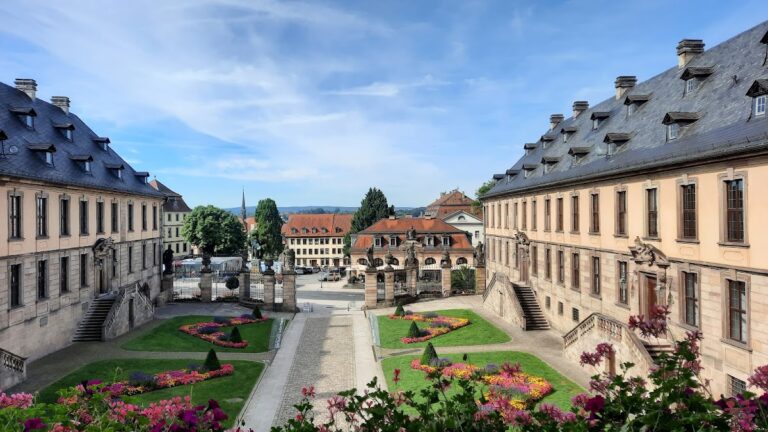
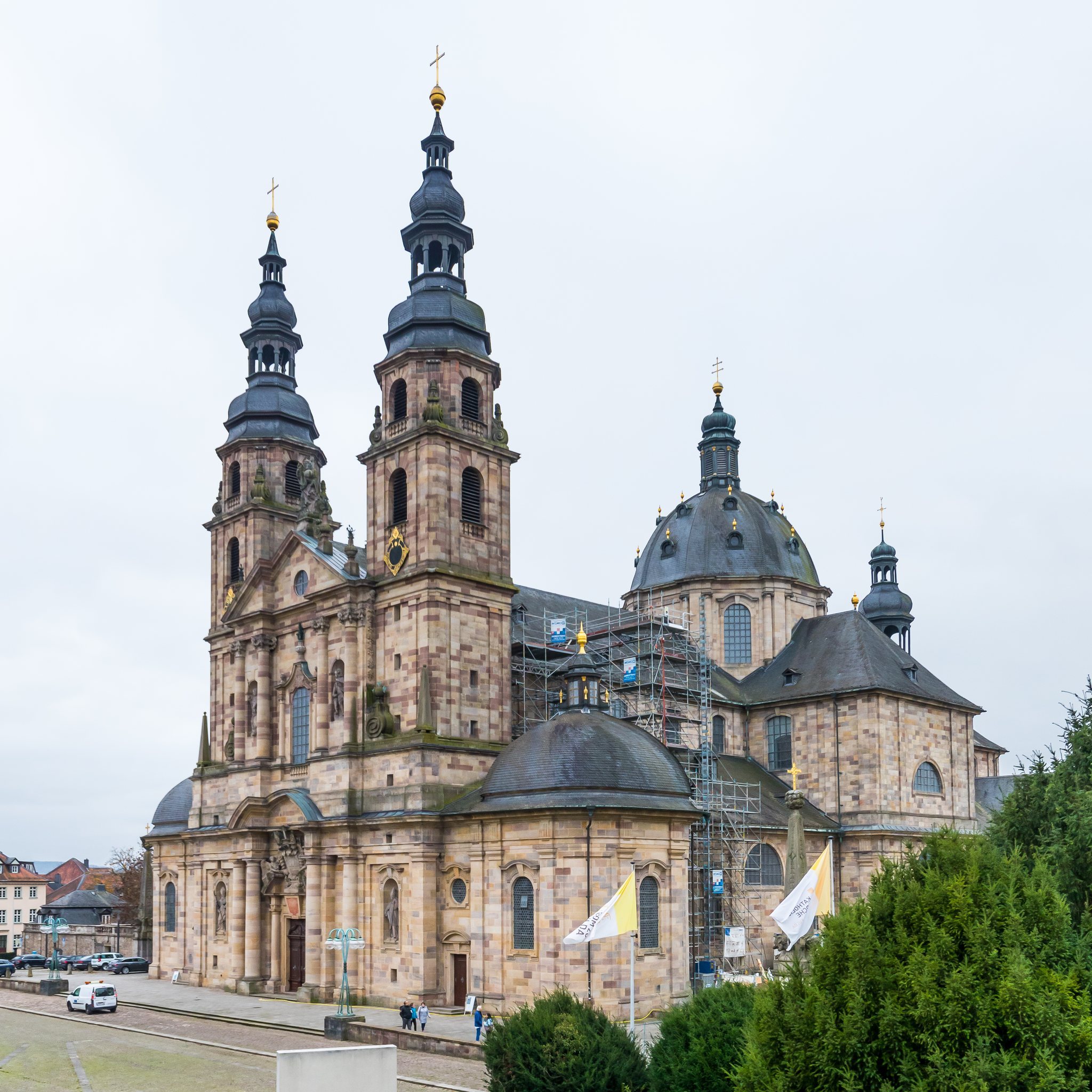
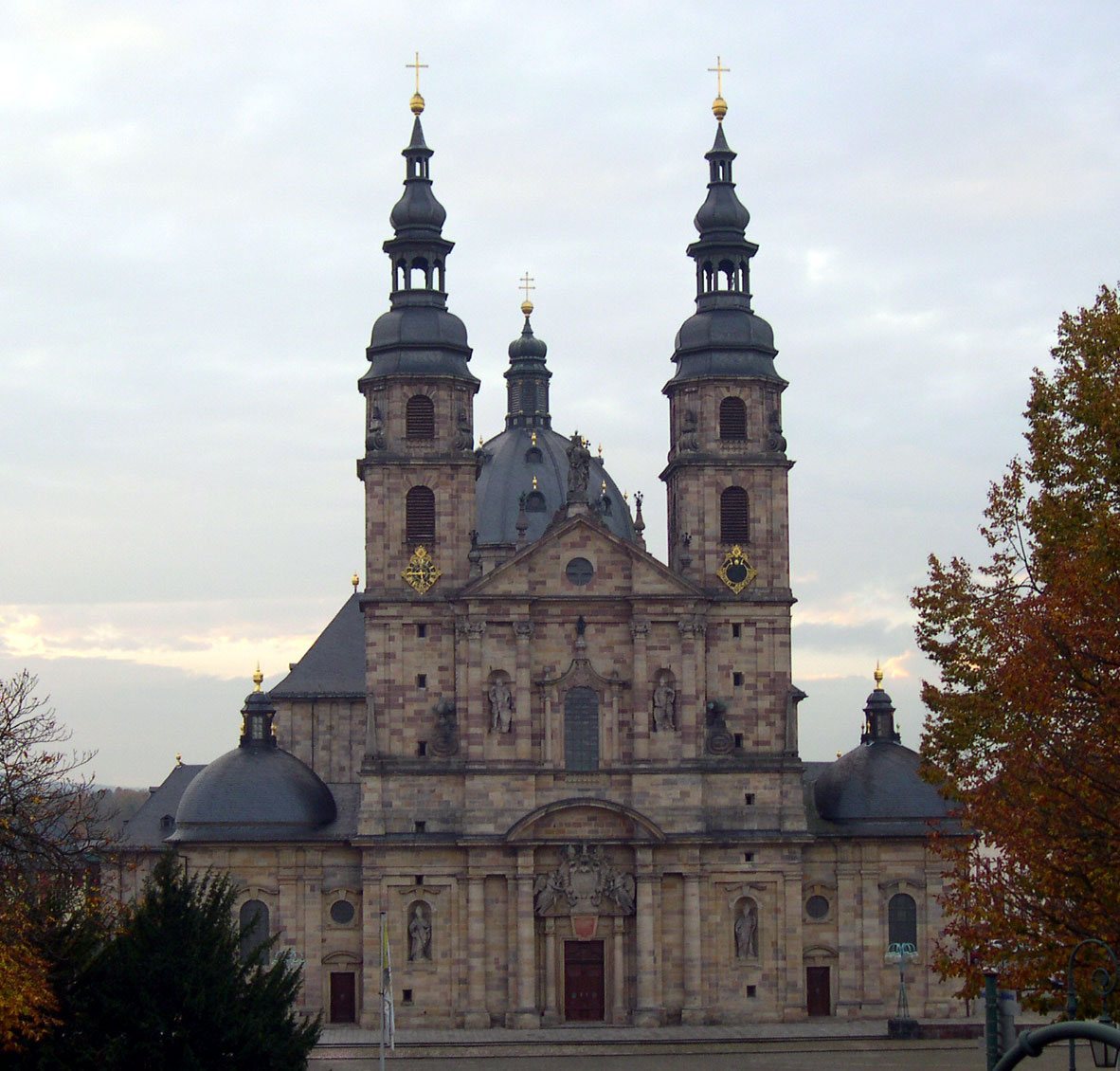
The medieval Ratgar Basilica was replaced during the early eighteenth century. In 1700, Prince-Abbot Adalbert von Schleifras commissioned Johann Dientzenhofer to build a new cathedral and a town palace in the Baroque style. Fulda University was founded in 1734 on the initiative of Prince-Abbot Adolph von Dalberg. It had faculties of theology, philosophy, medicine, and law, and operated until 1805.
The Benedictine monastery was dissolved in 1802 during secularization. The ecclesiastical principality ended in 1803 under the Reichsdeputationshauptschluss, the imperial settlement that secularized most ecclesiastical territories in the Holy Roman Empire. The seminary moved into the former conventual buildings in 1803. Fulda’s secular territories passed successively to Nassau-Orange-Fulda, the Electorate of Hesse, and Prussia. Although the monastery and its principality ended, the diocese of Fulda continued. The former monastic territories became part of the Prussian province of Hesse-Nassau in 1866.
Remains
Early church and memorial spaces
The early monastery included a church dedicated to the Saviour. Boniface was buried before its cross altar, giving the church a lasting connection with his pilgrimage cult. Eigil later constructed two crypts in the Salvator Basilica and began new conventual buildings. The intended location of those buildings was disputed, with a western site near Boniface’s tomb ultimately chosen over a southern site near the tomb of Sturmius.
Michaelskirche
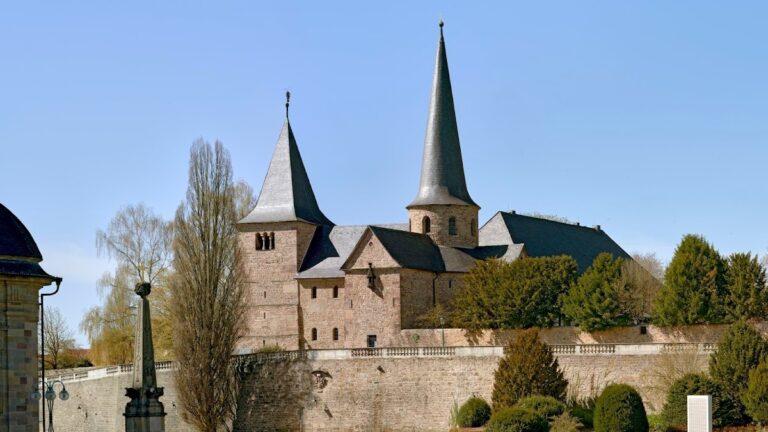
Eigil built the surviving Michaelskirche as a cemetery church. It is organized on a central plan around eight columns and has a vaulted or domed structure. Beneath it, a crypt has a vault supported by a central column. The church belongs to the period of Eigil’s leadership, when Fulda was restoring communal unity and strengthening the commemoration of its early abbots.
Ratgar Basilica
The Ratgar Basilica was constructed between 791 and 819 as a large double-choir church modeled on Roman architectural practice. It had three longitudinal aisles beneath a timber truss roof, two opposing apses, a western transept, and a crypt beneath the presbytery. A transept is the crosswise part of a church that intersects its main axis, while an apse is a sanctuary end and a crypt is a chamber beneath a church used for burial or sacred memorials.
The western transept and opposing apses were intended to recall the Constantinian Basilica of Saint Peter in Rome. The second apse created another sanctuary for the relics of Boniface and changed the interior’s axial movement and perspectives. The basilica was one of the largest and most innovative church buildings north of the Alps in its period. Its medieval structure was demolished in the early eighteenth century to make way for the Baroque cathedral.
Fortified residence and Baroque town palace
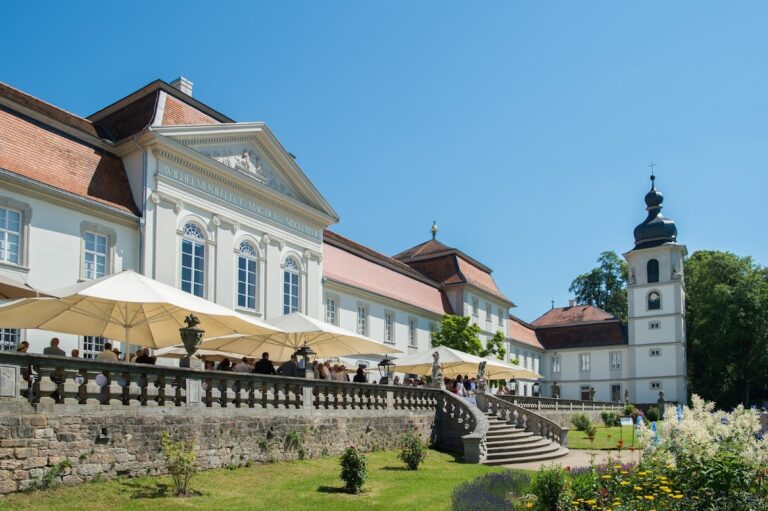
A fortified abbey residence was built between 1294 and 1312 under Prince-Abbot Heinrich V of Weilnau. In the seventeenth century, Prince-Abbot Johann Friedrich von Schwalbach transformed it into a Renaissance-style residence. Johann Dientzenhofer’s eighteenth-century rebuilding later converted the former fortified residence into a Baroque town palace.
Cathedral and university buildings
Johann Dientzenhofer’s eighteenth-century cathedral replaced the Ratgar Basilica as the principal church associated with Fulda. The Baroque university buildings were constructed between 1731 and 1734 to designs by Andrea Gallasini. They housed the faculties of theology, philosophy, medicine, and law established for Fulda University.
Scriptorium, library, and manuscript tradition
Fulda maintained a major scriptorium, the monastic area devoted to copying, producing, and decorating manuscripts, together with a painting and writing school. Its script tradition was initially influenced by Anglo-Saxon writing and changed decisively to Carolingian minuscule around 840. This clear, standardized medieval script continued in Fulda’s work through the Carolingian, Ottonian, and twelfth-century periods.
The monastery produced illuminated Gospel books, sacramentaries, copies of Hrabanus Maurus’s De laudibus sanctae crucis, and other illustrated works. The Ottonian-period Codex Wittekindeus and the Fulda Sacramentary are among the principal works associated with this artistic tradition. A sacramentary is a liturgical book containing the prayers and texts used by a priest or bishop in celebrating the sacraments and Mass.
The library held approximately 2,000 manuscripts. Its contents included works by Tacitus, Ammianus Marcellinus, and other ancient authors, as well as the Codex Fuldensis and texts important for the history of Old High German literature. The manuscripts were later dispersed, with surviving holdings preserved in several institutions, including the state archives at Marburg and the Vatican Library.
Memorial records and dependent foundations
The monks maintained Annales necrologici, a record of deceased members of the community used to organize commemorative prayers and psalm singing. As Fulda’s influence expanded, the record also included patrons, citizens, and nobles associated with the abbey.
Fulda’s wider architectural and institutional network included churches, monasteries, provostries, and women’s houses across central Germany. Foundations and associated houses stood at Frauenberg, Johannesberg, Michaelsberg, Neuenberg, Petersberg, Hameln, Brunshausen, and other estates connected with the abbey.